It’s called the Chelsea chop, and if you’ve never heard of it, you’ve probably been losing flowers to it for years without realising.
The 2026 RHS Chelsea Flower Show runs from 19–23 May, and that week is the traditional window for taking shears to a very specific group of plants. Done right, your echinacea blooms in August instead of July. Your sedum stands upright in September instead of splaying open in the first heavy rain. Your phlox finally stops doing that thing where it faceplants the moment a thunderstorm hits.
Here’s what the Chelsea chop actually is, which plants want it, which ones will hate you for it, and the timing problem nobody talks about.
What the Chelsea Chop Actually Does
The technique itself is almost insultingly simple. In late May, when herbaceous perennials are well into their growth but haven’t yet formed flower buds, you cut them back by a third to a half. That’s it. No fancy angles, no precise node-counting, just a firm haircut with shears or secateurs.
What happens next is the interesting part. The plant responds to the cut by branching. Where you had one main stem heading for one cluster of flowers, you now get three, four, or five side shoots — each one developing its own flower head. The plant is shorter and stockier as a result, which means it doesn’t flop. And because it’s now starting from behind, the whole flowering schedule shifts later by four to six weeks.
That delay is the secret weapon. Most gardens hit a peak in July and then visibly run out of steam through August. A border that’s been partly Chelsea-chopped will still be coming into its own when the un-chopped half is finishing — extending your colour display deep into late summer.
The technique gets its name from its traditional timing during Chelsea Flower Show week, but the actual cue is the plant, not the calendar. You’re looking for perennials that have made strong, leafy growth — usually 30–60 cm tall — but haven’t yet shown flower buds. In a cold, late spring, that might be the first week of June. In a warm spring, mid-May.
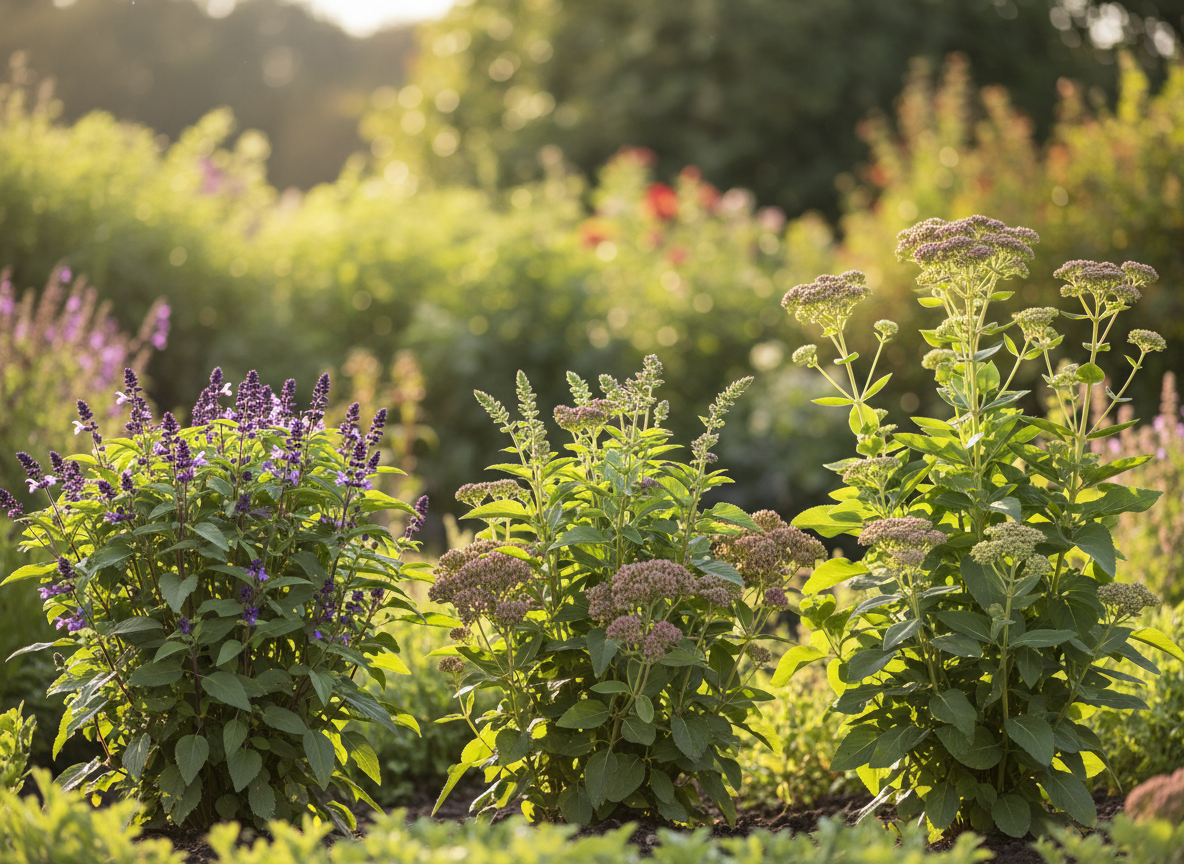 Three different-sized plants in a garden — AI-generated illustration
Three Ways to Do the Chop
There isn’t just one Chelsea chop — there are three approaches, each suited to different goals.
The full chop. Cut the entire plant back by a third or half. Best for plants you want to come into bloom later than usual, or for clumps that have got too tall and floppy in past years. The trade-off: you’ll have nothing in flower until the rest of the garden is well into its summer stride.
The half-and-half. Chop only the front half of the clump, leaving the back uncut. This gives you a two-stage display — the back blooms on its normal schedule, then the chopped front comes in as the back fades. For mid-border perennials like phlox or helenium, this is usually the best choice.
The selective chop. Identify one in three stems across the clump and cut just those. The rest bloom normally; the chopped ones come in late. This produces the longest flowering window but takes a bit more time and a steady hand.
If you’ve never tried the technique before, start with the half-and-half on one or two plants and watch how they respond through the rest of the season. You’ll quickly see why this trick is hoarded by professional border designers.
The Plants That Love the Chop
The Chelsea chop works on a specific group of perennials: late summer and autumn bloomers that flower on new growth, with sturdy enough constitutions to bounce back from a hard cut.
Plants that respond brilliantly:
- Echinacea (coneflower) — bushier, better-supported flowers
- Sedum (Hylotelephium) — prevents the centre splaying open under flower weight
- Aster (now Symphyotrichum) — taller varieties especially benefit
- Phlox paniculata — fewer collapses after summer storms
- Helenium — denser flowering, longer display
- Rudbeckia — more side branches, more flowers
- Solidago (goldenrod) — controls height without losing the show
- Nepeta (catmint) — extends the second flush significantly
- Tall hardy geraniums — can rejuvenate tired clumps mid-season
- Monarda (bee balm) — reduces flopping, slightly later bloom
Generally, if a plant flowers from late July onwards on new wood and has a tendency to either flop or peak too early, it’s a candidate.
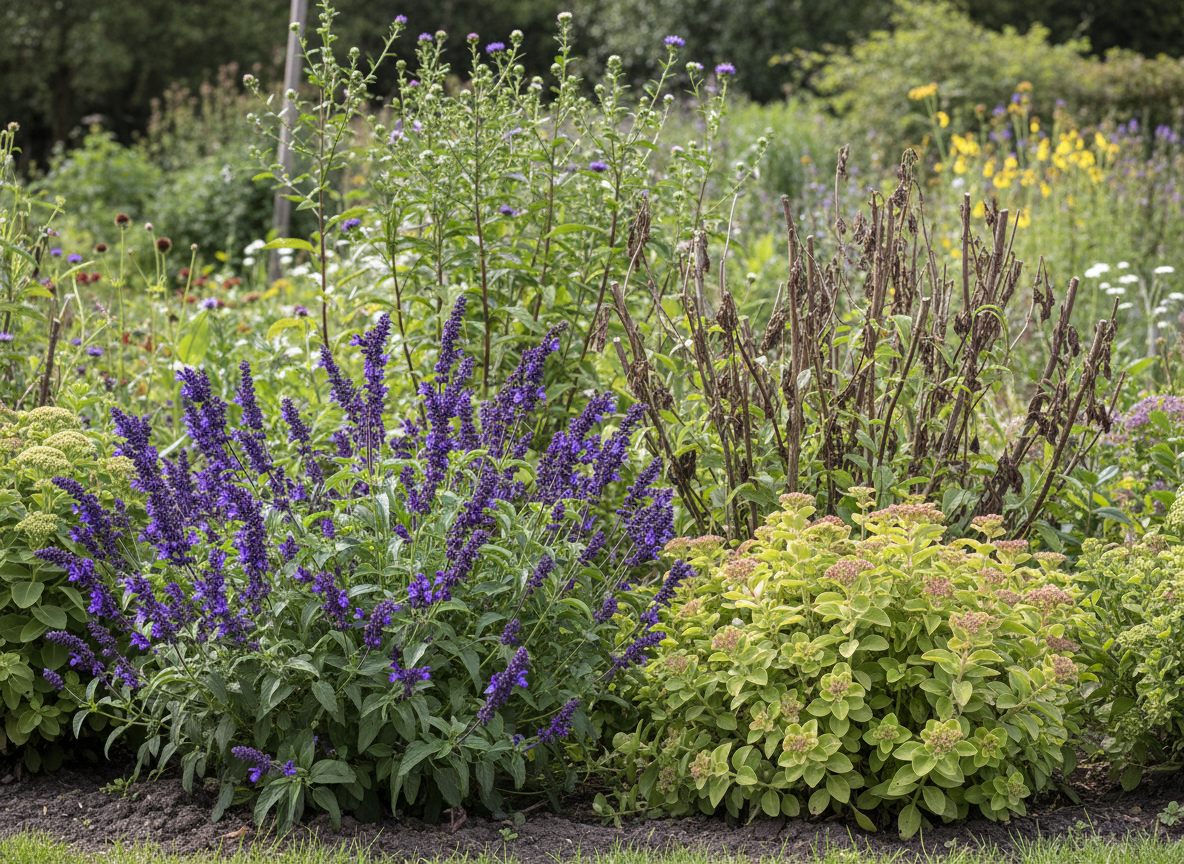 Purple and green plants in a garden — AI-generated illustration
The Plants That Will Punish You
This is where most “Chelsea chop” advice falls down — by treating it as a universal technique. It absolutely is not. A wrongly timed or wrongly targeted chop is just vandalism.
Don’t chop spring or early-summer bloomers. This includes peonies, oriental poppies, irises, lupins, delphiniums, foxgloves, and anything that’s already in bud or flower in late May. You’ll cut off this year’s flowers entirely.
Don’t chop once-flowering plants. If a perennial only blooms once per season on stems formed last year, the chop removes the entire show.
Don’t chop plants that bloom on old wood. Same logic as the hydrangea problem — you’re removing structures that already contain this year’s flowers.
Be cautious with anything weak or recently divided. The chop is a stress event. A plant that’s already struggling with drought, disease, or transplant shock isn’t going to bounce back the way a vigorous clump will.
When in doubt, ask three questions. Does it flower from late July onwards? Is it growing on this year’s new stems? Is it healthy and well-established? Three yeses and you can chop with confidence.
The Timing Trap Nobody Mentions
Here’s where the “Chelsea Show week” rule of thumb starts to break down. The technique is named for late May because that’s when most herbaceous perennials in southern England have made enough growth but haven’t yet committed to flowering. But “Chelsea week” is a London cue. If you garden in northern Scotland, the Netherlands’ coastal climate, or the higher Alpine zones, your plants are running a different schedule.
The actual signal isn’t a date — it’s the state of the plant. Look for these cues:
- Strong leafy growth, 30–60 cm tall. Below that, it’s too early. Above that, you risk cutting off forming buds.
- No visible flower buds yet. If you see colour or tight clusters at stem tips, you’ve missed the window.
- Steady, warm-but-not-hot weather ahead. A chop right before a heatwave or a sudden cold snap stresses an already-stressed plant.
If your perennials are still only knee-high in mid-May, hold off another week or two. If they’re already showing colour by 20 May, you’re better off skipping the chop this year and trying again earlier next season.
The other timing factor that catches people out is the post-chop weather. The plant’s response to being cut depends on getting reliable warmth and moisture in the days afterwards. A chop done before a forecasted dry spell sets the plant back without the conditions to recover. Watching the ten-day forecast is a small step that makes a real difference to how vigorously the plant pushes new growth.
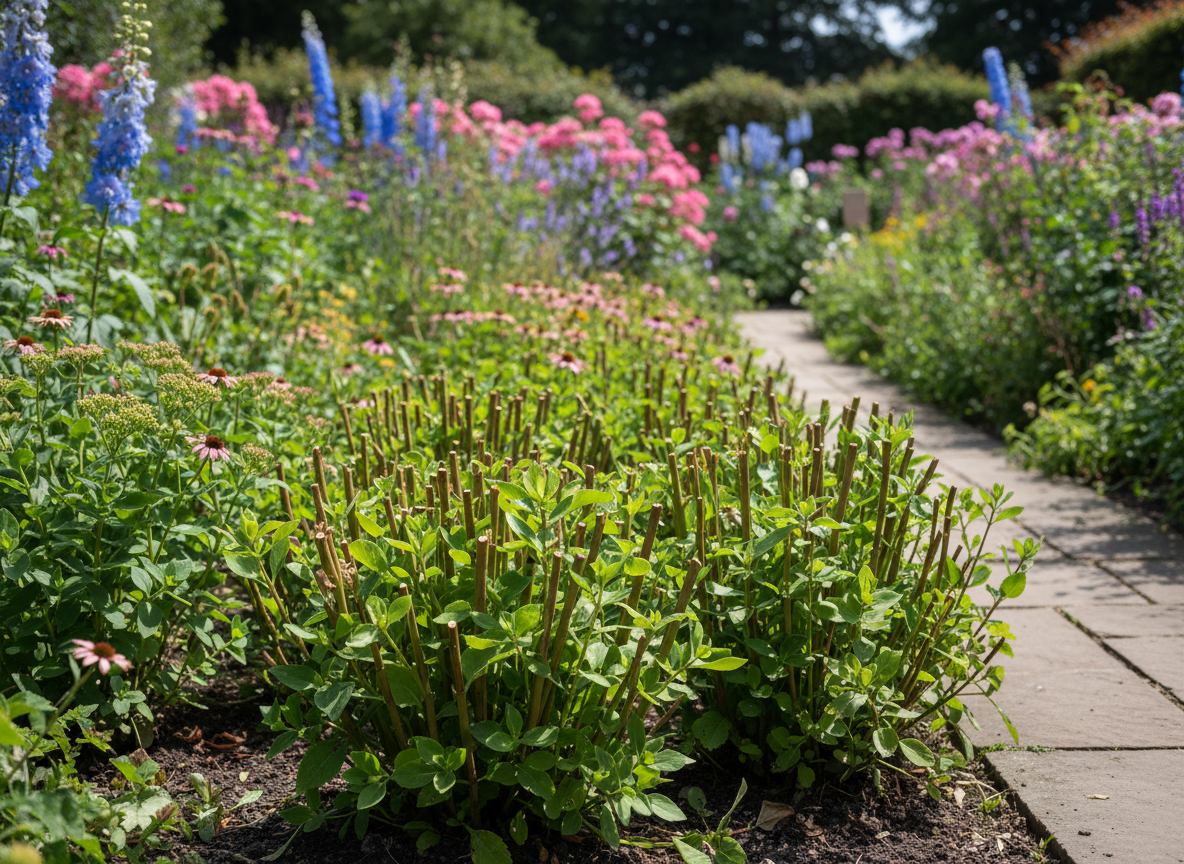 AI-generated illustration
After the Chop: What to Expect
For about ten days after a Chelsea chop, the plant looks rough. There’s no way around this. You’ve taken a leafy, vigorous-looking perennial and turned it into a stumpy collection of cut stems. Several gardeners I’ve spoken to admitted they nearly dug up their first-time chop victims because they were convinced they’d killed them.
Hold your nerve. By two weeks after the cut, you’ll see new shoots emerging from the leaf nodes below each cut. By four weeks, the plant looks fuller and bushier than it did before. By six to eight weeks, it’s flowering — later, lower, and more abundantly than it would have done untouched.
A few practical things help this process along:
- Water deeply once after chopping, especially if rain isn’t forecast for several days
- A light feed of balanced fertiliser supports the regrowth, but don’t overdo nitrogen or you’ll get leaves at the expense of flowers
- Don’t mulch heavily over the cut stems — the new shoots need to find light easily
- Resist a second chop later in the season — once is enough; cutting again means no flowers at all
Why This Technique Belongs in Every Late-Spring Garden Plan
The Chelsea chop is one of those techniques that sounds gimmicky until you see what it does. It’s free, it takes about ten minutes per plant, and it solves two of the most common late-summer border problems — uneven flowering peaks and floppy, collapsing clumps — at the same time.
What it asks in return is correct timing. Cut too early and the plant resents the cut without responding well; cut too late and you remove forming buds. The window is real but narrow, and it shifts with your local climate, your specific plant’s growth stage, and the weather pattern of that particular spring.
This is exactly the kind of timing problem Cresco was built for. Instead of trying to remember which of your perennials should be chopped, when, and based on what conditions, you get a prompt when your specific plants reach the right stage and the local forecast supports it. The app knows that your sedum wants the half-and-half treatment around the third week of May, but only if your last frost has passed and the next ten days look mild enough for vigorous regrowth.
For a technique where the gap between transformative and disastrous comes down to a single fortnight, that kind of timing intelligence is the difference between a border that flowers from June to October and one that peaks in July and then sulks.
What to Do This Week
If late May is approaching and you’ve got perennials in the right group, here’s the short version:
- Walk the border now and identify which plants are late-summer, new-growth bloomers
- Check whether each one is at the right growth stage — strong, leafy, no buds yet
- Decide on full chop, half-and-half, or selective for each plant
- Watch the ten-day forecast — chop into a stable, mild window if you can
- Cut by a third to a half with clean, sharp shears, just above a leaf pair
- Water in, wait, hold your nerve
The Chelsea chop is one of the easiest ways to add weeks of flowering to a perennial border without spending a penny on new plants. Get the timing right, pick the right targets, and your August will look very different from your neighbour’s.
Want a pruning plan that knows which perennials to chop and when your local conditions are right? Try Cresco at cresco-pruning.com.