What reversion actually is
A variegated shrub is not one plant pretending to be patterned. It’s a genetic mosaic — a chimera — built from two different layers of tissue stacked on top of each other. One layer makes chlorophyll normally; the other is partly switched off, which is what gives you the cream margins, gold splashes or white flecks you bought the plant for. The two layers grow side by side in every bud, and most of the time they stay in balance.
Reversion is what happens when that balance slips. Now and then a bud forms almost entirely from the green-capable layer, and the shoot it pushes out has no variegation at all — just plain, solid green leaves. It isn’t a disease. Nothing is eating it. The plant is simply reverting to the fully green form that its variegation was selected away from in the first place. Left alone, that one honest green shoot will quietly try to reclaim the whole shrub.
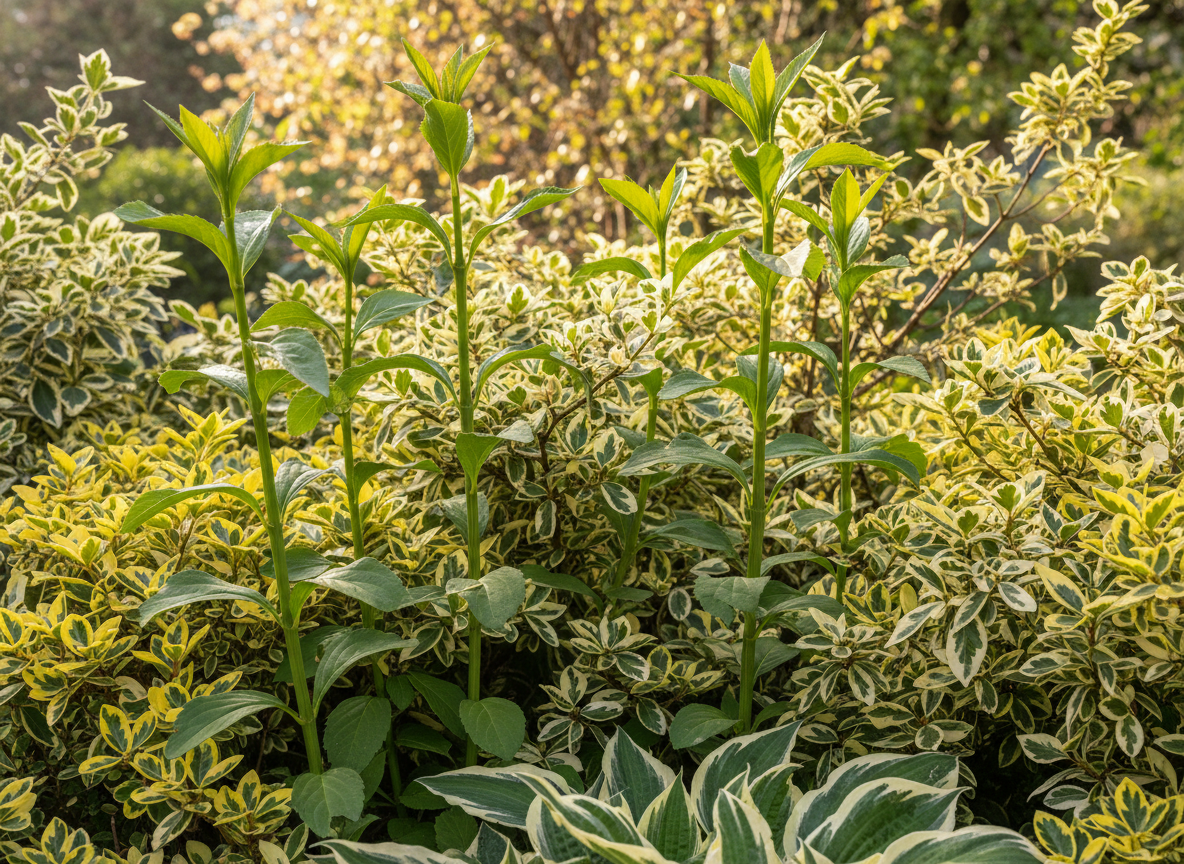 Plain green shoots erupting above a variegated gold shrub — AI-generated illustration
Why the green shoot is already winning
Here’s the part that catches people out: the boring green shoot isn’t weaker than the pretty variegated growth around it. It’s stronger. A lot stronger.
Chlorophyll is the plant’s sugar factory. A solid green leaf is running that factory at full capacity across its entire surface. A variegated leaf has cream or gold zones where there’s little or no chlorophyll, so it photosynthesises less per leaf — that’s the cosmetic trade-off baked into every variegated cultivar. So when an all-green shoot appears, it’s fuelling itself with more sugar than its neighbours, and it spends that sugar on exactly what you’d expect: longer internodes, bigger leaves, faster extension. The RHS is blunt about it — reverted shoots are “much more vigorous” than the variegated plant.
That head start compounds. The green shoot races above the mound, then branches. Its leaves shade the variegated growth beneath, which already photosynthesises poorly and now does so in shadow — so it weakens further. Within a single season a reverted shoot can go from a curiosity to the dominant leader, and within two the shrub you paid a premium for is an ordinary green bush. It’s not a fair fight, and the variegated tissue loses every time you don’t intervene.
The shrubs that revert — and the one group that does the opposite
Reversion turns up most often on the vigorous evergreens that get sold by the thousand as easy, structural plants. Watch these especially closely:
- Variegated euonymus (Euonymus fortunei ‘Emerald Gaiety’, ‘Emerald ‘n’ Gold’) — the classic offender, throwing plain green whips from the heart of a low gold mound.
- Elaeagnus (Elaeagnus × ebbingei ‘Gilt Edge’, E. pungens ‘Maculata’) — big, fast shrubs that will launch a green leader a foot above the canopy in weeks.
- Evergreen ceanothus, variegated ivy (Hedera), variegated dogwoods (Cornus), pittosporum and photinia all do it too.
There’s one important exception that flips the rule. Some variegated plants — variegated hollies (Ilex) chief among them — sometimes throw shoots that go the other way: pale yellow or near-white, with even less chlorophyll than the variegated norm. Those shoots are weaker, not stronger, so they can’t take over the plant. You may still want to remove an all-cream shoot because it looks odd or scorches in sun, but it isn’t the slow-motion takeover that a solid-green shoot is. The urgency is all about the green ones.
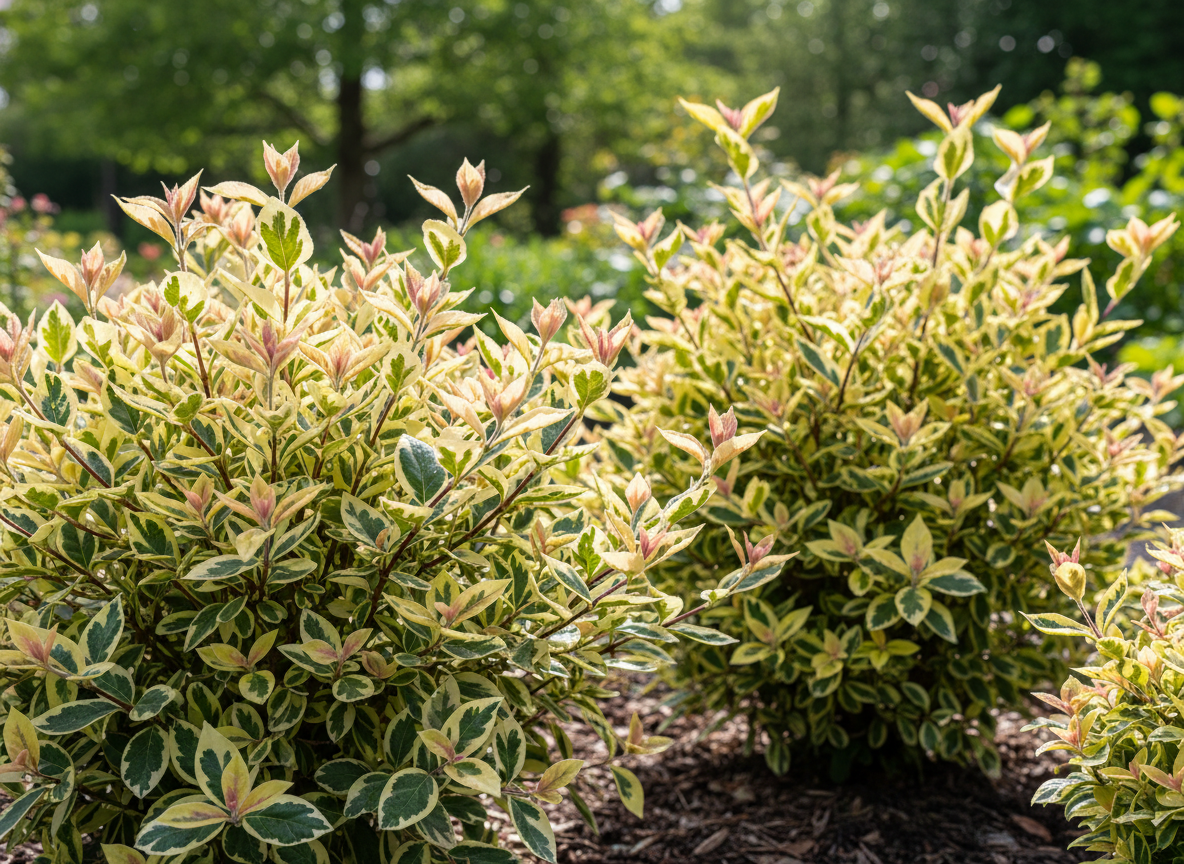 Variegated shrubs in a garden under natural daylight — AI-generated illustration
Why late May into June is when you catch it
Reversion can appear at any time, but late spring is when it both shows up and matters most. The spring flush is at full throttle right now, so a reverted bud expresses itself fast and obviously — a plume of solid green standing clear above the cream-and-gold, usually with bigger leaves and a coarser texture than everything around it. Against the patterned foliage it almost glows once you know what you’re looking at.
The timing window is the real point. Catch it now and you’re removing a single, accessible shoot with one cut. Leave it until high summer and that shoot has branched, woven itself into the framework, and set buds of its own — so removing it means a much bigger hole and a much bigger setback. In winter, on a deciduous variegated shrub, you can’t see it at all. The job is easiest, smallest and least damaging in the next few weeks, which is exactly why it belongs on the late-May list. Then keep checking: a quick look once a month through the growing season catches the next one while it’s still small.
Snipping the green leaves does nothing — trace the shoot to its origin
This is where most reversion “fixes” fail. The instinct is to grab the green tip, pull off the offending leaves, or shorten the shoot by a few centimetres so it stops standing out. None of that works, and here’s why: the bud that produced the reverted shoot is still on the plant, still made from that dominant green layer, and it will simply push again — often with two or three shoots where there was one.
The fix is to follow the all-green shoot all the way back to where it joins the plant — a framework branch, or the very base — and cut it out cleanly right there. The RHS guidance is to “prune out the reverted shoot completely,” or at the very least cut back into wood that still carries variegated leaves. Cutting to the point of origin is the safer of the two, because it leaves no green-tissue stub waiting to break out again. Use sharp secateurs, cut just above the junction without leaving a snag, and don’t compromise: a 10 cm stub of reverted wood is a problem you’ve postponed, not solved.
If you’re working on a grafted variegated plant — some variegated maples and standards are grafted — and the green growth is coming from below the graft union or straight out of the ground, that’s a rootstock sucker rather than true reversion. Same principle, different address: trace it below the graft and remove it there.
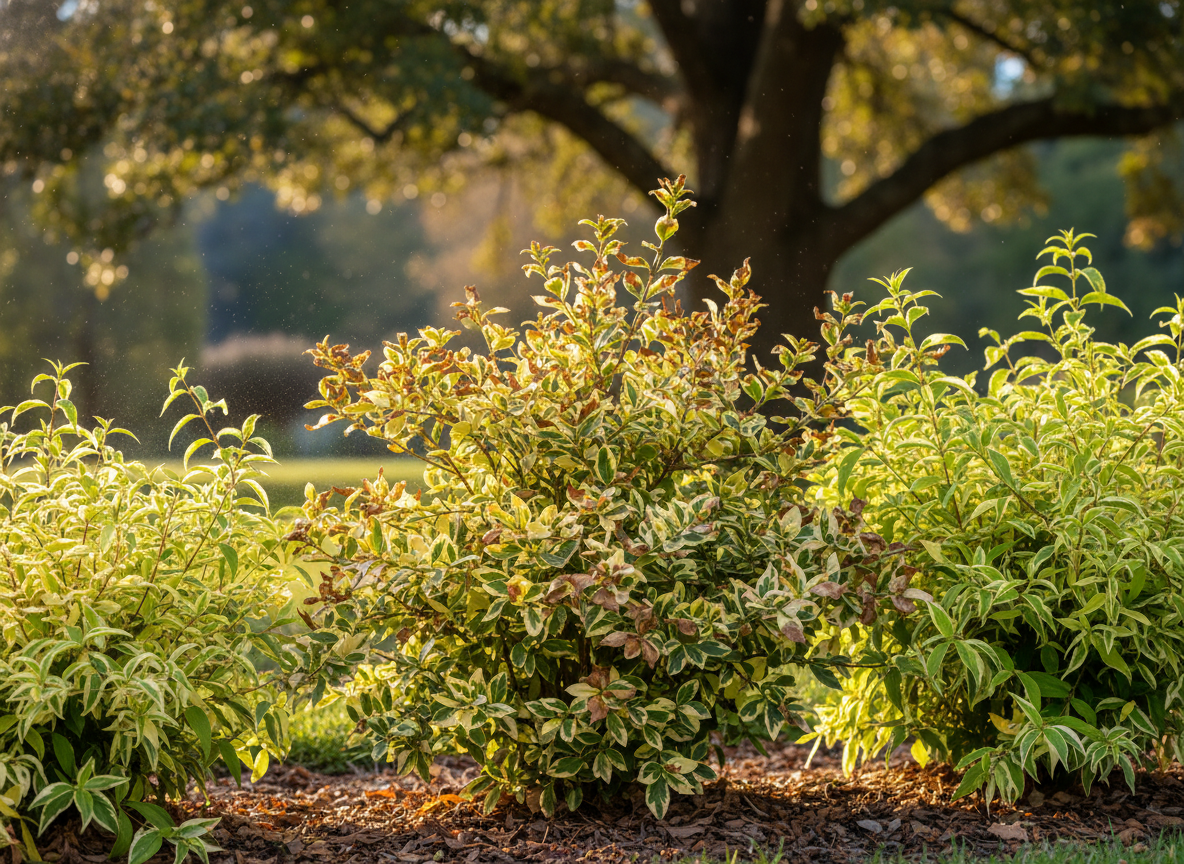 Variegated shrubs in good light, where reversion is less likely to gain a foothold — AI-generated illustration
What triggers it — and how to lower the odds
Reversion is partly just the luck of the draw: an unstable chimera will occasionally produce a green bud no matter how well you grow it. But three things tip the odds, and two of them are in your hands.
The first is light. Variegated plants carry less chlorophyll, so in deep shade they’re effectively running on half rations — and a shrub that’s short of light is more inclined to throw the vigorous green growth that photosynthesises better. Plant your variegated euonymus or elaeagnus in reasonable light, not a dark corner, and you remove some of the pressure that drives reversion in the first place.
The second is damage. A hard frost, a snapped branch or a clumsy hedge-trim can knock out the variegated layer along one branch and let the green layer take that wood over. If a branch comes through winter looking battered, watch it — it’s a likely site for a green break.
The third you can’t control but should recognise: some cultivars are simply more stable than others. If a plant reverts repeatedly no matter what you do, it may be a weak selection, and there’s no shame in replacing it with a better-behaved variety. The single most effective thing you can do, though, is the boring one — remove every green shoot the moment you see it, so the green genetics never get the foothold they need to compound.
Reading your shrub this week
Give each variegated shrub sixty seconds. Stand back first and let your eye travel across the canopy: a reverted shoot usually breaks the outline, standing proud of the mound as a tuft or plume of solid green. Then get in close and check the interior, because the first green shoots often start deep inside where the light is worst and you won’t spot them from the path.
When you find one, trace it down with your fingers to where it emerges and cut it out there — not at the tip, not halfway, at the origin. Do the same for every green shoot on the plant in one pass. Then make a note to look again in three or four weeks, because removing a reverted shoot frequently prompts the same area to try again, and the follow-up check is what actually keeps the cultivar true over the years. This isn’t a once-a-season job; it’s a habit you run all summer, and it takes a minute once your eye is in.
Let Cresco keep the habit for you
The hard part of reversion isn’t the cut — it’s remembering to look before the green shoot has already won. That’s exactly the kind of small, recurring, plant-specific job that falls through the cracks of a generic garden calendar.
Cresco builds a care schedule around the actual plants in your garden and your local season, so a variegated euonymus or elaeagnus gets a “check for reversion” nudge through the months it matters — not a one-size-fits-all reminder in the wrong week. Snap a photo, let Cresco identify the plant and its quirks, and let it carry the calendar so you can just do the minute of work when it counts. Your variegation stays the variegation you paid for.