What a browning cone is actually doing
Each of those long buddleia “cones” is a panicle built from hundreds of tiny nectar florets, opening from the base of the spike upwards over a week or two. While it’s purple and humming with tortoiseshells and peacocks, the plant is feeding pollinators. The moment the last florets fade and the cone turns fox-brown, the job changes: the plant stops making nectar and starts pouring its energy into seed.
That switch is the whole reason a butterfly bush left alone looks tired by mid-August. It isn’t running out of steam — it’s decided the season is over and is busy ripening a crop. A single Buddleja davidii can set hundreds of thousands of seeds, which is exactly why you see it self-sown on railway embankments, roof gutters and old walls all over the country. Deadheading in July flips that decision back the other way.
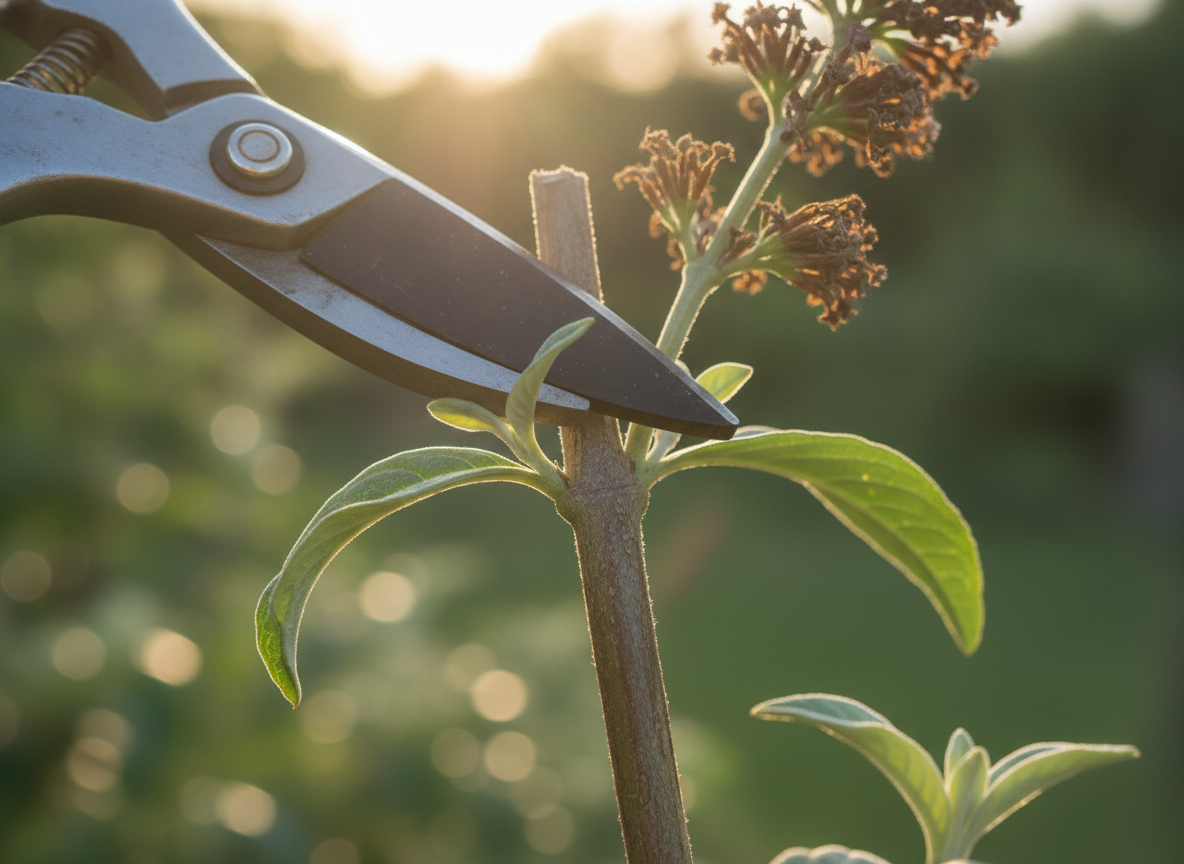 Pruning shears are shown cutting the stem of a buddleia plant above a pair of buds — AI-generated illustration
Cut to the next pair of buds, not the base
Deadheading a buddleia is not the hard March prune, and confusing the two is the most common mistake. Don’t shear the whole shrub. Instead, follow each spent cone down its stem to the first strong pair of leaves or the first pair of side-shoots below the flower, and snip just above them.
Those buds are already there, waiting. Relieved of the seed-set signal, the plant breaks them into two new flowering side-shoots within two to three weeks — so where you removed one fading spike, you get two fresh ones. The new cones are usually a little shorter than the first flush, but there are far more of them, and they keep coming.
Do it whenever a cone browns, not on a fixed day. In a warm early-July spell the first spikes go over fast, so walk the shrub once a week with secateurs and take everything that’s finished. It’s five minutes a plant. Keep it up and a healthy B. davidii will still be throwing purple in October, long after the un-deadheaded ones down the road have gone to brown rag.
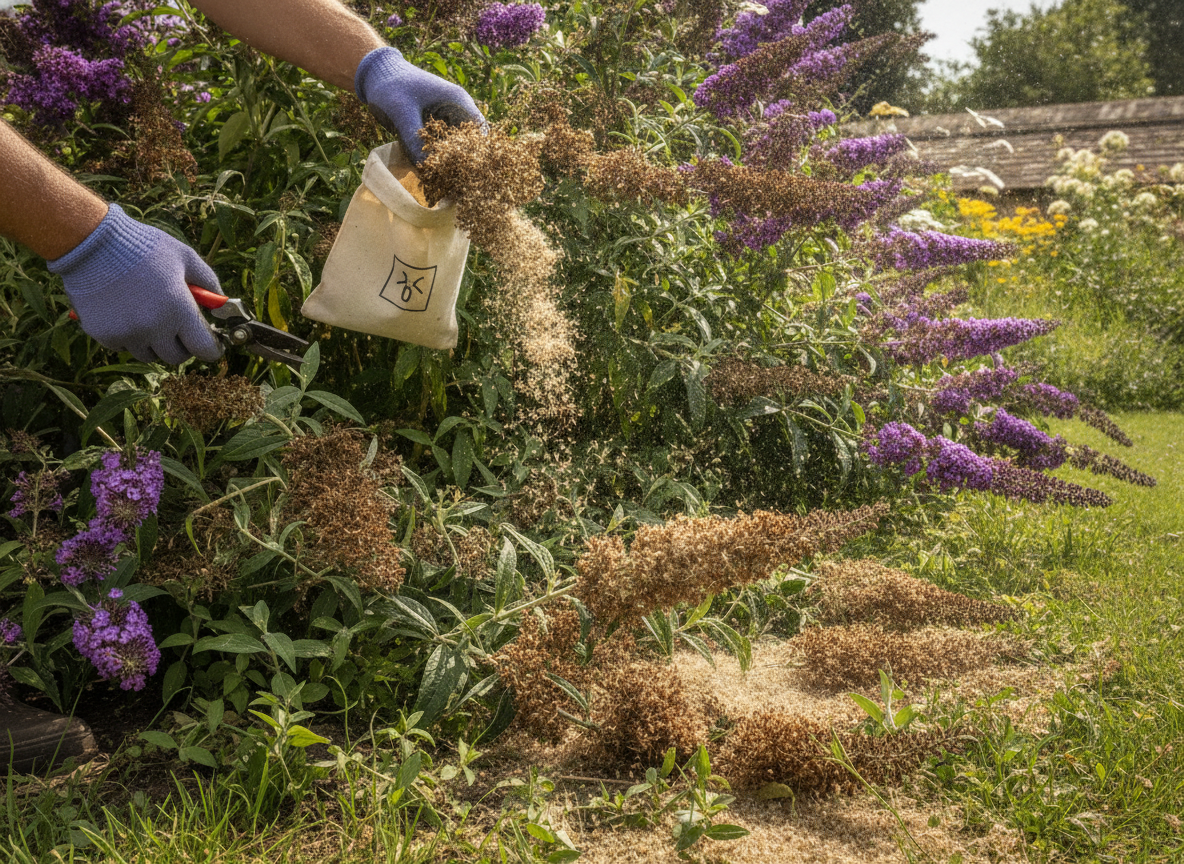 A person in gloves cuts seed pods from a buddleia bush, spilling them — AI-generated illustration
The seed problem, and why the RHS bothered to test it
This isn’t just tidiness. In an RHS trial run from 2010 to 2012, plants that were deadheaded flowered for longer and produced far fewer self-sown seedlings than plants left to their own devices. Both things at once: a better show for you, less of a nuisance for everyone downwind.
That matters more with buddleia than with almost any other garden shrub. It’s genuinely invasive — light, wind-borne seed by the hundred thousand, germinating in mortar joints and ballast where nothing should grow. Every brown cone you remove before it ripens is seed that never leaves your garden. If you’d rather not deadhead at all, the low-fertility cultivars — ‘Miss Ruby’, ‘Miss Molly’, the Lo & Behold and Flutterby series — set little or no viable seed and are worth seeking out when you buy.
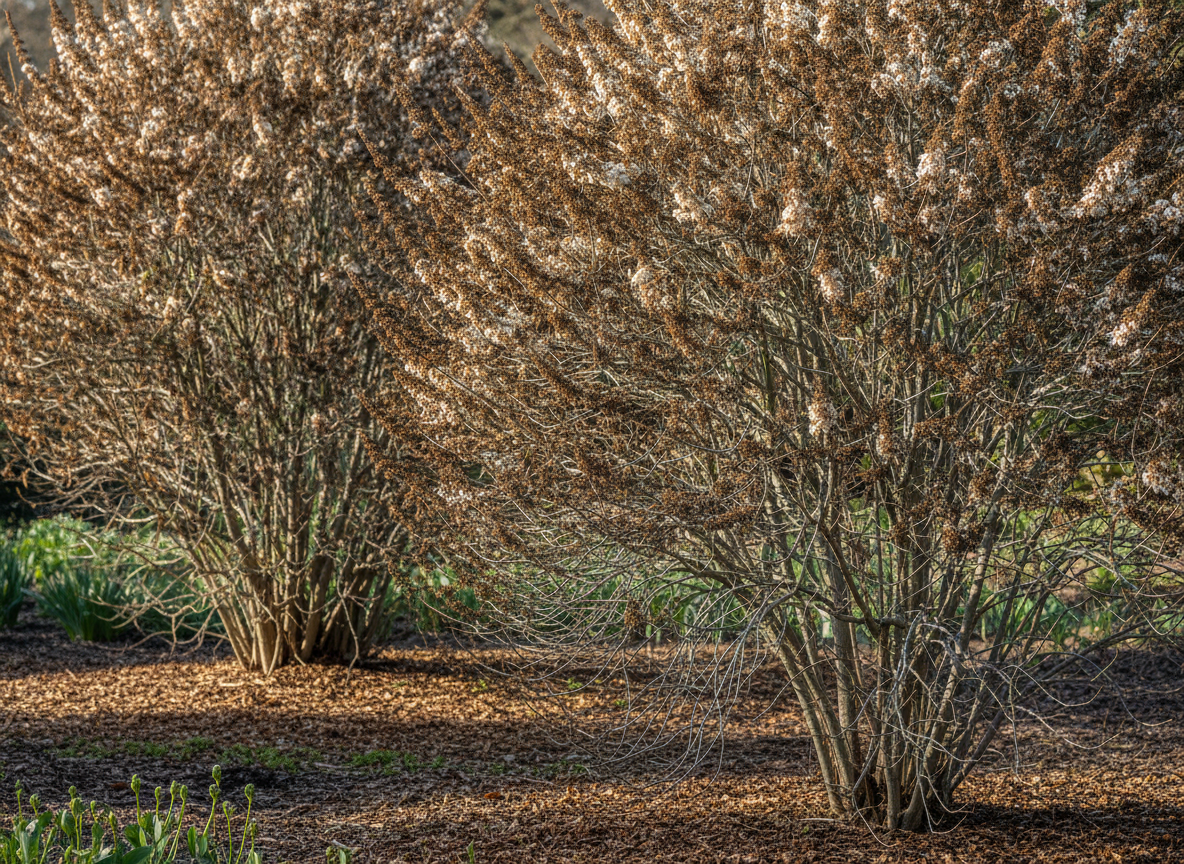 Two buddleia bushes with dried flowers in a garden — AI-generated illustration
Leave the hard cut for spring
One thing not to do in summer, and not in autumn either: don’t cut the shrub down to a stump now. Buddleia flowers on the current season’s growth, and the renovation prune — taking the whole framework back to a low knuckle of old wood — belongs to early spring, around March, once the worst frosts have passed. Do it now and you throw away the very growth that’s about to flower.
On an exposed, windy site you can shorten the longest stems by about a third in late autumn to stop the plant rocking loose in winter gales, but that’s a stability trim, not a prune. Save the real cut for spring. Through summer, the only tool the plant wants near it is the pair of snips taking off spent cones.
The rhythm, not the date
Buddleia rewards a habit more than a diary entry. It’s the same logic behind cutting salvias back to their side-shoots to keep them going till frost, or the early-July Hampton hack that resets tired perennials for a second flush — remove the spent flower before the plant commits to seed, and it flowers again. With a buddleia the window is open from now until the first hard frosts, and every brown cone you take is a fortnight of extra nectar for the butterflies the shrub is named for.
If you’d rather not keep the timing in your head, that’s exactly what Cresco is for: tell it what’s in your garden and it tells you which shrub needs the secateurs this week — deadheading now, the hard prune flagged for March — tuned to your own local weather rather than a generic calendar.