One flower, one day — that’s the whole plant in a name
The daylily wears its habit in its Latin name. Hemerocallis comes from the Greek hemera, day, and kallos, beauty: beautiful for a day. Every flower a daylily opens lasts a single day. It unfurls in the morning, holds through the afternoon, and by evening it has folded shut, gone soft, and started to rot. There is no bringing it back.
What keeps the plant looking generous for weeks is not any one flower but the scape — the tall, leafless flower stem — which carries a fistful of fat buds that open one after another over a fortnight or more. So a clump in full swing is doing two things at once every day: opening a fresh flower and killing off yesterday’s. That second half is the bit that makes the difference between a daylily that looks crisp all July and one that looks like it’s melting.
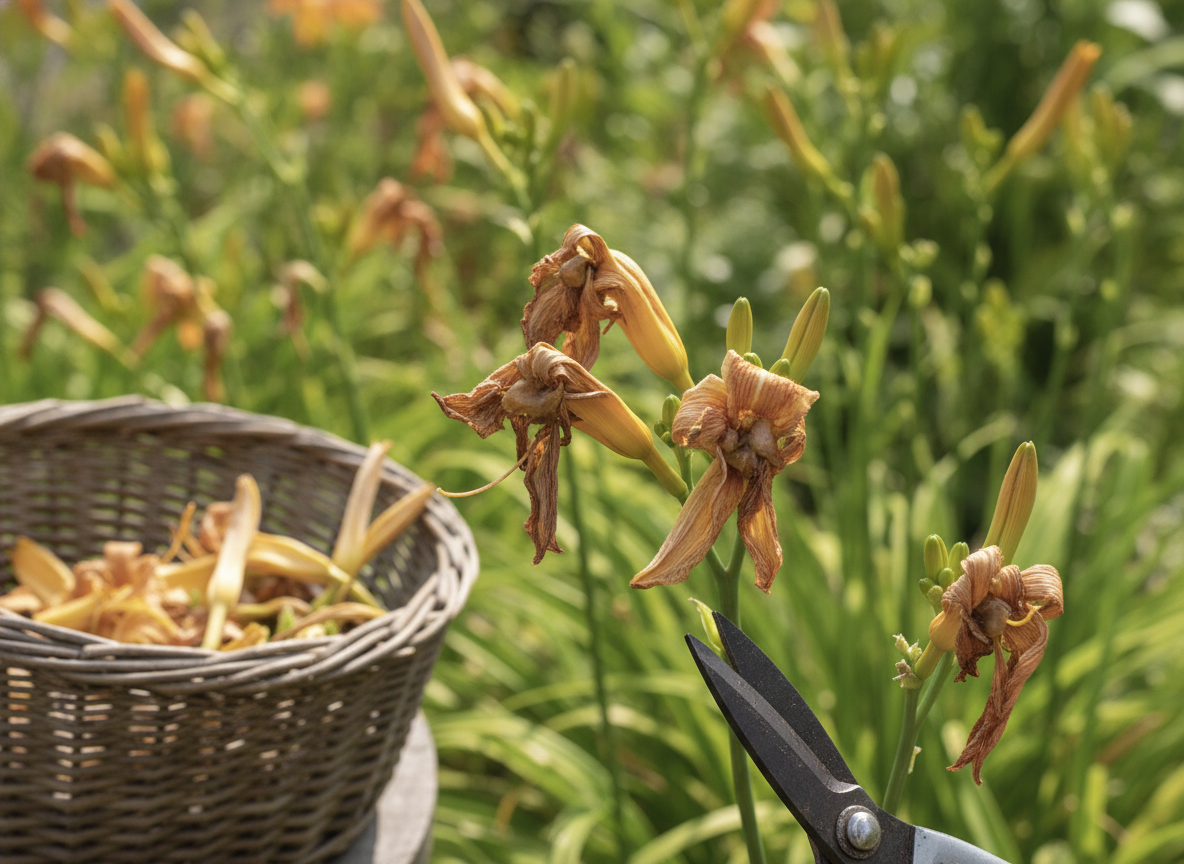 . A basket of spent daylily blooms next to pruning shears in a garden — AI-generated illustration
Deadhead the spent blooms daily — and why the mush matters
A finished daylily flower doesn’t dry and drop the way a rose petal does. It collapses inward into a wet, translucent tube of slime that clings to the top of the scape, right next to the fresh flowers opening beside it. Left alone, a clump that’s genuinely beautiful in the morning is speckled with brown mush by the afternoon, and the contrast makes the whole plant read as tired even while it’s flowering hard.
So the single most useful thing you can do for a daylily in July is walk past it once a day — evening is ideal, once the day’s flowers have gone over — and pinch off every spent bloom. Take the collapsed flower between finger and thumb where it joins its short stalk, and snap it off cleanly. It comes away in a second, and a whole clump takes a minute or two. Do it daily and the plant never looks anything but fresh.
There’s more to it than tidiness, though. Behind each spent flower, a daylily will try to set a fat green seed pod, and ripening seed is one of the most energy-hungry things a plant does. Every pod you let form is energy pulled away from the buds still to open — and, on the modern reblooming kinds, away from the second flush of scapes the plant might send up later. Snapping off the spent flowers before pods can swell keeps that energy where you want it.
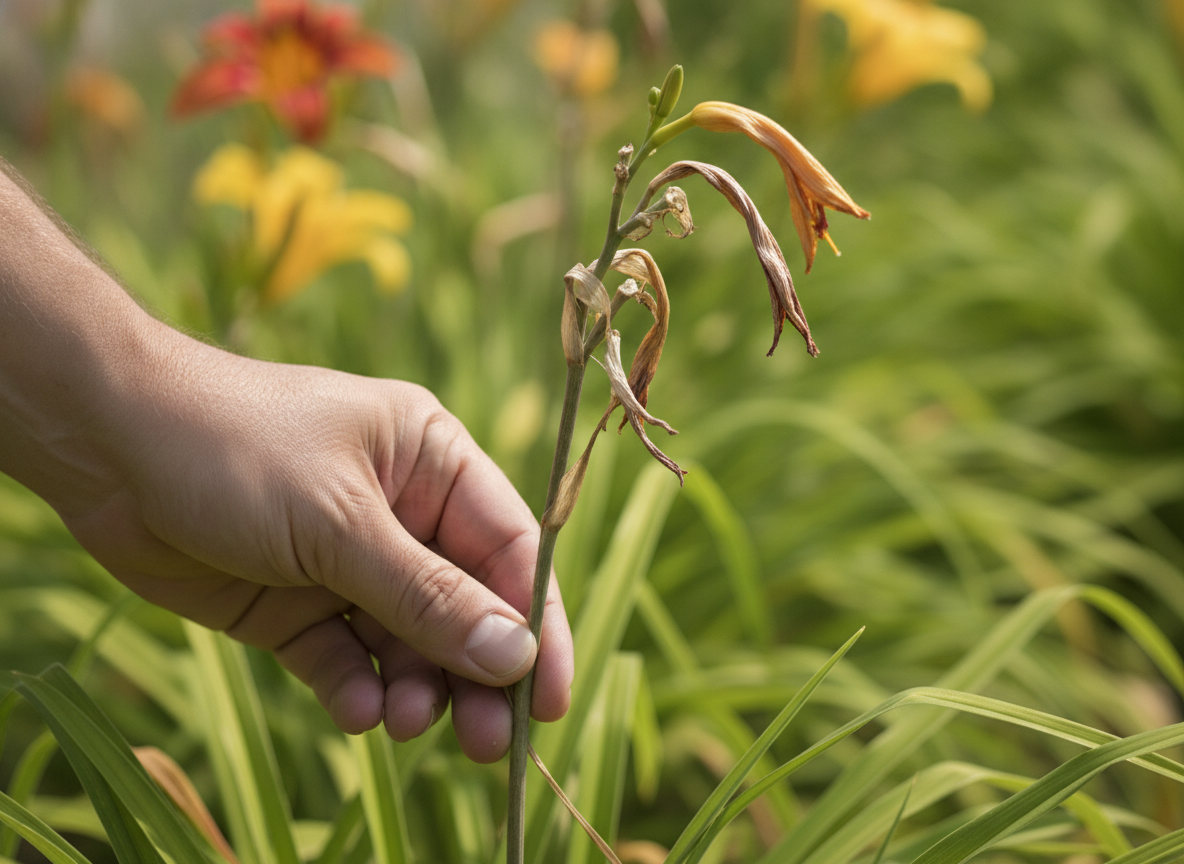 . A hand snaps off a daylily scape with spent flowers — AI-generated illustration
Snap off the whole scape once its last bud has flowered
Deadheading spent flowers keeps the plant tidy day to day, but it isn’t the end of the job. Each scape has a finite number of buds, and once the last one has opened and gone over, that stem’s work is finished. What’s left is a bare, brownish stick standing above the foliage — and it won’t flower again.
Follow that spent scape all the way down, past the leaves, to where it emerges from the base of the plant, and cut or snap it off there at ground level. Take the whole stem, not just the top: a clump studded with leafless stalks looks half-finished in a way that a clean cushion of strappy leaves never does. On a well-grown plant the scapes come away with a firm sideways snap; if a stem is tough or you’d rather be neat, use snips right down at the base.
The one thing you don’t touch is the foliage. Those arching, grass-like leaves are feeding the plant and — on reblooming kinds — building next month’s flowers. Cutting them back now just weakens the clump. Leave the leaves; remove only the finished flower stems.
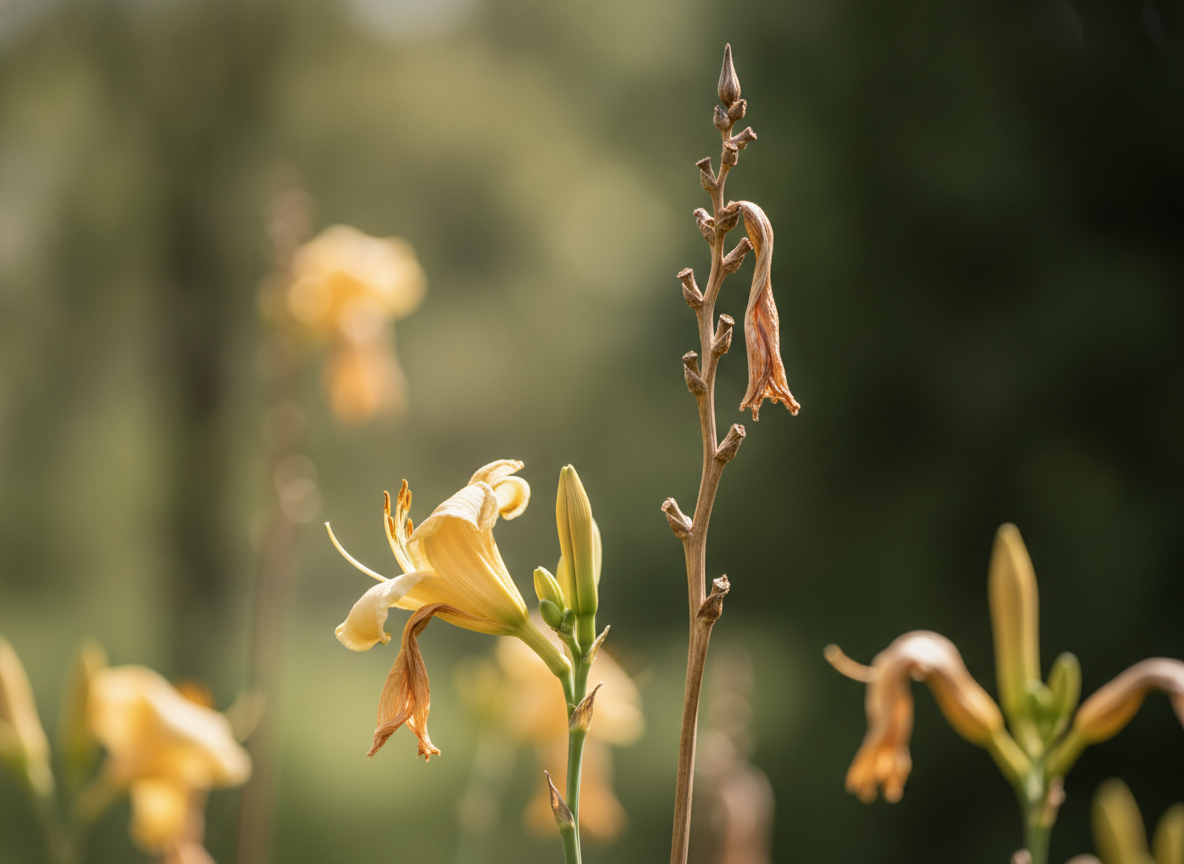 Daylilies, spent flowers, and spent scapes in a garden — AI-generated illustration
Spent flower or spent scape? A quick way to tell them apart
The two jobs get muddled because they happen on the same plant at the same time, so here’s the simple test. Look at the individual flower: if it’s collapsed and soft but there are still fat, unopened buds on the same stem, you’re deadheading — pinch off just that one spent bloom and leave the scape. Look at the whole stem: if every bud on it has already flowered and there’s nothing left but withered ends and maybe a swelling pod or two, you’re done with the scape — take the entire stem down to the base.
In practice a July daylily wants both, a few days apart: daily flower-pinching while the scape is still opening buds, then one clean removal of the exhausted stem once it’s spent. It’s the same finish-the-job logic behind snapping rather than snipping a rhododendron’s spent trusses — get the whole spent structure off, not just the obvious brown bit on top.
Rebloomers earn a feed — and a good soak
Most older daylilies flower once, gloriously, for a few weeks and then are done for the year; for those, deadheading and scape removal are purely about keeping the clump smart. But a lot of what’s sold now are reblooming or remontant kinds — ‘Stella de Oro’, ‘Happy Returns’, the Rainbow Rhythm and Bloom-a-Thon types — bred to send up a second and even third set of scapes later in summer if you keep them going.
Those are the ones where the July tidy-up pays a real dividend. Keep every spent flower and every finished scape removed so no energy leaks into seed, then, once the first flush is over, water the clump well in dry weather and scatter a handful of general fertiliser around the base. That combination — no seed set, plus food and water — is what coaxes a reblooming daylily into a fresh wave of scapes from late summer, rather than calling it quits after the first show. It’s the same trick that keeps salvias throwing flowers until frost when you cut them right: stop the plant setting seed, and it keeps trying to.
For a once-flowering daylily, none of the feeding matters — just deadhead for looks and cut the scapes when they’re spent. Not sure which kind you’re growing, or when your particular clump wants its scapes removed? Cresco can tell you, plant by plant, on your own garden’s weather.