The cut is a date in the diary, not a job for “sometime”
English lavender (Lavandula angustifolia — the hardy ‘Hidcote’ and ‘Munstead’ kind) opens its spikes in late June and holds colour through July. The moment that purple starts to grey and the bees move on, the clock starts. That’s your window: trim within a week or two of the flowers fading, while there’s still plenty of summer left for the plant to put on a flush of fresh silver growth before winter.
The RHS is blunt about the deadline — finish by early October, preferably well before. A lavender cut in late summer goes into winter as a tight, leafy dome. A lavender cut in October, or not at all, goes into winter as an open, sprawling mess that splits under the first wet snow.
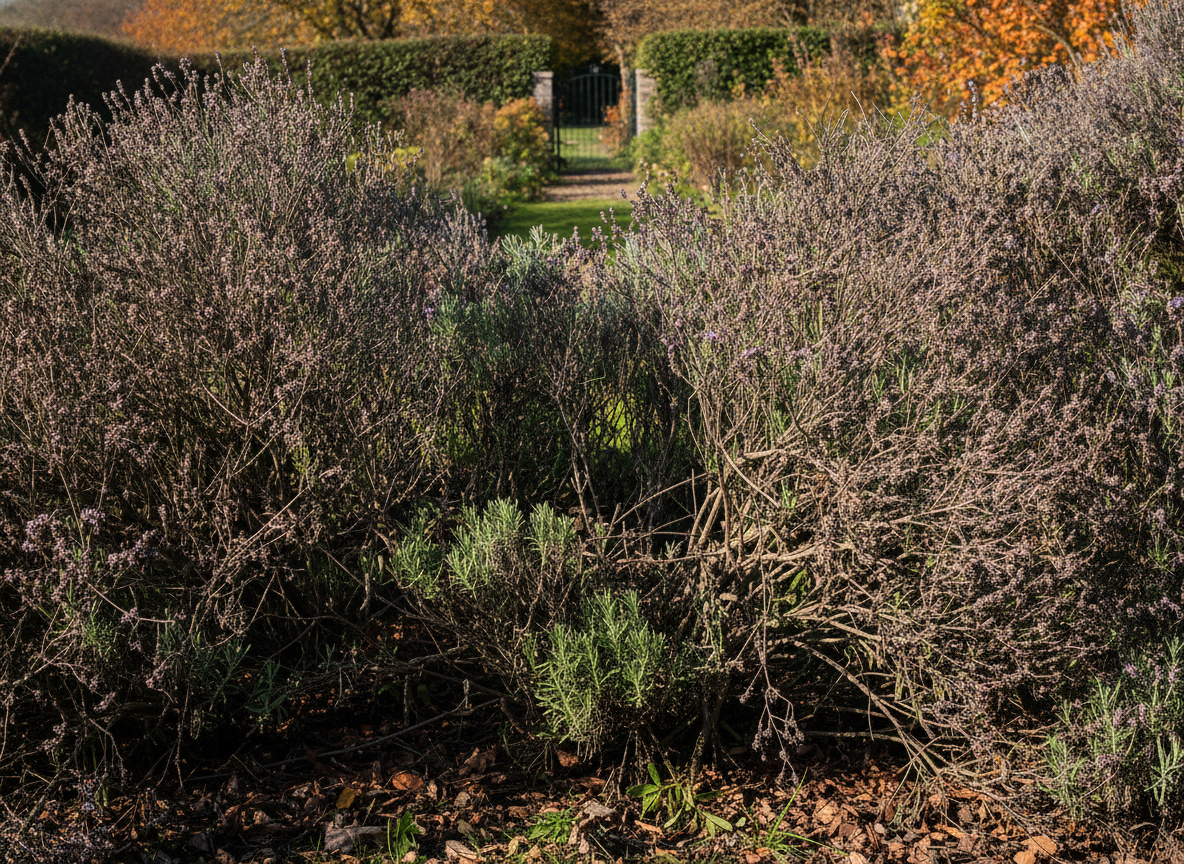 A garden scene with lavender plants in the foreground and a gate in the background — AI-generated illustration
Why you can’t just leave it till autumn
It’s tempting to enjoy the dried spikes and deal with the plant “later.” The problem is what lavender does when it isn’t cut: it lengthens. Every season the flowering stems extend a little further from the base, and the woody framework underneath them creeps upward and outward. Skip a couple of years and you get the classic sight — a bare, grey, gnarled base with a thin halo of leaf and flower balanced on top, falling open in the middle like a split bun.
That shape is almost impossible to undo, and the reason is the single most important fact about this plant.
The one cut that kills lavender
Never cut into the bare, woody stems. Unlike a rose or a buxus, lavender does not break new growth from old wood. Slice down into that grey, leafless base and the stub just sits there — no buds, no shoots, often a slow die-back of the whole branch. There is no hidden reserve of dormant buds waiting in the wood the way there is in a beech hedge or a hardy shrub.
So every cut you make has to land in the soft green growth, above the woody part. Leave a collar of leafy shoots on every stem and the plant rebuilds from them next spring. Leave bare wood and you’ve simply created a dead stub. This is the same hard rule that governs sun-loving Mediterranean sub-shrubs generally — it’s why the rock-rose never grows back from old wood and why broom needs a light trim every single year. Miss a year on any of them and the green retreats up the stem out of reach.
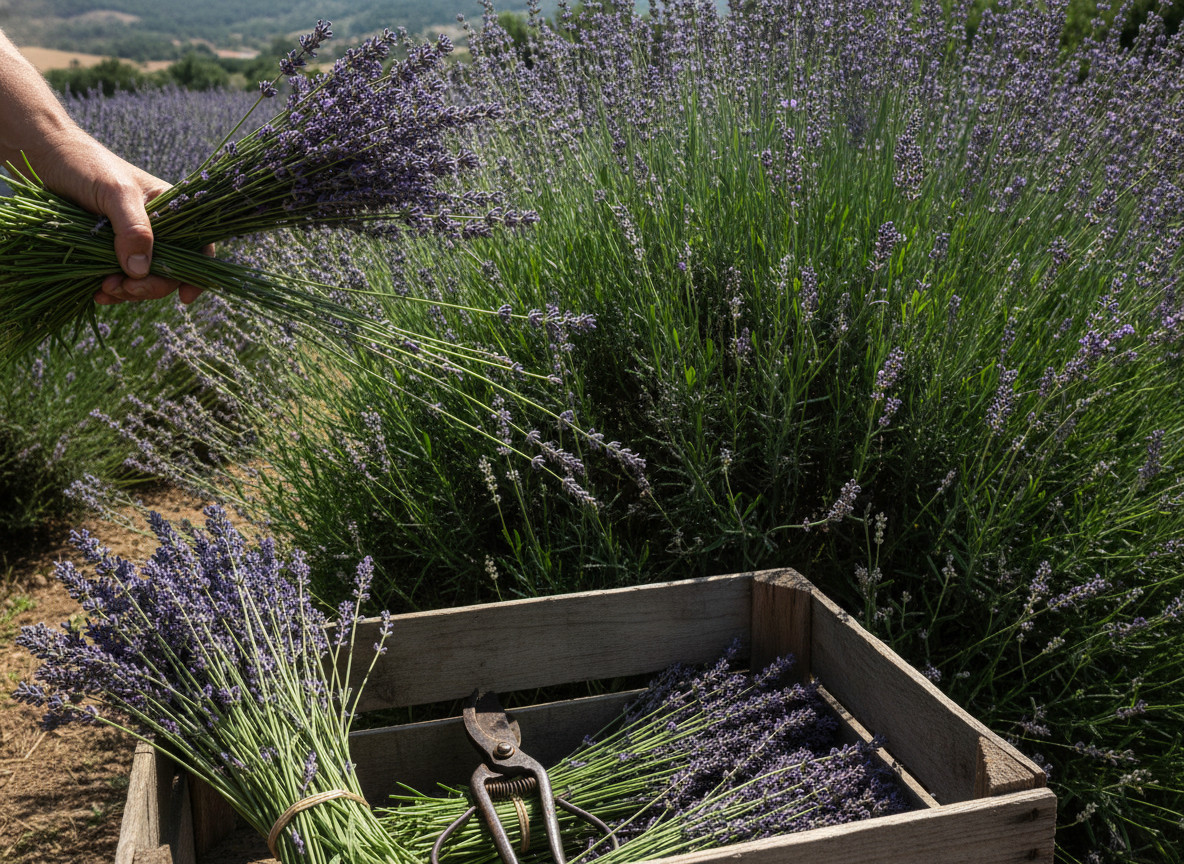 . A person harvests lavender bundles next to a wooden crate and pruning shears — AI-generated illustration
How much to take — and how to find the green
Two safe approaches, depending on the plant’s age:
- The standard annual trim: remove the spent flower stalks plus about 2.5 cm (an inch) of the leafy growth below them. Light, quick, keeps a young plant tight.
- The “third off” tidy: on an established, slightly leggy plant, shear the whole dome back by up to a third — but stop a good two fingers’ width above the woody part, always cutting into leaf.
The trick is to look before you cut. Run your hand into the dome and find where the green leaf stops and the bare grey stem begins. Keep every cut above that line. A neat hemisphere is the goal — shaping the whole plant into a tight mound now means more flowering stems, evenly, next year.
English, French and Spanish are not the same plant
Timing depends on which lavender you have:
- English lavender (L. angustifolia) and the lavandins (L. × intermedia) — one main flush, so one main prune, right after flowering in mid-to-late summer.
- French and Spanish lavender (L. stoechas) — the ones with the tufty “rabbit ears” on top of the flower. These flower earlier and longer, so give them a light shear after the first flush fades to push a second showing, then a final tidy in late summer. They’re also less hardy, so don’t cut them hard going into a cold winter.
If you’re not certain which you’ve got, the ear-tufted flower means stoechas; a plain narrow spike means English.
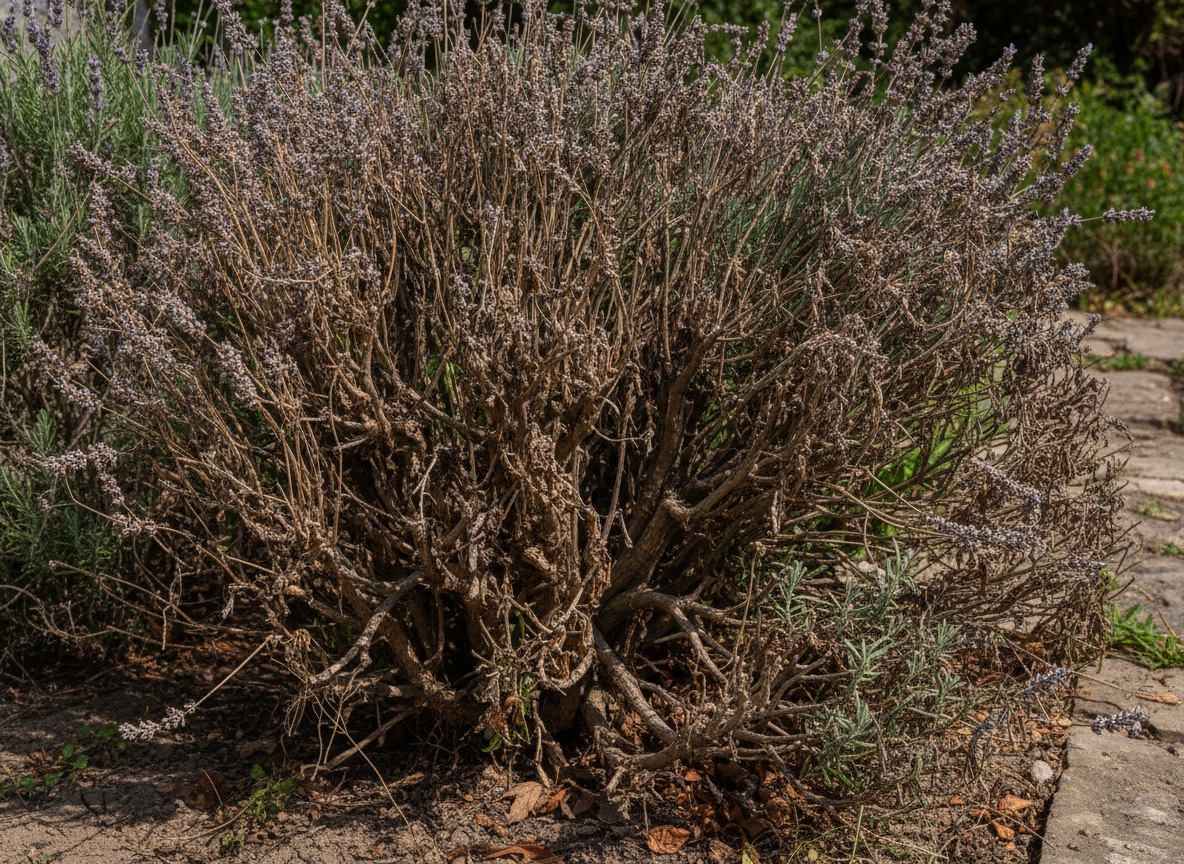 A woody, overgrown lavender bush in natural daylight — AI-generated illustration
If yours is already a woody mess
A lavender that’s gone bare and split is, honestly, usually past saving — cutting hard into that old wood to “reset” it is the one move that finishes it off. You have two realistic options. Replace it (lavender is cheap, fast, and happiest young), or attempt a slow rescue: each summer, cut to within a hand’s width of the bare wood and only where you can still see a few green shoots, then repeat a little lower the next year. Sometimes it sprouts further down and you renew the framework over two or three seasons. Often it doesn’t. Manage your expectations.
The real lesson is the one that prevents all of this: trim a little, every single year, while the plant is still young and green. A lavender never trimmed for five years can’t be fixed in one cut. A lavender trimmed every July stays tight and floriferous for a decade or more.
The yearly habit
Put it in the calendar where you won’t miss it: when the flowers fade, cut. That’s the whole discipline. If you want every plant in the garden tracked the same way — the right window, judged against your local weather rather than a generic date — that’s exactly what the Cresco pruning calendar is built to do. Lavender included.