The first flush is finishing — and one-stem deadheading won’t bring it back
By the last week of June a geum that was a sheet of orange, red or apricot in May has thinned to a few tired flowers waving about on long, wiry stems. The clump of low, scalloped leaves at the base still looks fine, but the colour up top has gone, and what’s left is a thicket of bare flower stalks with the odd bloom hanging on at the end.
Most people respond by deadheading — following one spent stem down, snipping it off, and moving on to the next. That keeps the plant tidy and stops it setting seed, which is worth doing. But on a geum that’s genuinely going over, picking off flowers one at a time only slows the decline. The plant is still carrying a forest of old stems, still putting energy into ripening the last seeds, and still reading the season as nearly done. You get a thinner and thinner trickle of flowers rather than a real second wave.
The fix is to stop being delicate about it. When the first flush has clearly faded — not the odd spent bloom, but most of the colour gone — you cut the whole plant back in one go, right down to the fresh leaves at the base. That single hard cut is what triggers a proper second flush, and early July is the moment to make it.
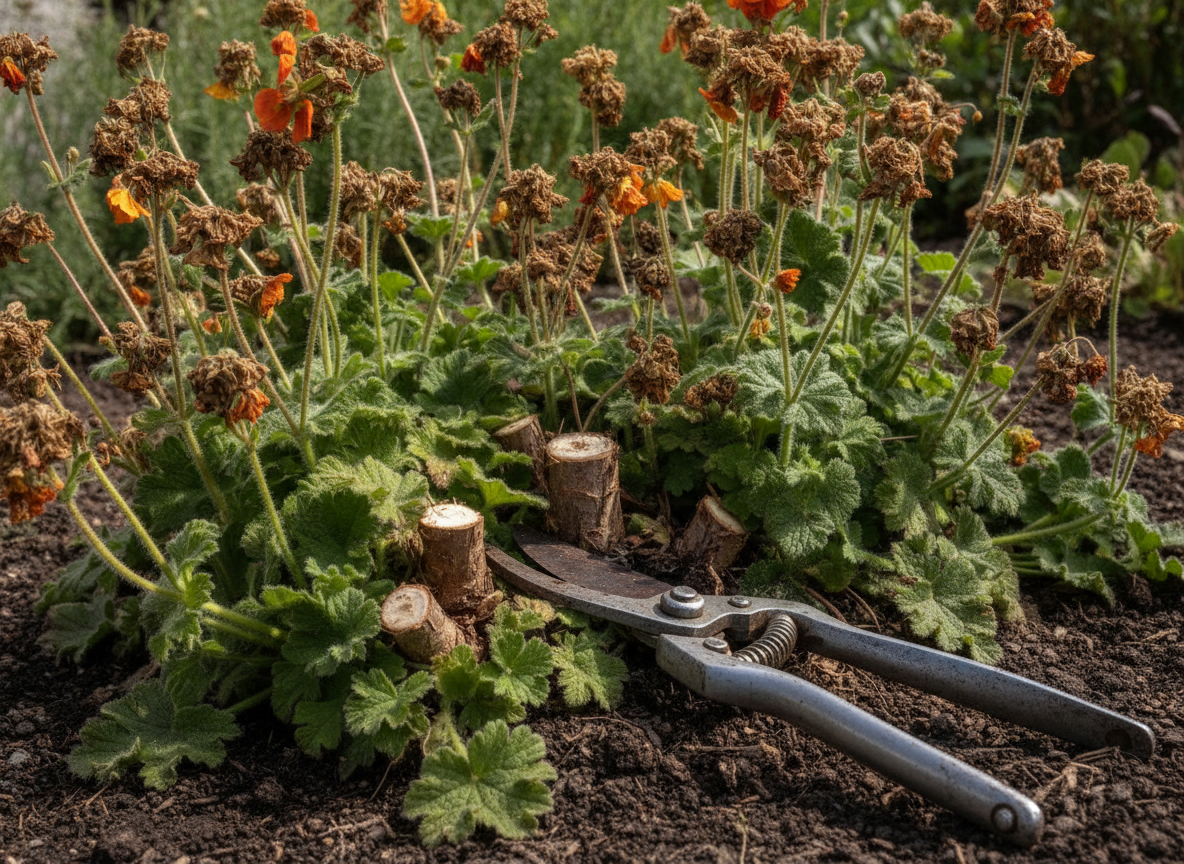 Garden shears lie on the soil next to cut geum plant stems — AI-generated illustration
Cut every flower stem down to the basal rosette
Look at the base of the plant and you’ll see a tight rosette of healthy green leaves sitting close to the ground. That rosette is the engine of next month’s flowers, and it’s all you’re keeping. Everything above it — every flower stem, spent or not, plus the tired upper leaves on those stems — comes off.
Take a pair of one-handed shears or sharp snips and cut the lot back to just above that leafy base, roughly 5–8 cm from the ground. Don’t hunt for individual buds the way you would on a rose, and don’t just take the flower heads off the top: a half-hearted trim leaves you a clump of leafless stalks with no reason to start again. Gather the flower stems in one hand and cut straight across, like taking a fistful of grass, then tidy any you missed. It looks drastic for a day — a flat green cushion where a flowering plant used to be — but the new growth comes from the rosette, not from the old stems you’re removing, so nothing you want is being lost.
 AI-generated illustration
Time it as the colour fades, not when the seedheads ripen
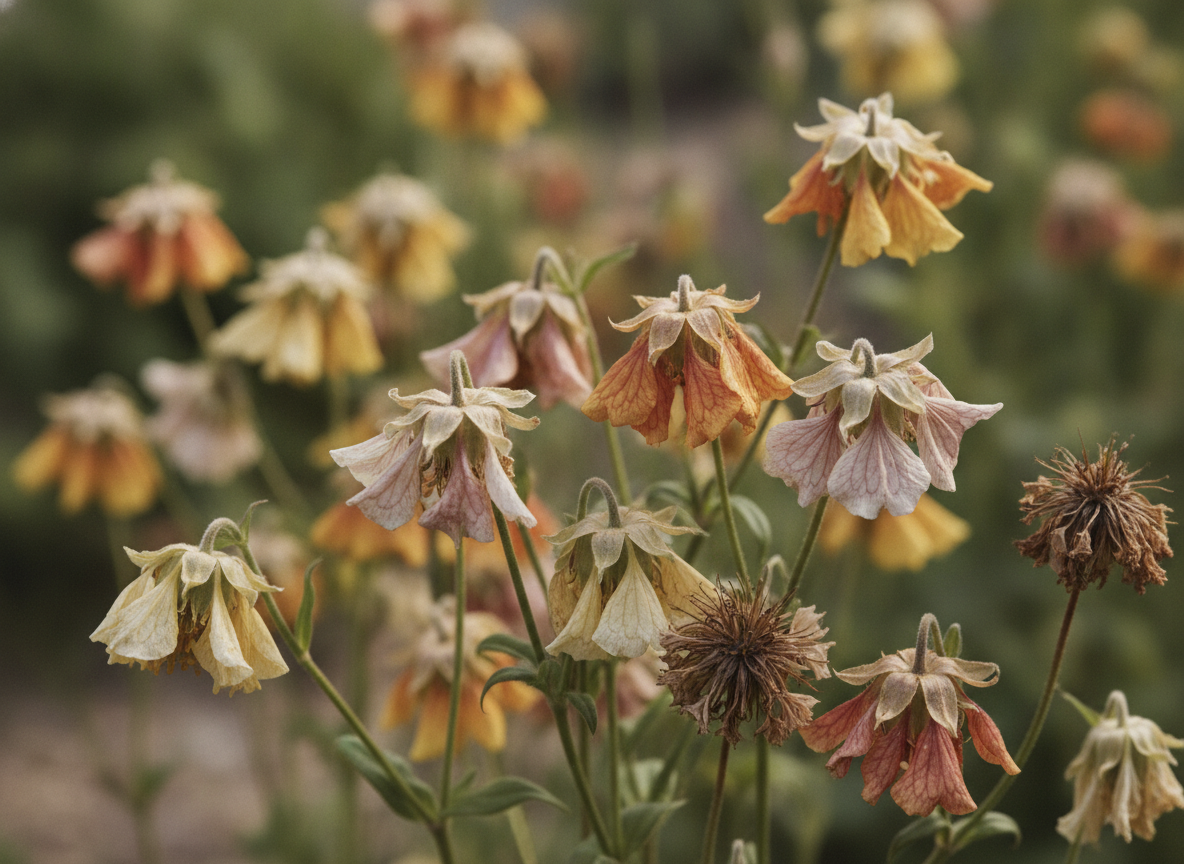
The window is forgiving, but the best moment is while the flush is going over rather than long gone. Watch the plant: as the petals drop, the flowers turn to fluffy, ripening seedheads on the ends of the stems. The cut you want to make is before those seedheads dry and shed — once a geum finishes ripening seed, it reads its job for the year as done, and the second flush gets weaker or never comes.
In a normal Northern European year that puts the cut in the last week of June or the first half of July, earlier after a warm, early spring. Cut while the colour is fading and the stems are still soft and green, and you interrupt seed-set, redirect that energy into fresh basal growth, and get a new wave of flowers in roughly four to six weeks — so an early-July cut flowers again from mid-to-late August, just as the early-summer border starts to go quiet.
It’s the same logic that works on catmint sheared to a low mound and on hardy geraniums given the late-spring chop: cut the spent first flush away hard and the plant answers with a second one.
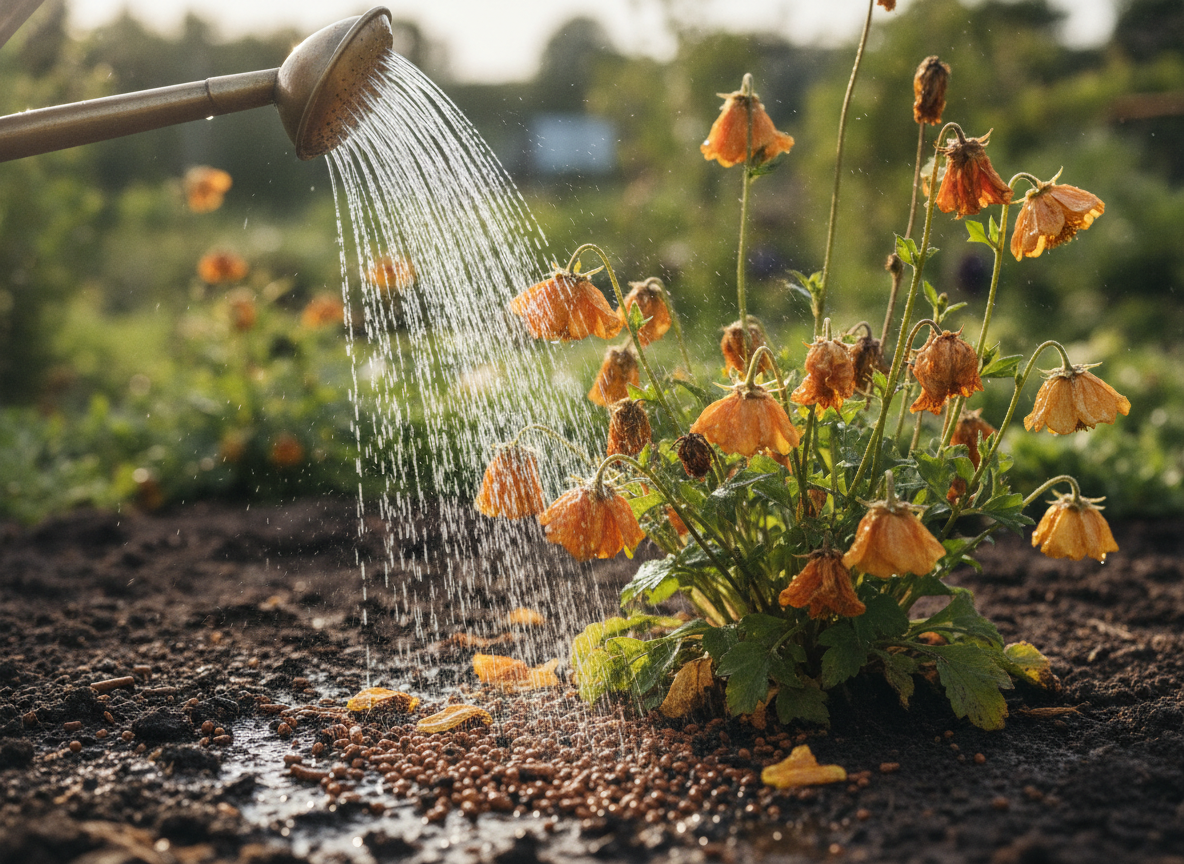 Watering can watering fading geum plants in a garden bed — AI-generated illustration
Feed, water, and let it run
The cut on its own does most of the work, but a geum that’s about to throw a whole new set of flowers wants something to do it with. The day you cut, water the clump well if the soil is dry — and early July soil often is — and scatter a handful of general fertiliser or a mulch of compost around the base. That’s the cue for the rosette to push fresh leaves quickly rather than sulking.
Then leave it alone. Within a week or two you’ll see new foliage filling out from the centre, and behind it the first of the new flower stems. Keep the plant watered through any dry spell while it regrows, and from here you can simply deadhead the odd spent stem to keep it going as long as the weather allows.
Which geums this suits — and the one caveat
This whole-plant cut suits the long-flowering border geums most people grow: Geum ‘Totally Tangerine’, the brick-red ‘Mrs J. Bradshaw’, apricot ‘Mai Tai’ and ‘Prinses Juliana’, and similar named hybrids that flower over a long season and respond well to being refreshed. These are the ones that reliably give a worthwhile second flush from an early-July cut.
The caveat is the lower-growing, spring-flowering species geums — the wild water avens (Geum rivale) and its close forms — which flower earlier and more briefly. With those, deadheading and a light tidy is plenty; there’s no big second flush to chase, so there’s no need for the hard cut. For the modern garden hybrids, though, the rule is simple: when the colour fades, cut the whole plant back to its leafy base and let it come again.
For everything else in the border that’s finishing about now, a perennial like salvia keeps going if you cut to the side shoots — and Cresco can tell you which of your plants wants the hard cut and which just wants deadheading, plant by plant, on your local weather.