The mistake almost everyone makes on their first dahlia
The first dahlias open at the end of June, and within a fortnight every plant carries a confusing jumble of swellings on the end of its stems — some about to open, some long over. They look near enough identical from a stride away, and that’s where the trouble starts. A gardener walks the bed with secateurs, snips off everything that isn’t a fully open flower to “tidy up”, and quietly removes half the buds that were about to bloom. The plant then spends its energy where you’ve left it — ripening seed in the heads you didn’t cut — and slows right down.
It’s the single most common dahlia mistake, and it’s entirely avoidable once you can read the two shapes. A dahlia is a deadheading plant above all else: leave the spent flowers on and it reads the season as winding down, takes them off and it keeps throwing new buds from now until the first frost blackens the foliage in October or November. Get the reading right and one plant gives you four months of cut flowers. Get it wrong and you’re snipping your own blooms off.
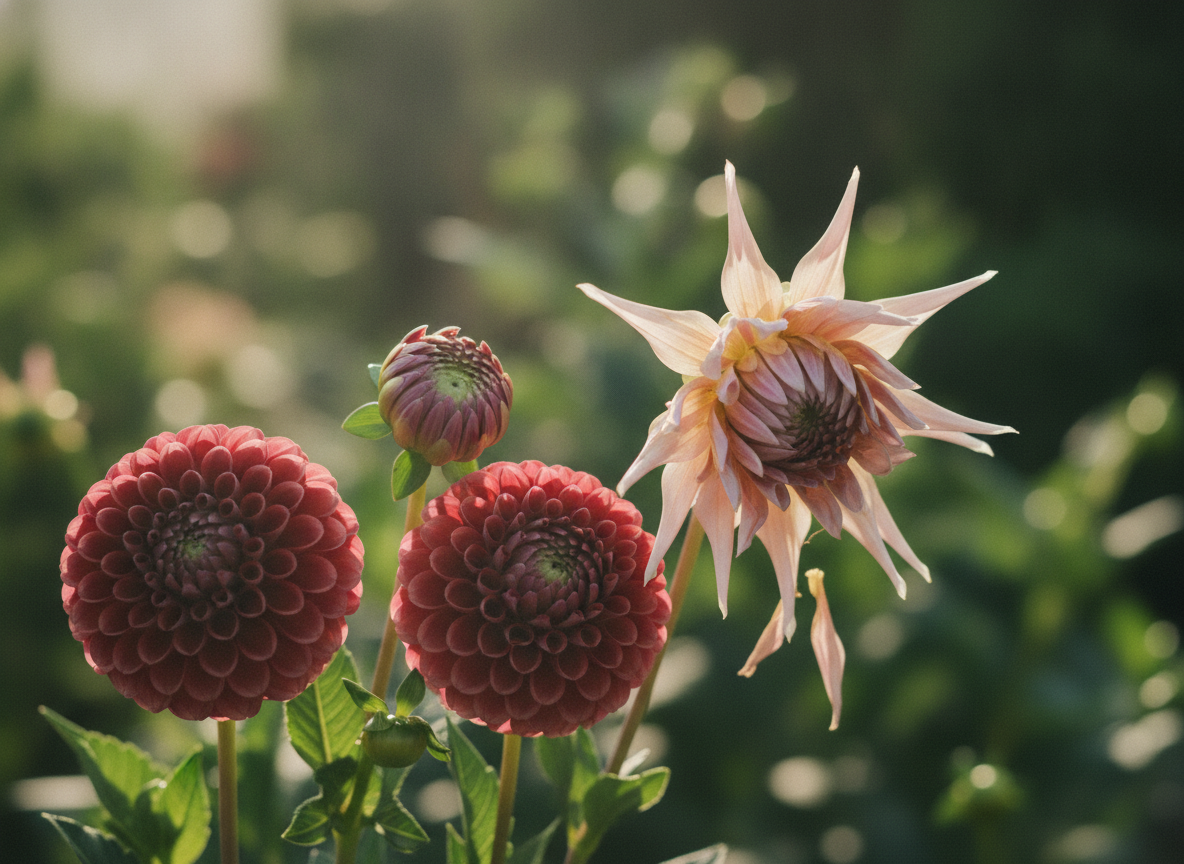 Three dahlias, two round and firm, one pointed and soft — AI-generated illustration
Round and firm is a bud. Pointed and soft is finished.
Stand close and the difference is obvious once you know it. A flower bud is round and plump — gardeners describe it as marble-shaped, or like a tiny satsuma — and it feels firm and solid when you roll it gently between finger and thumb. A spent flower that has dropped its petals draws its remaining bracts up into a point: it’s cone-shaped, almost like a small closed umbrella or a little pyramid, and it feels soft, even squishy, when you squeeze it. You’ll often see a few dried brown petal-ends still poking out of the top.
So before any cut, do the two-second test: round and hard, leave it; pointed and soft, take it. If you’re genuinely unsure on a particular swelling, a light squeeze settles it every time — a developing bud resists, a finished head gives. After a week of doing this you’ll stop thinking about it and just see which is which down the whole stem.
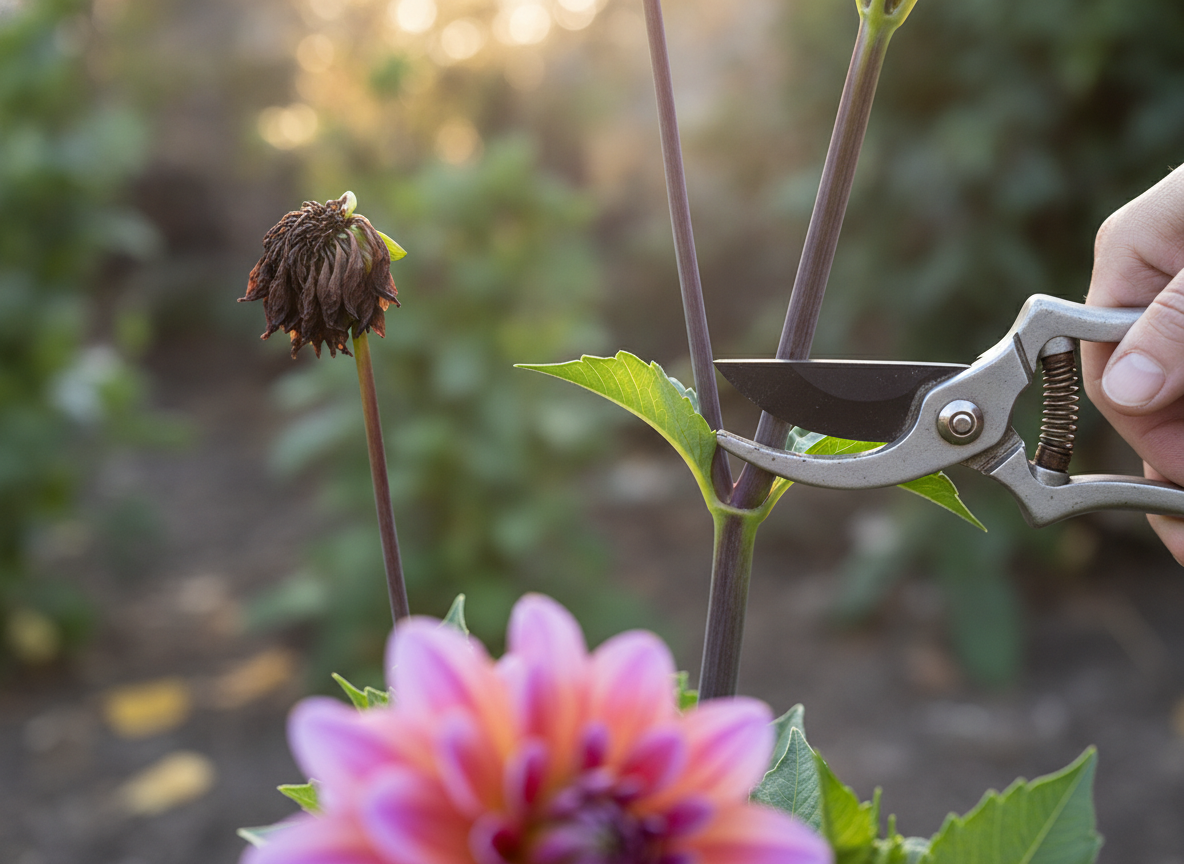 A hand prunes a dahlia stem near a leaf joint — AI-generated illustration
Don’t behead it — cut back to a leaf joint
Once you’ve found a genuine spent flower, where you cut matters as much as what you cut. The instinct is to nip the head off right under the dead bloom, but that leaves a bare, blunt stub standing proud of the plant — an eyesore that won’t reflower and just sits there going brown. Worse, it does nothing to encourage replacement.
Instead, follow the flower stem down past the next swelling buds to the first proper set of leaves — usually a pair of leaves where the stem meets a main stalk — and cut cleanly just above that leaf joint. It feels drastic the first time, because you’re often removing a good 15–30 cm of stem along with the dead head. But a dahlia breaks from those leaf nodes: cut back to a pair of leaves and the plant typically pushes two new flowering shoots from that point, where a beheading gives you none. Tidier plant, and more flowers — the same logic that drives the side-shoot cut on border salvias.
Use clean, sharp snips or secateurs rather than pinching — dahlia stems are hollow and easily crushed or torn, and a ragged wound on a soft, sappy stem is an invitation to rot in wet weather.
Every few days, not once a month
Dahlias don’t wait for you. In high summer a well-fed plant cycles through flowers fast, and the small-flowered, prolific types — pompons, the single ‘Bishop’ sorts, ball dahlias — can throw spent heads by the dozen. To keep a plant genuinely flowering rather than seeding, deadhead little and often: every two or three days through July and August is ideal, once a week the bare minimum. It’s a five-minute job with a basket if you stay on top of it, and a daunting one if you let a fortnight slide.
This is the same bargain you strike with sweet peas, dahlias and the rest when you pinch them out in spring and the same one behind deadheading roses through summer: the plant’s whole purpose is to set seed, and every time you remove a spent flower before it can, you force it to try again with a fresh one. Cutting for the vase counts too — every stem you bring indoors is a deadhead that earns its keep twice.
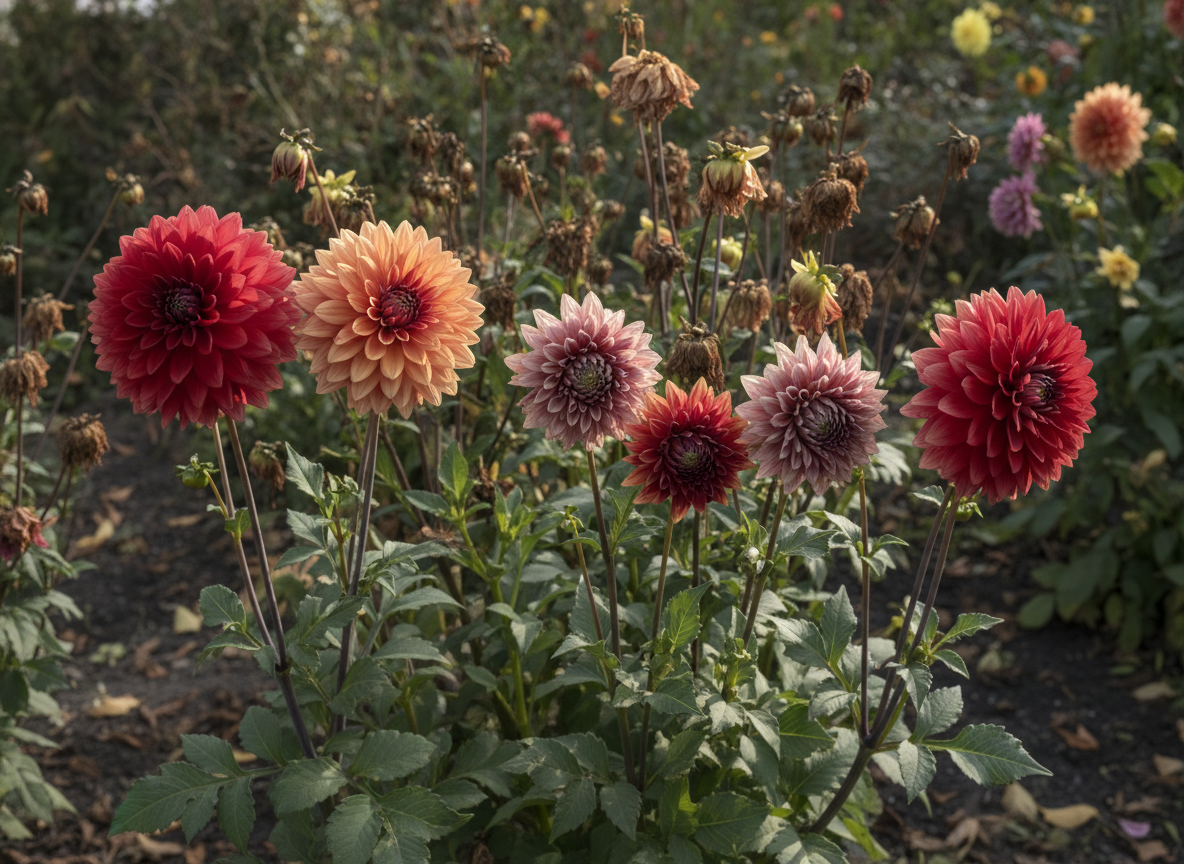 Red and orange dahlias in a garden setting — AI-generated illustration
When to stop — and let the last few stand
Keep deadheading right up to the first hard frost. Once frost has blackened the foliage the plant is done for the year, and in colder gardens that’s your cue to lift and store the tubers (or mulch them deeply where they stay in the ground). There’s one deliberate exception worth making before then: if you grow open-centred single or collarette dahlias and want to feed late bees, or you fancy collecting seed from a favourite, leave a few of the last heads to go over uncut in autumn. By then the flowering push is nearly spent anyway, so you lose almost nothing — and the late pollen is welcome.
Read every swelling before you cut
That’s the whole skill, and it’s mostly about looking before you snip. Round and firm is tomorrow’s flower — leave it. Pointed and soft is yesterday’s — cut it back to a leaf joint, not just under the head. Do that every few days from the end of June and a dahlia turns from a brief late-summer flush into the longest-flowering plant in the border.
Not sure whether the swelling in front of you is a bud or a spent head — or when your particular dahlias and everything else in the bed need their next cut? Snap a photo in the Cresco app and it’ll tell you what you’re growing and the right moment to make each cut.