Why deadheading one bloom at a time won’t restart them
By late June a clump of garden pinks has usually done the same thing it does every year: the cushion of grey-blue foliage that looked so neat in May has thrown up a forest of flower stems, the first flush of clove-scented blooms has faded to papery brown, and the whole plant has started to splay outwards from a thinning, bare centre. Most people work along the clump snipping off the dead heads one at a time, leaving the long flower stalks standing — and then wonder why the plant just sits there, sprawled and tired, for the rest of the summer.
Picking off spent heads keeps the plant tidy for a day or two, but it leaves all those long, leafless flower stems in place. Those stems are done — they won’t flower again from the same point — and while they stand, the plant reads its job as finished and pours its energy into ripening seed instead of building the fresh shoots that carry the next round of bloom. Deadheading bloom by bloom is housekeeping. It is not the cut that gets you more flowers.
The cut that does is faster, looks far more drastic, and is the single most useful thing you can do for a clump of repeat-flowering modern pinks in the next fortnight: shear the whole thing back by about a third, all at once.
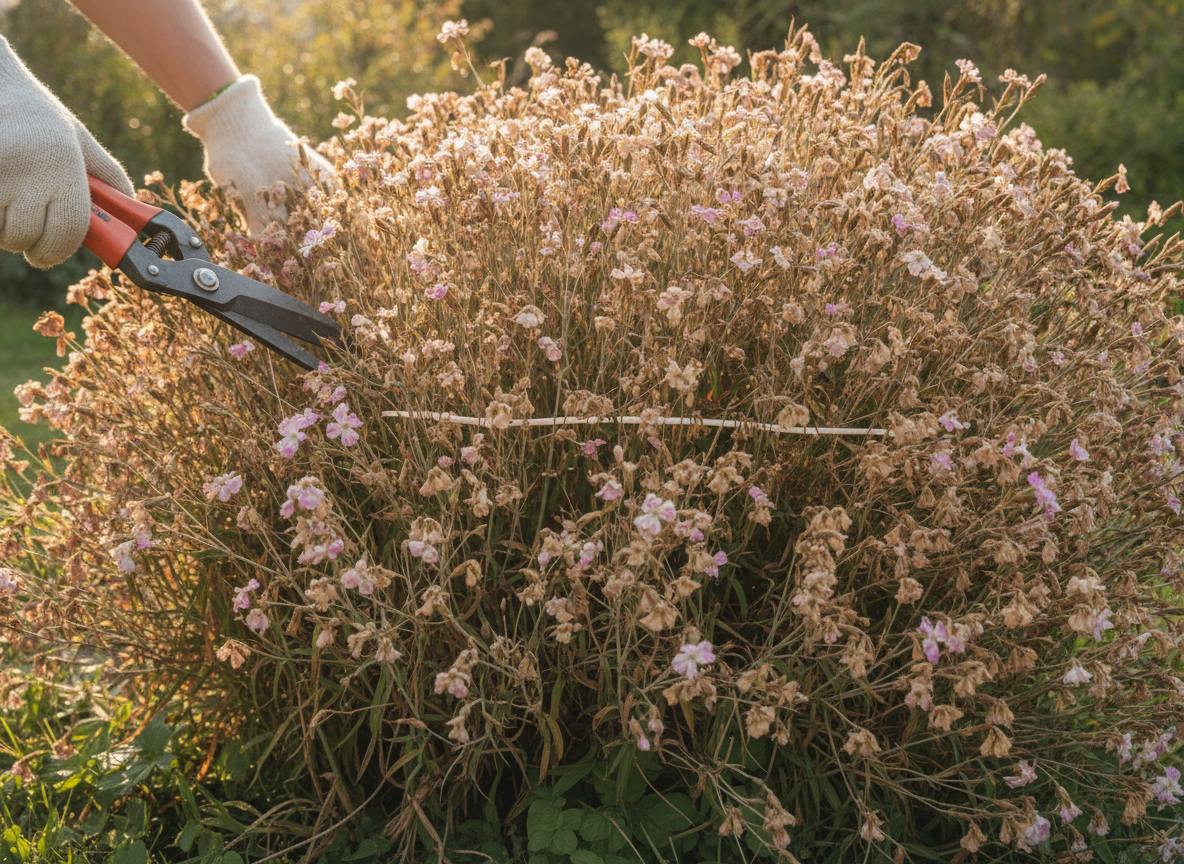 The photograph depicts a person’s gloved hands shearing a pink flowering plant with clippers — AI-generated illustration
Shear the whole clump by a third — not down to the wood
Take a pair of shears — one-handed grass shears are ideal, or secateurs for a small clump — and run them over the entire plant in one pass, the way you’d top a low mound, taking off roughly the top third. You are not picking out individual stems. You’re removing the spent flower stalks and the soft, leggy top growth in a single cut, so the plant is left as a tighter, lower dome of that grey-blue foliage.
The “by a third” matters in both directions. Take too little — just the flower heads off the top — and you’ve left a full-height, leggy plant with no reason to start again, and you’ll be looking at the same sprawl in a fortnight. But the far more serious mistake is cutting too far, down into the bare, woody base of the plant. More on that below, because it’s the one cut pinks will not forgive — but the short version is: keep your shears in the green. As long as every cut lands in living, leafy growth and you remove around a third of the plant’s height, you’ve got it right.
Time it as the first flush fades — late June into early July
The window is forgiving, but the best moment is when the first flush is going over, not long gone. Watch the flowers: once the bulk of the heads have turned papery and brown and only a few late ones are hanging on, that’s your signal. In a normal Northern European year that falls in the last week of June and the first week or two of July, a little earlier after a warm, early spring.
Cutting at that “going-over” stage rather than waiting for fully set seed matters for the same reason it does on catmint: the moment a plant finishes ripening seed, it reads the year as done and the second flush gets weaker or never comes. Shear while the clump is going over and you interrupt the seed-set, redirect that energy into fresh basal growth, and a repeat-flowering modern pink will give you a second wave of bloom from late August into September — just as a lot of the border is winding down. It’s the same logic that drives the late-May chop on hardy geraniums, shifted a few weeks later to suit a plant that flowers later.
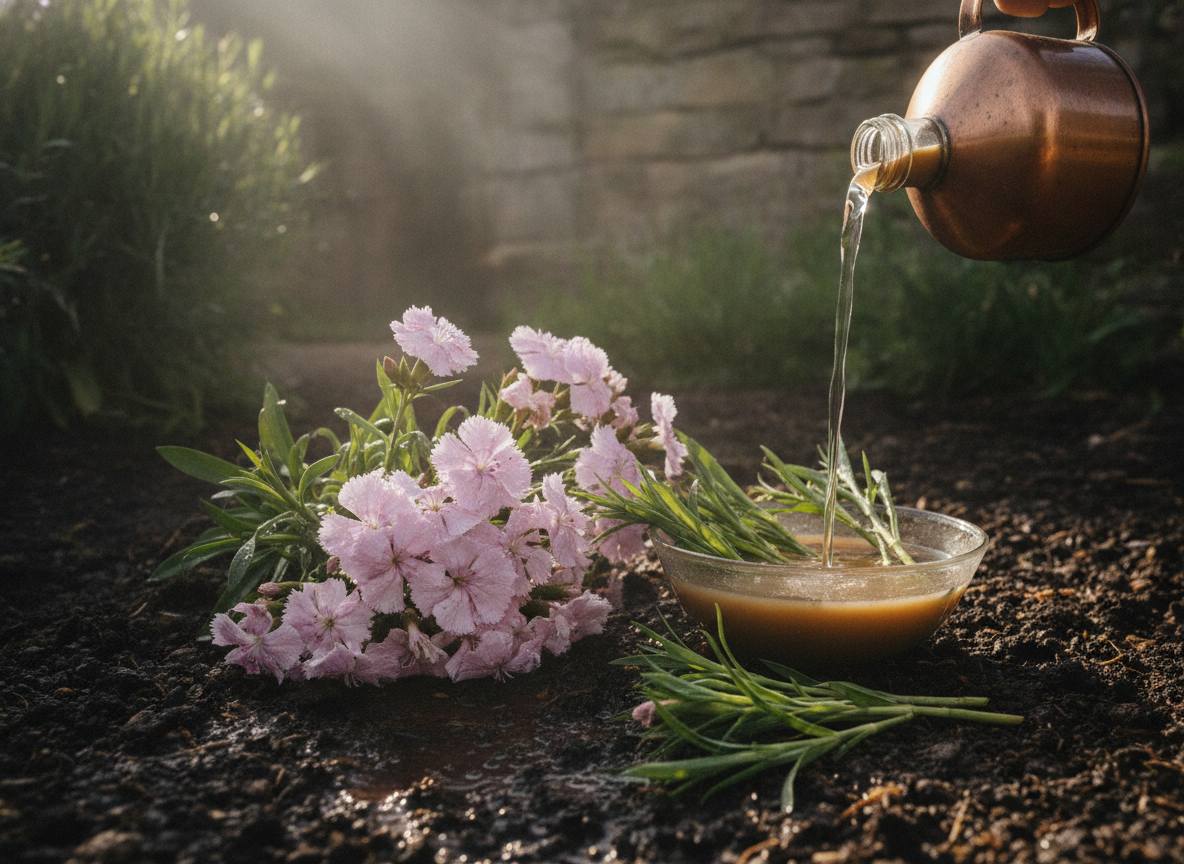 A copper watering can pours water into a bowl beside cut pink flowers — AI-generated illustration
Feed and water the day you cut
A plant you’ve just sheared needs two things to push a strong second flush: water and a light feed. If late June is running dry — and it often does — give the clump a good soak after cutting, and scatter a handful of a balanced or potassium-leaning feed around the base. Potassium drives flowering; a high-nitrogen feed just gives you soft, floppy leaf, which is exactly the sprawl you were trying to fix.
Pinks earn their keep on lean, sharply drained, alkaline soil in full sun, so don’t smother them in richness. A single feed after the cut to fuel the regrowth is plenty — then leave them be. Within a couple of weeks you’ll see fresh grey-green shoots breaking from the base, and the plant rebuilds itself into a tighter cushion than the leggy thing you cut down.
Don’t cut into the old wood — the one mistake pinks won’t forgive
Here is the rule that separates a shear that works from one that kills the plant: never cut back into the bare, brown, woody stems at the base. Pinks make their new shoots from the leafy green growth near the tips, not from old wood — and unlike a hedge plant, a stem that has gone woody and leafless will almost never break into fresh growth once you cut into it. Cut a clump back hard into that woody zone, the way you’d cut catmint to stubble, and you don’t get a flush of new shoots; you get a dead patch, or a dead plant.
So the discipline is the opposite of the hard chop you’d give a herbaceous perennial. Take your third off the top while there’s still plenty of green leaf below every cut. If a clump has already gone bare and woody in the middle with only a fringe of green around the edge, shearing won’t rescue the bare centre — that plant is telling you it’s near the end of its short life, and the answer isn’t a harder cut but a few cuttings (see below).
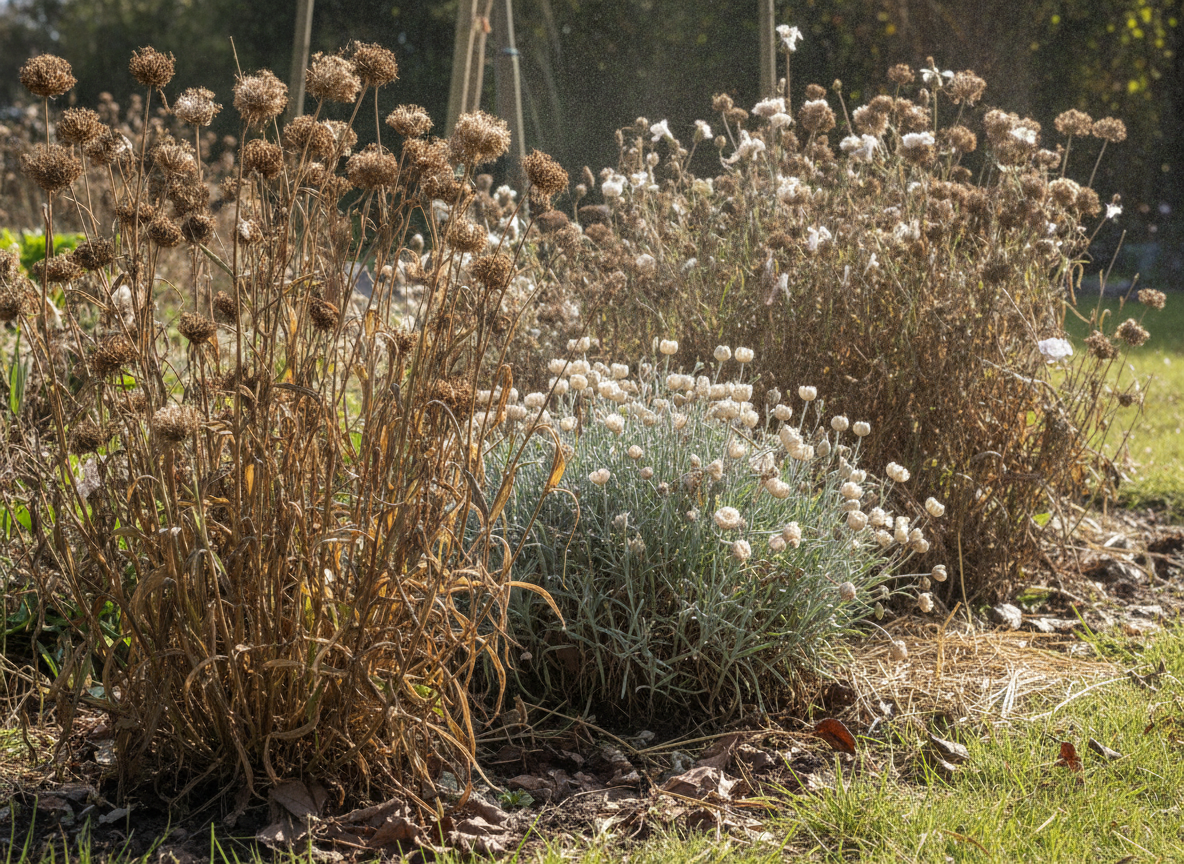 Various dried plants in a garden setting, with some green foliage — AI-generated illustration
Border pinks, alpine pinks and old-fashioned pinks behave differently
How much you get back depends on which Dianthus you’re growing. The modern repeat-flowering border pinks — ‘Doris’, ‘Gran’s Favourite’, ‘Devon Wizard’ and the like — are the ones that genuinely reward the by-a-third shear with a strong second flush, because they’re bred to keep going. The old-fashioned pinks such as ‘Mrs Sinkins’ flower gloriously but mostly just once; shearing them won’t conjure a big repeat show, but it still earns its place by keeping them compact and stopping the splay. Low alpine and rockery types like Dianthus deltoides want only a light trim with shears once they’ve finished — treat those as a tidy-up, not a chop.
Whatever the type, pinks are short-lived plants — most are tired and bare-centred within three or four years. The neatest insurance is to take a few “pipings” in summer: pull out a non-flowering shoot tip with a clean snap at a leaf joint, strip the lower leaves, and push it into gritty compost. They root easily, and you’ll have young, tight plants ready to replace the old woody clumps before they collapse.
What the shear actually buys you
Done at the right moment, the late-June shear does three things in one pass: it ends the sprawl and resets the plant into a neat low cushion, it triggers a real second flush on repeat-flowering pinks just as late summer arrives, and — by stopping the clump exhausting itself on seed — it keeps a short-lived plant going a little longer. One run with the shears, a feed, a soak, and you’re done. Just keep every cut in the green.
Not sure whether your pinks are repeat-flowering border types or once-flowering old-fashioned ones — or whether a clump has gone too woody to shear safely? Snap a photo in the Cresco app and it’ll tell you what you’re looking at and exactly when its window opens.