A rock rose puts on a three-week show of papery, crumpled flowers in late spring and early summer, then the petals drop by mid-morning and the bush starts to sprawl. That sprawl is the moment most people reach for the secateurs and cut it back hard — into the grey, leafless stems at the base — to neaten it up. With almost any other shrub that would be fine. With Cistus, it’s the one cut that doesn’t grow back.
Why a rock rose can’t heal a hard cut
Most shrubs carry dormant buds hidden under the bark of old wood. Cut into a bare stem and those buds wake up, and within a few weeks you get a flush of new green shoots. That’s the whole reason renewal pruning works on a ceanothus only if you never touch the old wood — and the reason a broom needs a light trim every single year so it never builds up bare wood in the first place.
Cistus belongs to that same unforgiving club, only stricter. The old wood has almost no living buds left in it. Cut a stem back to the bare grey and nothing comes — no shoots, no leaves, just a stub that slowly dies back and leaves a permanent hole in the dome. One enthusiastic tidy-up in late June can disfigure a plant you’ve grown for years, and a really hard cut to the base usually kills it outright.
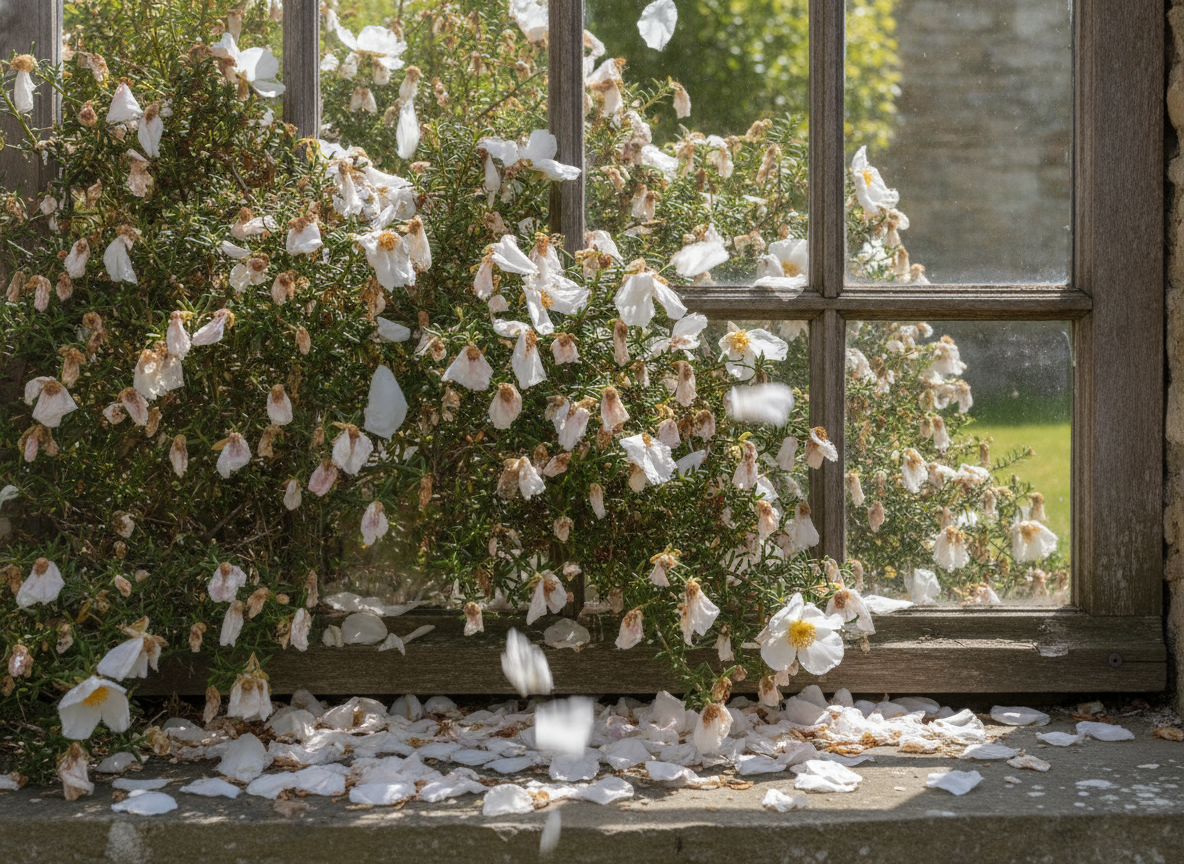 White rock roses shed petals onto a window ledge — AI-generated illustration
The window: straight after flowering, not later
Rock roses flower on growth made the previous year, so the safe time to touch them is the short gap between the last flowers fading and the plant putting on its summer growth — for most of the country that’s late June into early July.
Trim now and the soft new shoots have all summer to fill back in and set next year’s flower buds. Leave it until autumn and you’ll be cutting off the very wood that would have flowered, and the cuts won’t have time to heal before the first frosts. So the rule is simple: a light tidy in the week or two after the petals drop, then leave the plant alone for the rest of the season.
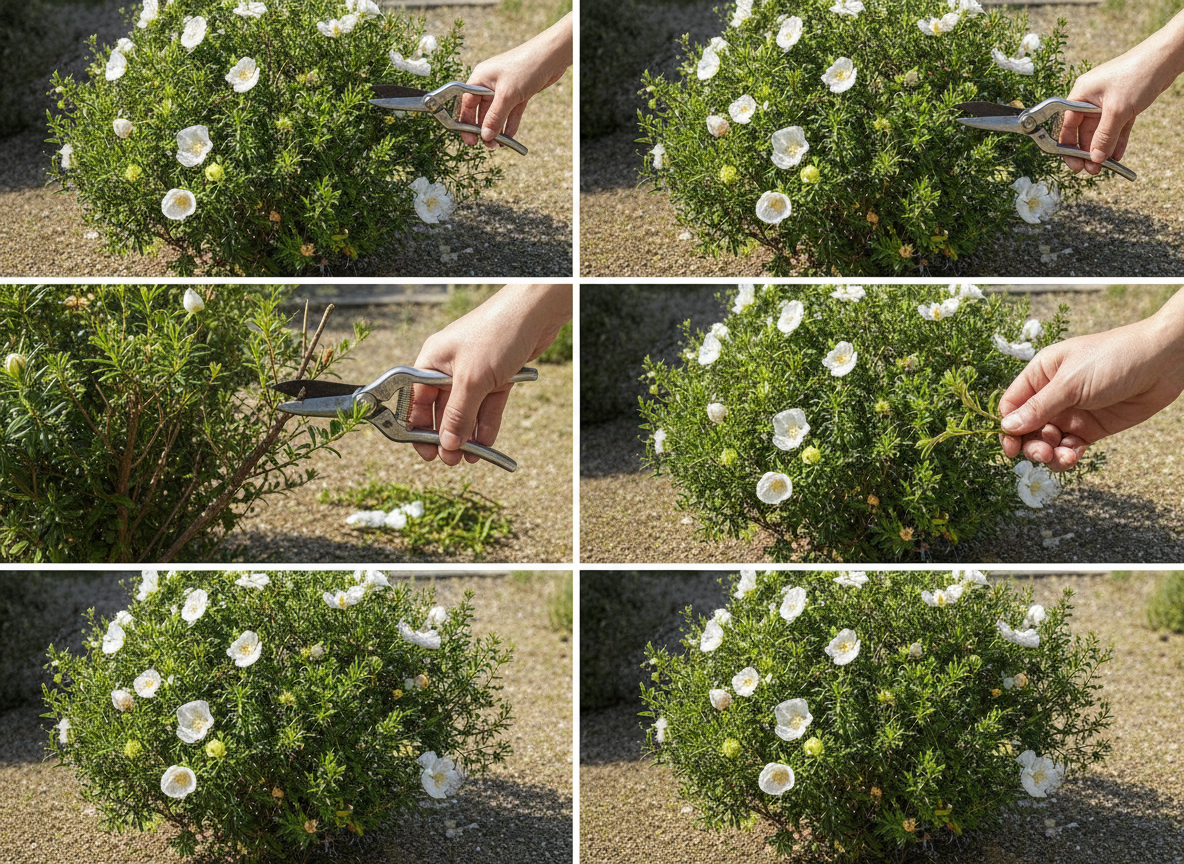 A step-by-step photographic guide showing pruning a rock rose — AI-generated illustration
The cut, step by step
Think of it as a haircut, not surgery. You are only ever shortening this year’s soft, green, leafy growth — the part that still bends in your fingers and snaps cleanly. Anything grey, woody and stiff is off-limits.
- Snip the tips. Shorten each leading shoot by no more than a third, cutting just above a leaf or a pair of leaves. The plant will branch from there and grow denser.
- Follow the green back, then stop. Run your finger down a stem until it changes from green to brown. Make your cut in the green, a centimetre or two above where it turns woody — never below it.
- Take out the dead, not the old. You can remove any shoot that’s genuinely dead or frost-damaged right back to its origin, but leave living old wood exactly where it is.
- Aim for the shape, not the size. A few minutes of light shaping keeps a tidy mound. If you find yourself wanting to take off a third of the whole plant, the plant has already got too big for its spot — and pruning won’t fix that.
A pair of sharp shears or secateurs is all you need. Wipe the blades if you’ve just been on a diseased plant, but rock roses are tough and rarely fussy about clean cuts.
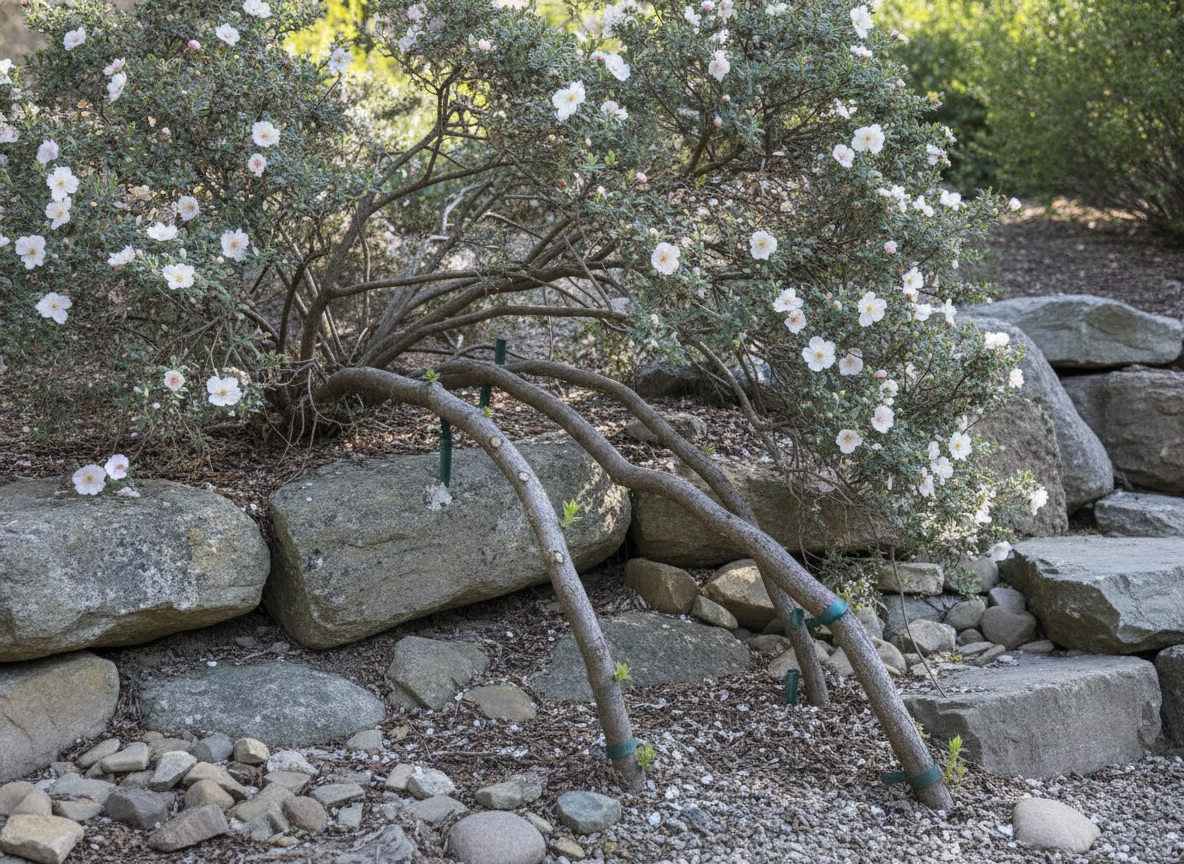 A leggy rock rose bush with flowering branches supported by wooden stakes — AI-generated illustration
What to do with a bush that’s already leggy
This is the hard truth: if your Cistus is already a sprawling mess of bare wood with a thin frill of leaves on top, there is no prune that brings it back. Cutting into the bare stems won’t trigger regrowth — it just speeds up the decline.
Rock roses are short-lived shrubs anyway. Even a happy one tends to look its best for five to ten years before it goes woody and gappy, and the right move then is to replace it rather than rescue it. The good news is they’re some of the easiest shrubs to propagate: take 8–10 cm semi-ripe cuttings from the soft tips in late summer, pot them up, and you’ll have young, bushy replacements ready to plant out the following year — usually for free.
Get the timing right for every shrub, not just this one
The thing that makes Cistus dangerous is that the wrong cut looks identical to the right one until weeks later, when the gap fails to fill. Almost every shrub has a window like this — a fortnight after flowering for the old-wood crowd, a hard winter cut for others — and the penalty for guessing is a whole year of bloom.
That timing is exactly what Cresco tracks for every plant in your garden, using your local weather rather than a generic calendar. Photograph your rock rose, and it’ll tell you the safe trimming window for your patch — and, just as importantly, when to keep the secateurs in the shed.