The five-leaflet rule that everyone still repeats
Open almost any rose-care leaflet from the last fifty years and you will find the same instruction for summer deadheading: don’t just pull the dead flower off, cut the whole stem back to the first leaf with five leaflets, ideally one facing outward. The reasoning sounds airtight. A five-leaflet leaf sits above a fat, well-developed bud; a three-leaflet leaf near the flower sits above a weak one; so cutting lower gives you a stronger new shoot and a better next bloom.
It is one of those rules that gets repeated so often it stops being questioned. And for decades nobody did question it — until the people who grow roses by the thousand started counting flowers instead of trusting the leaflet, and found the rule was costing them blooms.
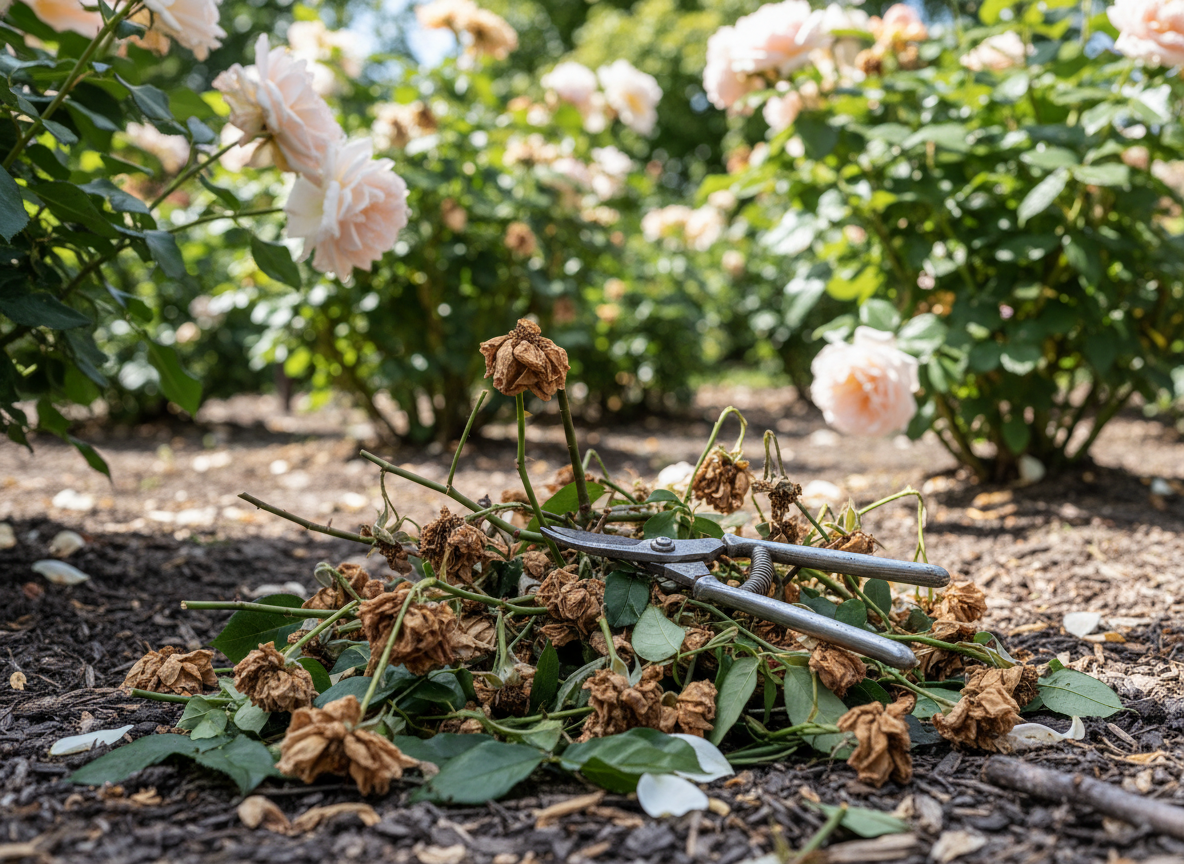 Deadheaded roses with gardening shears on the ground — AI-generated illustration
What the rose growers actually found
The Royal National Rose Society ran the comparison the leaflets never bothered to: deadhead one block of repeat-flowering roses the traditional way, cutting each spent flower back to an outward-facing five-leaflet leaf, and deadhead an identical block by simply snapping the dead head off just below the swollen base, leaving every leaf on the stem. Then count the days to the next flush and the number of blooms.
The snapped roses won, and not by a small margin. They came back into flower noticeably faster — often a week or more ahead — and carried more blooms in the second flush.
The mechanism is obvious once you see the result. A rose powers its next flush with the energy its leaves make. Every leaf you cut off to reach that tidy five-leaflet joint is a leaf that is no longer feeding the plant. Cut three leaves off every stem across a mature bush and you have stripped away a serious chunk of the factory floor right when the plant needs it most. Snap the head off and leave the leaves, and the rose rebuilds from full power.
The five-leaflet rule was never wrong about which bud is stronger. It was wrong about the trade. You gain a fractionally better bud and you pay for it with a third of the stem’s leaves — and the leaves matter more.
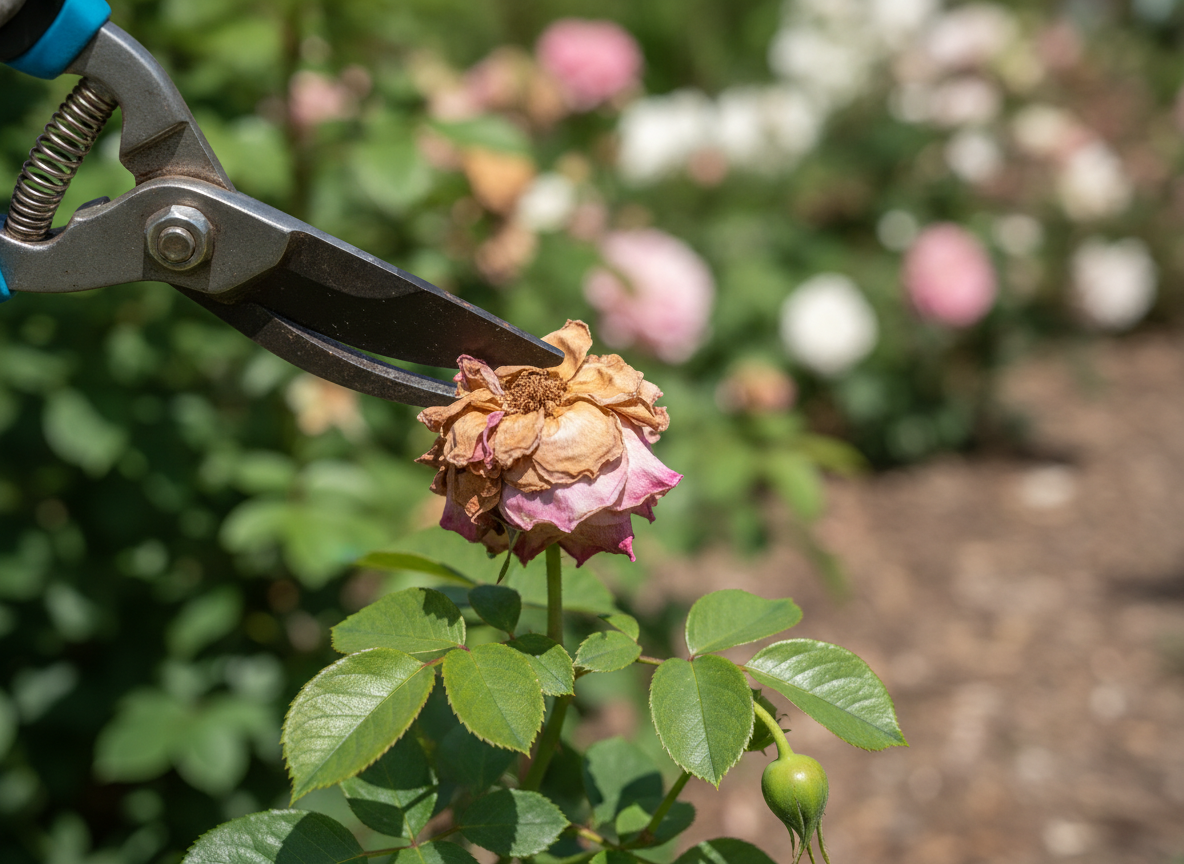 Pruning shears cutting a dead rose flower from its stem — AI-generated illustration
How to snap a rose deadhead
This is the easiest job in the summer garden, which is part of the point: a method you’ll actually do every few days beats a fussier one you put off.
- Find the spent flower — petals browning, dropping, or already gone, with the green base beginning to swell.
- Bend it sideways with finger and thumb just below that swollen base, at the thin “knuckle” where the flower stalk meets the first leaf. Ripe deadheads come away with a clean snap, no tools needed.
- Leave every leaf on the stem. Don’t reach down for the five-leaflet leaf. The whole gain is the foliage you keep.
- Drop the heads in a trug, not on the bed — spent petals left lying in damp weather are an invitation to botrytis.
On a still summer evening you can deadhead a dozen bushes in the time it takes to find your secateurs. That is the real reason the method works: it is fast enough to keep up with, so the plant is never carrying a load of fading flowers draining its energy into hips.
When cutting back is still the right call
Snapping is for routine summer deadheading. There are three situations where you should reach for clean, sharp secateurs and cut lower instead:
- The stem has grown leggy or lopsided. If a shoot has shot up well above the rest of the bush, cut it back to a leaf at the height you want — here you are shaping, not just deadheading, and the leaflet count is beside the point.
- There’s dieback or disease below the flower. Blackspot-spotted leaves or a stem browning from the tip should be cut out into clean green wood, well below the trouble, and the prunings binned rather than composted.
- It’s the very end of the season. Stop deadheading hybrid teas, floribundas and grandifloras in late August or September. The last flowers left to fade signal the plant to harden off for winter, and on hipping varieties they give you autumn colour for the birds.
For the bigger structural cuts — the once-a-year reshape rather than the summer tidy — the timing and technique are a different job entirely. The full calendar is in our guide on when to prune roses.
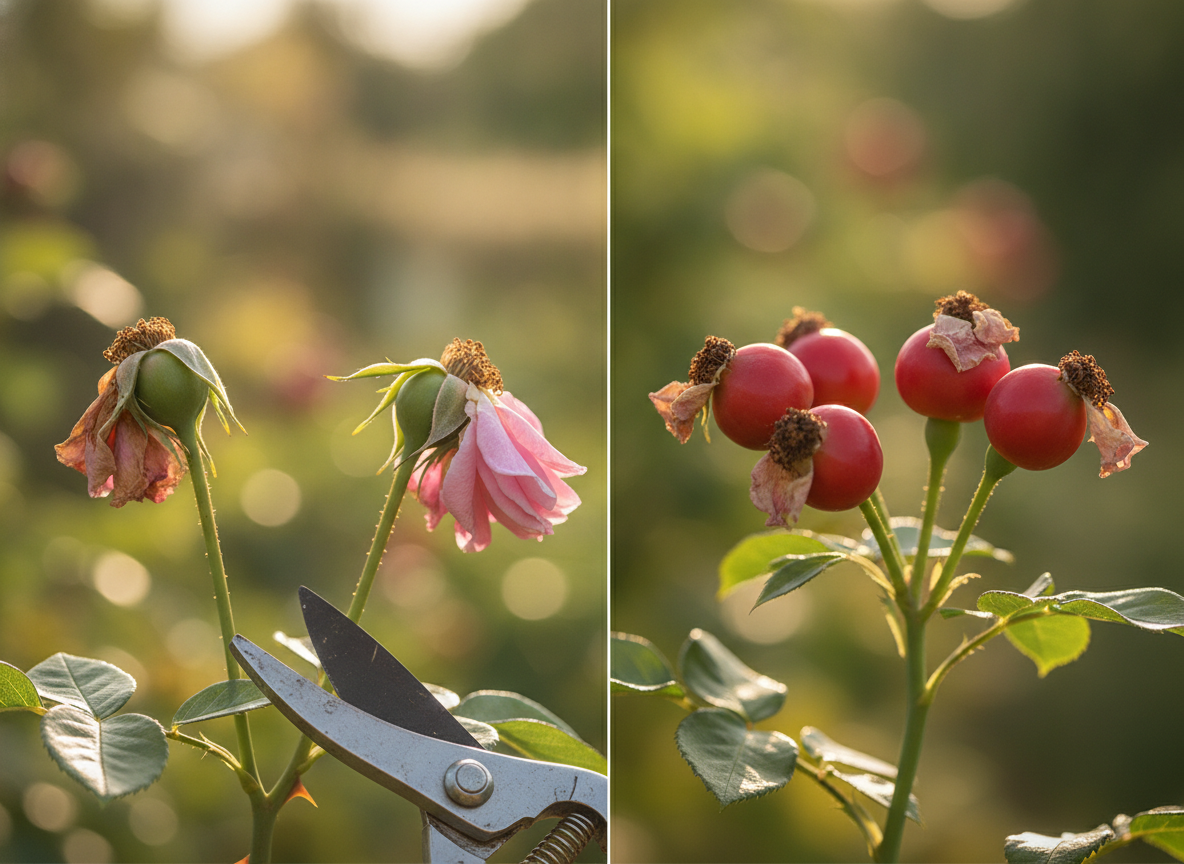 A pair of garden photographs of roses and rose hips in natural light — AI-generated illustration
Which roses to deadhead — and which to leave alone
Deadheading only buys you more flowers on roses that repeat. Before you pinch anything, know what you’re holding:
- Repeat-flowering bush roses — hybrid teas, floribundas, modern shrub and patio roses — are the ones that pay you back. Snap them through the whole season and they keep coming.
- Once-flowering old roses and most ramblers flower a single time on old wood and won’t rebloom no matter what you do. Deadheading them gains you nothing — and if you want autumn hips, it costs you the display. Ramblers get their own treatment right after they finish; see pruning rambling roses after flowering.
- Single and species roses grown for hips — Rosa rugosa, Rosa moyesii, dog roses — should be left entirely. The whole point is the autumn fruit, and every deadhead is a hip you’ve thrown away.
The same “leave it for the second flush, but don’t let it set seed” logic drives a lot of summer perennial work too — it’s exactly the call you make with deadheading lupins.
The summer rhythm
Get into a loop. Walk the roses every three or four days with a trug, snap anything spent, drop it in. It takes minutes and it keeps every repeat-flowering bush pushing buds from June until the first cool nights of autumn.
Two small habits make a difference. Feed after the first flush — a rose asked to flower twice or three times needs feeding to do it, so a handful of rose fertiliser worked in after the June display pays off in August. And water the roots, not the leaves, in any dry spell: wet foliage in warm weather is how blackspot spreads, and a deadheaded bush with clean leaves will out-flower a neglected one all summer long.
Snap, don’t cut. Keep the leaves, lose the dead heads, and let the rose do the rest.