The window opens when the bottom of the spike turns to peas
A lupin spike doesn’t fade all at once. It opens from the bottom up, so while the top still looks fresh, the lowest florets are already browning and swelling into little pea-like pods. That bottom third is your signal. By early to mid June most garden lupins — including the big Russell hybrids — have reached this stage, and that is exactly the moment to act.
Wait too long and the plant reads those swelling pods as a job well done. Seed is the whole point of flowering, from the plant’s perspective, and once it commits to filling those pods it shuts the flowering effort down. Catch it before the pods ripen and you can redirect all of that energy into a second, later show.
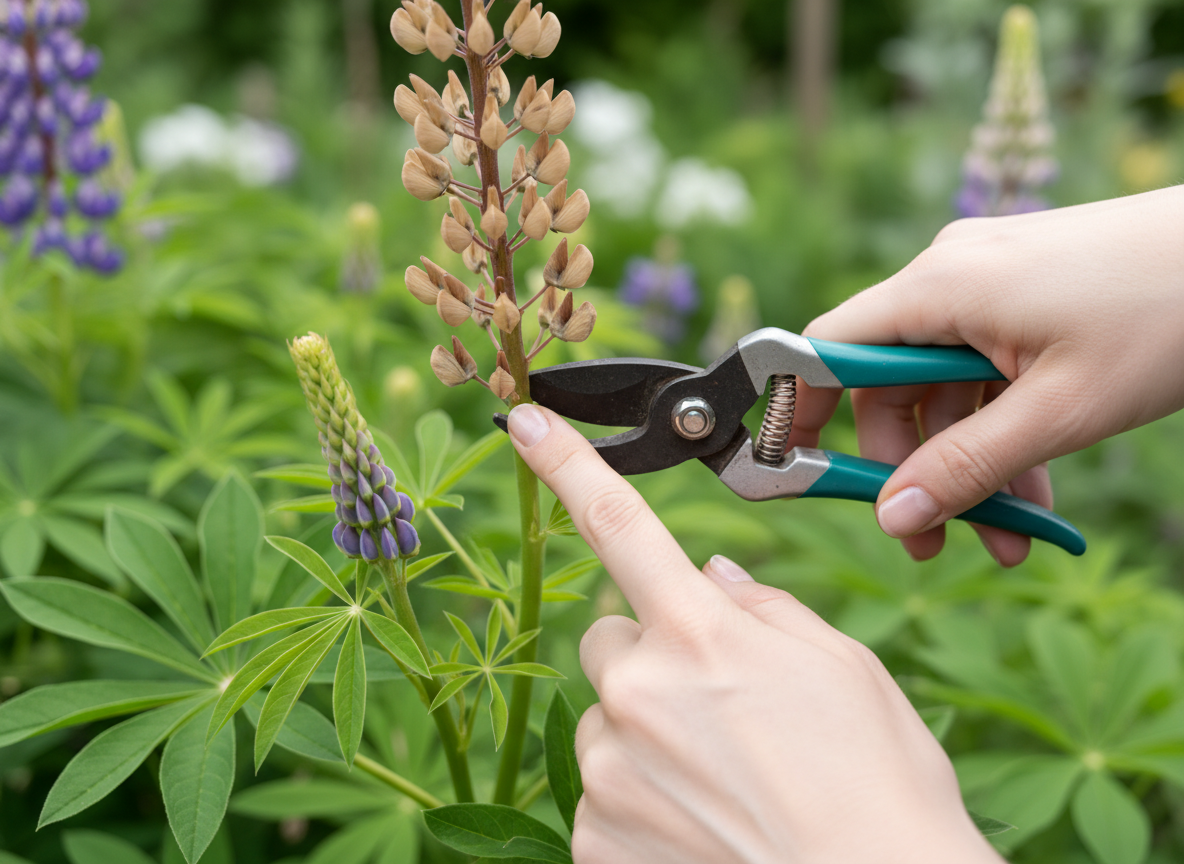 A person’s hands use shears to deadhead a lupin plant in a garden — AI-generated illustration
Where to cut — and the side spikes most people never see
Follow the spent spike down with your eyes. Below the flowers, where the upper leaves meet the stem, you’ll usually find tiny secondary buds already forming in the leaf axils. These are the future second flush — smaller, daintier spikes that the plant will throw up if you give them the room.
So don’t snap the spike off at the top. Cut the whole spent stem right back to a strong leaf or a visible side bud low down, using clean secateurs and an angled cut so water runs off rather than sitting on the wound. Take the main spike off entirely; leaving a tall bare stalk just invites rot and looks like a flagpole all summer.
Within a few weeks the plant answers with those side spikes. They won’t match the cathedral-spire drama of the first flush — expect something more modest in August and September — but a second wave of colour from a plant most people write off after June is a good trade for ten seconds with the secateurs.
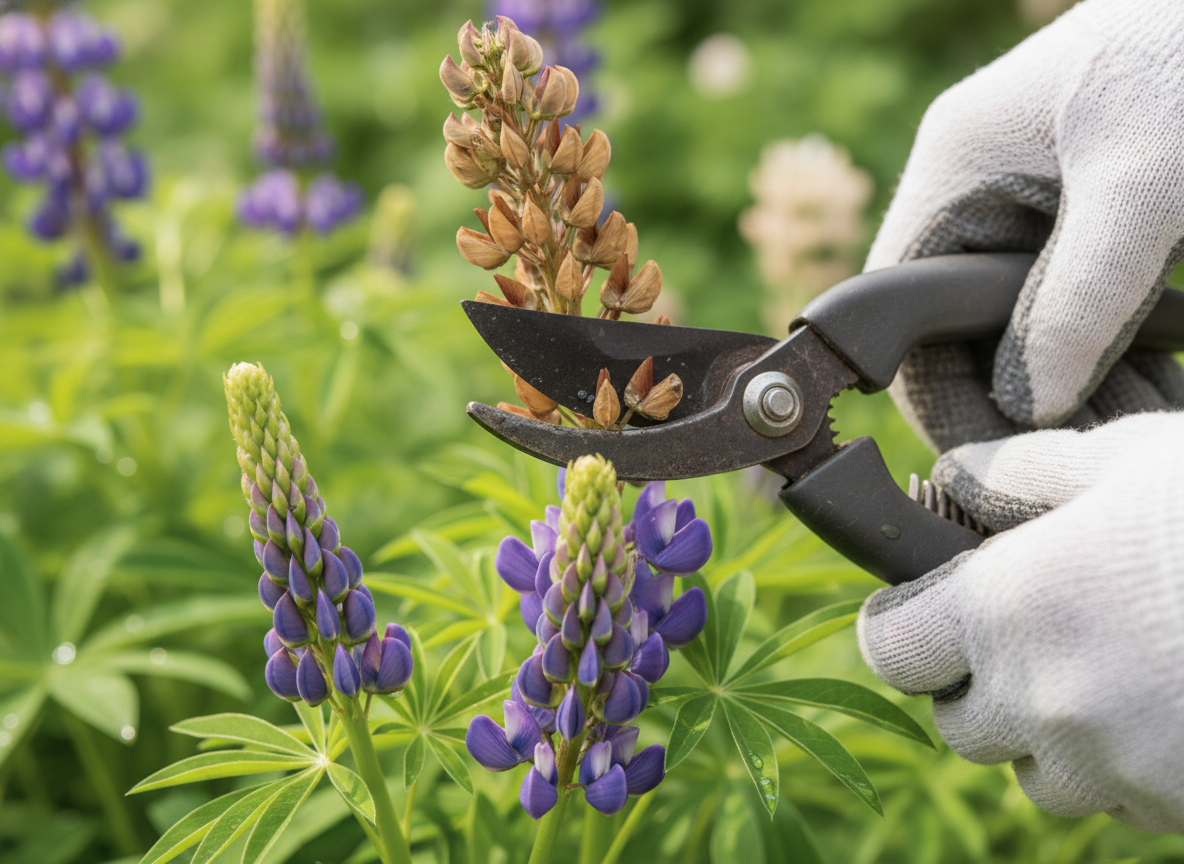 A gloved hand uses pruning shears to deadhead a lupin flower — AI-generated illustration
Why this matters more for lupins than almost anything else
Lupins are short-lived perennials. A vigorous Russell lupin gives you maybe three to six good years before it tires and fades out, and nothing exhausts it faster than setting a full crop of seed. Every pod you let ripen is energy pulled out of the crown and the roots — the very parts that have to overwinter and come back next spring.
Deadheading isn’t just about a second flush, then. It’s life-extension. Keep the seed off and you keep the plant’s reserves where they belong, and a well-deadheaded lupin will often soldier on a season or two longer than one left to seed itself out.
There’s a second reason to stop the seed, and it catches a lot of people. Named Russell lupins and modern hybrids don’t come true from seed. Let them self-sow and the seedlings drift back towards muddy purples and washed-out mauves over a few generations — so the gorgeous bicolours you paid for quietly disappear and a patch of nondescript lupins takes their place. If you want more of the plant you actually bought, take cuttings in spring instead of trusting the seed.
This is the same logic behind cutting other early-summer performers back hard at the right moment. If you grow foxgloves or hardy geraniums, you’ll recognise the move: cut before the plant commits to seed, and it spends the saved energy on you instead.
 AI-generated illustration
Watch for the grey aphid while you’re in there
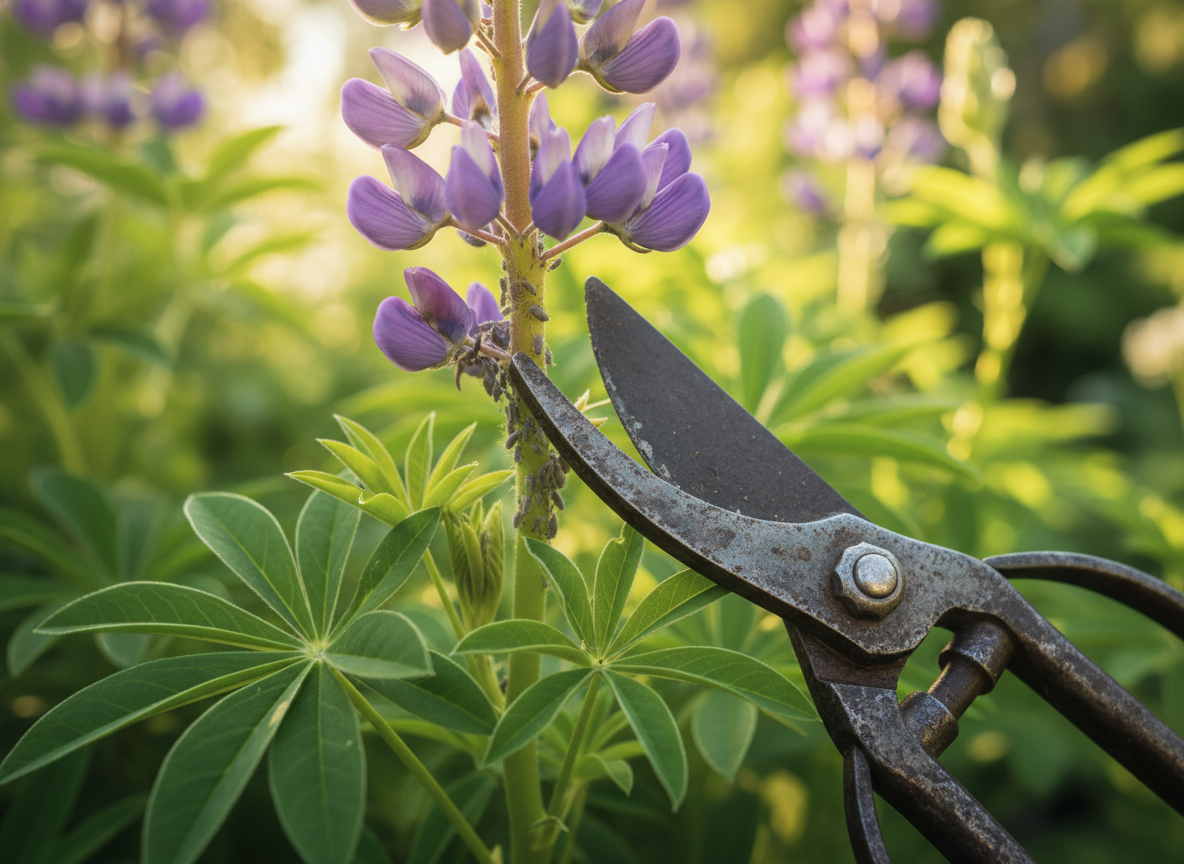
Deadheading puts your face right next to the part of the plant the lupin aphid loves. This is a big, soft, greyish-white aphid — up to about 4 mm long — and it doesn’t bother with subtlety: it forms dense, mealy-looking colonies on the undersides of leaves and packed all down the flower spikes. Left alone in June it can wilt a whole plant.
The good news is you’re already holding the cure. Cut off any badly infested spikes — they’re spent anyway — and bag them rather than composting them on the spot. For colonies on the foliage, a hard jet of water from the hose knocks most of them to the ground, where they struggle to climb back up, and a thumb-and-finger squash deals with the rest. Catch them early, before the colonies get crowded and start producing winged forms that fly off to colonise the rest of the border.
The last cut of the year
Once the second flush is over and the foliage starts collapsing in autumn, cut the whole plant down to a few centimetres above the crown. Clear the old leaves away — they’re a favourite overwintering spot for slugs and disease — and the plant rests until it pushes fresh growth in spring.
That’s the full year in three moves: deadhead the main spike in June, enjoy the side spikes in late summer, cut down in autumn. None of it is hard. The only part that trips people up is timing, and the plant tells you when — the moment the bottom of the spike turns to peas.
If you’re not sure whether a spike is far enough gone, or you want a reminder when your particular lupins are due for their cut, Cresco builds the timing into a care schedule for every plant in your garden — so the right cut lands in the right week without you having to track it. And once you’ve got the lupins sorted, the same June deadheading habit pays off across the border.