By the end of June a red valerian (Centranthus ruber) is at the turning point of its year. The first flush of dusky pink, crimson or white flowerheads has peaked, the lower stems are starting to flop open, and behind the fading blooms the plant is quietly loading thousands of tufted seeds onto the wind. What you do in the next fortnight decides whether you get a tidy second flush into autumn — or a hundred seedlings wedged into every wall, path and gravel crack by next spring.
Why this plant earns its reputation
Red valerian is one of those border plants that pays its way and then some: drought-proof, happy in the poorest soil, a magnet for bees and the hummingbird hawk-moth, and in flower from May right through summer. It’s also one of the most prolific self-seeders you can grow. Each spent flowerhead carries a froth of dandelion-like seeds, every one with its own parachute, and the smallest breeze lifts them into mortar joints, gravel drives and the dry cracks at the foot of a sunny wall — exactly the starved spots where they germinate best. A plant you welcomed three years ago becomes the one you’re forever levering out of the patio.
The cure isn’t to stop growing it — it’s to cut it back at the right moment, before the seed ripens and flies. That puts red valerian in the same management bracket as a few other generous self-seeders, like lady’s mantle and aquilegia, where one well-timed cut after the first flush saves you a whole season of weeding.
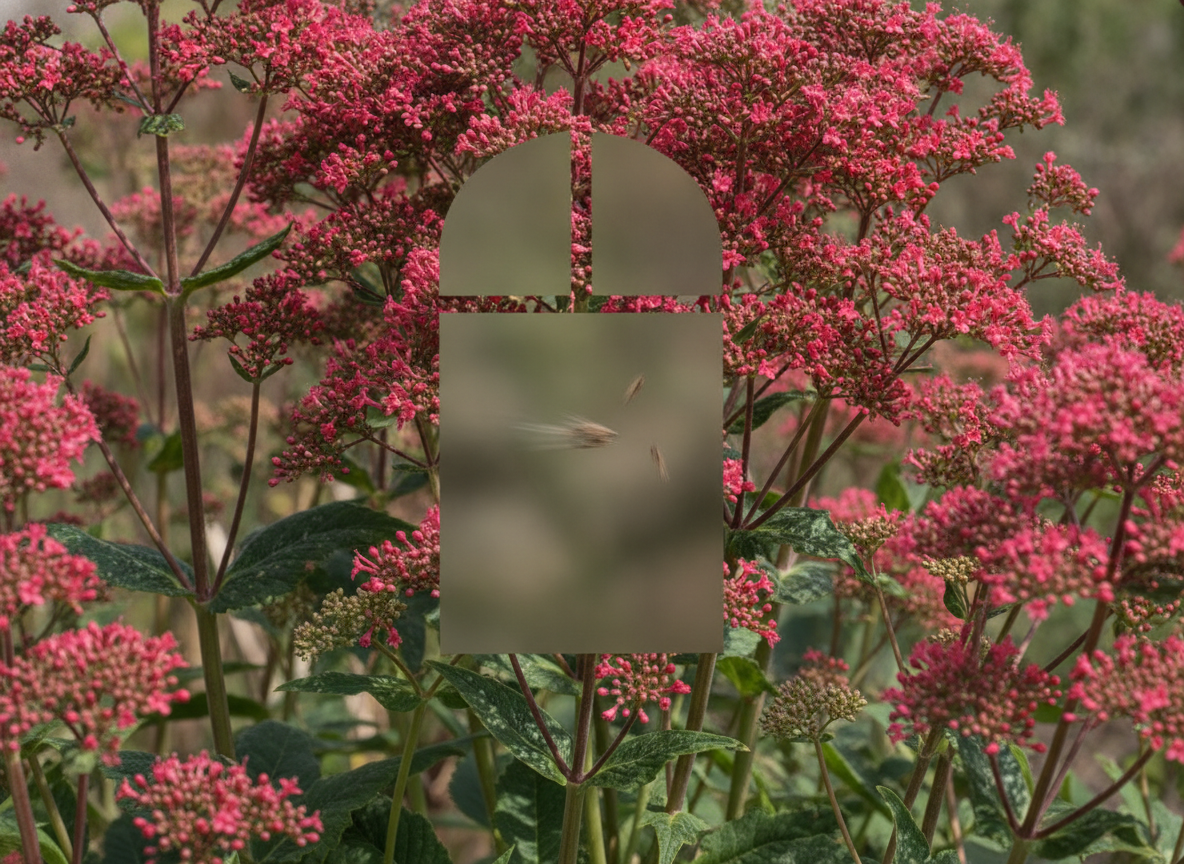 Red valerian flowers with a window pane highlighting a flying seed — AI-generated illustration
The window: cut before the seed flies, not after
The timing rule is simple: cut as the first flush goes over, not once it’s finished. The RHS advice is to cut back hard in July if self-seeding is a problem; across most of Northern Europe the first flush peaks in June, which puts the sweet spot at late June into early July. You’re aiming for the moment when most flowers have faded to a dull brown but the seed hasn’t yet turned fluffy and started to lift.
Run a hand over a faded head to check. If it’s still firm and the seeds sit green and tight, you’re in time. If it’s already soft and the white tufts pull away on your fingers, the seed is shedding — cut anyway to stop the rest, but expect a scattering of seedlings next spring.
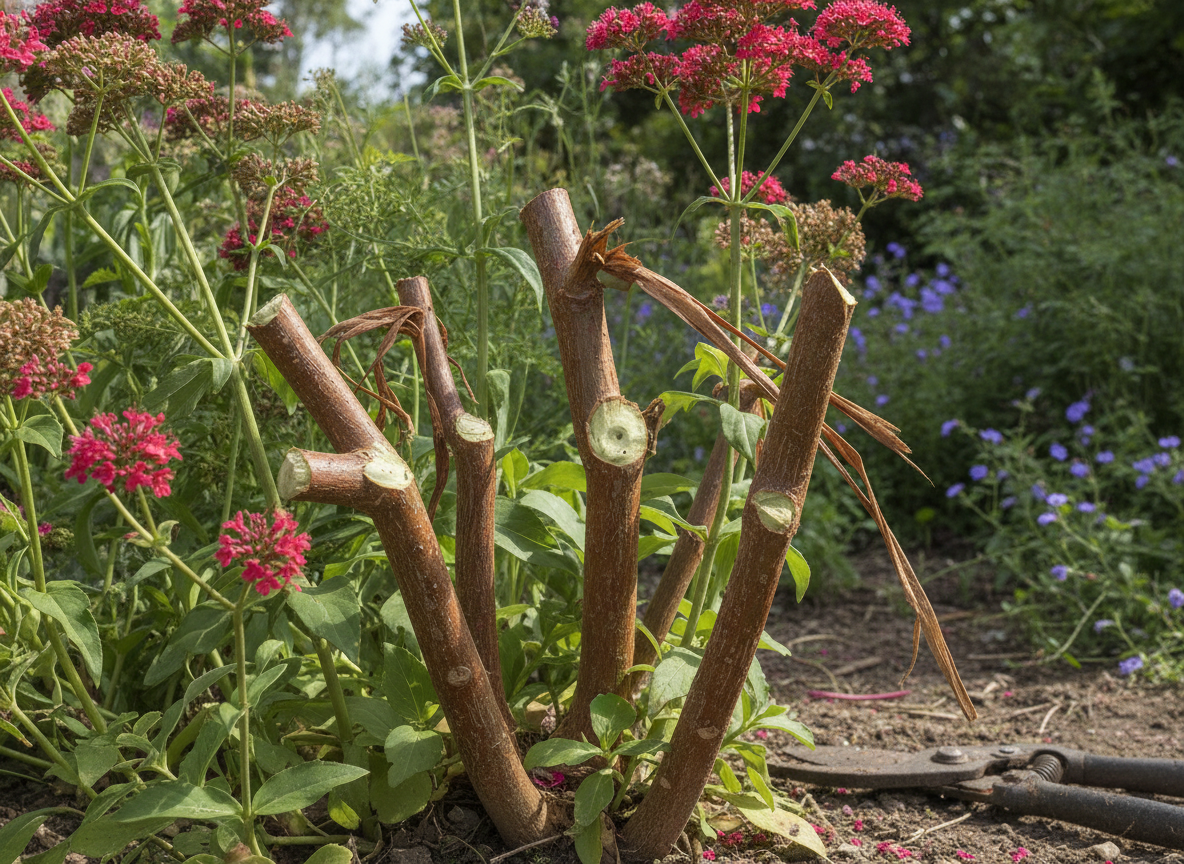 The photograph depicts cut red valerian stems with pruning shears nearby — AI-generated illustration
How hard to cut
Don’t deadhead red valerian one stem at a time. It sprawls from the base and you’ll never keep up, snipping single heads while a dozen more go to seed behind you. Treat it the way you’d treat a catmint: shear the whole plant at once.
- Take it down hard. Cut every flowered stem back by at least half. On a leggy, well-established clump, go down to within 15–20 cm of the ground — to the low cushion of fresh blue-green leaves you’ll find hiding at the base.
- Don’t be timid. Red valerian regrows fast from the crown, and a hard cut gives you denser, less floppy growth and a stronger second flush than a nervous trim ever will.
- Stay out of the old wood. The one thing to avoid is cutting into the woody base of a very old plant — those stems lignify with age and won’t reshoot from bare wood. If your clump is more wood than leaf, it’s near the end of its naturally short life; let a self-sown seedling take over instead.
The sap is harmless — no gloves needed, unlike euphorbia — though the cut stems can feel slightly sticky.
The second flush — and the bees
Cut now and a well-fed plant in a sunny spot will push a second flush of flowers in August and September. It’s smaller than the June show, but very welcome late in the season when the rest of the border is tiring. Those late flowers earn their keep for more than looks: red valerian is a top nectar source, and a second flush feeds bees, butterflies and the hummingbird hawk-moth right through into autumn.
If you’d rather keep some seedheads for their structure, or to let a few seedlings come, simply leave one or two plants uncut in an out-of-the-way corner and shear all the rest. You get the wildlife seed and a handful of self-sown replacements without carpeting the whole garden.
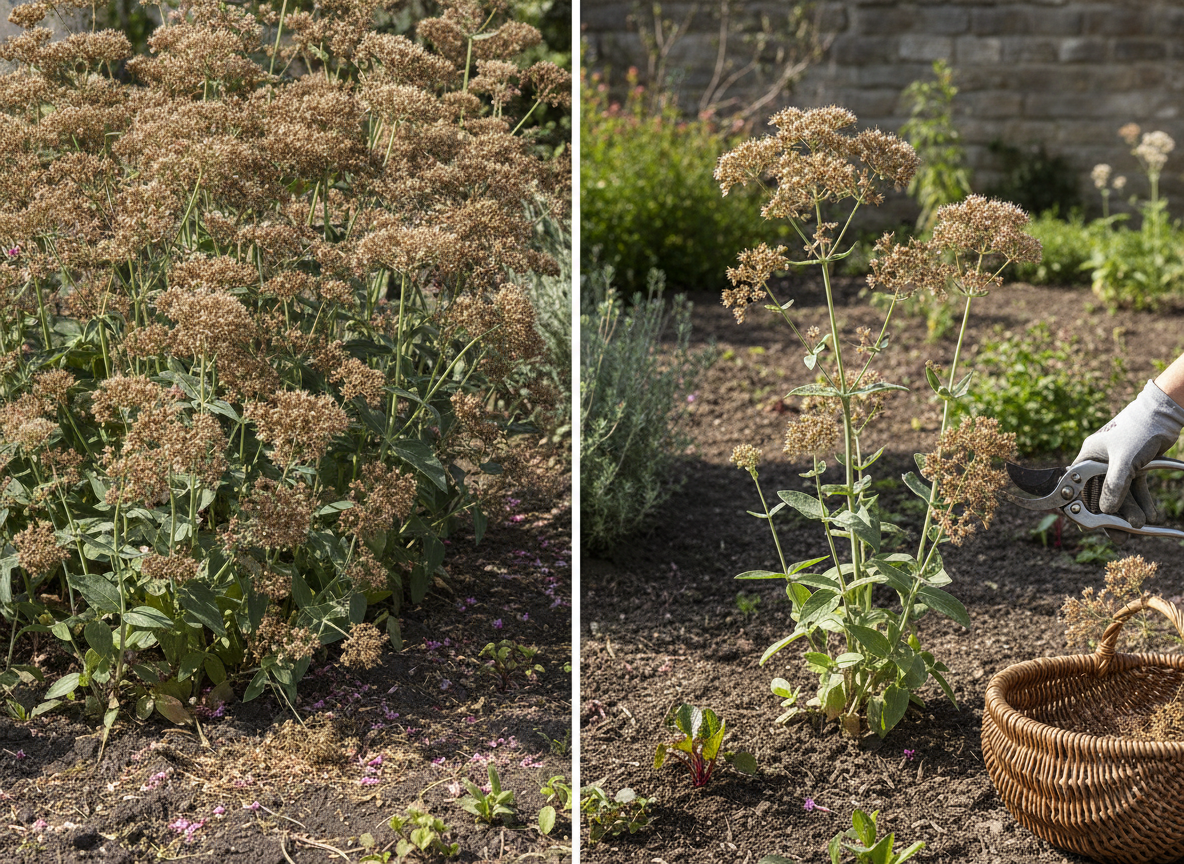 Red valerian plants in a garden setting — AI-generated illustration
Where to let it seed — and where not to
Red valerian seeds itself where it lands, not where you’d plant it, and each seedling drives down a long taproot that makes it stubborn to move once established. So the trick is to be ruthless near paving, walls and gravel — cut those plants before they seed, every time — and relaxed on a dry bank or in a hot, poor border, where a self-sown drift of valerian is exactly the loose cottage-garden look you’re after.
Either way it’s the same cut at the same moment. You’re just choosing how many plants to leave standing.
The cut is easy — the week is everything
Red valerian is forgiving about how you cut it but unforgiving about when: a week or two late and the seed is already in your neighbour’s gravel. That’s the pattern with almost every summer cutback — the right week matters more than the right technique, and it shifts a little every year with the weather.
Cresco keeps a pruning calendar for every plant you grow, checked against your local conditions, so you get a nudge in the week your valerian — or your catmint, or your lady’s mantle — is actually ready for its cut, rather than a generic date from a book. Snap a photo of it and Cresco will tell you the window for your own garden.