The June scruffiness isn’t decline — it’s the plant going to seed
By the middle of June your aquilegia has been and gone. The nodding spurred flowers that floated over the border in May — the granny’s bonnets, the long-spurred McKana types, the inky ‘Black Barlow’ doubles — have dropped their petals, and what’s left is a forest of upright seed pods on bare stalks above a clump of foliage that’s starting to look tired. The leaves go pale, often dusted with a grey-white bloom, and the whole plant takes on a tatty, half-collapsed look that reads like a perennial dying back early.
It isn’t dying. Aquilegia (columbine, or granny’s bonnet) is a short-lived perennial that flowers itself into a frenzy and then throws everything it has into setting seed. Those green pods splitting open in late June can scatter hundreds of seeds per plant, and the foliage that fed the flowers is now surplus to requirements — which is exactly why it’s the first thing powdery mildew colonises once the plant’s energy turns inward. Left alone, you get a mildewed, seed-heavy clump that looks rough for the rest of the summer and a carpet of unwanted seedlings next spring.
The fix is the most satisfying cut in the mid-June border, and it does three jobs at once.
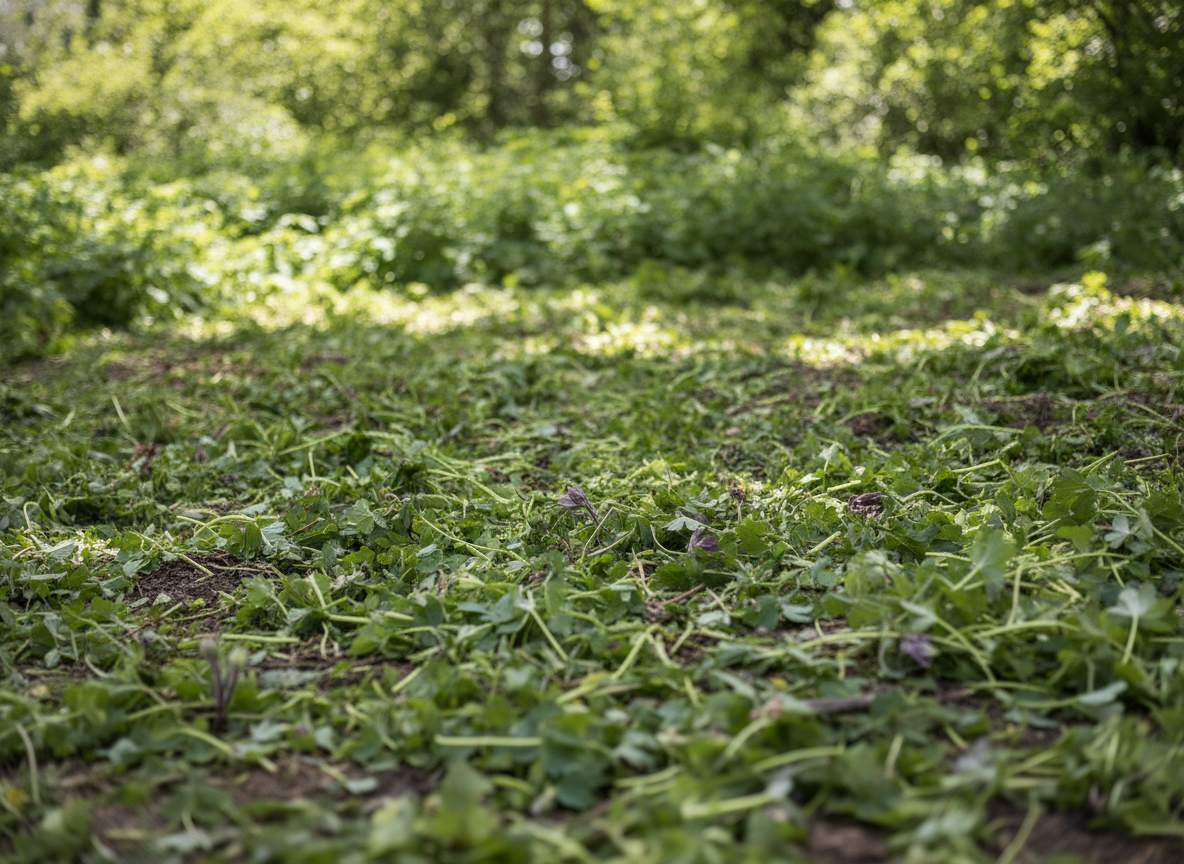 Cut aquilegia leaves and stems lie on the ground in a garden — AI-generated illustration
Cut the whole thing to the ground — leaves and all
This is not deadheading. You’re not snipping off the spent flower stalks and leaving the foliage to soldier on. With aquilegia you take the shears and cut the entire plant — flower stems, seed pods and the whole mound of leaves — right down to 5–8 cm above the crown.
It feels drastic, especially if some of the foliage still looks reasonable, but it’s the standard treatment and the plant is built for it. Aquilegia regenerates from the base. Within two to three weeks of a hard June cut and a good soak, a fresh rosette of clean, blue-green leaves pushes up from the crown — and that new growth carries you through to autumn looking far better than the mildewed clump you removed. A timid trim that takes the seed heads but leaves the old foliage just keeps the mildew in residence and the plant looking weary.
Time it by the pods, not the calendar
The window is wide, but the trigger to watch for is the seed pods, not a date. Aquilegia flowers from a green, upward-pointing pod that holds the seed in five fused chambers. While those pods are soft, plump and closed, you’ve still got time. The moment they start to dry, go papery and split at the top, the seed is ripe and ready to spill — and that’s the line you don’t want to cross if you’re trying to control self-sowing.
In a normal Northern European year that means the second or third week of June for most of the clump, earlier after a warm spring. Cut while the pods are still green and closed and you intercept the seed before it drops, exactly the same logic that makes a timely cut work on lady’s mantle, another June self-seeder that turns into a hundred seedlings if you let it ripen. Wait until the pods rattle and you’ve already lost that battle for next spring.
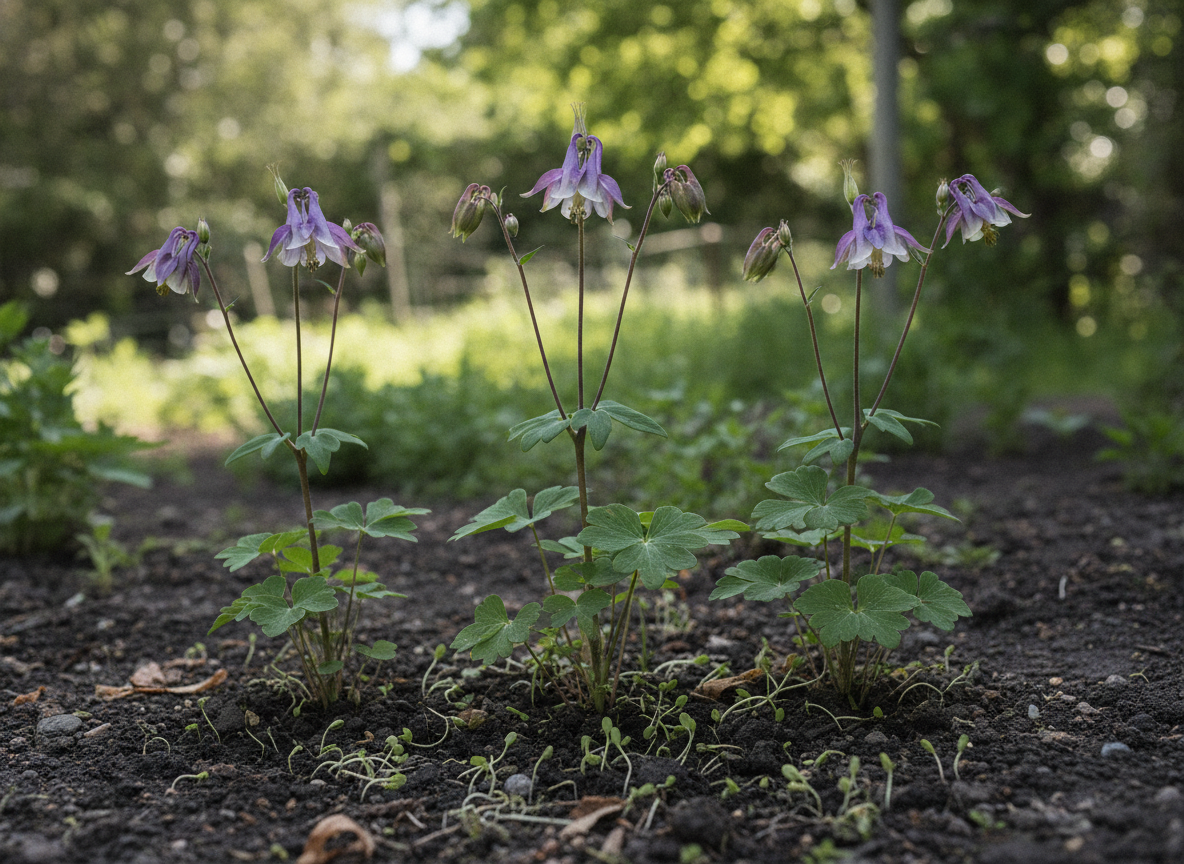 Aquilegia plants and seedlings in a garden — AI-generated illustration
Self-seeding: keep a few, lose the rest
Here’s the decision the cut lets you make. Aquilegia hybridises with abandon — plant a named long-spurred variety next to a dark double and the seedlings will be neither, just a muddle of muddy purples that slowly takes over and crowds out the parents. If you love a particular plant, cutting before the seed drops is how you keep it from being swamped by its own offspring.
But aquilegia is also short-lived — most plants are tired by their third or fourth year — and a controlled amount of self-seeding is how a colony renews itself. So the practical middle path is this: cut the whole clump down for tidiness and mildew control, but if you want replacements, leave one or two of the best pods on a single stem to ripen and scatter where you want them, then cut that last stem once it’s shed. You get fresh foliage, no mildew, and a handful of seedlings instead of a flood. Move the seedlings while they’re small if they land in the wrong place — they resent disturbance once the taproot is down.
Powdery mildew — and the newer downy mildew you shouldn’t compost
Most of the grey-white film on June aquilegia foliage is ordinary powdery mildew: cosmetic, encouraged by dry roots and crowded air, and entirely solved by the hard cut, because you’re removing the infected leaves wholesale and the fresh regrowth comes clean. Keep the new growth watered through any dry spell and it usually stays clean into autumn.
There’s a more serious lookalike worth knowing about, though. Aquilegia downy mildew (Peronospora species) has spread through European gardens over the last decade and behaves very differently — it shows as yellow blotches on the upper leaf surface with a grey-purple fuzz underneath, distorts new growth, and can kill a plant outright. If your regrowth comes back distorted and discoloured rather than clean, suspect downy mildew: cut it out, and bin or burn the material — don’t compost it, because the spores survive. Powdery mildew you can shrug off; downy mildew you isolate.
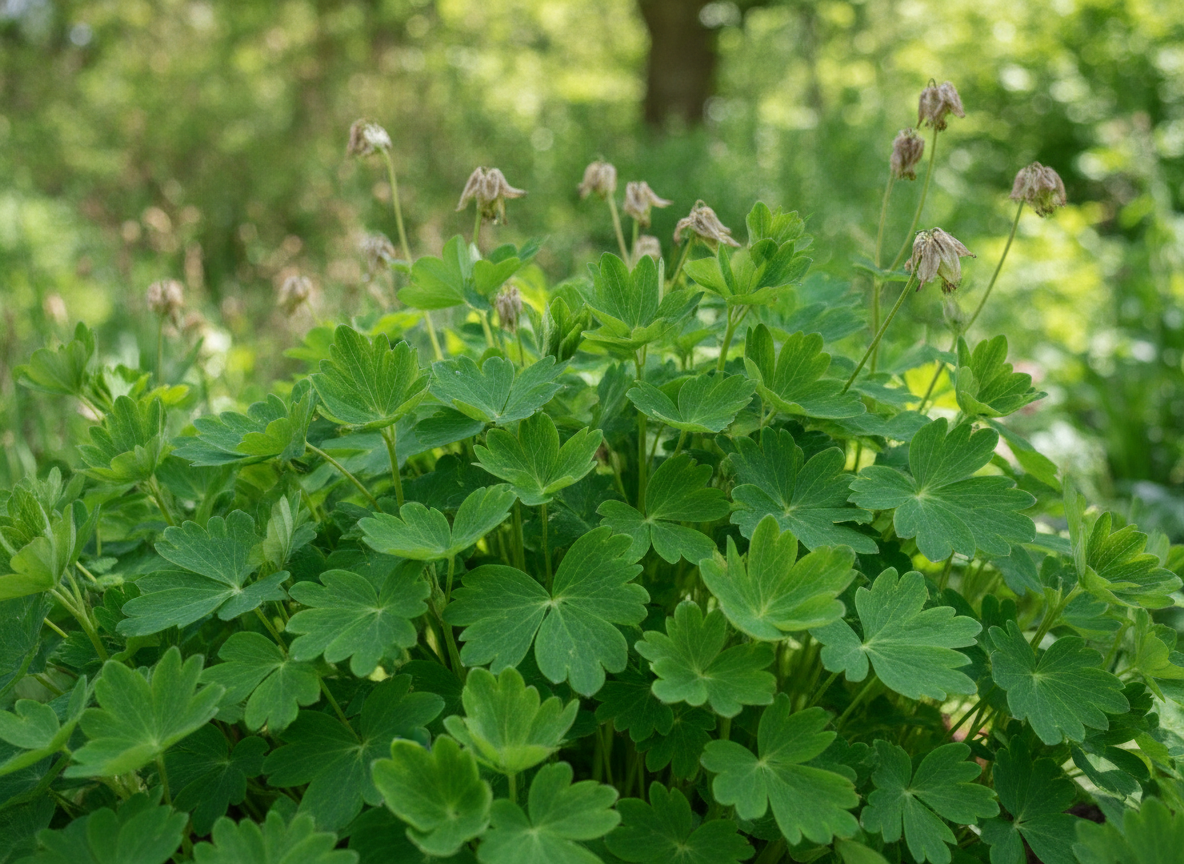 Aquilegia plants with green leaves and spent flowers in a garden — AI-generated illustration
Don’t expect a second flush — expect fresh leaves
It’s worth setting the right expectation, because aquilegia doesn’t behave like catmint or delphiniums. You’re not cutting for a reliable second flush of flowers — you’ll occasionally get a few sporadic late blooms, but the real reward is a clean mound of fresh foliage that earns its place in the border for the rest of the season, instead of a mildewed, seed-strung mess.
That’s the same reason you’d cut oriental poppies hard once they collapse: not every hard cut is chasing more flowers — some are simply trading a tatty plant for a fresh one. Give the clump a good soak after cutting, and a light balanced feed if your soil is poor, and leave it to rebuild.
What you get back
The mid-June aquilegia cut is one of those jobs that pays out three ways from a single pass of the shears. You strip out the powdery mildew before it sets in for the summer, you intercept hundreds of seeds before they scatter into a weed problem, and you replace a tired flopping clump with a fresh rosette of clean foliage — while keeping, if you choose, just enough seed to renew a short-lived plant on your terms.
Not sure whether your clump is ripe enough to cut, or whether that grey film is harmless powdery mildew or the downy mildew you need to bin? Snap a photo in the Cresco app and it’ll tell you what you’re looking at and exactly when the window opens.