The window opens when the spire goes over, not when it browns
A delphinium spire flowers from the bottom up. The lowest florets open first, then the colour climbs the stem over a couple of weeks until only the tip is left. The moment you want is the moment the bottom two-thirds have dropped their petals and the top is fading fast — usually mid-to-late June for the first flush, depending on your variety and how warm the spring ran.
That is earlier than most people cut. The temptation is to leave the spire standing until it is fully brown and obviously finished. By then the plant has read the spent flowers as a signal to set seed, and it has already started pouring its energy into pods instead of new shoots. Cut while the spire is going over — not gone over — and you redirect that energy before it leaves the building.
This is the same logic behind the late-May chop on hardy geraniums: early-flowering perennials respond to a hard cut after their first show by pushing fresh growth, and the timing of the cut decides whether you get a real second flush or just tidy stumps.
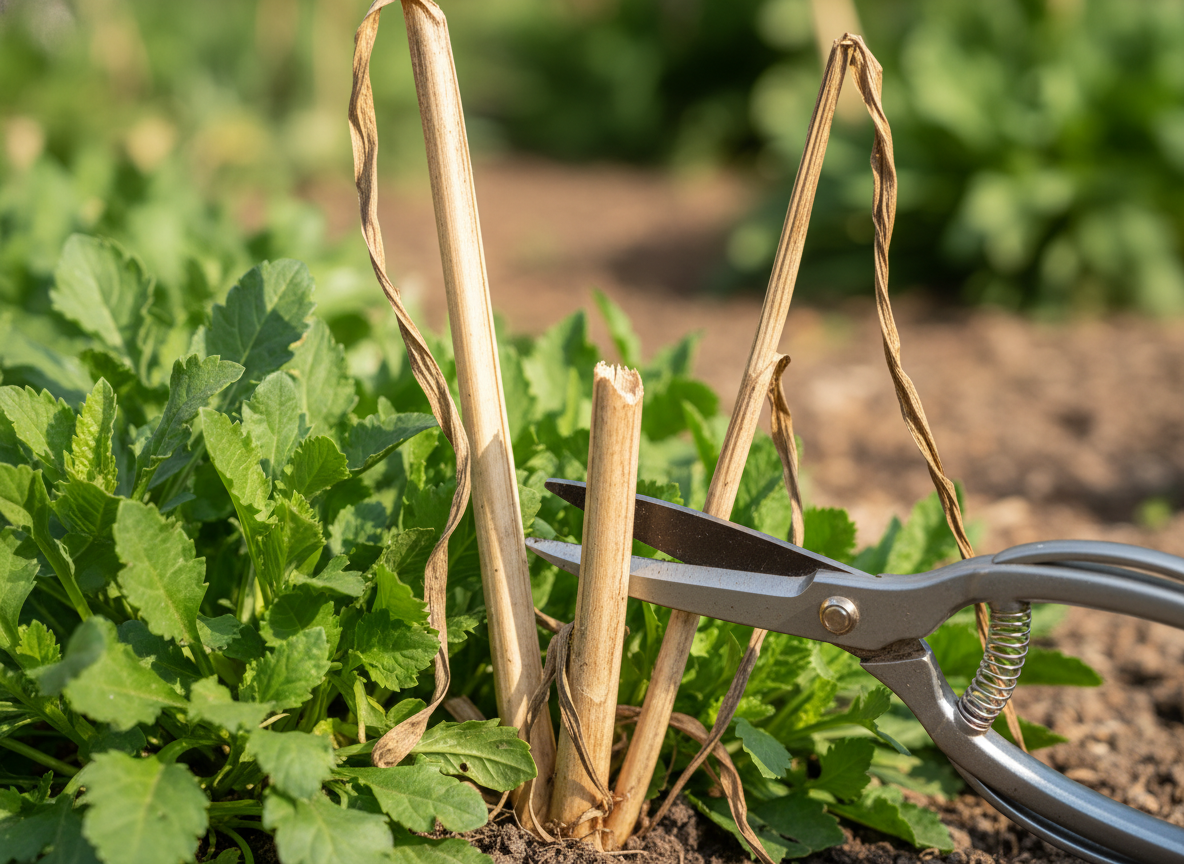 . A pair of gardening shears cuts a dried plant stem at its base — AI-generated illustration
Cut the whole stem to the base — not just the dead tip
Here is the mistake that costs people their second flush: snipping the faded flowerhead off the top and leaving the leafy stem standing. It looks neater, but it does almost nothing. The plant still has a full-height stem to maintain, and no signal to start again from the crown.
Instead, follow the flowered stem all the way down and cut it off about 5 cm above the ground — right back into the clump. Take the whole thing. You will feel like you are being brutal, especially while there is still green leaf on the stem, but that green leaf is on a stem that has already done its job. The new flush comes from buds at the very base of the plant, not from the old stems.
Leave any low rosette of fresh foliage that is already pushing from the crown — those are next month’s flowers in waiting. You are removing the spent flowering stems, not shaving the plant to bare earth.
 AI-generated illustration
Feed and water, or the second flush stalls
A delphinium that has just thrown up a metre of flower spike is hungry. If you cut it back and then leave it dry and unfed, it will sulk: you might get a few short stems in September, or nothing worth looking at.
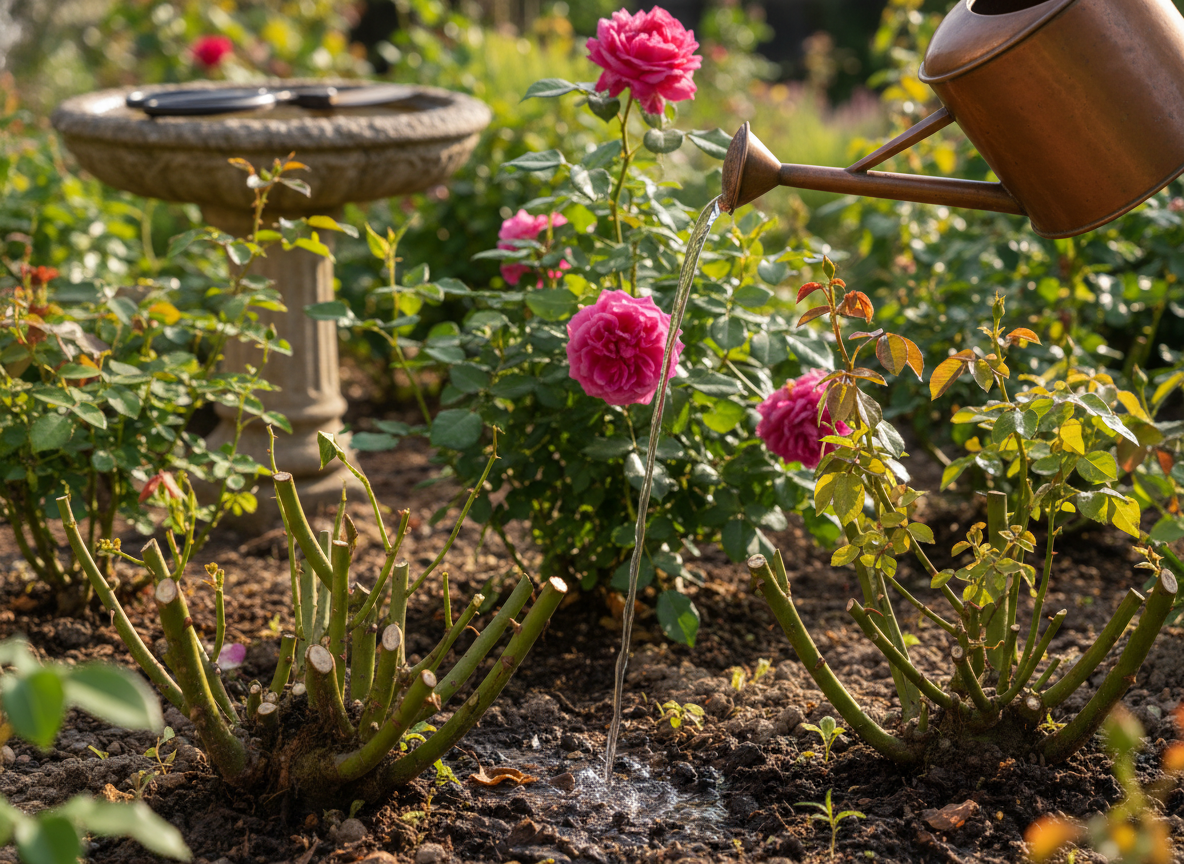
So treat the cut as the first half of the job and the feed as the second. Water the clump well if the ground is dry — June can turn dry fast — and give it a dose of a potassium-rich feed, the same sort you would reach for to push tomatoes or sweet peas into flower. Potassium drives flowering; a high-nitrogen lawn feed will just give you soft leaf. A mulch of compost around (not on top of) the crown keeps the moisture in while the new shoots get going.
Within a week or two you should see fresh shoots breaking from the base. These run up faster and shorter than the first flush, and they flower in August or September — smaller spires, but a genuine second wave of colour when most of the border has gone quiet.
Watch the new shoots — slugs find them first
The fresh growth that comes after a cut-back is exactly what slugs and snails want: soft, low to the ground, and tender. A clump that sailed through spring untouched can get its second flush stripped overnight in late June, before the shoots are tall enough to harden off.
Check the crown every few days once you have cut back, especially after rain. Whatever method you trust — wool pellets, nightly patrols, beer traps, copper rings — get it in place the day you cut, not the day you notice the damage. The cut and the slug defence are part of the same task. Lose the new shoots and there is no second flush to wait for.
 An outdoor garden with a wooden bench and gardening tools — AI-generated illustration
First-year and young plants: leave the cut for next year
If you planted your delphiniums this spring, ease off. A first-year plant is still building a root system and a crown, and a hard chop-and-second-flush cycle asks a lot of a young plant. Deadhead the spent spire to stop it setting seed, but don’t expect — or force — a full second flush. Let it put its energy into establishing, and you will get the proper two-flush performance from next year on.
The same goes for any clump that looks weak or has struggled through a dry spell: a tired plant cut hard and not fed can fail to come back at all. Healthy, established clumps are the ones that reward the brutal cut.
What you actually get back
Done right, the late-June cut buys you three things. You stop the plant wasting itself on seed it doesn’t need to set. You get a second flush of spires in late summer, when delphiniums are an unusual and welcome sight in a border that has mostly moved on to its August colours. And you get a tidier, healthier clump going into autumn, with fresh foliage instead of a collapse of brown stems and powdery mildew.
It is the same principle that makes deadheading lupins worth the effort: with the short-lived, fast-flowering perennials of the early-summer border, the cut you make in June is what decides whether the plant gives you one show or two.
If you are not sure your plant is the right type, or whether a clump is established enough to take the hard cut, snap a photo in the Cresco app — it will tell you what you are looking at and when its window opens.