A sweet pea (Lathyrus odoratus) is an annual with a single goal: set seed and die. Every flower it opens in June is a means to that end, not the end itself. The fragrance, the colour, the long stems you want for the vase — all of it is bait for a pollinator, and the moment a flower is fertilised the plant starts swelling a pod behind it. Once that pod is on the way, the vine reads the job as done and throttles back flower production. Leave a single stem to set seed and you can watch the whole plant lose interest within a fortnight.
That is the entire secret to a sweet pea that flowers from June into September: never let it finish. Keep taking the flowers and the plant keeps making them, because as far as it knows it still hasn’t managed to reproduce. Stop for a week on holiday, come back to a tangle of fat green pods, and the flowering is effectively over for the year.
What a single pod does to the plant
Watch a stem that you’ve left alone. The flower fades, the petals shrivel, and behind them a slim green pod starts to fatten — flat at first, then plumping as the seeds inside swell. That pod is a hormonal signal. The developing seeds pump out the growth chemistry that tells the rest of the vine to redirect sugars away from new buds and into ripening seed.
The plant only has so much energy. It cannot fund a flush of new flower spikes and a crop of ripening pods at the same time, so it chooses the pods every time — that is its whole reason for existing. This is why a sweet pea that was throwing ten stems a week in late June can be down to two or three thin, short-stemmed blooms by mid-July if it has been left to seed. It hasn’t run out of steam. It has succeeded, and a successful annual stops flowering.
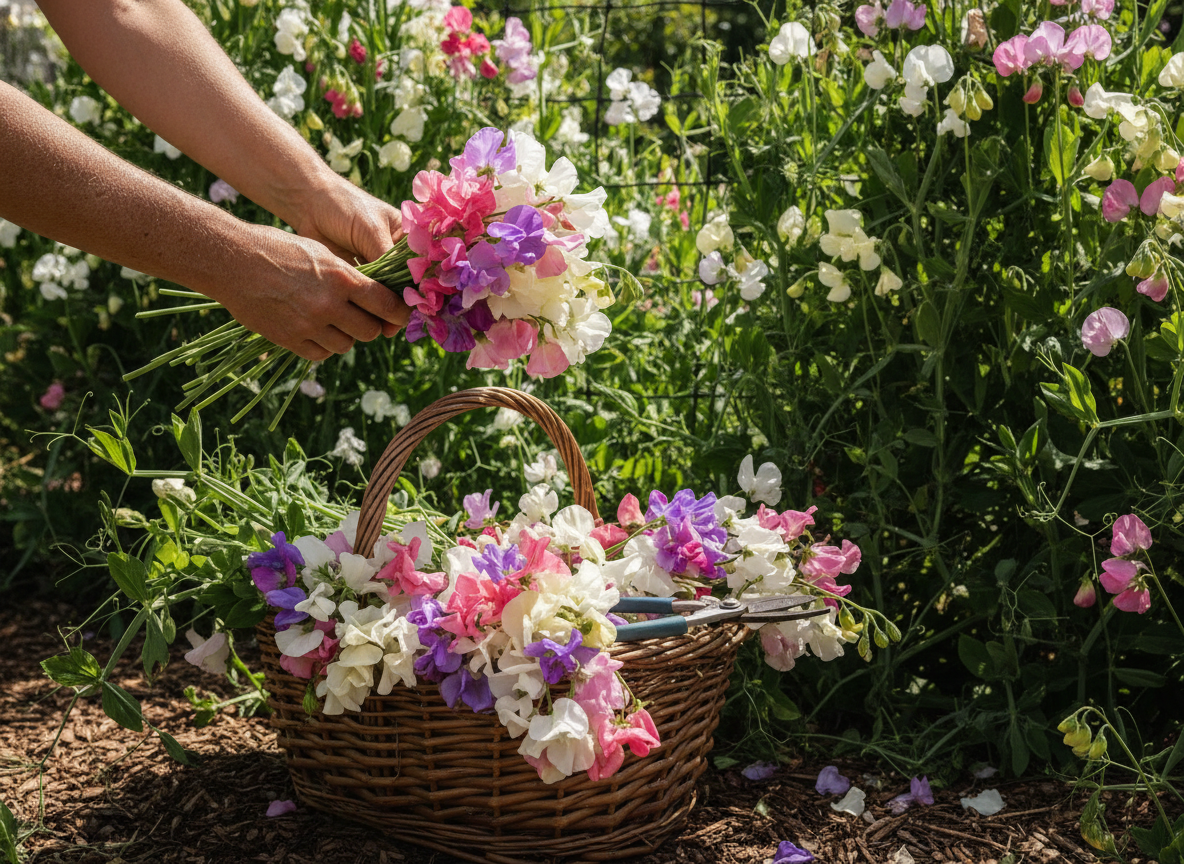 Hands picking sweet pea flowers and placing them into a basket — AI-generated illustration
The rule: pick every bloom, every day or two
The RHS puts it plainly — annual sweet peas will stop flowering if seedpods are allowed to develop, so you remove the flowers as often as you possibly can. In practice that means walking the row every day or two through the season and taking every open stem, whether you want it indoors or not.
This is the part most gardeners get wrong. They pick the nicest stems for a vase, leave the rest “to enjoy on the plant,” and those left-behind flowers quietly set the pods that shut the vine down. There is no such thing as leaving a few for the bees. If a flower is fully open, it comes off — into the house, into the compost, it doesn’t matter. The act of removing it is what keeps the plant working.
Pick in the cool of the morning when the stems are full of water and the scent is strongest. A stem is at its best for the vase when the lowest one or two flowers are open and the top buds are still showing colour but closed — it will keep opening up the spike in water for the best part of a week.
 AI-generated illustration
How to make the cut
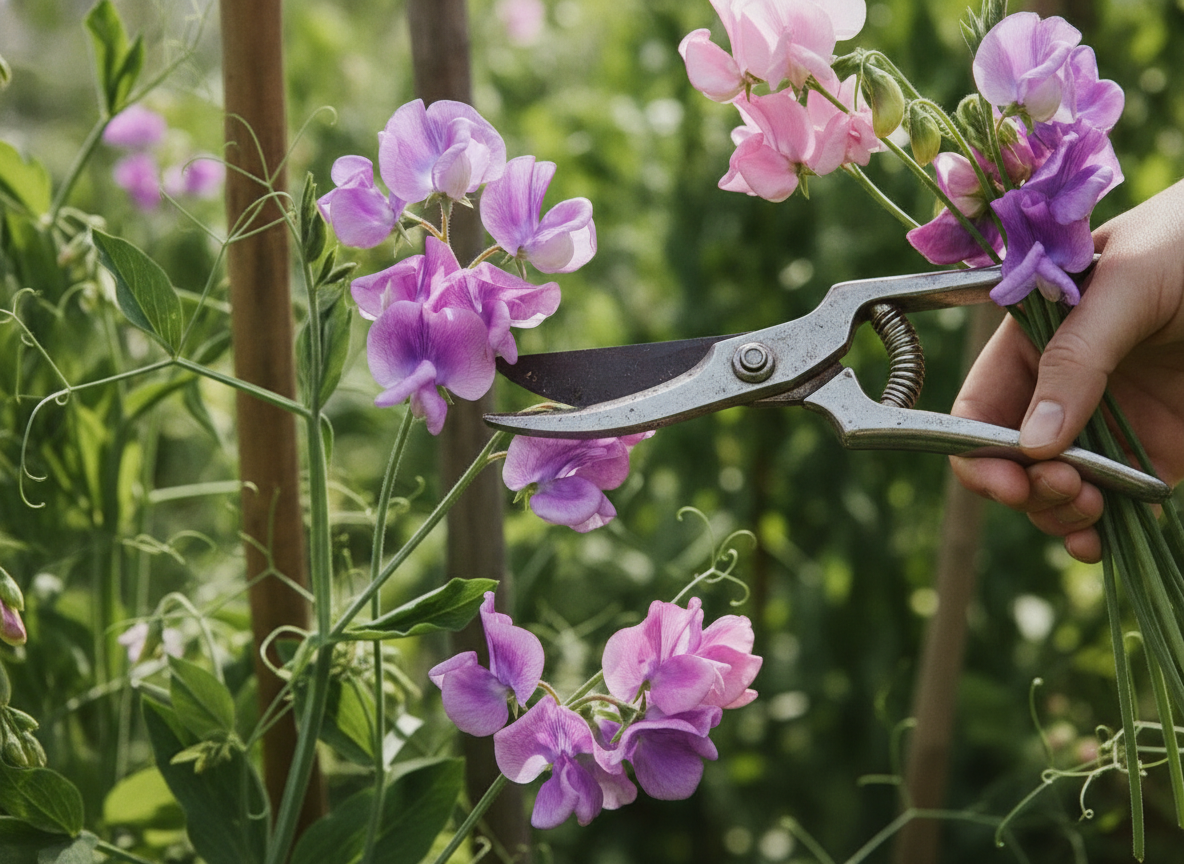
You don’t need secateurs for sweet peas — the stems are soft enough to pinch, though a small scissors gives a cleaner finish on a thick cordon stem. Follow the flower stem (the thin stalk carrying the blooms) down to where it joins the main climbing stem, and take it off right at that junction. You’re removing the whole flower stalk, not just the spent heads, so nothing is left behind to make a pod.
If you’re only deadheading a faded flower rather than cutting for the vase, the principle is identical: take the entire little stem back to the main stem. A flower snapped off halfway leaves a stub that can still swell a pod or two at the base.
Hunt down the pods you already missed
However diligent you are, some flowers will slip through — hidden behind foliage, opened and fertilised between visits. So every time you pick, spend thirty seconds hunting for pods. They’re easy to spot once you know the shape: flat-to-plump green pea pods, often in twos and threes, hanging where a flower used to be.
Snip off every one you find, however far along it is. A half-ripe pod is still draining the plant, and removing it tells the vine the mission has failed again — keep flowering. This pod patrol is the single most useful five minutes you can spend on a sweet pea in July, and it’s the step that separates a wigwam still going in September from one that browned off in the heat of high summer.
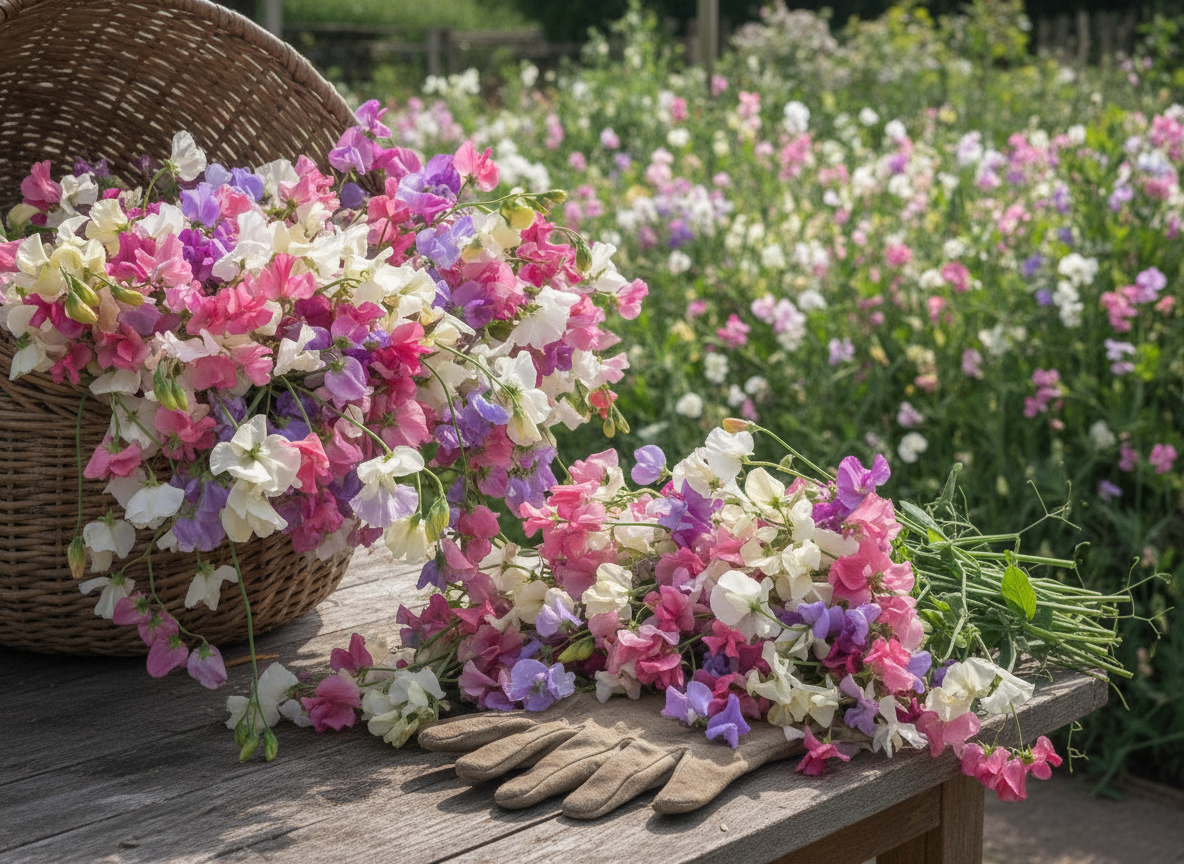 A large quantity of sweet peas overflowing from a basket and resting on a wooden table — AI-generated illustration
When picking isn’t enough
If you’re picking religiously and the flowers still dry up in July, the vine is usually telling you about its roots, not its flowers. Three things stall a sweet pea even when the pods are under control:
- Drought. Sweet peas are thirsty. A dry root run in a hot spell makes them drop buds before they open and shorten their stems. Soak them deeply at the base a couple of times a week in summer rather than splashing the leaves daily.
- Hunger. They’re hungry feeders, especially in pots. A weekly high-potash feed — the same tomato food you’d use on dahlias — keeps the flush coming. Too much nitrogen does the opposite: lush leaf, few flowers.
- Heat. Above the mid-20s°C, sweet peas sulk and may pause flowering whatever you do. That’s normal. Keep picking and watering through the heat and most will pick back up as nights cool in late summer.
Powdery mildew — a white dust on the leaves in a dry August — is the other common late-season killer. Keep the roots watered (mildew thrives on dry roots and humid air) and the plants will hold on far longer.
Keep them going into September
Get the picking habit right and an early-sown wigwam of sweet peas will flower from June well into September — a four-month run from a plant that, left to its own devices, would have shut up shop by mid-July. The work is trivial; the discipline is everything. Pick daily, pull every pod, water the roots, and feed once a week.
The same “remove the spent flower before it sets seed” logic runs through half the summer border — it’s exactly why snapping a rose deadhead off cleanly keeps the repeat blooms coming, and why a thumbnail pinch in May set your sweet peas up to climb in the first place. If you’d rather not keep the dates and feeding intervals in your head, Cresco tracks the picking and feeding window for every plant you grow and reminds you the week it matters.