First, work out which clematis you own
You don’t need the plant label. The flowering time tells you almost everything, and right now — mid-June — your clematis is sorting itself into one of three camps in front of you.
If it threw a curtain of small flowers in April and May and is already done, it’s a Group 1 (the montana types). Leave the secateurs in the shed; that one gets a hard shear straight after flowering and nothing now.
If it’s covered in large, saucer-sized flowers — 12 to 20 cm across, the ‘Nelly Moser’, ‘The President’, ‘Vyvyan Pennell’, ‘Niobe’ kind — that opened from late May and is now starting to fade, you have a Group 2. This is the one this post is about, and the one that will flower a second time if you act in the next fortnight.
And if it’s still all leaf, with buds that won’t open until July or August, it’s a Group 3 — the late, smaller-flowered viticellas and ‘Jackmanii’ types. Those you cut hard in February, not now.
The big saucer flowers fading on the vine this week are your cue. Group 2 clematis flower on short shoots coming off last year’s wood, and — this is the part most gardeners never get told — they will push a second flush on this year’s new growth if you deadhead the first one. The Royal Horticultural Society lists exactly this: prune lightly after the first flush of flowers to encourage a later show.
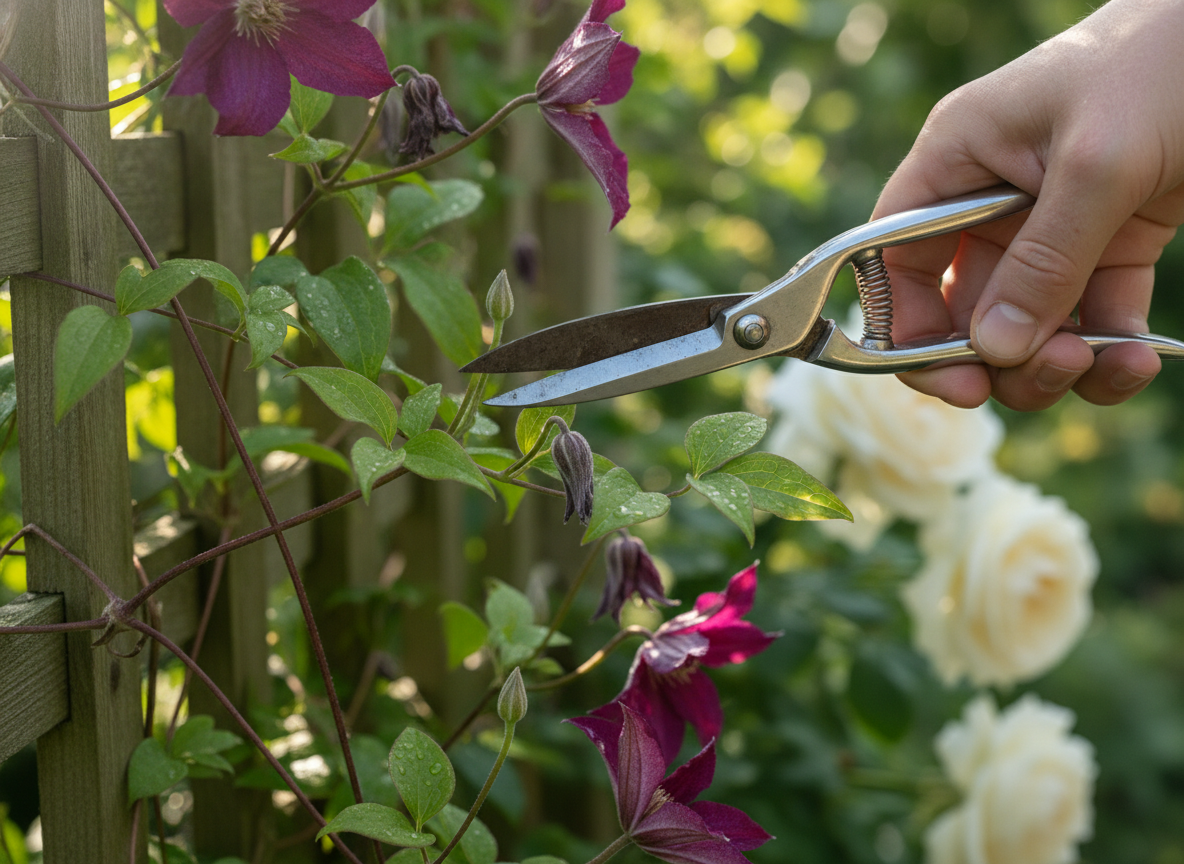 . A hand prunes a clematis vine with purple flowers — AI-generated illustration
The cut that triggers the repeat
Deadheading a Group 2 clematis is not snipping single dead flowers off the top like you would a rose. You follow each spent bloom back down its stem and cut to a plump pair of buds or a strong side shoot just below the faded flower — usually only 15 to 30 cm of stem comes off.
That short cut does two things. It stops the plant pouring energy into seed (those silky seedheads are pretty, but each one is a flower the plant won’t make). And it wakes the buds immediately below your cut, which break into the new shoots that carry the August–September flush.
Work over the whole plant, not just the parts you can reach standing up. The flowers you remove now are spent anyway; the ones you’re buying come on growth that hasn’t appeared yet.
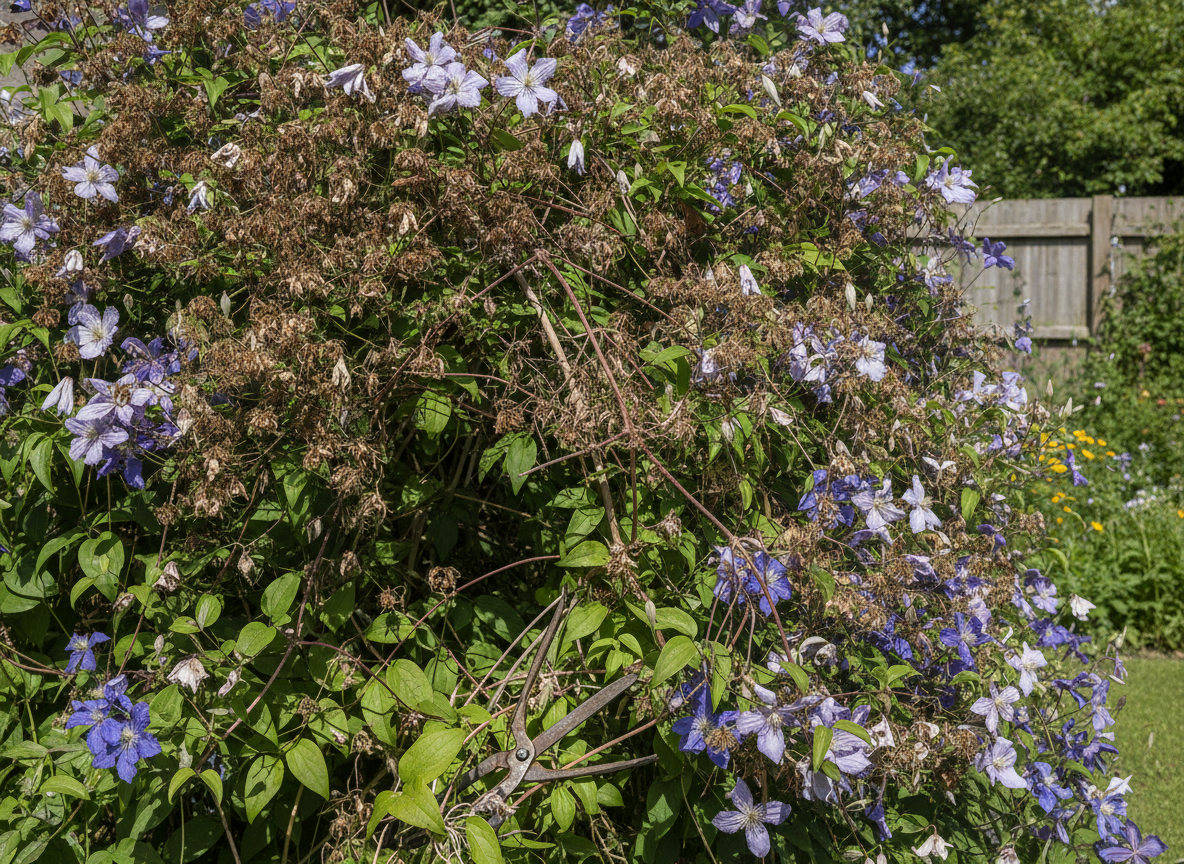 A large clematis plant with spent blooms and green foliage — AI-generated illustration
The cut to skip in June
Here’s where good intentions cost you the second show. Faced with a Group 2 clematis that’s gone a bit leggy and bare at the base, the temptation is to take the shears to the whole thing and cut it back hard, the way you would a Group 3 in late winter.
Don’t. Hard-pruning a Group 2 in June removes the very wood that’s about to carry the late flowers, and you’ll spend the rest of the summer looking at a tangle of leaf with nothing on it. The framework of older stems is the asset — your job in June is to tip them back to live buds, not to clear them out.
If your Group 2 is genuinely bare-legged and you want to rebuild it lower down, that’s a job for February, done gradually over two or three springs by taking one or two of the oldest stems right down each year. June is for the light, flower-chasing cut only.
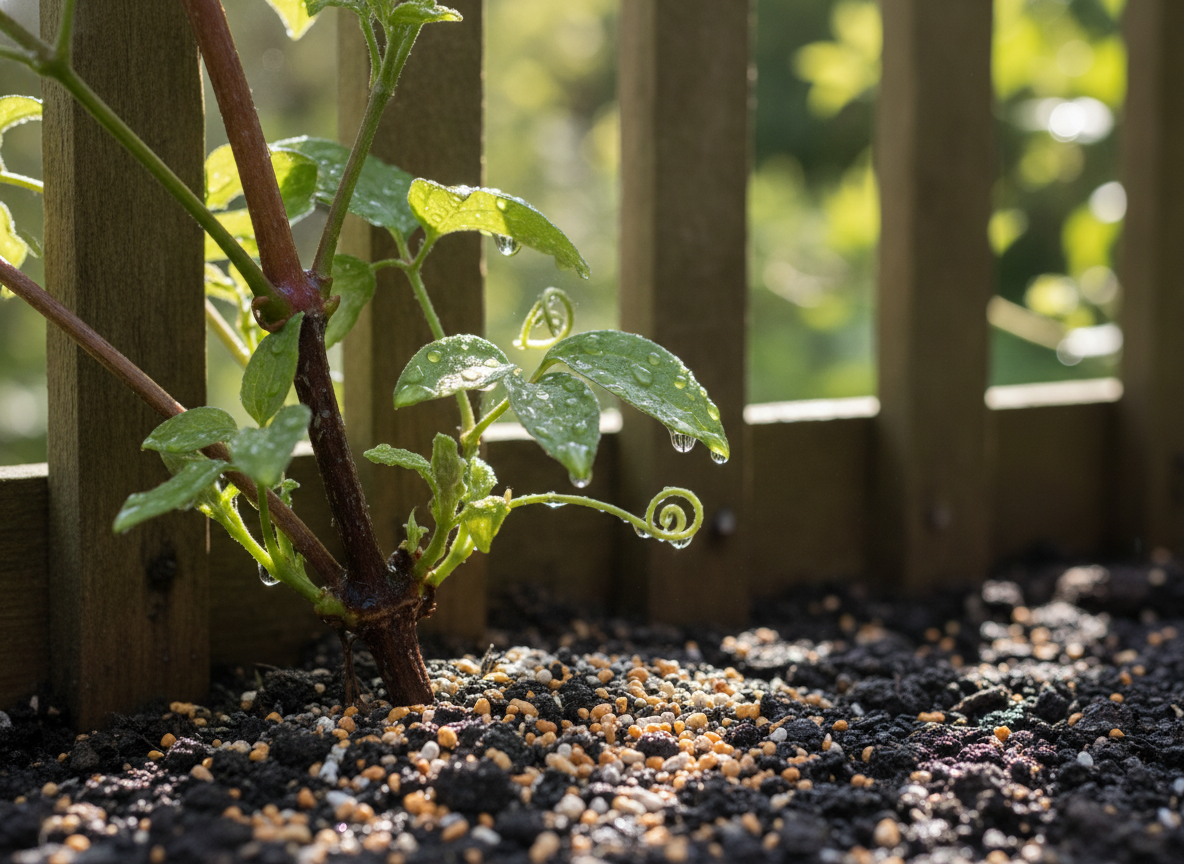 A young clematis plant with water droplets and fertilizer on the soil — AI-generated illustration
After the cut: feed, water, and let it run
A clematis making a second flush is being asked to flower twice in one season, and it can only do that if it’s fed. Once you’ve deadheaded, water the root run well — clematis hate to dry out — and give a balanced or potassium-rich feed (rose or tomato food both work) to fuel bud formation. A mulch over the roots keeps them cool, which is the other thing every clematis quietly wants: shade at the feet, sun on the face.
Then leave it alone. The new shoots will lengthen through July, set buds, and open from mid-August into September — a smaller, looser show than June’s, but a real one, on a plant most people think has finished for the year.
If yours turned out to be a Group 1 or 3
If the flowering time gave you a montana rather than a large-flowered hybrid, the timing and the cut are completely different — that one is a shear-it-all-back job the moment the flowers drop. We covered it here: Clematis montana after flowering: the late-May shear.
And the whole idea of cutting a plant in early summer to buy a second wave of flowers isn’t unique to clematis — it’s the same logic behind the Chelsea chop on perennials. Once you see it on one plant, you start spotting the window everywhere.
The hard part isn’t the cut — it’s knowing which clematis you’ve got and catching the fortnight when the deadhead actually pays off. That’s the kind of plant-specific, weather-aware timing Cresco is built to track for you: tell it what’s growing, and it tells you the week to reach for the secateurs.
Source: RHS — Clematis pruning: group two.