Two jobs, only one of them is for now
By late June penstemons are hitting their stride — the tall, foxglove-ish spires of tubular bells in wine red, plum, pink and white that will, if you treat them right, keep going until the first hard frost. That long season is the whole reason to grow them. But it’s also where people trip up, because a penstemon in full flower invites two very different cuts and only one of them belongs in your hand right now.
The first cut is deadheading: taking off the spent flower spikes as they go over, all through summer, to keep new ones coming. That one you do now, and keep doing. The second cut is the hard cut-back — shearing the whole plant down to tidy it for winter. That one is a mistake in summer and a mistake in autumn, and getting the timing wrong on it is the single most common way gardeners lose a penstemon they didn’t need to lose.
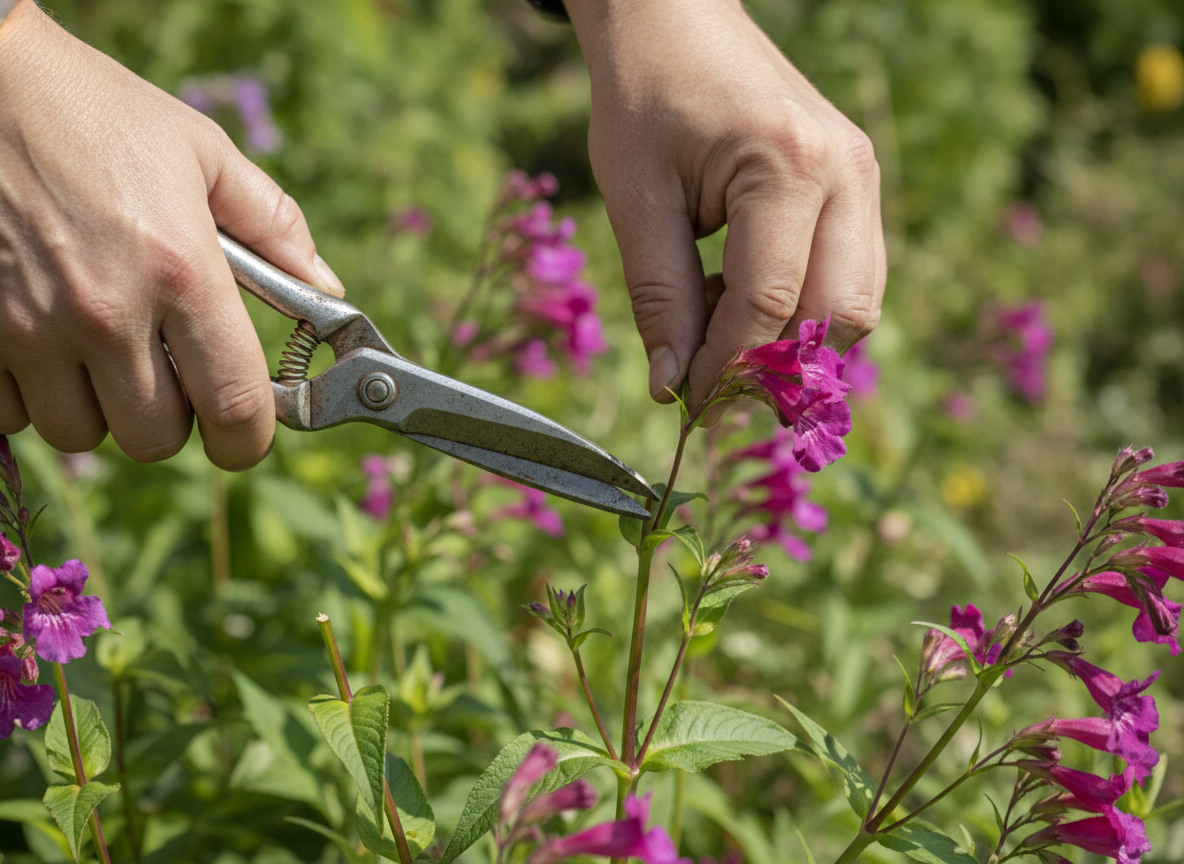 AI-generated illustration
Deadhead to the side shoot, not just the top
The point of deadheading a penstemon isn’t tidiness, it’s redirection. Left alone, a finished spike pours the plant’s energy into ripening seed and the flowering slows right down. Cut it off before that happens and the plant spends that energy breaking new flower stems instead — and penstemons are unusually willing to do it, which is why a deadheaded plant can still be in bloom in October.
The cut that works is the same precision cut you’d give a salvia: don’t just nip the dead bells off the very top. Follow the spent spike down the stem to the first pair of healthy leaves or the first visible side shoot — often a third to halfway down — and cut just above it. You’re removing the whole finished spike and the bare stem above the new growth, and leaving the side shoot to run up and flower. Snapping off only the top few withered flowers leaves a length of seeding stem that does nothing for you. Work spike by spike across the plant every week or two through July and August and the bells barely stop.
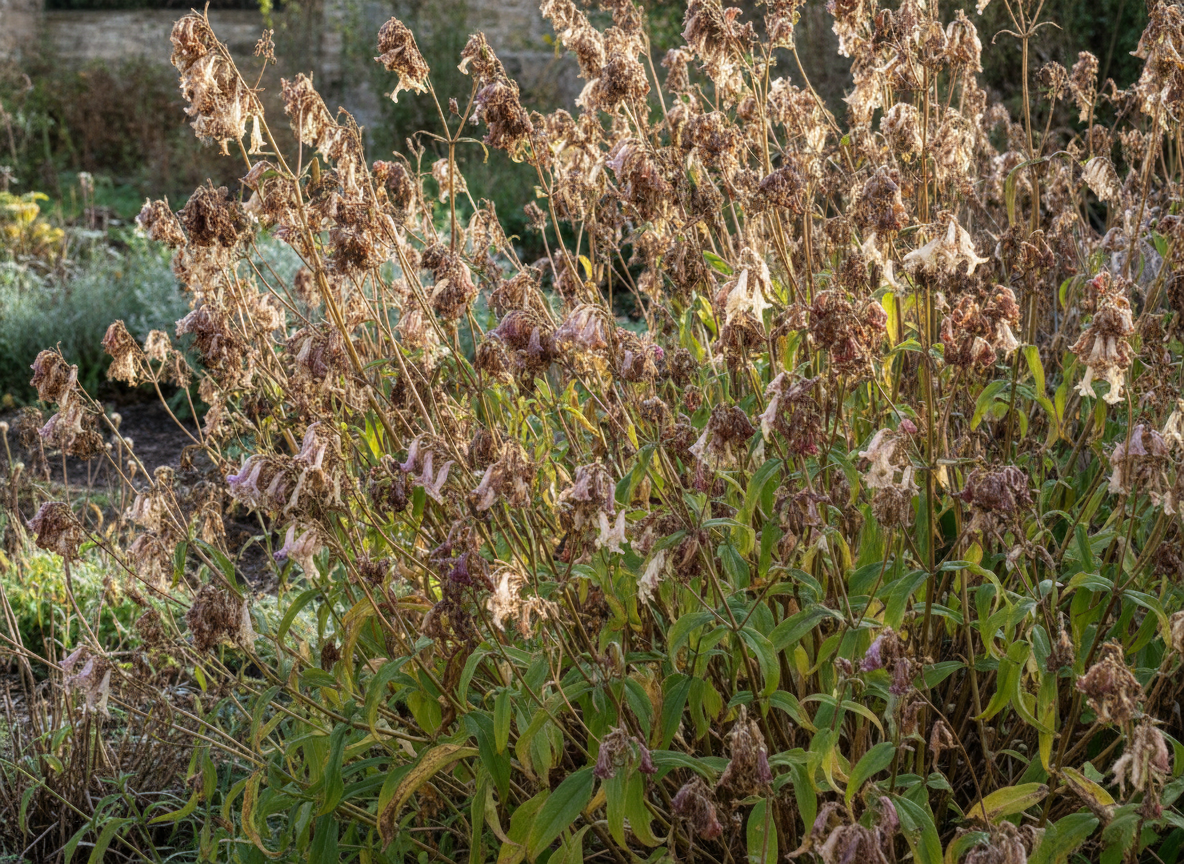 A garden bed with dried penstemon plants in natural light — AI-generated illustration
Don’t cut the plant back now — and not in autumn either
Here’s the part that catches people out. A penstemon is technically a perennial, but it’s a woody-based one — closer to a small shrub than a true herbaceous plant. It builds a semi-woody framework at the base and carries that structure through the year. And like most things with a woody base, it does not break freely from old, hard wood. Shear it to the ground in summer and you don’t get a clean second flush from the crown the way a hardy geranium would — you get a sulking plant with bare stubs that may or may not reshoot.
The bigger risk is winter. The thing that kills penstemons over winter is rarely the cold on its own — most named hybrids shrug off a normal frost — it’s cold plus wet sitting at the crown. That old top growth you’re tempted to clear away is exactly what protects the crown through the worst of it, trapping a little air and shedding water off the centre of the plant. Cut it all off in autumn and you expose the crown to months of freezing damp. That’s why the advice you’ll see from the RHS and most experienced growers is the same: leave the framework standing over winter. At most, if your plants sit somewhere windy, shorten the tops by about a third in autumn to stop them rocking loose in the wind — but no more than that.
So through summer: deadhead, yes; cut back, no.
 Penstemon plants with white and purple flowers blooming in a garden — AI-generated illustration
The Chelsea (or Hampton) chop — for some, not all
There is one summer cut beyond deadheading that’s worth knowing. If you’ve got an established clump that always flowers in one big rush and then looks tired, you can shorten a portion of the stems by about a third now — the same idea as the Chelsea chop gardeners give other perennials a few weeks earlier. The cut stems flower a little later and a little shorter, the uncut ones carry on as normal, and you stretch the display across a longer window instead of one peak.
Two cautions. Only do this to a healthy, established plant — a young or recently planted penstemon needs all its stems working. And only cut some of the stems, never the whole plant: this is about staggering the show, not the hard reset that the woody base won’t forgive in summer.
What to actually do — and when
Think of it as a calendar, because penstemons reward you for getting the order right:
- Now to early autumn: deadhead every week or two, cutting each spent spike down to a side shoot. Water in a dry spell and give a light, potassium-leaning feed if growth looks tired. Don’t cut the plant back.
- Autumn: leave it standing. If it’s exposed to wind, shorten the tops by no more than a third. That’s it.
- Spring, after the last frost: this is when the hard cut happens. Once you can see new green shoots breaking low on the stems, cut the old growth back to just above them. Cut too early, before the frosts are truly done, and you sacrifice the winter protection you spent all winter preserving.
Get that sequence right and a good border penstemon — ‘Garnet’, ‘Raven’, ‘Apple Blossom’ and the rest — earns its place for years, flowering longer than almost anything else in the border.
Let Cresco track the timing for you
The penstemon’s two cuts are easy to mix up because they happen six months apart and depend on your local frosts, not a fixed date. Cresco builds the schedule around your plants and your weather — so it nudges you to deadhead through summer and holds the hard cut-back until spring, when your last frost has actually passed. Add your penstemons and let the app keep the two jobs straight, so the only thing you have to remember is to enjoy the flowers.