Two cuts get confused — and one of them, made now, can kill the plant
A penstemon in the last week of June is just hitting its stride. The first spires of foxglove-shaped bells — wine red, plum, pink, white-throated — are opening from the bottom up, and given the right handling the plant will keep throwing them until the first proper frost in October or even November. Few border perennials flower for that long, and the thing standing between you and four more months of colour is almost entirely down to how you cut.
The trouble is that two completely different cuts go by names that sound alike, and people muddle them. There’s the light, repeated deadheading you do all summer to keep the flowers coming — that’s the job for now. And there’s the hard cut-back that takes the whole plant down — and that one belongs in spring, not autumn, and absolutely not now. Make the hard cut at the wrong time and you don’t get a tidy plant; on a borderline-hardy penstemon you get a dead one, because the old growth you removed was its winter coat.
So this post is really about timing two cuts correctly. Deadhead lightly from now on. Leave the structure standing over winter. Then cut hard once, in mid-spring, after the frosts have passed.
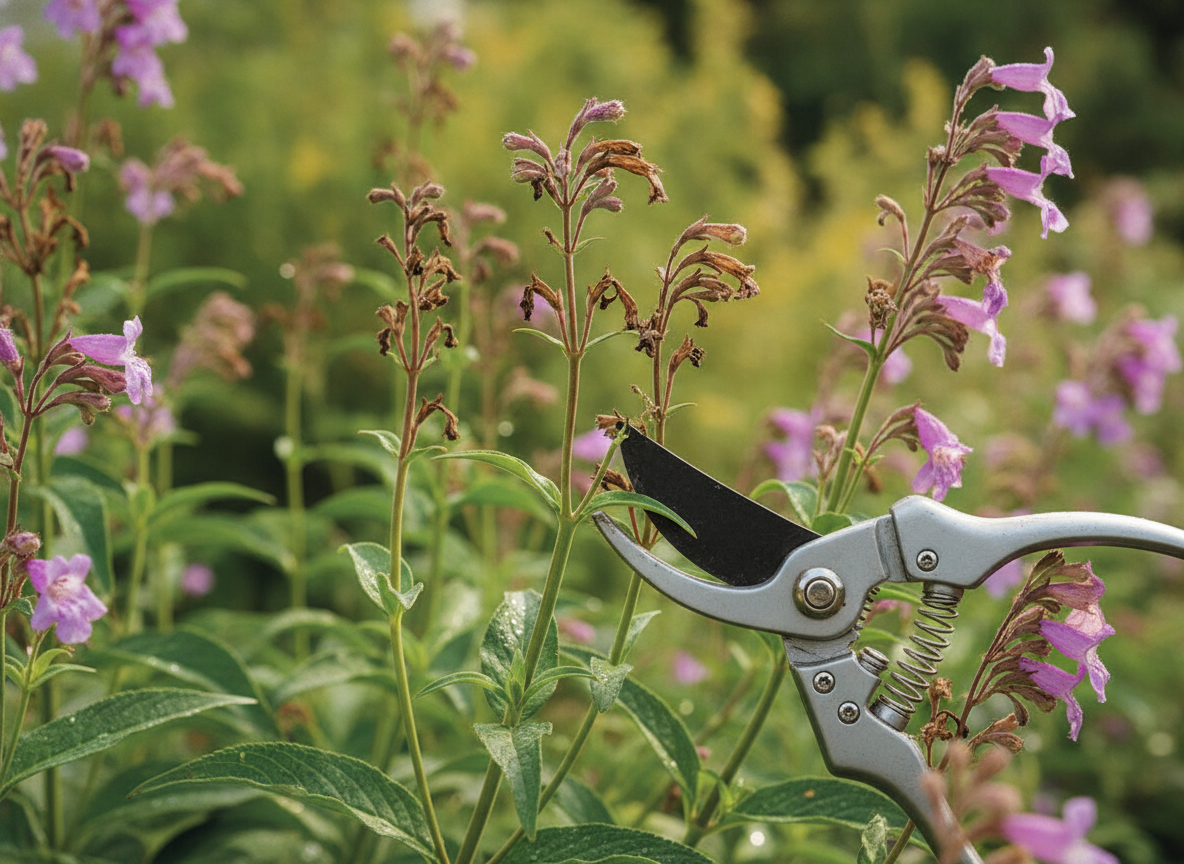 Garden shears trimming deadheaded penstemons back to the first set of leaves — AI-generated illustration
Deadhead to the first leaves, not just the tip
When a flower spike has dropped most of its bells from the bottom and is fading at the tip, it’s spent — and leaving it on tells the plant to pour energy into ripening seed instead of opening more flowers. Take it off. But where you cut matters.
Don’t just nip the dead top inch off. Follow the spent spike down to where it meets the first pair of healthy leaves or a side shoot lower on the stem, and cut just above that. You’ll often see a small bud or a pair of fresh leaves waiting in the leaf joint — that’s where the next flowering side shoot breaks from. Cut to it and the plant answers with a branch of new bells; snip only the tip and you leave a bare, blind stub that does nothing. It’s the same principle that keeps salvias reblooming till frost when you cut each spike to the side shoots rather than shearing them flat.
Go over the plant like this every week or two through summer. It takes a couple of minutes, it keeps the clump looking fresh rather than seedy, and it’s the single thing that turns a penstemon from a six-week plant into a five-month one.
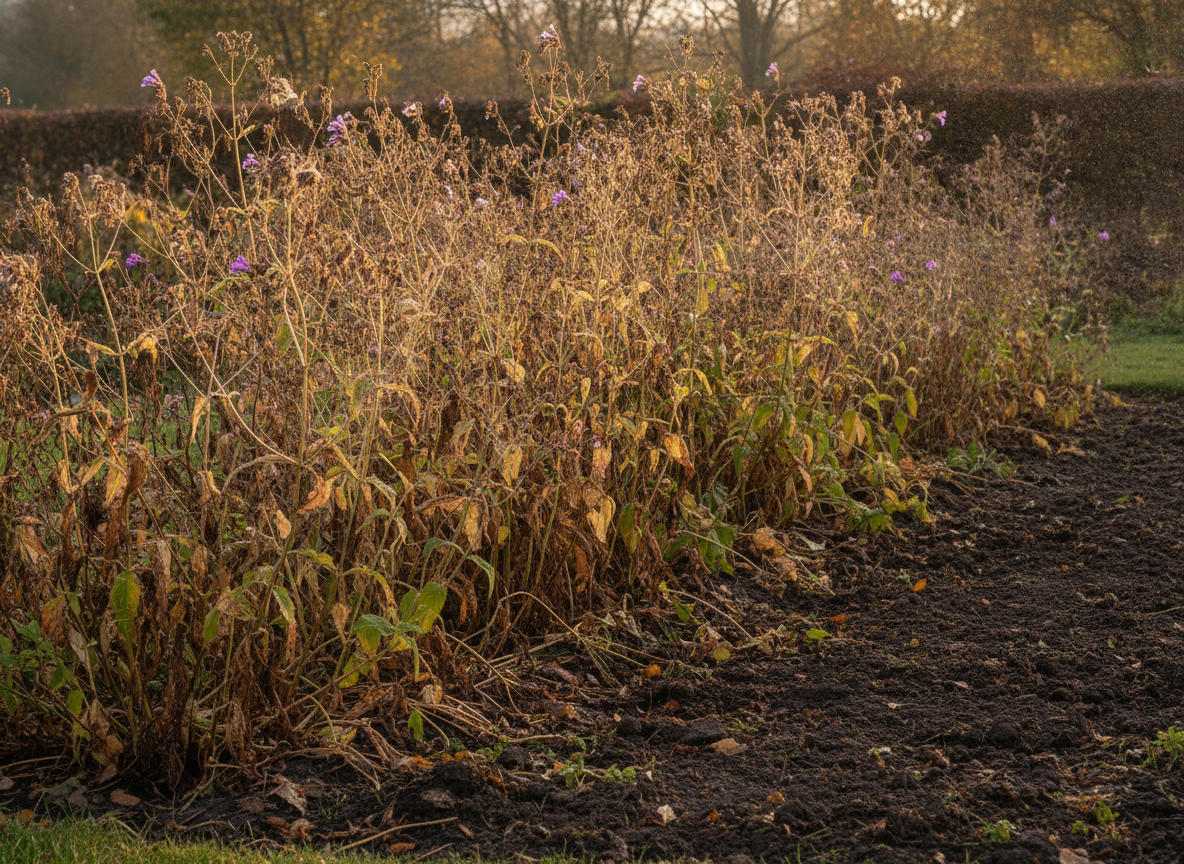 Penstemons in an autumn garden, with dead leaves and a few purple blooms — AI-generated illustration
The autumn mistake: don’t cut it back for tidiness
By October the urge to “put the border to bed” is strong, and a penstemon covered in faded stems looks like an obvious candidate for a hard chop. Resist it. Penstemons are only borderline hardy in much of Northern Europe, and the top growth you’d be cutting away is exactly what protects the crown through a cold winter. The mass of old stems traps a little warmth, shields the base from the worst of the wet and wind, and stops the plant being rocked loose in storms.
Strip that away in autumn and a hard frost reaches straight down into the crown. Plenty of penstemons that “died over winter” weren’t killed by the cold itself — they were killed by a tidy gardener who took their coat off in October. If a long, untidy plant bothers you, the most the RHS suggests is shortening the stems by about a third in late autumn to cut down on wind-rock. Leave the bulk of the growth standing until spring.
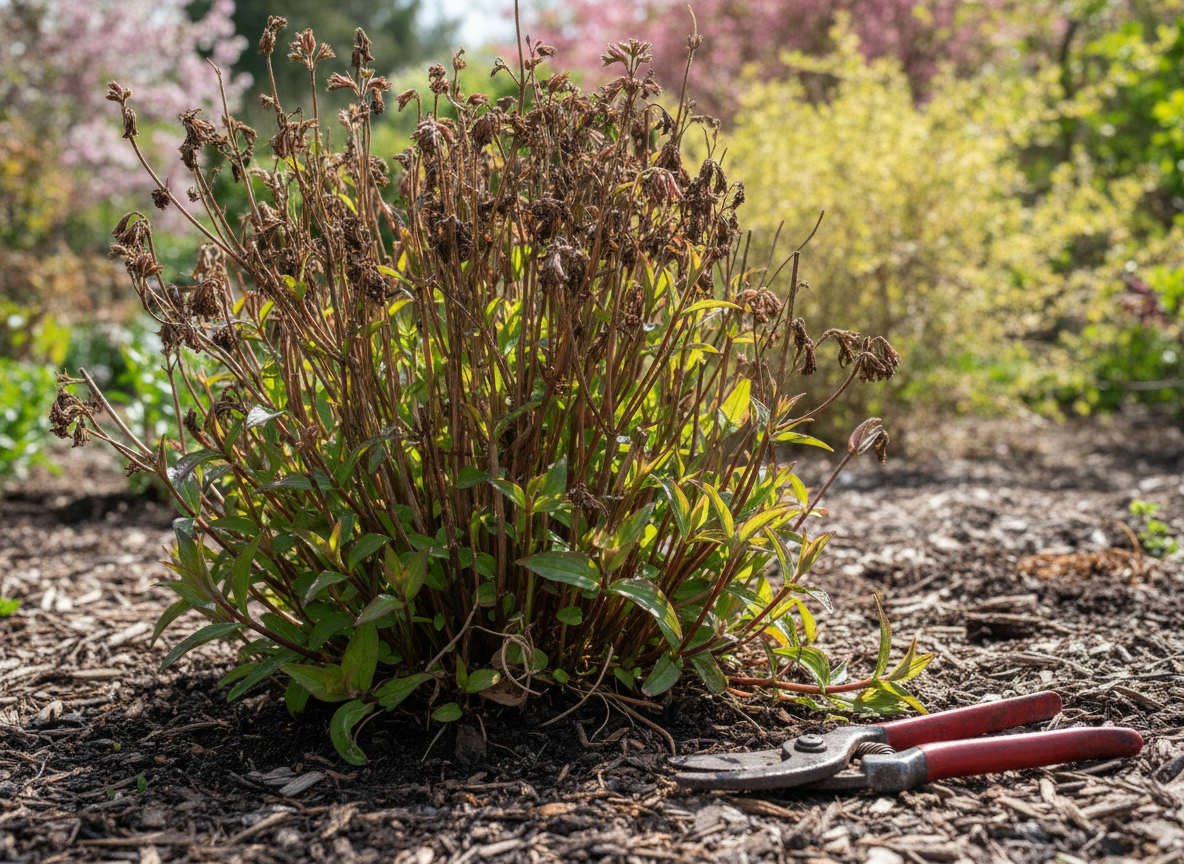 A garden scene with penstemons and pruning shears — AI-generated illustration
Spring is when the hard cut happens
The real cut-back waits until the worst frosts are behind you — in practice mid-to-late spring, often April into early May, once you can see fresh shoots breaking from low down on the plant or from the base. That new growth is your signal: now the plant is awake and the old stems have done their winter job.
Cut the whole plant back hard, down to just above the lowest pair of strong new shoots — typically 10–15 cm from the ground. Don’t cut into completely bare, leafless old wood hoping it will reshoot; like many shrubby perennials, an old penstemon stem with no growth on it often won’t break again, so always leave the cut just above visible new shoots. Done at the right moment, this single spring cut resets the plant into a dense, well-shaped mound that flowers all the harder for it. If you also want to delay and extend flowering, you can give established clumps a Chelsea chop in May — shortening some stems by half to stagger the display.
Hardiness, cuttings, and which penstemons forgive most
The big, broad-leaved border hybrids most of us grow for their fat bells — the ‘Pensham’ series, ‘Raven’, ‘Blackbird’ and ‘Rich Ruby’ types — are the ones that most need their winter growth left on, because they’re the least reliably hardy. The narrow-leaved, smaller-flowered kinds like ‘Garnet’ (Andenken an Friedrich Hahn) and ‘Evelyn’ tend to be a good deal tougher, but the same timing serves them all: deadhead through summer, leave the top growth over winter, hard-cut in spring.
One insurance policy is worth the five minutes it takes. Penstemons root very easily from soft cuttings taken now through late summer — pull or cut a non-flowering side shoot, trim below a leaf joint, and push a few into gritty compost. A pot of rooted cuttings on a sheltered windowsill means that even if a savage winter takes the parent plant, the variety isn’t lost. It’s the standard way gardeners hedge against the one weakness of an otherwise generous, long-flowering plant.
So the whole year comes down to two cuts at two times: light deadheading to the first leaves from now until the frosts, and one hard cut in spring once new growth shows. Get those in the right order and a single penstemon earns its place from June to November — and Cresco can flag the exact week each of your plants wants deadheading versus cutting back, on your own local weather rather than a generic calendar.