Wait for the frost — it’s the only date that matters
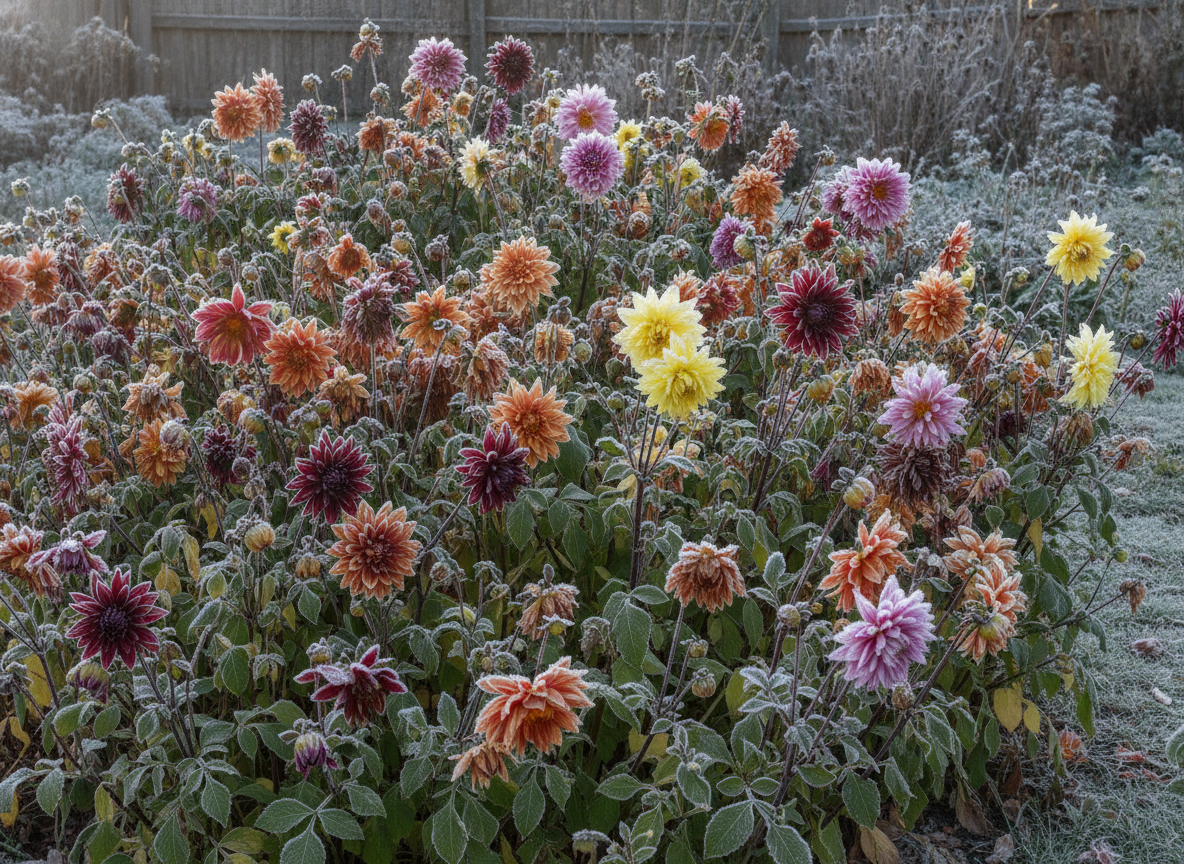
Right now, in mid-September, dahlias are at full tilt: the beds are stacked with colour and the plants are throwing new buds faster than you can cut the old flowers. This is exactly the wrong moment to start thinking about cutting them down for winter. The signal to end a dahlia’s season is not a date in the diary — it’s the first proper frost that turns the foliage black overnight.
That frost matters because it does a job for you. Right up until it comes, the leaves are still feeding the tuber, fattening it and ripening its skin for storage. Cut the plant down in September because the calendar says “autumn jobs” and you stop that process weeks early, leaving yourself a softer, smaller tuber that stores badly. Leave it until the frost blackens the top growth, and the plant has poured everything it can into the crown before you touch it.
In most of the Low Countries and the UK the first blackening frost lands somewhere between mid-October and mid-November — but a single clear, still night in a frost pocket can bring it three weeks early, and a mild coastal autumn can hold it off until December. That swing is exactly why a fixed “cut dahlias down in October” rule catches so many people out: it fires on a date, not on the weather your garden actually gets. Watch the forecast for the first night near zero, and let that be your cue.
 AI-generated illustration
The hollow stem is a straw that rots the tuber
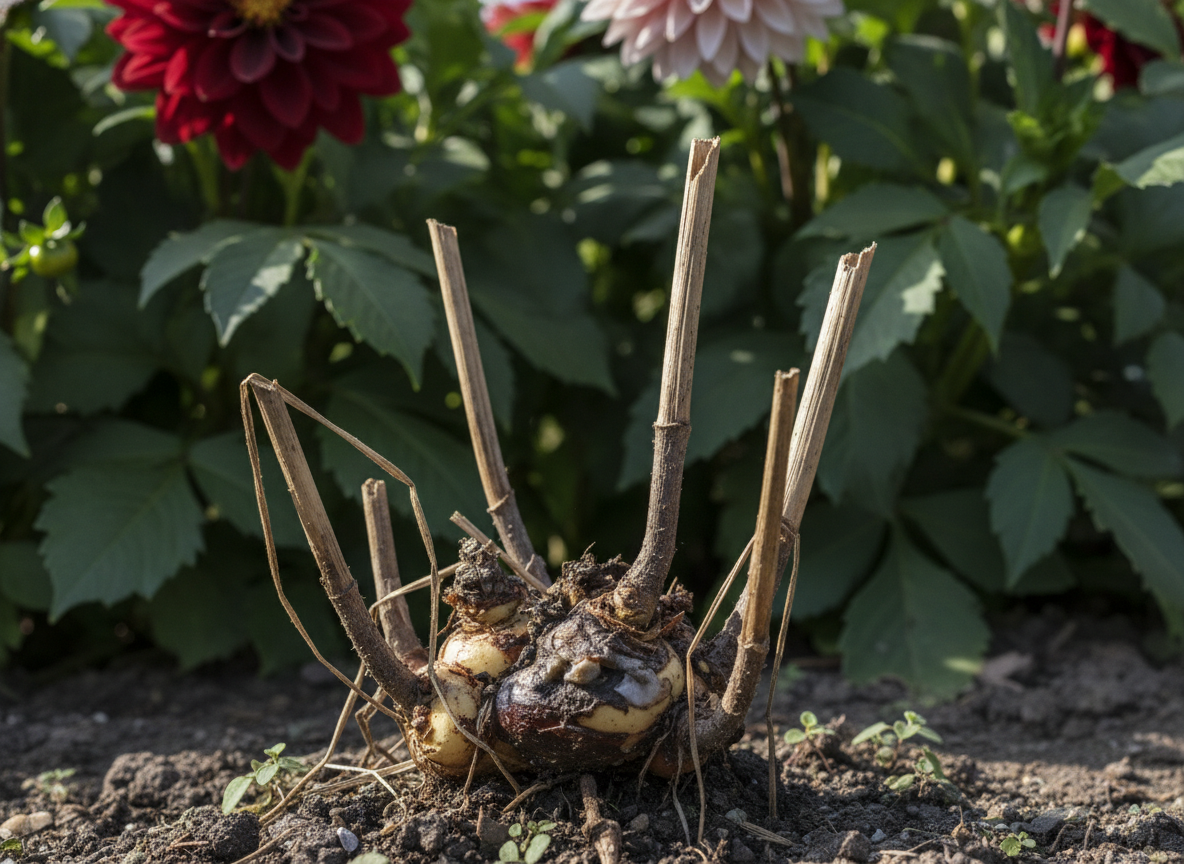
Here’s the mistake that quietly kills more overwintered dahlias than cold ever does. The frost arrives, you go out the next morning to a bed of blackened plants, and you cut everything down flush to a neat stub — then leave the tubers sitting in the ground for a few more weeks before you get round to lifting them. It looks tidy. It’s a trap.
Dahlia stems are hollow. Cut one flat and leave it open to autumn rain, and it works exactly like a drinking straw: every shower funnels water straight down the stem and into the crown of the tuber, the one part that must stay sound if the plant is to come back. Sitting in cold, waterlogged ground with a straw pointed at its heart, the crown rots — and a rotten crown means a dead dahlia, however plump the tuber underneath looks.
So make the cut, but make it well. Take the plant down to a stump about a hand’s width tall — 10 to 15 cm — rather than flush to the soil. If you’re lifting, cut and lift the same day so the open stems never spend a wet fortnight in the ground. If you’re leaving the tubers in place, lay something over the cut stumps to keep the rain out of them, or nick the stems on a slant so water sheds instead of pooling. Either way, don’t cut flat and walk away.
 A split composition of a dahlia garden and gardening tools — AI-generated illustration
Lift or leave? Your soil decides, not your nerve
Every autumn the same argument runs: dig them up to be safe, or leave them in the ground and save yourself the work? Both camps are right — for their own gardens. The honest test isn’t bravado or a hardiness zone off a map. It’s drainage and cold, because a dahlia tuber is far more likely to die of wet than of frost.
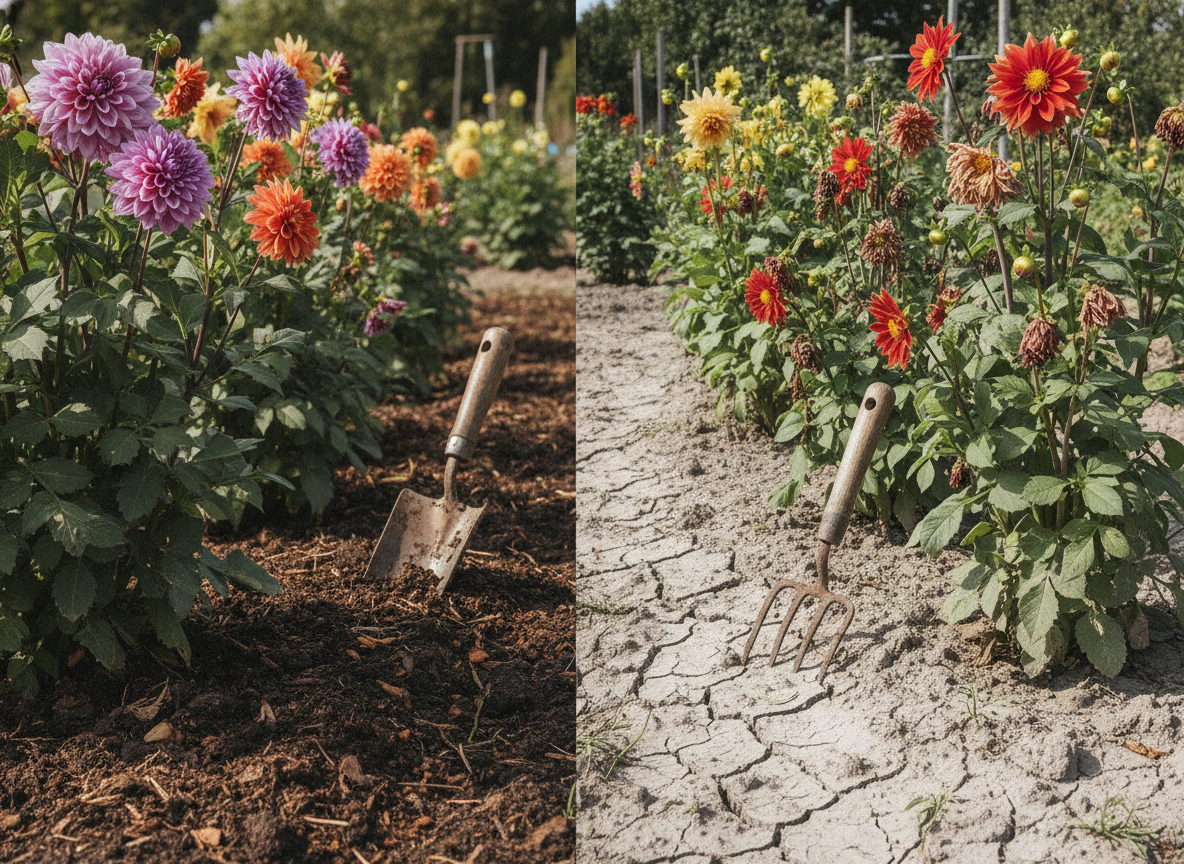
Leave them in the ground if your soil is free-draining and your garden is on the milder side — a city plot, a coastal border, a raised bed of sandy loam. After the foliage is cut back, pile on a thick, dry mulch: 15 cm of bark, straw, bracken or leaf mould over the crown, kept as dry as you can, is enough to see tubers through most of our winters where the ground doesn’t sit sodden.
Lift them if you garden on heavy, wet clay, in a cold inland spot, or in a frost pocket where the ground freezes hard. On soil that holds water all winter, no mulch will save a tuber sitting in a cold puddle for three months — the only reliable answer is to get it out of the ground and store it somewhere dry and frost-free. If you’re not sure which camp you’re in, the deciding question is simple: does your soil stay squelchy for days after heavy rain? If yes, lift.
Lifting and storing, step by step
If you’re lifting, wait a week or two after the frost before you dig — it lets the skins firm up — then fork the plant up from well outside the clump so you don’t spear the tubers. Knock or rinse off the soil, trim the roots and cut the stems down to a few centimetres, and stand the whole clump upside down for a couple of weeks somewhere frost-free so the hollow stems drain completely.
Once they’re dry, pack the tubers in a box of barely-damp compost, spent coir or vermiculite, label them while you still remember what they are, and keep them somewhere cool but frost-free — a shed, garage or cellar at roughly 5–10 °C is ideal. Too warm and they shrivel; too cold and they freeze. Look them over once a month and cut away any patch that’s started to rot before it spreads to its neighbours.
 . Dahlias in various colors are covered in frost in a garden — AI-generated illustration
Until the frost, keep them flowering
None of this is a job for this week. For now, in September, do the opposite of cutting back: keep the plants going as hard as you can, because every extra day of growth is a fatter, better-ripened tuber for next year. That means deadheading religiously — snapping off the spent flowers before they set seed — and a last liquid feed to hold the display through to the first cold night.
It’s the same principle behind everything Cresco nudges you on: the right job depends on the weather your garden is actually having, not on a generic calendar. A pruning calendar built around your own local weather tells you the dahlia is still in its flowering job today — and will tell you the morning that job changes.
The one-line rule
Don’t cut dahlias down on a date — wait for the first frost to blacken the foliage, cut them to a 10–15 cm stump (never flush) within a day or two, and then either lift promptly or mulch heavily where the soil drains. The calendar is a guess; the frost is the instruction.
Not sure whether the dahlia in your border wants leaving in or lifting where you garden? Cresco reads your own photo, works out exactly what you’re growing, and tells you the job for this week in your own weather — not a one-size-fits-all date.