Still in flower while the border winds down
Rose of Sharon (Hibiscus syriacus) is doing something most shrubs gave up on weeks ago. While the rest of the garden slides into seedheads and brown, this one is still opening fat, five-petalled trumpets — white, lilac, wine-red, that unmistakable pale blue — right through September and often into October. It’s one of the last big shrubs to keep the show going, and the bees know it.
That late timing isn’t luck. Rose of Sharon flowers on new wood — the shoots it grew this spring and summer. The buds you’re enjoying now formed on growth that didn’t even exist in April. Old, gnarled branches carry very little; the flowers ride on the young extensions at the tips.
That one fact settles the whole pruning question, the same way it does for the other new-wood shrubs. If the flowers come from fresh growth, the cut that matters is the one that forces fresh growth — and that cut belongs in spring, not now.
 A hand reaches towards a rose sharon bush, with pruning shears on the ground — AI-generated illustration
So don’t reach for the shears now
The temptation in autumn is the usual one: the shrub is getting leggy, the lower stems are bare, a few leaves are yellowing, and you want to tidy it before winter. With Rose of Sharon, cutting now is simply wasted effort — and it costs you.
For a start, you’d be cutting off flowers that are still working. A hibiscus in full bloom in mid-September has weeks left in it, and it’s feeding pollinators at a point in the year when there’s little else on offer. Every stem you shorten is buds you’re throwing away.
But the bigger reason to wait is that autumn pruning does nothing useful for the plant. Rose of Sharon won’t respond to a September cut with a flush of new growth — it’s shutting down for winter, not gearing up. All a late cut leaves you with is a set of fresh wounds and soft stub-ends going into the cold and wet, which can die back further over winter and give you nothing in return. You’d only have to cut again in spring anyway.
It’s the same trap that catches the other shrubs that flower on new wood — caryopteris, Russian sage, and buddleia. They all look scruffy by late autumn, and they all reward patience over the tidy-up.
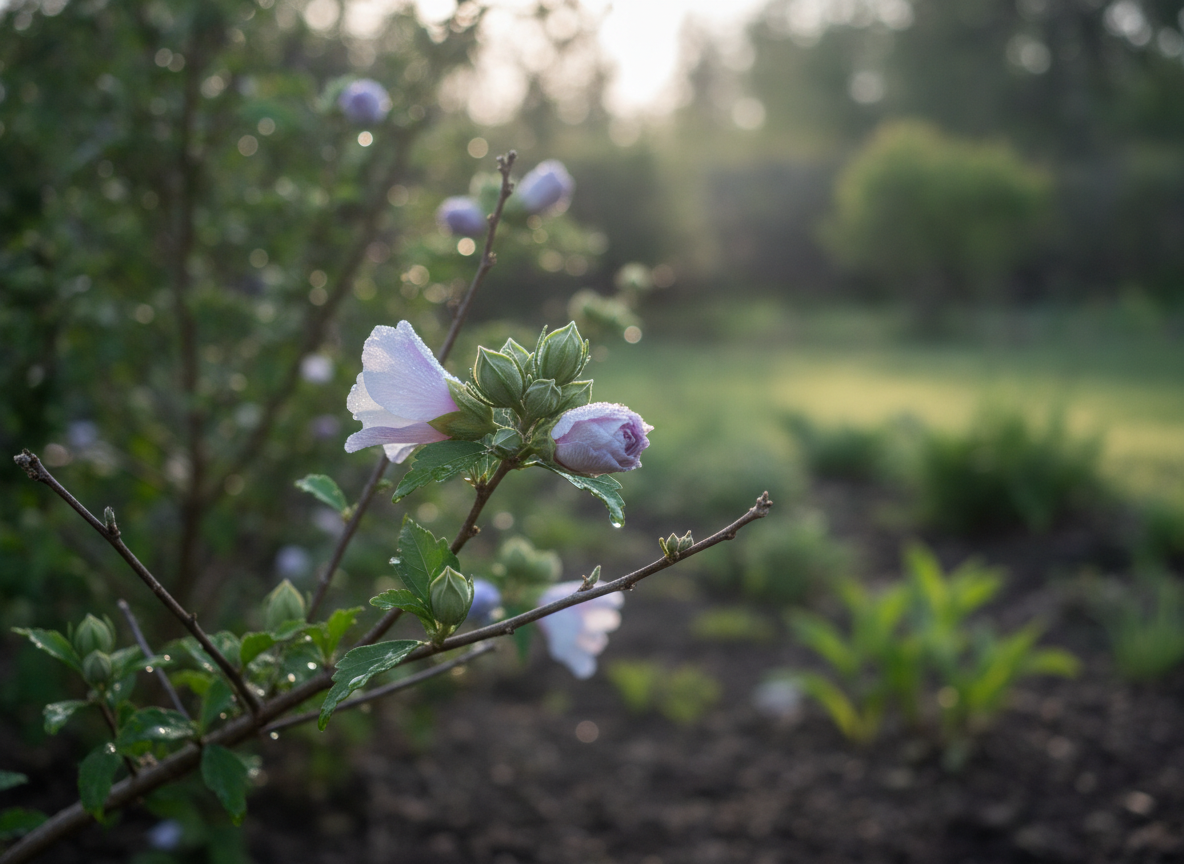 The photograph depicts a close-up of rose of sharon buds and a single bloom with dew drops — AI-generated illustration
Don’t write it off when it wakes late
Here’s the quirk that trips up more Rose of Sharon owners than any pruning mistake: it is famously, alarmingly late to leaf out.
While everything around it is green by mid-April, a hibiscus can stand there as bare twigs well into May. Every spring, gardeners decide the shrub has died over winter, dig it up, and bin a perfectly healthy plant that was simply a few weeks behind. Its foliage often doesn’t break until the second half of May.
So make yourself a note now, while you can still see it flowering and know it’s alive: this plant leafs out late. Come next May, scratch the bark with a thumbnail before you write it off — green underneath means it’s just biding its time. That single piece of patience saves a lot of good shrubs.
The spring cut is where the flowers come from
The real pruning happens in late winter to early spring — roughly February to March in Northern Europe, once the hardest frosts are behind you and you can see the buds beginning to swell. If your late winter is still biting, wait; there’s no rush, and pruning into a hard frost is the one way to actually damage a hardy plant.
When you do cut, this is the moment to be decisive, because the harder you prune, the bigger the flowers. Here’s the trade-off worth understanding:
- A light trim — just tipping the shoots back — gives you more flowers, but smaller ones, on a bushier plant.
- A hard prune — cutting the previous year’s growth back to two or three buds from its base — gives you fewer flowers, but noticeably larger ones, on a tidier, more open shrub.
Most gardeners want the second. Take each of last year’s stems back hard to a low, permanent framework, and remove one or two of the oldest, thickest branches right down to the base each year to keep the middle from congesting. The strong new shoots that spring from those cuts are exactly the wood that will carry next summer’s trumpets.
Skip the spring prune altogether and Rose of Sharon does what all unpruned new-wood shrubs do: it goes leggy and bare-bottomed, the flowering drifts up out of reach, and the blooms shrink year on year. The annual cut is what keeps it dense and generous.
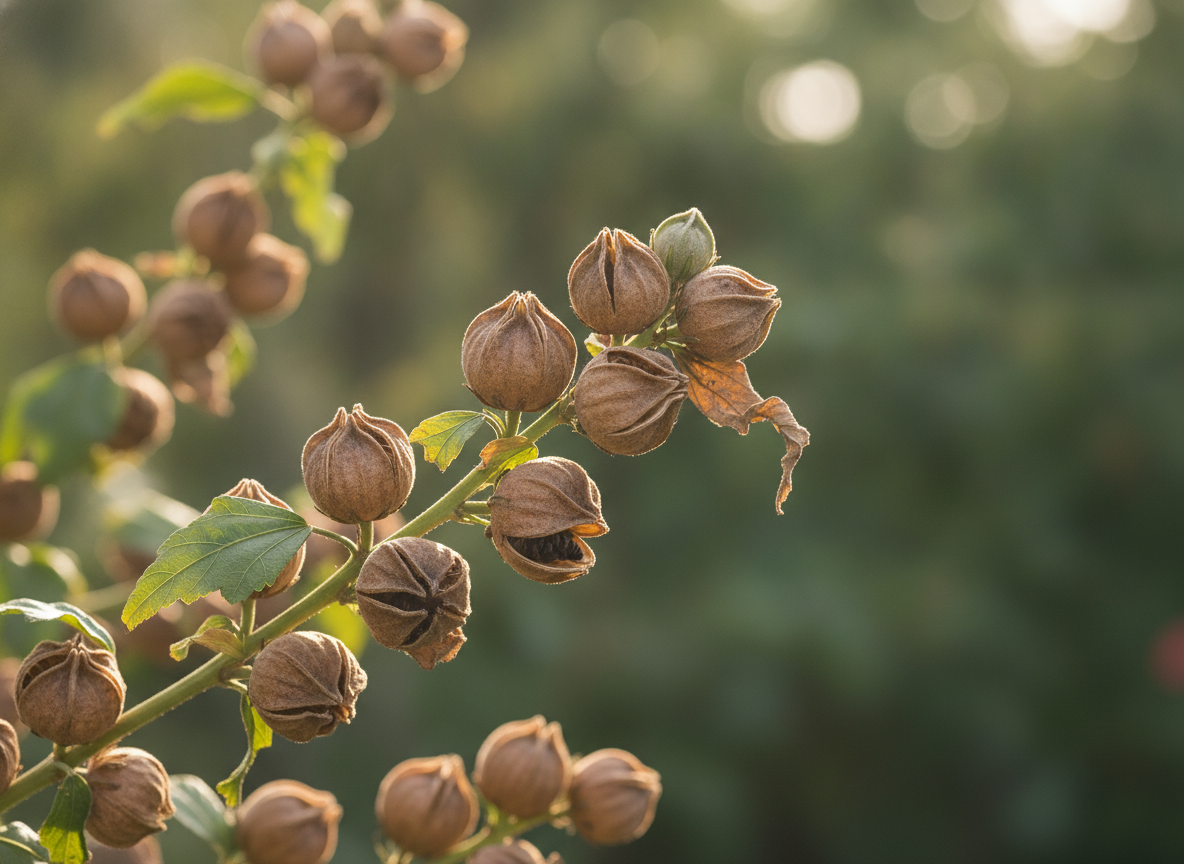 Rose of Sharon seedpods hang on a branch in natural daylight — AI-generated illustration
What about the seedpods?
As the flowers finish, Rose of Sharon sets papery seed capsules, and in a warm spot it can self-seed freely — you’ll find hibiscus seedlings turning up around the garden next year. If that bothers you, snipping off the spent flowers and developing pods before the seed ripens is the one small job worth doing this autumn. It won’t trigger new growth, but it keeps the plant from sowing itself everywhere.
Beyond that, leave the shrub be. The bare winter stems do no harm standing, and they give you something to prune to in spring.
The two dates that matter
Rose of Sharon really only asks two things of you, and both are about timing:
- Now (September–October): hands off. Enjoy the last flowers, let the bees have them, and — if self-seeding is a nuisance — remove the spent pods. That’s all.
- February–March: prune to a low framework once the frosts ease, cutting hard for bigger blooms, then feed and mulch.
And the third thing, which isn’t a job at all: don’t panic next May when the twigs are still bare. It’s the last shrub in the garden to wake up.
Keeping straight which shrub wants cutting in which month is exactly the part Cresco takes off your hands — it holds the pruning window for every plant you grow and tells you the week to act, so the spring hibiscus cut doesn’t slip past while the border’s busy waking up around it.