The blue you’re admiring grew this year
Caryopteris — bluebeard, blue spirea, call it what you like — is doing its one job right now. Hazy blue flower clusters up every stem, grey-green aromatic leaves, and a steady traffic of bees working it while most of the border is winding down. It’s one of the last real nectar shrubs of the year, and in early September it’s at its peak.
Here’s the thing that decides how you treat it: every one of those flowers is sitting on wood the plant grew this spring and summer. Caryopteris flowers on the current season’s growth, not on old branches. The stems that carried flowers last year are just structure now — the show has moved onto the new shoots.
That single fact settles the whole pruning question. If the flowers come from new growth, then the cut that matters is the one that forces new growth — and that cut belongs in spring, not now.
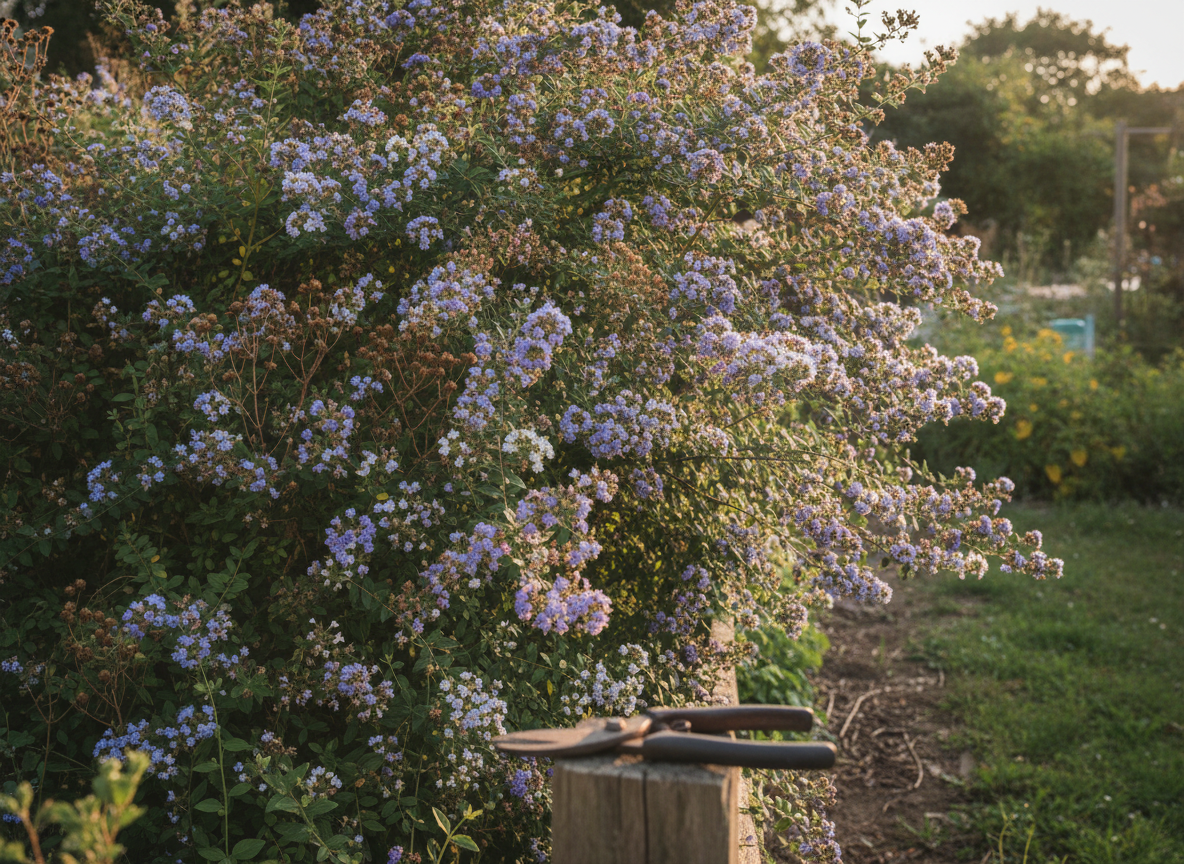 A caryopteris shrub with secateurs resting on a wooden post — AI-generated illustration
So keep the secateurs away in September
The instinct, once the flowers start to brown, is to cut the plant back and tidy it before winter. With caryopteris that instinct is doubly wrong.
First, you’d be cutting off flowers that are still working — bluebeard often carries colour into October, and it’s feeding pollinators when little else is.
Second, and more important, an autumn cut opens the plant up to exactly the damage it can’t afford. Caryopteris is only borderline hardy in a cold, wet Northern European winter. It hates sitting cold and soggy, and a hard prune now leaves fresh wounds and a bare crown facing the worst months of the year. Cut it low in September and a wet winter can rot the base before spring ever arrives.
It’s the same trap that catches Russian sage and buddleia: three shrubs that all flower on new wood, all look scruffy by late autumn, and all punish you for the tidy-up. The urge to neaten them is the urge to hurt them.
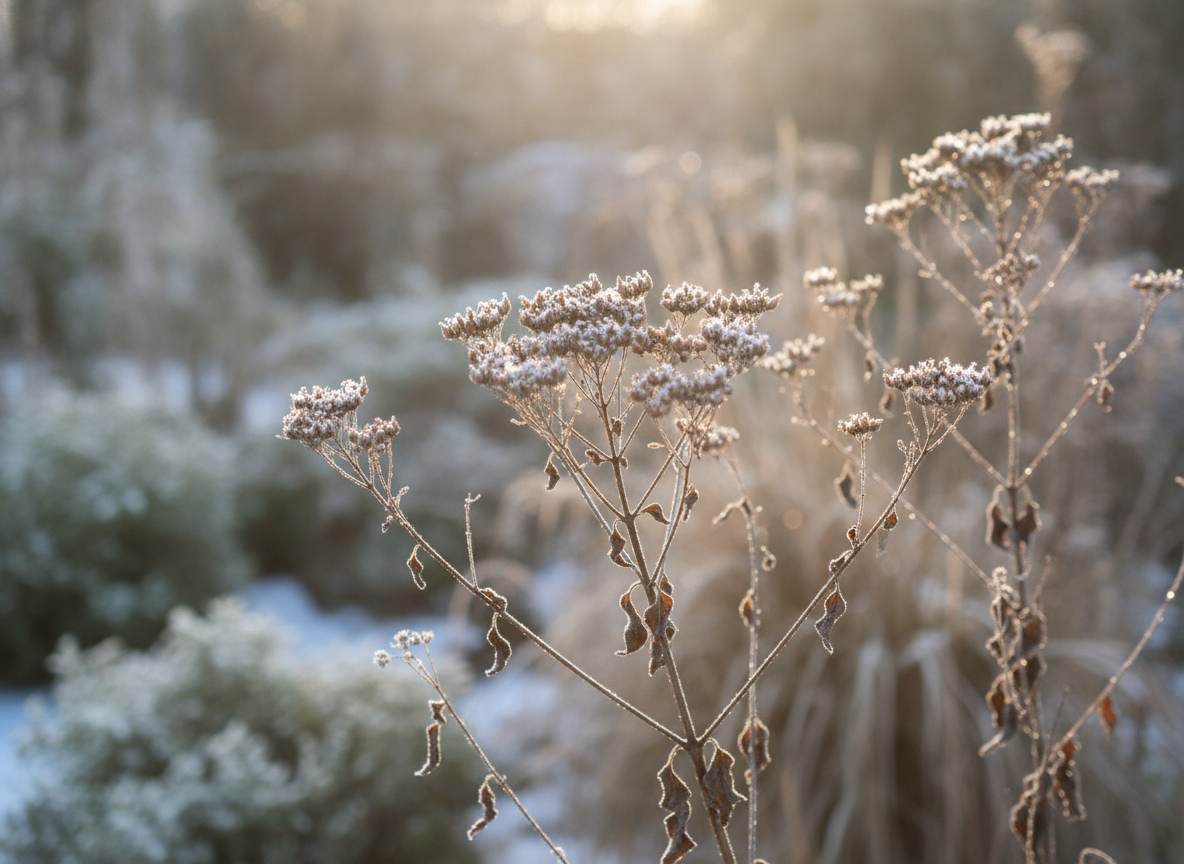 Frost-covered caryopteris stems stand in a winter garden — AI-generated illustration
Leave the stems standing all winter
Do nothing. That’s the September job.
The old top-growth you’re tempted to remove is what protects the living crown at the base — it catches leaves, holds a little air around the buds, and takes the brunt of the frost so the wood you actually need survives. A caryopteris that goes into winter with its stems on is far more likely to come through than one cut to the ground in a damp October.
There’s a second reason to hold off: the plant still looks good doing nothing. The faded seedheads and pale stems catch frost through the dead months, the same argument for leaving ornamental grasses standing. Winter structure costs you nothing but a fortnight of tidiness in March.
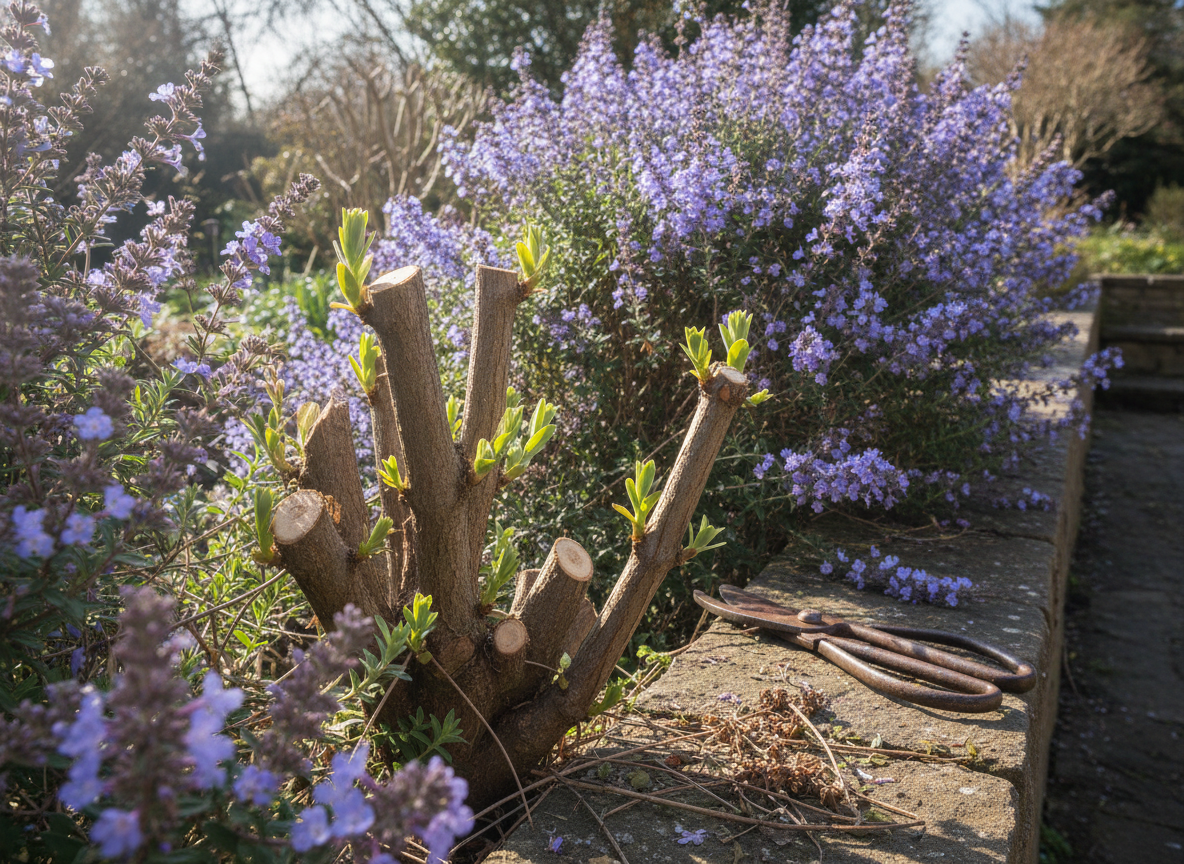 Plant pruned in foreground, purple flowers and pruning shears in background — AI-generated illustration
The hard prune that makes the flowers — in March
Come spring, caryopteris gets the opposite of neglect. This is where the plant earns its keep, and where a lot of gardeners go too gentle.
Wait until the worst of the cold has passed and hard frosts are unlikely — mid-March to early April for most of Northern Europe — and you can see the buds swelling low down. Then cut hard. Take every stem back to a couple of buds from its base, leaving a low, permanent, woody framework roughly 15–20 cm high. It looks brutal — a knuckly stump where a shrub used to be — but that’s exactly right.
The reason ties back to the top of this article: caryopteris flowers on new wood, so the harder you cut in spring, the more vigorous new shoots it throws, and the more flower it carries in late summer. A timid trim gives you a leggy, sparse plant that flowers thinly at head height. A proper hard cut gives you a dense, dome-shaped shrub covered in blue.
Skip the spring prune entirely and the plant does what all unpruned sub-shrubs do: it goes woody and bare at the base, the flowering drifts upward and thins out, and within a few years it’s a gaunt thing you’ll want to replace. The hard cut is what keeps it young.
One caution: prune to a low framework of live buds, but don’t chase your cuts down into the oldest, thickest bare wood expecting it to reshoot from there. Keep a short permanent stump and renew from that. A feed and a mulch straight after pruning sets the season up.
The two dates that matter
Caryopteris really only asks two things of you, and both are about timing rather than effort:
- Now (September–October): hands off. Enjoy the blue, let the bees have it, and leave the stems on for winter cover.
- March–April: cut hard to a low framework once frost risk fades, then feed.
Get those two right and bluebeard is one of the most reliable late-summer shrubs you can grow. Get the timing backwards — a hard cut in autumn, nothing in spring — and it’s one of the quickest to fail.
If keeping track of which shrub wants cutting in which month is the hard part, that’s exactly what Cresco is for: it holds the pruning window for every plant in your garden and tells you the week to act, so the spring caryopteris cut doesn’t slip past while you’re busy with everything else.