First, work out which heather you’ve got
Not every heather gets cut now, and getting this wrong is the difference between a plant that thrives and one you’ve timed for a haircut it doesn’t want. The whole “when” question comes down to which flowering group you’re standing in front of.
Summer- and autumn-flowering heathers are the ones peaking right now. This is ling (Calluna vulgaris) with its tight spikes going over to russet, bell heather (Erica cinerea), Cornish heath (Erica vagans), and the fat-belled Daboecia. These flowered on the growth they made this year, and once the colour fades they get their trim — early autumn, straight after flowering, or in early spring. Any of those windows is correct; what matters is that you do it before the plant puts on its next surge of growth.
Winter- and spring-flowering heathers are the opposite. Erica carnea and Erica × darleyensis are building the buds right now that will carry you through the bleakest months. Shear them today and you cut off the whole winter show. Leave them completely alone until they’ve finished flowering next spring — then they get their trim.
So before the shears come out: is it flowering now, or is it a plump green cushion waiting for winter? Flowering now, or just finished — trim it. Quietly biding its time — leave it.
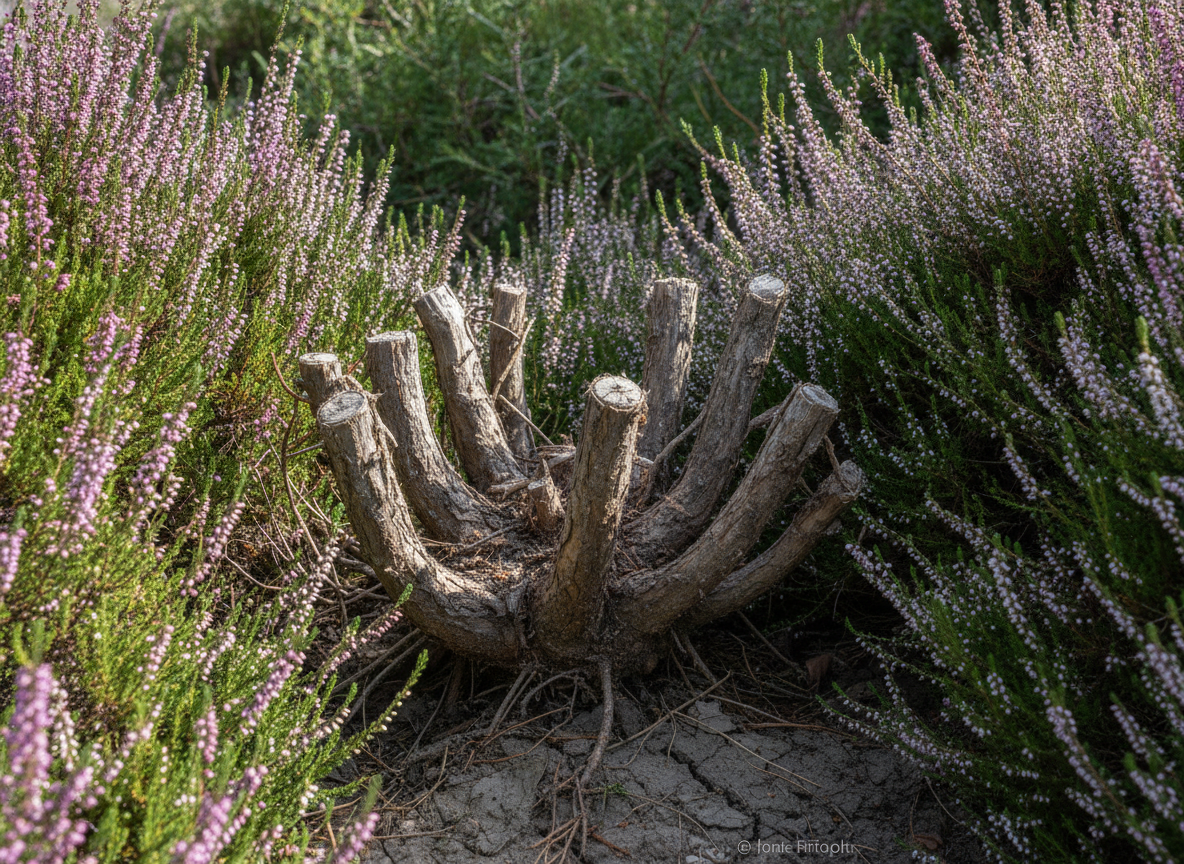 A severely cut heather plant stump surrounded by blooming heather plants — AI-generated illustration
The one cut a heather can’t come back from
Here’s the rule that saves more heathers than any other: never cut into the old, bare wood. Part the foliage on an established plant and you’ll see it — the woody brown stems at the heart of the cushion, stripped of leaves. That wood is dead to you. Heathers, almost without exception, will not push fresh shoots from it. Cut back into it and you’re left with a bald, brown crater that simply stays bald.
It’s the same trap that catches gardeners with lavender, cotton lavender and rock rose — all of them Mediterranean-minded shrubs that flower on young growth and refuse to break from old. If you’ve read our note on why lavender has to be cut the week the flowers fade, the principle here is identical: you are shaping this year’s soft growth and nothing older. The same goes for cotton lavender and for the rock-rose cut that never grows back.
Stay in the green — cut through the faded flower spikes and take a thin sliver of this year’s leafy growth with them, no deeper. If your blades are anywhere near the brown, you’ve gone too far.
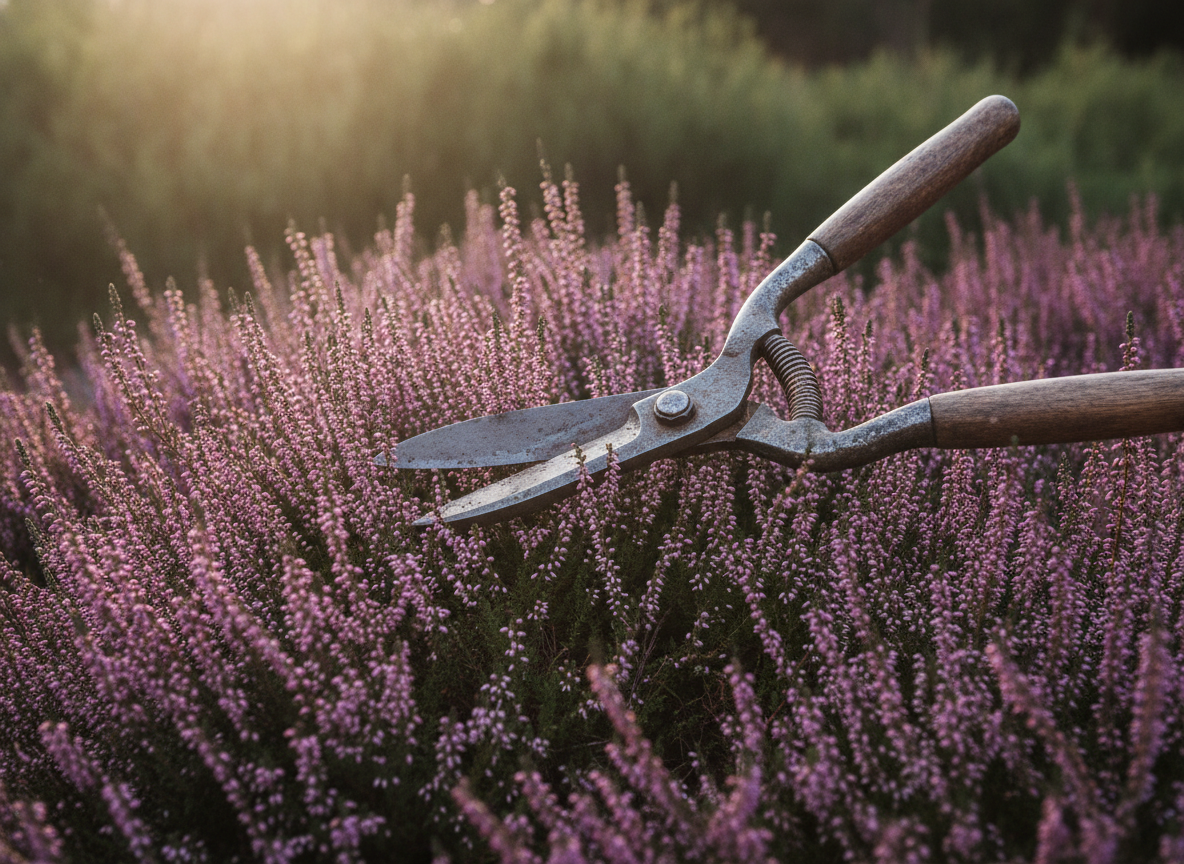 Shears resting on blooming heather plants in a garden — AI-generated illustration
How to make the shear
This is a five-minute job on a small plant, and a genuinely light one. You’re tidying and encouraging density, not reducing the heather’s size.
- Use sharp shears or one-handed trimmers. For a single plant or a few, one-handed shears (the kind sold for shrubs and topiary) give you the most control over a low dome. For a big heather bed, hedge shears or a light trimmer are faster — just keep them sharp and clean, so the cut is crisp rather than crushed.
- Follow the natural shape. Heathers look best as soft, rounded cushions and mats, not flat-topped boxes. Run the blades over the top and down the sides, tracing the dome the plant already has. Skimming the faded flowers off the surface is most of the work.
- Take the flowers plus a whisker of green. Cut just below the spent flower spikes, into the leafy growth — a centimetre or so. That’s enough to remove the old blooms and prompt bushy new shoots from the top of this year’s wood.
- Don’t try to reduce a big plant. If a heather has outgrown its spot, shearing harder won’t fix it — you’ll only hit the brown. A heather that’s too big is a heather in the wrong place; note it for replacing rather than butchering.
- Pick a mild, dry day. Avoid shearing in blazing heat or with frost forecast that night — fresh cuts scorch in strong sun and blacken in a hard freeze. A soft, overcast day is ideal.
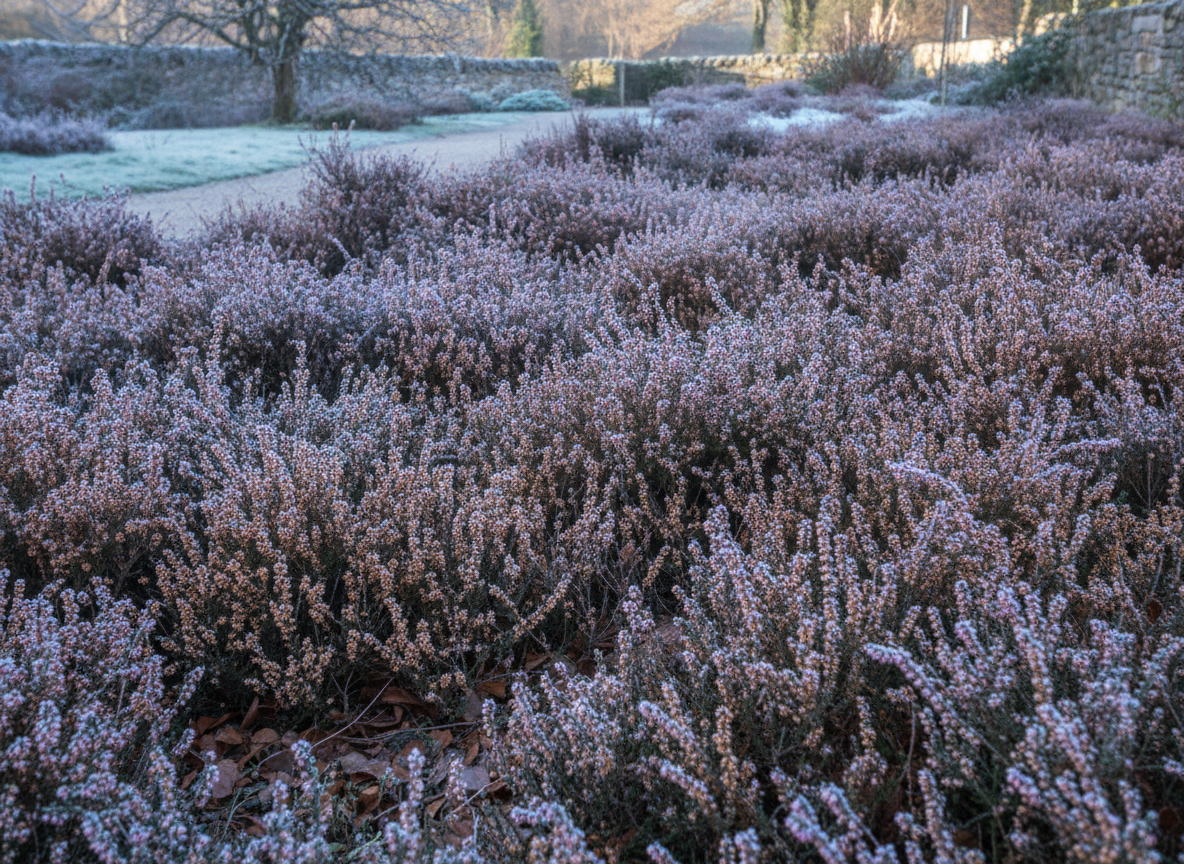 Heather plants with frost in a garden — AI-generated illustration
Cold garden? Leave the flowers on until spring
There’s a second, equally valid school of thought, and it comes into its own the colder your garden is. Instead of shearing summer heathers the moment they fade, you leave the spent flower heads standing right through winter, then trim in early spring, just as the new growth begins to move.
There’s a real reason for it. The faded blooms of Calluna hold a warm, foxy-brown colour that carries a heather bed through the dead months, and that top-growth gives the crown a little insulation against hard frosts and cold winds. In an exposed or northern garden, that winter cover is worth more than an autumn tidy. Shear in March instead and you lose nothing.
Either way, the rule underneath doesn’t change: whether you cut in September or wait until spring, you cut into the green and never the brown.
When a heather has gone too woody to save
Sometimes you inherit a heather that’s been left unpruned for years — sprawling, open in the middle, all bare brown stems with a thin fringe of green at the tips. The honest answer is that there’s usually no cut back to health. Take it hard and it won’t reshoot from that old wood; you’ll just be left with sticks.
Two options are worth a try before you dig it out. You can layer it: mound gritty compost into the open centre and over the bare stems in spring, keep it moist, and some of the buried shoots may root into it over a season, letting you detach and replant them. Or you accept the plant has had its span — most heathers stay good for ten years or so — and replace it. Heathers are cheap, quick to establish, and a young plant sheared lightly every year will always beat an old one nursed along. Sometimes the kindest prune is a trowel.
Let Cresco time it for your heathers
“After flowering” is doing a lot of work in a country where one garden’s Calluna is over in late August and another’s is still colouring in October. The right week depends on your plants, your aspect and the autumn you’re actually having. Plant & Bloom by Cresco builds a pruning calendar around your own garden and nudges you when your heathers are ready — and if you’re not sure whether you’re looking at a summer Calluna to trim now or a winter Erica to leave, snap a photo and it’ll tell you before you pick up the shears.