Cotton lavender (Santolina chamaecyparissus) is one of those silver, aromatic sub-shrubs that looks after itself for years — right up until the day you cut it back too hard and it simply refuses to grow again. The button-yellow flowers are fading now, in late July and into August, and this is the moment that decides whether the plant stays a tight silver dome or splits open into a woody, bare-centred mess by next summer.
The rule is the same one that governs lavender and rock rose, and it is worth tattooing on your secateurs: cotton lavender does not regrow from old brown wood. Cut into the green, and it breaks freely. Cut into the bare woody base below the lowest leaves, and that stem is finished — no dormant buds, no recovery.
Why it flops open in the first place
Left to its own devices, santolina flowers on tall stalks that lift well above the foliage. The weight of those stems, plus a summer downpour, pushes the whole plant outward from the centre. Once it has flopped, the middle is shaded, the base goes leggy and bare, and the neat mound you bought turns into a ring of grey twigs around a hole.
Deadheading alone won’t fix that. Snapping off the spent flowers tidies the top but does nothing for the sprawling frame underneath. What keeps santolina compact is a proper shear that resets the shape — taking the plant back to a firm dome of green growth before it has a chance to set that open, collapsed habit for the season.
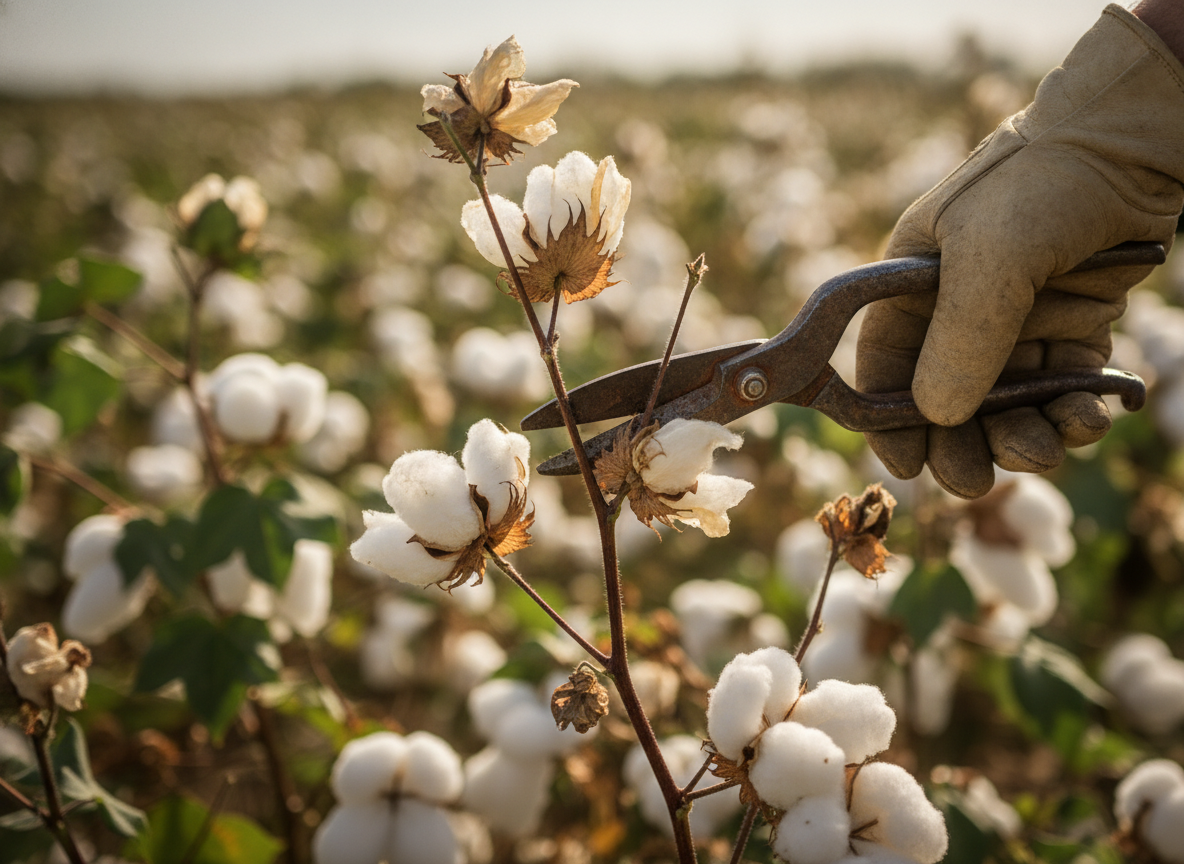 A gloved hand uses shears on a cotton plant with fading flowers — AI-generated illustration
When to shear: as the flowers fade
The window is now — late July through August, as soon as the yellow buttons brown off. Shearing straight after flowering gives the plant the rest of the warm season to push out fresh growth and firm up before autumn, so it goes into winter as a solid, closed dome rather than a hollow one.
Miss the window and don’t panic, but don’t reach for the shears in October either. A late cut leaves soft new growth exposed to the first frosts, which can rot back into the plant. If you get to autumn without having shorn it, leave it be and do the harder cut in mid-spring instead (more on that below).
How to make the cut
Two steps, in order:
- Take the flower stems off first, as low as you can — while staying in green. Follow each spent stalk down and cut it just above where you can still see leaves or small shoots. This removes the ugly brown stalks and stops the plant wasting energy on seed.
- Then lightly shear the whole plant into a dome. Take off around a third of the top growth with hand shears, following the natural mound shape. You are shaping soft green growth, not sawing into the frame.
The single line you must not cross: keep every cut above the lowest green leaves and visible buds. If your blades meet bare grey wood with no leaves on it, stop — cut there and nothing comes back. When in doubt, cut less. You can always take a little more; you cannot glue a dead stem back on.
It is the same discipline that keeps lavender tidy and stops rock rose going bald — all three are Mediterranean sub-shrubs with no buds hiding in the old wood.
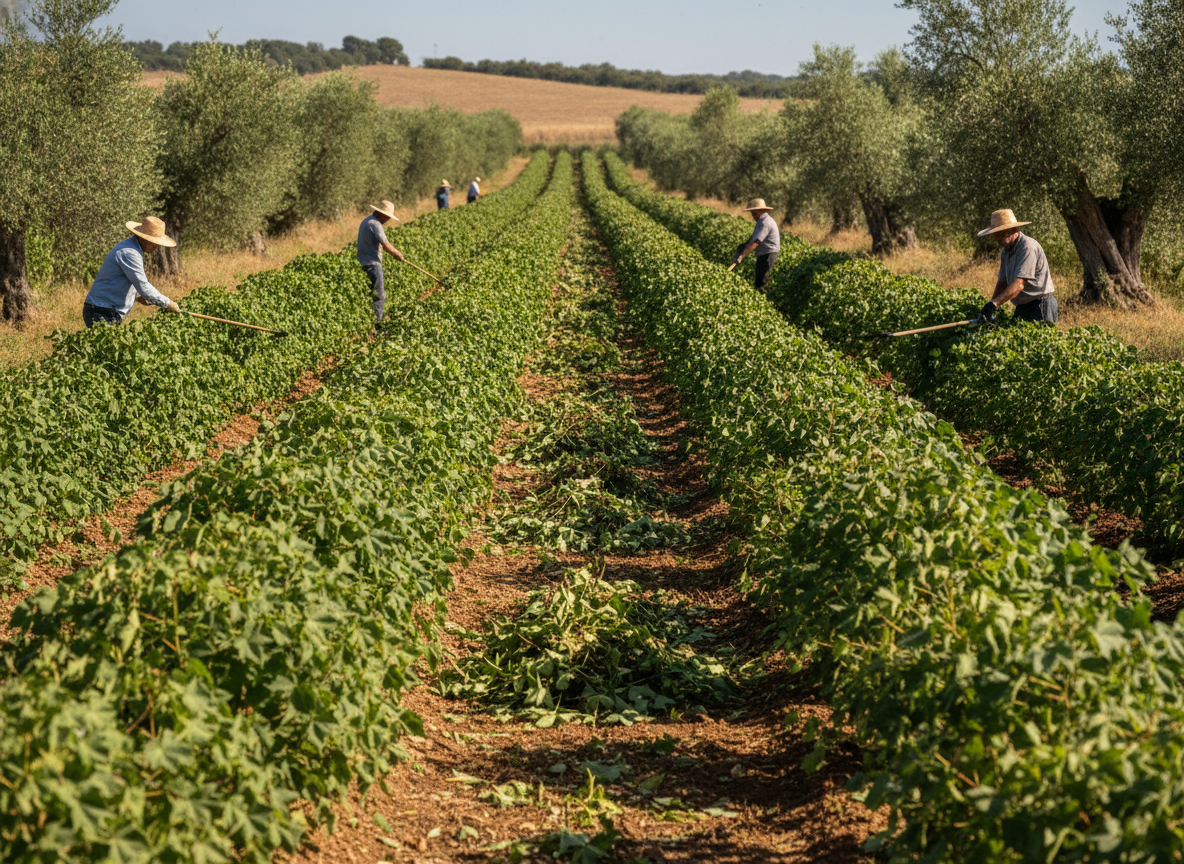 People tend cotton plants in a field — AI-generated illustration
The twice-a-year rhythm that keeps it young
One shear a year keeps santolina presentable. Two keeps it genuinely dense and long-lived.
- Mid-spring (April): the main cut. Once the worst frosts have passed and you can see new growth breaking, reduce the whole plant by roughly a half, shaping it back to a firm mound. This is the cut that does the real rejuvenation work — but it still stays above the lowest green shoots.
- Late summer (now): the light tidy described above. Flower stems off, a third of the top sheared into shape.
Skip the spring cut for a few years and the plant slowly builds a bare woody skeleton that no amount of summer shearing can disguise. The spring reduction is what keeps green growth low on the frame, which in turn keeps your future cuts safely in the green.
Flowers or a silver cushion? Your call
Some gardeners love the sharp yellow buttons; others grow santolina purely for the filigree silver foliage and find the flowers a distraction that pulls the plant open. If you are in the second camp, you can shear the flower buds off before they open in early summer. The plant stays as a tight, uninterrupted silver cushion and never flops from flower weight at all.
There is no wrong answer — just know that letting it flower is the main thing that opens the plant up, so a flowering santolina needs that post-flowering shear more than a foliage-only one does.
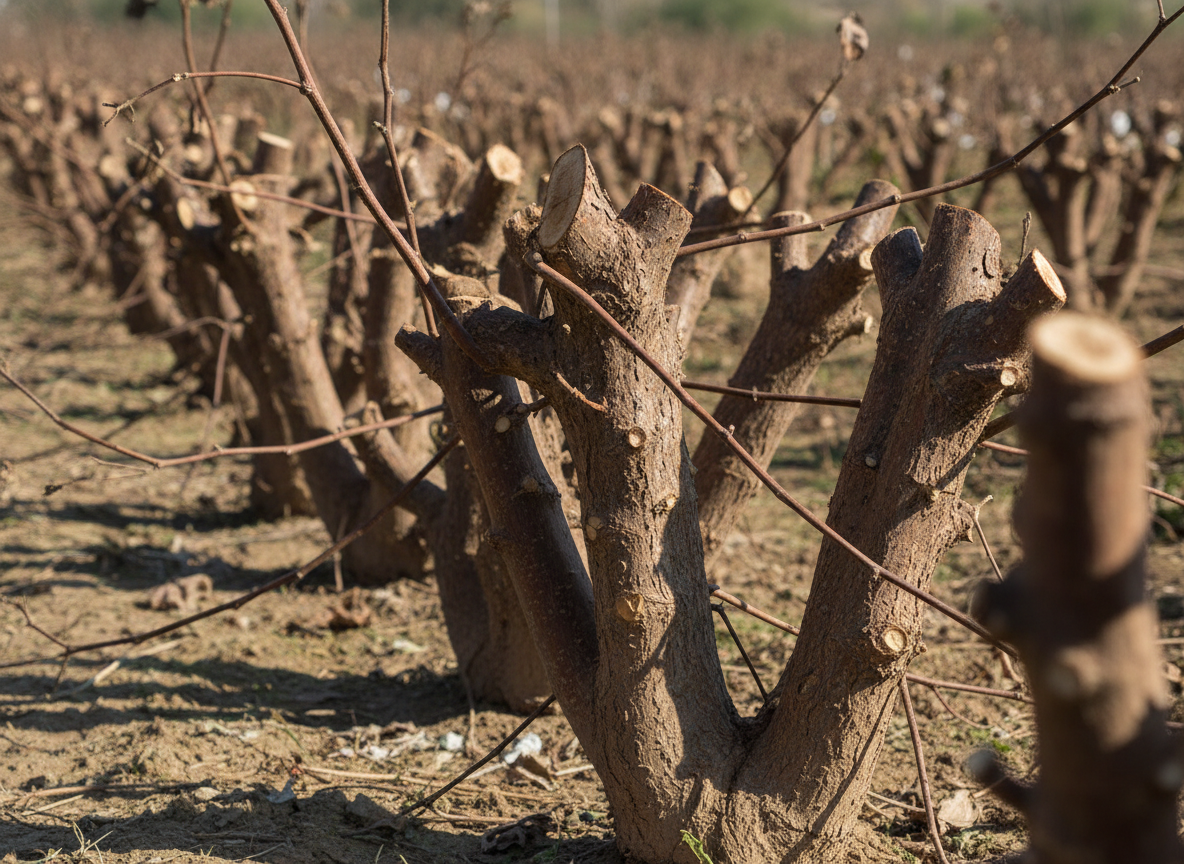 . Sheared cotton plants with woody, bare stalks stand in a field — AI-generated illustration
If it’s already gone woody and bare
Say you inherited a santolina that is already a hollow ring of grey stems. Can you cut it hard back into the wood to force a fresh flush? Honestly — usually not. Unlike some shrubs, it rarely breaks reliably from bare old wood, and a hard cut into brown often just kills sections outright.
You have two realistic options. Either accept it, do the gentle spring-and-summer routine from here on, and let a little new green slowly furnish the outside — it will never fully refill the centre. Or, if it is badly gone, take soft cuttings in summer (they root easily) or simply replace it. Santolina is short-lived by nature; a plant that is more wood than leaf has usually had its best years, and a young replacement will look better within a season than a hard-pruned veteran ever will.
Not sure it’s shear day where you are?
Flowering finishes at different times depending on your region, your soil and the summer you have had — a santolina in a hot, dry border may be over by mid-July, while one in a cooler spot is still buttoning up in August. If you would rather be told this week whether it’s time, the Cresco app builds a pruning calendar around your actual plants and local weather, so cotton lavender pops up on your list at the right moment — and reminds you to stay out of the old wood while you’re at it.