The mistake isn’t how hard you cut — it’s when
Escallonia is the shrub that forgives almost everything except bad timing. It’s a tough, glossy-leaved evergreen — the pink, red or white bell-flowered hedge you see holding a line in seaside gardens where nothing else will stand the wind. You can cut it hard, you can reshape a whole side of it, you can renovate a leggy old plant right back to bare stumps, and it comes back. What it won’t forgive is the one cut most gardeners are tempted to make: a tidy-up in spring, just as the garden wakes and the shrub looks a little shaggy.
That spring cut is the flower thief. Reach for the shears in April and you slice off exactly the growth that was about to carry this summer’s bells. The plant survives, greens up, looks fine — and barely flowers. Do it every spring and you end up with a healthy, dense, entirely flowerless hedge, wondering where the pink went.
The fix is a change of date, not technique. Escallonia’s window opens the moment the main flush of flowers fades — for most gardens that’s from late July into August.
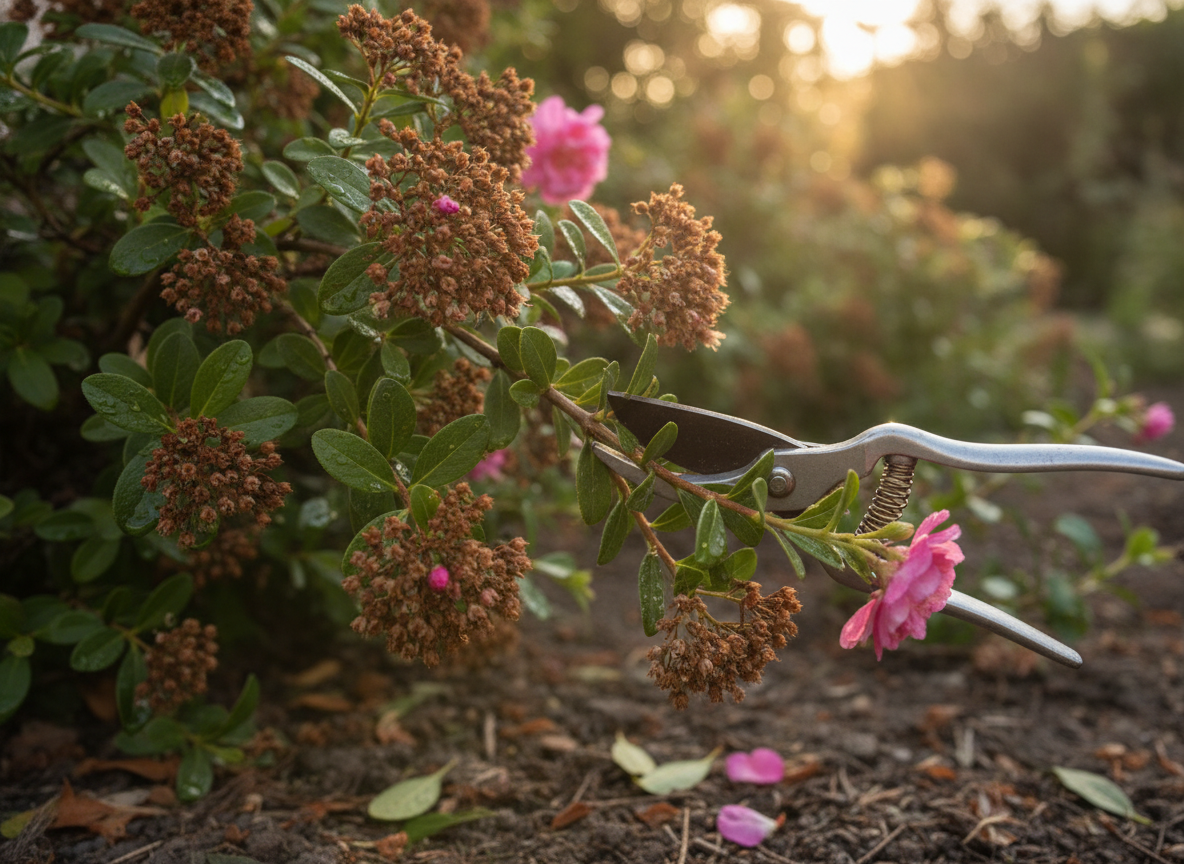 Pruning shears cut an escallonia branch with green leaves and pink flowers — AI-generated illustration
When exactly to cut, and why late summer works
Escallonia flowers through the summer, with a big first flush that peaks around midsummer and starts to grey and drop from late July. That fade is your signal. Trim within a week or two of the main flush finishing, while there’s still a good stretch of warm weather left.
The reason the timing matters is what the plant does next. Cut now and escallonia responds with a wave of fresh shoots, and those shoots have the rest of summer and early autumn to ripen and set the flower buds that open next year. Cut in spring and you’re removing that ripened, bud-bearing wood before it ever flowers. The RHS is explicit about it: prune after flowering, and keep any spring work to snipping out frost-damaged stems only — anything more reduces the display.
One trim a year, straight after flowering, gives you the most flowers. You can clip an escallonia hedge more often if you want a crisp formal face, but every extra cut trades flowers for tidiness. Decide which you’re growing it for before you pick up the shears.
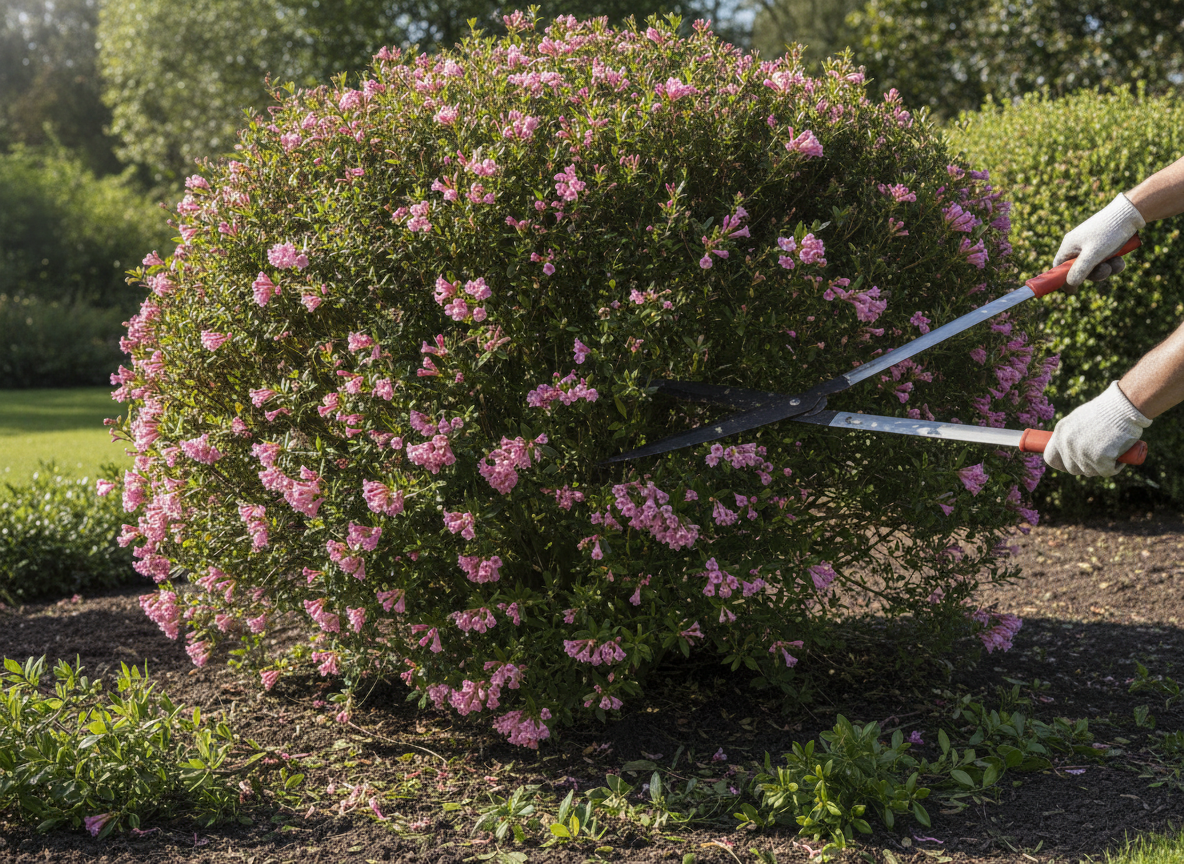 Trimming an escallonia shrub — AI-generated illustration
How to trim a hedge or a free-standing shrub
For a hedge: go over the whole face and top with shears or a trimmer, taking off the flowered growth and shaping to a slight batter — wider at the base than the top — so light reaches the bottom and it doesn’t go bare at the ankles. Don’t be shy: escallonia takes a firm clip and thickens up from it. Sweep the trimmings out of the plant so they don’t sit and rot in the crown.
For a free-standing shrub, where you want the loose, arching, flowery habit rather than a wall, skip the shears and use secateurs. Shorten the stems that have just flowered back to a healthy pair of leaves or a side-shoot, and thin out a few of the oldest, thickest stems entirely at the base. That keeps the fountain shape and lets the plant breathe, instead of turning it into a dense green box.
Either way, aim to be finished by early autumn. Late cuts push soft new growth that won’t harden before the first frosts, and on a plant that’s already at the tender end of hardy, that soft growth is what winter kills.
The old-wood difference — escallonia is not lavender
Here’s the fact worth filing away, because it separates escallonia from a whole family of sun-loving shrubs it often grows beside. Escallonia breaks new growth from old, bare wood. An overgrown, leggy, hollow-in-the-middle escallonia can be renovated hard — cut back to a framework of stumps 30–45 cm high — and most plants push new shoots and rebuild within a couple of seasons.
That is the opposite of its Mediterranean neighbours. Lavender cut into its bare grey base never comes back; the rock-rose won’t regrow from old wood either, and broom needs a light trim every single year precisely because it can’t be cut back hard once it’s gone woody. With those, one hard cut is fatal. With escallonia, a hard cut is a reset.
One caveat on that renovation: do the hard cut in mid-spring (April), not now. A drastic cut in late summer wouldn’t leave the plant time to re-clothe and harden before winter. So the rule splits neatly: the light maintenance trim goes in right after flowering, in late summer; the rare renovation cut goes in during spring, accepting you’ll skip a year of flowers to get the shape back.
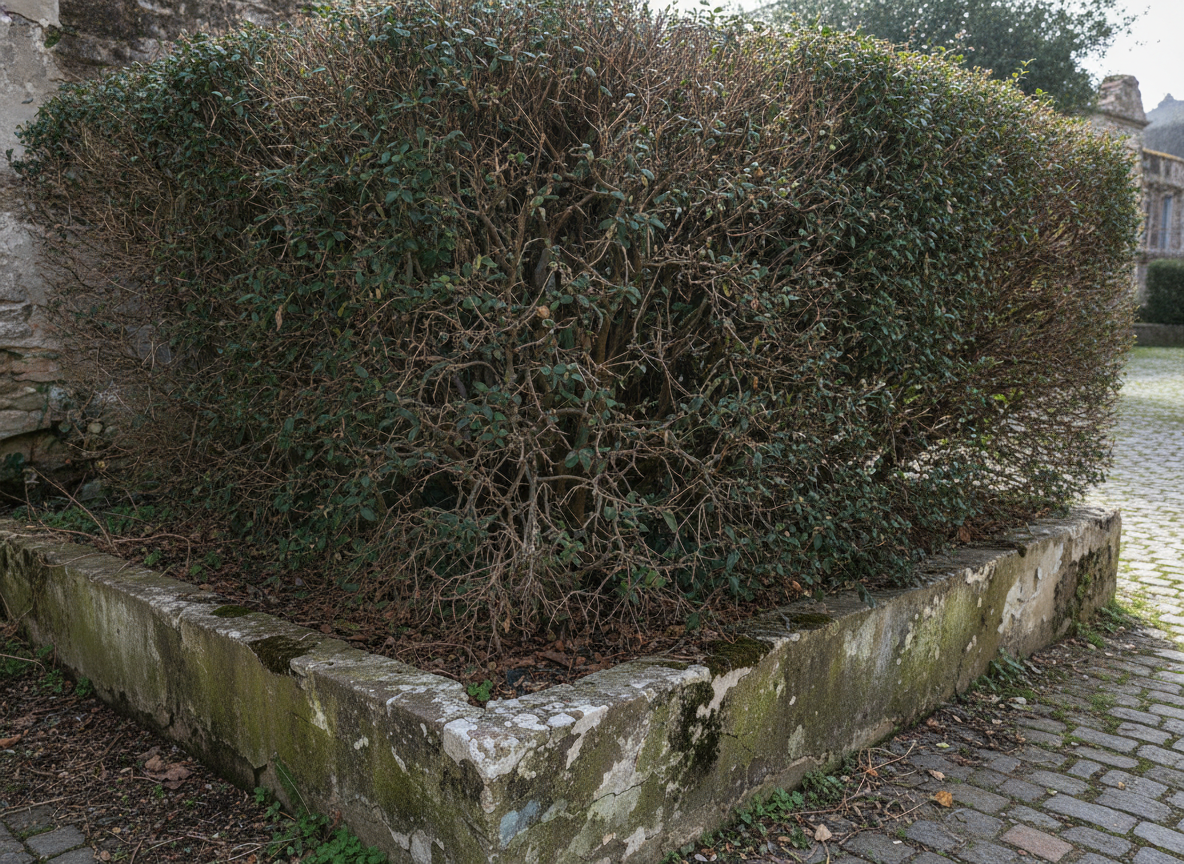 An overgrown, flowerless escallonia bush in a concrete planter — AI-generated illustration
If it’s already an overgrown, flowerless block
Plenty of escallonia hedges end up in exactly this state — sheared at the wrong time for years, dense as a wall, and hardly a flower on them. You have two routes back.
- The gentle way: switch to the correct regime. From this summer on, make your one cut right after flowering and nothing in spring. Within a season or two the flowering wood builds back up and the bells return, without any drama.
- The hard reset: if it’s also leggy, bare-based or simply too big, cut it back hard next April to that 30–45 cm framework, feed and water it through the summer, and let it rebuild. You lose a year of flowers, but you get a plant the right size with a fresh, dense structure — and then you keep it that way with the after-flowering trim.
Put it on the calendar the right way round
The whole discipline fits in one line: escallonia is trimmed when the flowers fade, and left alone in spring. Get that one date right and it’s one of the easiest, most weatherproof flowering hedges you can grow.
If you’d rather not hold every shrub’s window in your head — and escallonia’s “after flowering, not in spring” is exactly the kind of rule that’s easy to get backwards — the Cresco pruning calendar tracks each plant’s timing for you, judged against your local season rather than a generic date. Escallonia included.