Coneflowers keep flowering — if you keep deadheading
A coneflower (Echinacea purpurea) does not die when it sets seed the way a cosmos does — it is a perennial, and it will come back next year whatever you do this week. But it still runs on the same instinct every flowering plant runs on: pour energy into a ripening seedhead and it eases off making new flowers. Through July and August, that trade is worth taking off the plant. Snip the spent, browning daisies as they go over and Echinacea keeps pushing fresh buds from the crown and the side branches, holding a full show weeks longer than a clump left to run to seed by mid-August.
The gain is real but modest — think two or three extra weeks of colour and a tidier, denser plant, rather than the six-week transformation you get from an annual like cosmos. That is the key difference to hold onto: with an annual, seed means the season is over; with a coneflower, seed just means this stem is done. So deadheading here is about stretching the display and keeping the border crisp — not a life-or-death intervention. Which is exactly why the end-of-season decision goes the other way, as we will get to.
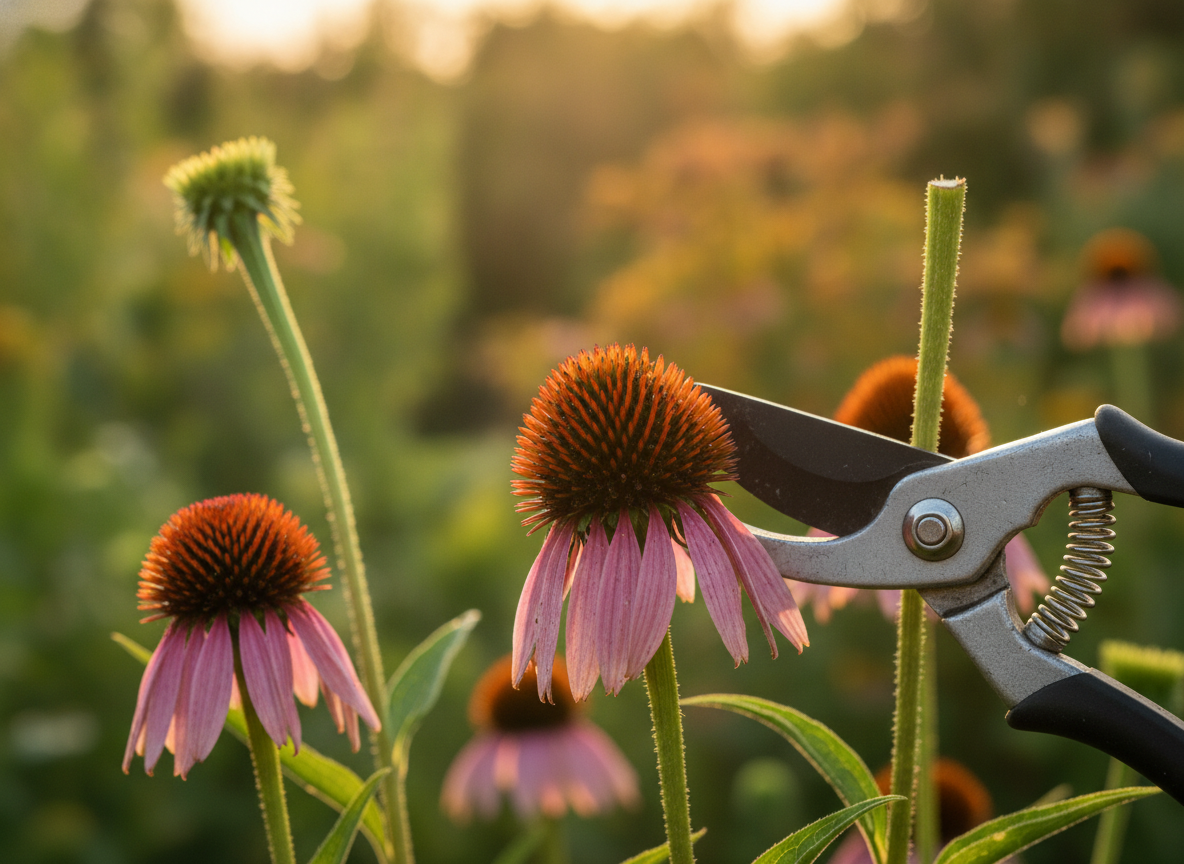 A gardener prunes a coneflower with pruning shears in a garden — AI-generated illustration
How to deadhead a coneflower without leaving spikes
The mistake is snapping the dead cone off the top of its stalk and walking away. Coneflower stems are too woody to pinch cleanly with your fingers in any case, and a flower taken off at the neck leaves a stiff, leafless spike standing in the clump with no growing point below it — nothing breaks from it, and you end up with a pincushion of bare green sticks by September.
Follow the spent flower’s stem down into the plant instead, and cut with sharp snips just above the next side-bud, the next lateral shoot, or the first strong pair of leaves below the flower. There is nearly always a fork lower down with a new flowering stem waiting in it. Cut there and the plant breaks that bud into fresh bloom in a couple of weeks, while the clump stays leafy and full to the ground. If a whole stem has finished flowering top to bottom with nothing usable below, take it right out at the base — that opens the crown to light and air, which matters more on Echinacea than most perennials.
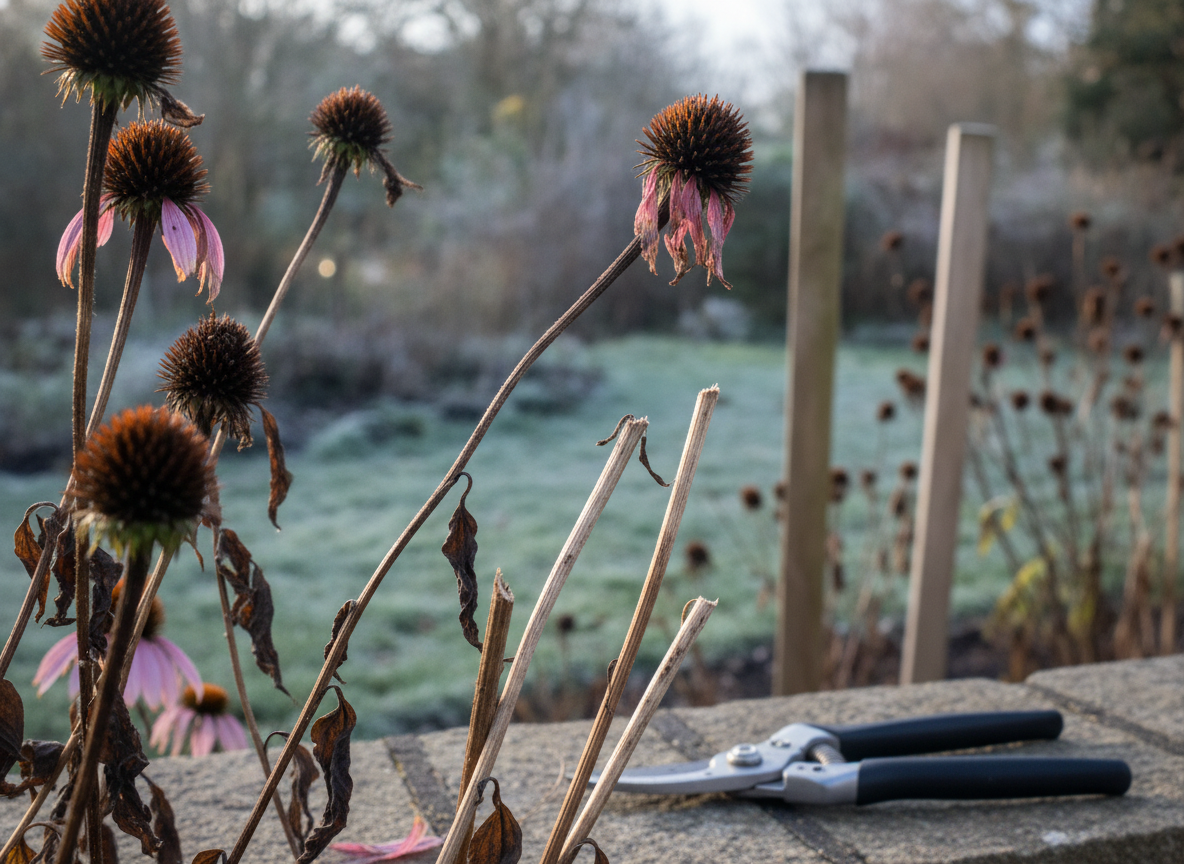 Fading coneflowers stand next to pruning shears on a stone wall — AI-generated illustration
Why clean, sharp cuts matter more here than on most plants
Coneflowers are one of the perennials most prone to aster yellows — not a fungus you can spray off, but a disease carried plant to plant by sap-sucking leafhoppers. Its signature is unmistakable once you have seen it: flowers that come up green and deformed, with leafy tufts and secondary shoots sprouting straight out of the central cone, and colour that never develops properly. There is no cure. If you spot a stem doing this, cut it out well below the flower and bin or burn it — do not compost it, and do not leave it standing among healthy plants where leafhoppers can pick the infection back up.
That is also the reason to keep your blades sharp and to wipe them between plants if you have had any trouble. A clean cut heals fast and gives disease fewer footholds; a crushed, ragged snap on a hollow-ish stem sits wet and open. It is a small habit, but on Echinacea it earns its keep — the same blades-and-hygiene point that decides whether a box hedge shrugs off or spreads its problems.
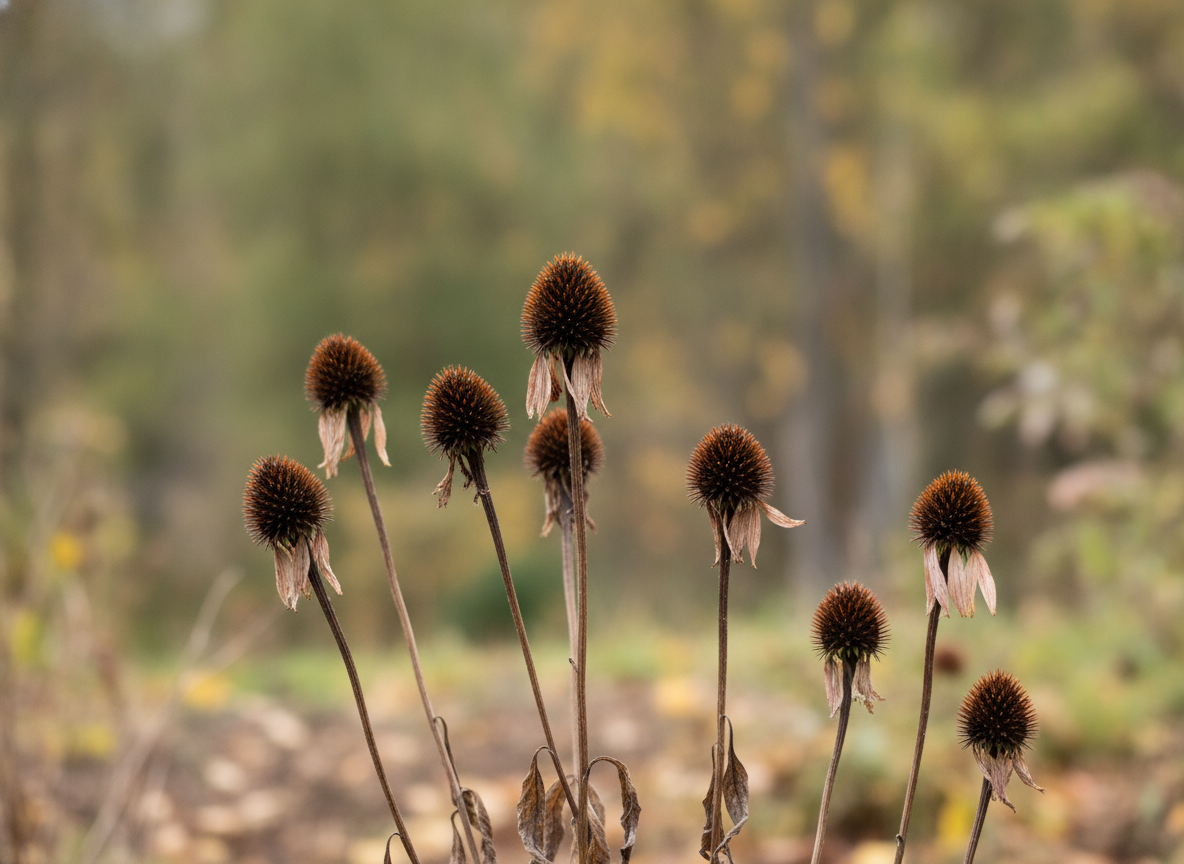 AI-generated illustration
When to stop: leave the last cones standing
Here is where the coneflower parts company with almost everything else you have been deadheading all summer. Stop cutting about four to six weeks before your first expected autumn frost. Any flowers opening after that will not add much to the display, and the plant now has a better use for them: seed.
Leave that final flush to ripen and you get two things a tidied-up clump throws away. First, the seed. A ripe Echinacea cone is a spiked black dome packed with oil-rich seed, and goldfinches work them right through autumn and into winter — a stand of coneflowers left standing is one of the best natural bird-feeders a border offers. Second, the structure. Those stiff dark cones on straight stems hold their shape under frost and the first snow, catching light on grey mornings when everything soft has collapsed. Cut the clump down now and you spend the whole of winter looking at bare soil; leave it and you get four months of silhouette for free.
So resist the autumn tidy. Let the last cones stand brown and bristly through the cold months, and cut the whole clump down to the ground in late winter or very early spring, just before the new basal rosette pushes up. That final cut is also the moment to lift and divide a congested clump if the middle has gone woody and shy — much as you would split a tired bearded iris, only in spring rather than midsummer.
The same seed bargain, one border at a time
If this reads like a rule you have met before, it is — with a twist. It is the same bargain behind deadheading cosmos down to a bud right up to the frosts: take the spent flower before it sets seed and the plant flowers on. The difference is that a coneflower is a perennial, so the end of its season flips the logic — the last seedheads are worth more standing than cut, exactly as they are with alliums, whose globes you never deadhead at all and with hydrangea heads you leave on the plant until spring.
The catch is that every plant in the border keeps its own version of this clock: the cosmos wants a weekly walk with snips, the coneflower wants deadheading until late summer and then leaving strictly alone, the allium wanted leaving all along. Miss the changeover date on any of them and you either lose weeks of flower or cut off a winter’s worth of birds. That is exactly what Cresco tracks for you: tell it what is growing and it tells you which plant needs the secateurs this week — and, just as usefully, which one to put the secateurs down for — tuned to your own local frost dates rather than a generic calendar.