By late July the crocosmia are in full swing: those wiry, arching stems hung with rows of flame-orange, scarlet or butter-yellow trumpets that the bees can’t leave alone. ‘Lucifer’ is the one everyone knows — chest-high and unapologetically red. And every year, the moment the last flower on a spray browns off, someone reaches for the shears and cuts the whole clump down to a tidy stubble.
That tidy stubble is exactly the mistake.
The one cut that hurts
Crocosmia grows from a corm — a swollen underground storage stem, stacked in little chains just below the soil surface. Everything about next summer’s display is decided by how much energy those corms bank between now and autumn. And the factory that fills them is the foliage: those upright, sword-shaped leaves, still green and hard at work long after the flowers have gone.
Cut the leaves off while they’re green and you switch the factory off early. The corm goes into winter half-charged, and next July you get a flush of leaf and few flowers — or a clump that limps along and then quietly fails.
It’s the same rule that governs daffodil leaves in spring and lily stems after the bloom drops: the flower is finished, but the leaves are not. Agapanthus behaves the same way — deadhead the stalk, never the strappy leaves. Green foliage is always feeding something you can’t see.
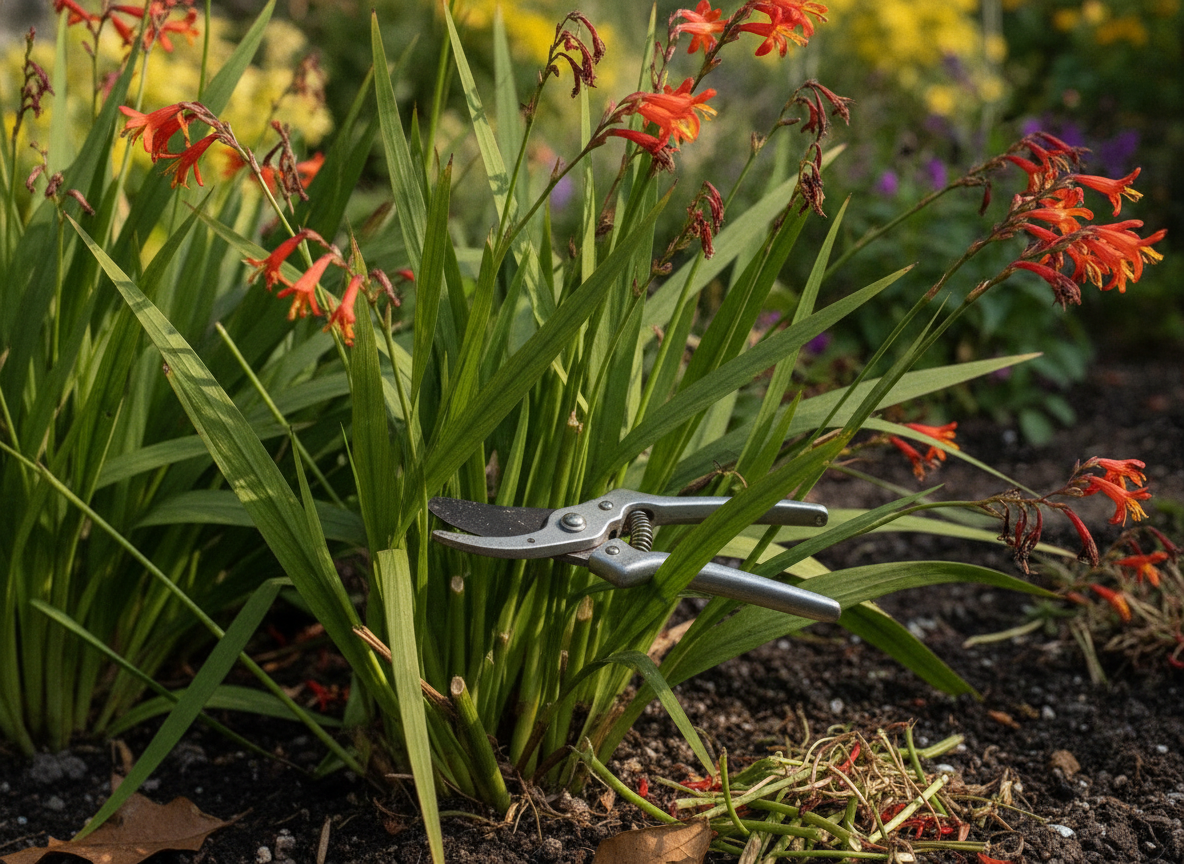 Orange crocosmia plants and pruning shears are in a garden — AI-generated illustration
So what do you cut in late July?
The flower spikes — and only the flower spikes.
Follow a finished spray back down its stem to where it emerges from the fan of leaves, and cut it out there, low and clean. Leave every leaf behind. You’re removing the spent stem, not the plant.
There are two reasons to bother, and neither is really about the crocosmia’s health:
- Tidiness. Browning stems flopping over the border look tired. Snipping them lifts the whole planting instantly.
- Stopping it running. The old orange montbretia (Crocosmia × crocosmiiflora) is a notorious spreader. In mild, damp gardens it seeds and creeps into hedgerows and neighbouring beds, and it’s genuinely hard to dig out once established. Cutting the spikes before the seed capsules ripen keeps it where you planted it.
If you grow one of the well-behaved named varieties — ‘Lucifer’, ‘Emily McKenzie’, ‘Star of the East’ — the spreading worry mostly falls away, and deadheading becomes purely cosmetic.
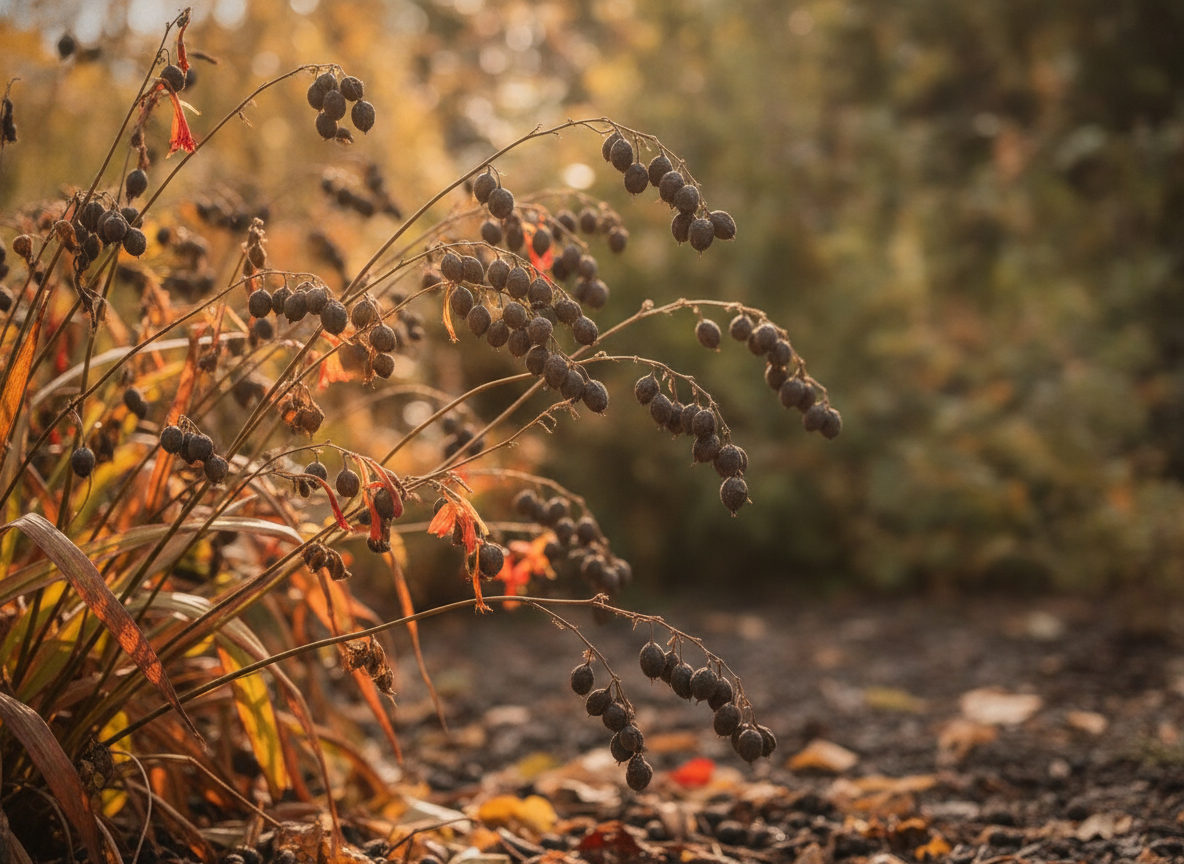 Crocosmia seedheads in a natural garden setting — AI-generated illustration
Seedheads: leave a few if you like them
Here’s the flip side. Crocosmia seedheads are handsome — green capsules that dry to papery beige along those arching stems, holding their shape well into winter and catching the frost. Birds pick at them on cold mornings.
So it’s a genuine choice, not a rule:
- Tidy borders, or a running montbretia? Cut the spikes now.
- Winter structure and wildlife, with a clump that stays put? Leave a scattering of spikes standing and cut the rest.
You can happily do both across a big drift — deadhead the front, leave a few at the back for the frost to decorate.
When the leaves finally come off
Not now. Leave the foliage right through summer and autumn while it’s green — that is the whole point of everything above. Let it yellow and collapse naturally with the first frosts. Then you have two options:
- Late autumn: cut the dead, brown foliage back to the ground once it’s mushy and clearly finished.
- Early spring: leave the dead leaves standing as a frost blanket over the corms, and tidy them just before the new shoots spear through.
In colder gardens the spring option is the safer bet — that scruffy thatch gives the shallow corms a little extra winter protection.
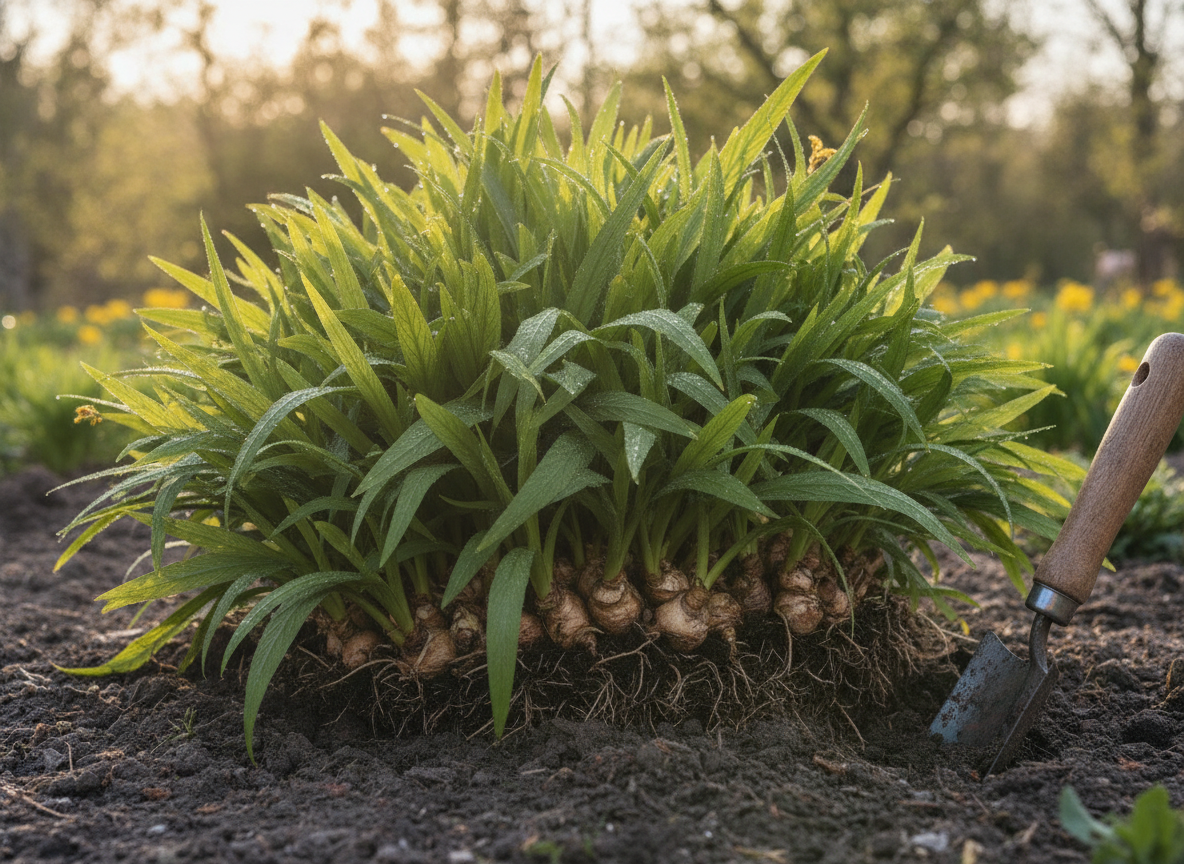 A dense clump of crocosmia corms with foliage and a trowel in garden soil — AI-generated illustration
Congested clump? That’s a spring job
If flowering has thinned year on year and the clump has become a solid mat of leaf with few flowers, the fix isn’t pruning — it’s division. But do that in spring as growth restarts, not now. Lifting and splitting a clump in the middle of its flowering season just sets it back. Make a note, leave it be, and deal with it when the new shoots are a few centimetres tall.
The one-line version
Cut the spent flower spikes to the base. Leave every green leaf until autumn. That’s the whole job — and it’s the difference between a crocosmia that gets stronger every year and one that slowly fades out.
Not sure whether that strappy clump in your border is a crocosmia, a young iris or a montbretia gone feral? Cresco identifies it from a single photo and tells you exactly when — and when not — to cut.