The blue is fading — so what actually comes off?
An agapanthus in full swing is one of the best things in a late-July garden: those tall stems, each topped with a firework of blue or white trumpets, holding steady above a fountain of strappy green. Then, over a week or two, the little florets brown and drop one by one, the round head goes to a knot of green seed pods, and the whole thing starts to look tired. That is the point where the question lands — do you cut it back?
The short answer is that you cut one thing and leave everything else alone. Take off the spent flower stalk, right down at the base, and that’s the whole after-flowering prune. What you must not do — and what the phrase “cut agapanthus back” tempts people into — is take the shears to the leaves. Those leaves are not spent. On many agapanthus they aren’t going anywhere until next summer, and cutting them now is how a healthy clump turns into a sulking one that skips a year of flowers.
 AI-generated illustration
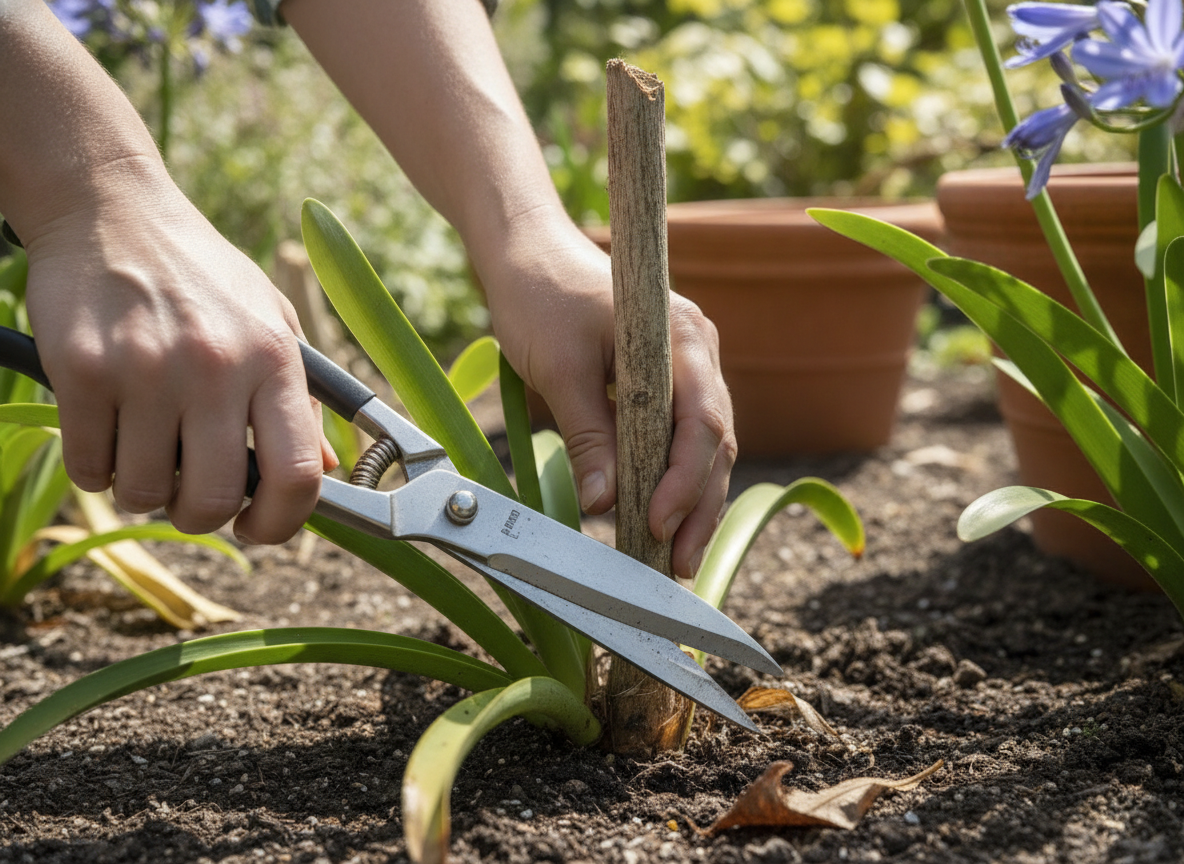
Deadhead the spent stalk right down at the base
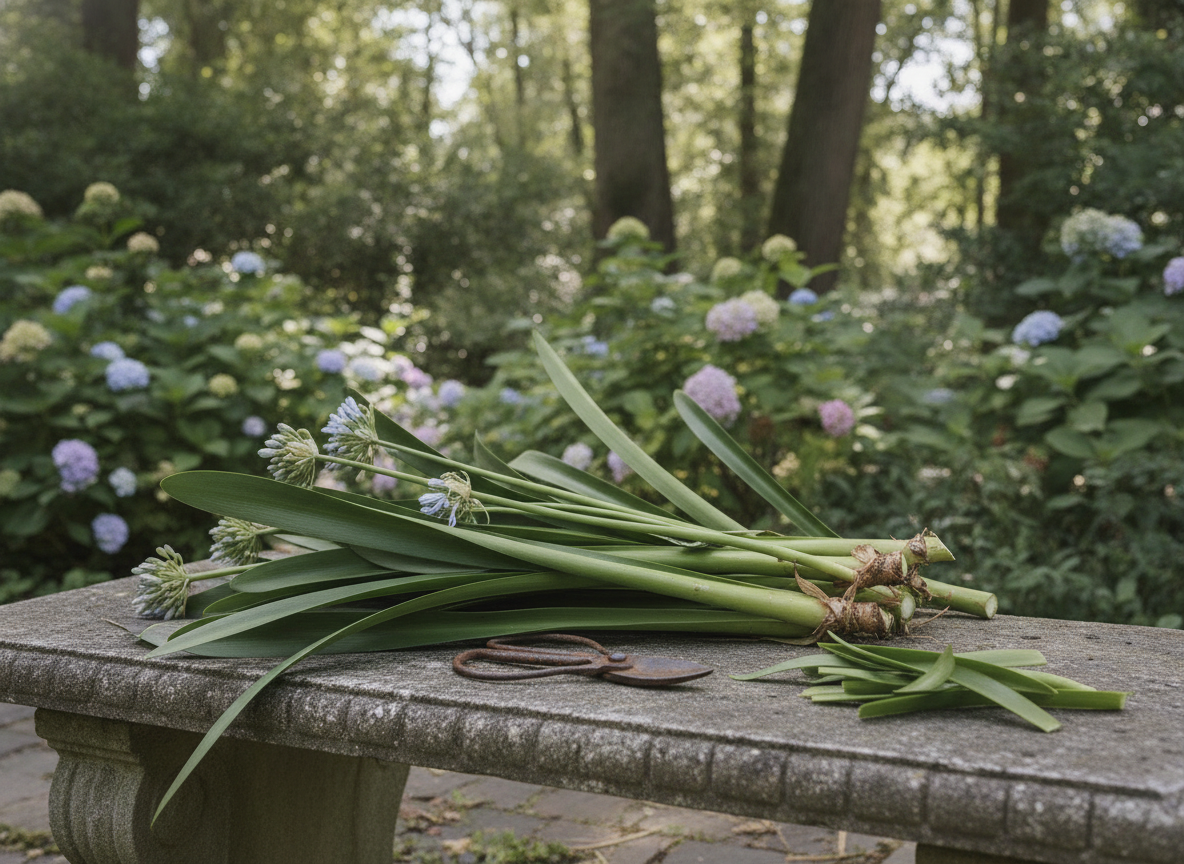
Wait until every floret on a head has gone over — agapanthus open from the outside of the umbel inwards, so a head can still have a few good trumpets when the first ones brown. Once the whole head is finished, follow its stalk all the way down to where it emerges from the base of the plant, and cut it there. Don’t leave a tall bare stub sticking out of the foliage; a stalk cut low disappears into the leaves and the clump looks clean again in one snip.
The reason to bother isn’t only tidiness. A finished agapanthus head is busy turning into seed pods, and filling seed is one of the most energy-hungry things the plant can do — sugar spent on next year’s seedlings instead of next year’s flowers. Cutting the stalk off stops that drain. It’s the same “take the seed away and the plant feeds itself instead” logic behind snapping the faded flower off a lily before it sets a pod, and behind deadheading buddleia so it flowers on instead of seeding everywhere. Don’t expect a big second flush, though — unlike buddleia, agapanthus won’t rebloom to order. If you deadhead early you might get an extra stem or two; mostly you’re banking energy, not buying more flowers this year.
 Here is a photorealistic, editorial-style garden photograph for you: — AI-generated illustration
Never shear the leaves — especially on an evergreen agapanthus
Here’s the mistake the “cut it back” instinct causes. Agapanthus comes in two camps, and the commonest garden and patio types — the broad-leaved, glossy evergreens — hold their foliage right through the year. Those leaves are the plant’s entire engine: they keep photosynthesising through autumn, winter and spring, quietly feeding the fleshy roots that will throw next year’s flower stems. Shear them off after flowering “to tidy up” and you’ve unplugged the engine at exactly the wrong moment. The clump limps into next summer with fewer stems, or none.
So on an evergreen agapanthus, the rule is blunt: cut the flower stalks, never the leaves. The only foliage you remove is the odd leaf that has already gone yellow or brown at the tips — tug or trim those out at the base for looks, but leave every green blade standing. Those evergreen leaves are also the tender part in a cold winter, which is the other reason not to strip them: the crown needs its own foliage and a dry winter mulch for protection, and a plant you’ve shaved bare going into December is a plant you may not see again in July.
Evergreen or deciduous — the difference that changes the timing
If your agapanthus dies down completely every winter — the leaves yellow, collapse and vanish, leaving bare soil — you’ve got a deciduous type (the hardier, narrower-leaved kinds, often the best choice for cold gardens left in the ground). These can be cut back, but not now, and not with the shears. Let the foliage do exactly what a bulb’s leaves do: stand until it yellows and dies naturally in autumn, feeding the roots the whole way down. Only once it has browned and pulls away easily do you clear it off. Cut it green in July and you’ve thrown away three months of the plant feeding itself.
It’s the identical rule that governs every bulb and tuber in the garden — the flower is the part you enjoy, the leaves are the part that pays for it, and you wait for the leaves to finish on their own timetable. If you’re not sure which camp your plant is in, the test is simple: an agapanthus that keeps green leaves over winter is evergreen (leave the foliage permanently); one that disappears underground is deciduous (leave the foliage until autumn, then clear it). Either way, July is for the flower stalk and nothing else.
 Cut agapanthus in a vase with plant feed on a wooden table — AI-generated illustration
The feed is what actually decides next year’s flowers
Deadheading tidies the plant and stops it wasting energy — but if you want more agapanthus flowers next year, the real lever isn’t the secateurs at all. It’s the feed, and the window for it is closing. Agapanthus flower on the strength of the roots they built the previous season, and what builds flower-bearing roots is potash. Give the plant a high-potash feed — the ordinary tomato feed you’d use on anything you want to bloom rather than leaf — every week or two from spring right up through flowering. A nitrogen-heavy feed does the opposite: lush leaf, few flowers.
Then ease off. Once flowering is over and you’ve deadheaded, stop feeding for the year — late feeding just pushes soft growth that won’t harden before winter. This matters most for agapanthus in pots, which flower beautifully when a little pot-bound but run out of food fast; an unfed potted plant is the classic “all leaves, no flowers” agapanthus. A season of steady tomato feed while it’s in growth, and no feed once it’s done, is what turns a shy clump into one that flowers reliably. If a clump has grown so congested that flowering is dropping off despite feeding, that’s the cue to lift and divide it — but do that in spring, not now.
Leave the seedheads only if you actually mean to
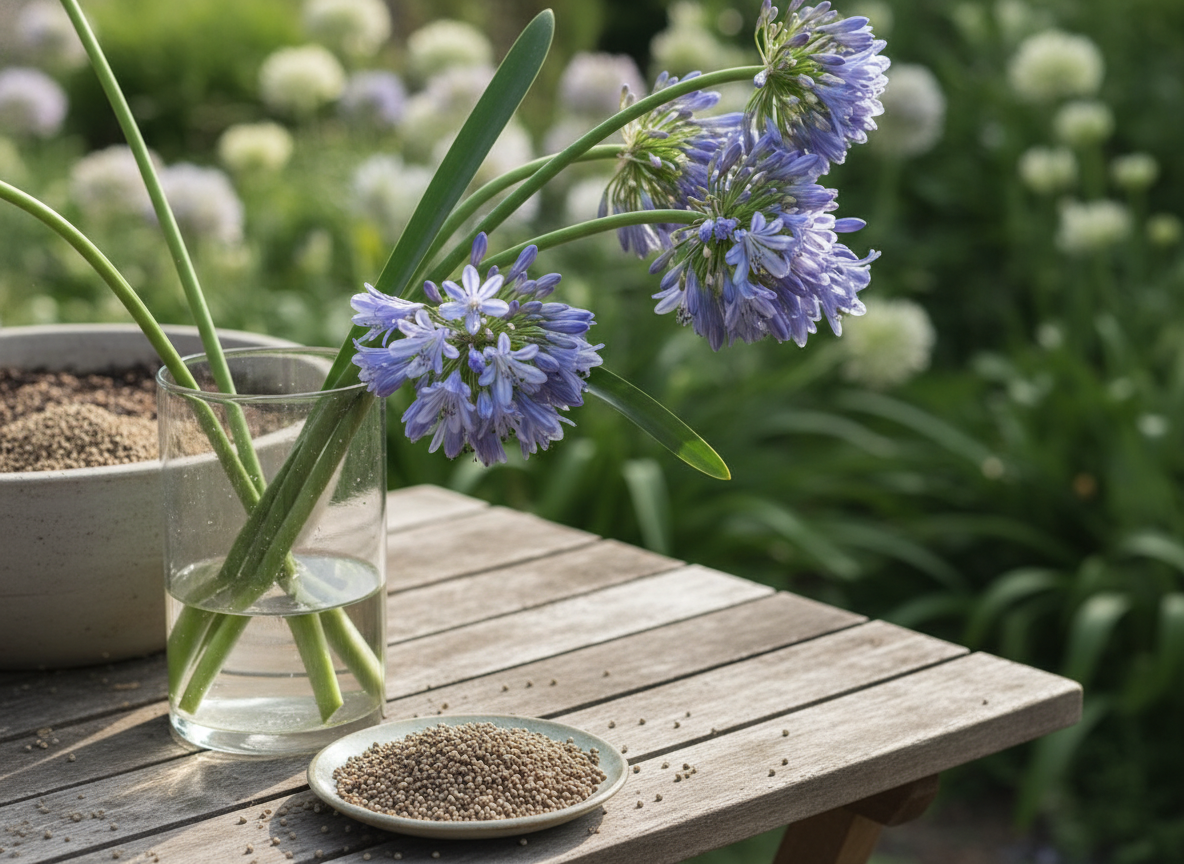
One honest exception to the deadheading rule: those spherical seedheads are genuinely handsome. Left to dry, they hold their shape into autumn and winter, catch frost beautifully, and give structure to a border that’s otherwise gone over. If you want that — and many gardeners do — leave a few of the strongest stalks standing and deadhead the rest. You’re making a straight trade: winter sculpture in exchange for some of next year’s flower energy, and on an established, well-fed clump that trade is a fair one.
Just make it a choice, not an oversight. A whole clump left to seed, year after year, with no feed to compensate, is a clump slowly running itself down — and agapanthus seeds itself around freely in milder gardens, so you may also be signing up for seedlings you didn’t want. Deadhead most, keep a sculptural few, feed while it grows, and never touch the leaves: that’s the entire after-flowering job.
Not sure whether the agapanthus in front of you is evergreen or deciduous, or whether this is a deadheading week or a feeding week? That’s exactly the call Cresco makes for you — it tracks each plant by type and by your own garden’s weather, and tells you the one thing worth doing this week, so you cut the stalk that’s finished and spare the leaves that aren’t.