The flower is finished — but the plant is only halfway done
A lily in July puts on the loudest show in the border, and then, over a week or so, the last trumpet browns at the edges and folds. That is the moment most people reach for the secateurs and cut the whole stem down, tidying the plant away for the year. It is also the single most expensive mistake you can make with a lily, because the flower finishing is not the plant finishing. It is the plant switching jobs.
For the first half of summer a lily bulb spends itself pushing up a stem and opening flowers. For the second half — the part that starts the day the last bloom fades — that same stem runs in reverse, hauling sugars back down into the bulb to build next year’s flower before it dies back. Cut the stem now and you cut off that supply line. The bulb goes into winter underfed, and next July it answers with a shorter stem, fewer buds, or nothing at all. Everything below is about not doing that.
 AI-generated illustration
Deadhead the spent bloom — you’re really removing a seed pod
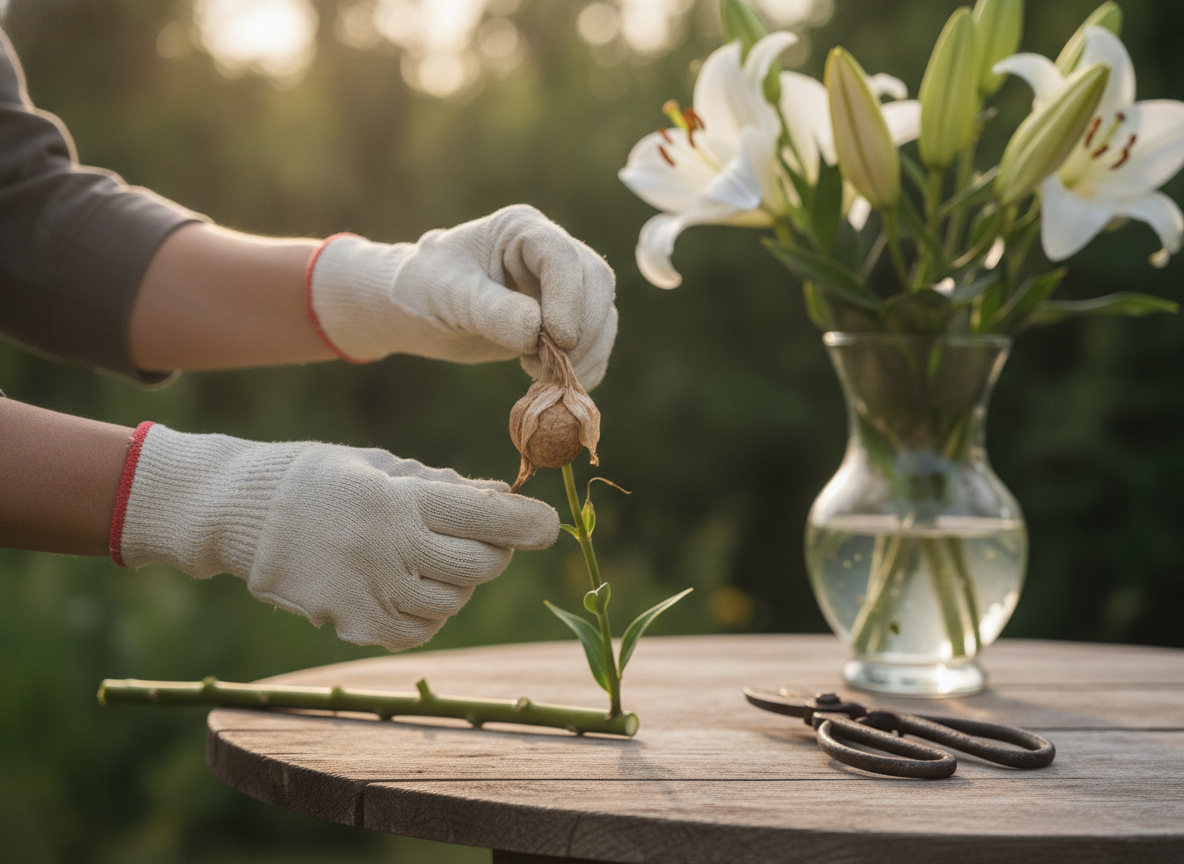
Start with the part that is safe to cut. As each individual flower goes over, look just behind it: where the petals were attached, a fat green swelling is already forming. That is the ovary, and left alone it ripens into a heavy seed pod. Setting and filling seed is one of the most energy-hungry things a bulb can do, and every pod that swells is sugar spent on next year’s seeds instead of next year’s bulb.
So snap or snip off each faded flower where its short stalk joins the main stem — take the spent bloom and the swelling pod behind it, and nothing more. On a lily carrying six or eight trumpets that open in succession, this is a job you do a few times over a fortnight, picking off yesterday’s as today’s open. It keeps the plant looking crisp, and it keeps the bulb’s energy pointed the right way. This is the same “stop it setting seed and it feeds itself instead” logic behind cutting red valerian back before it seeds — the plant only relaxes once you take the seed away.
 Cut lilies in a glass vase on a wooden table — AI-generated illustration
Never cut the stem down for the vase
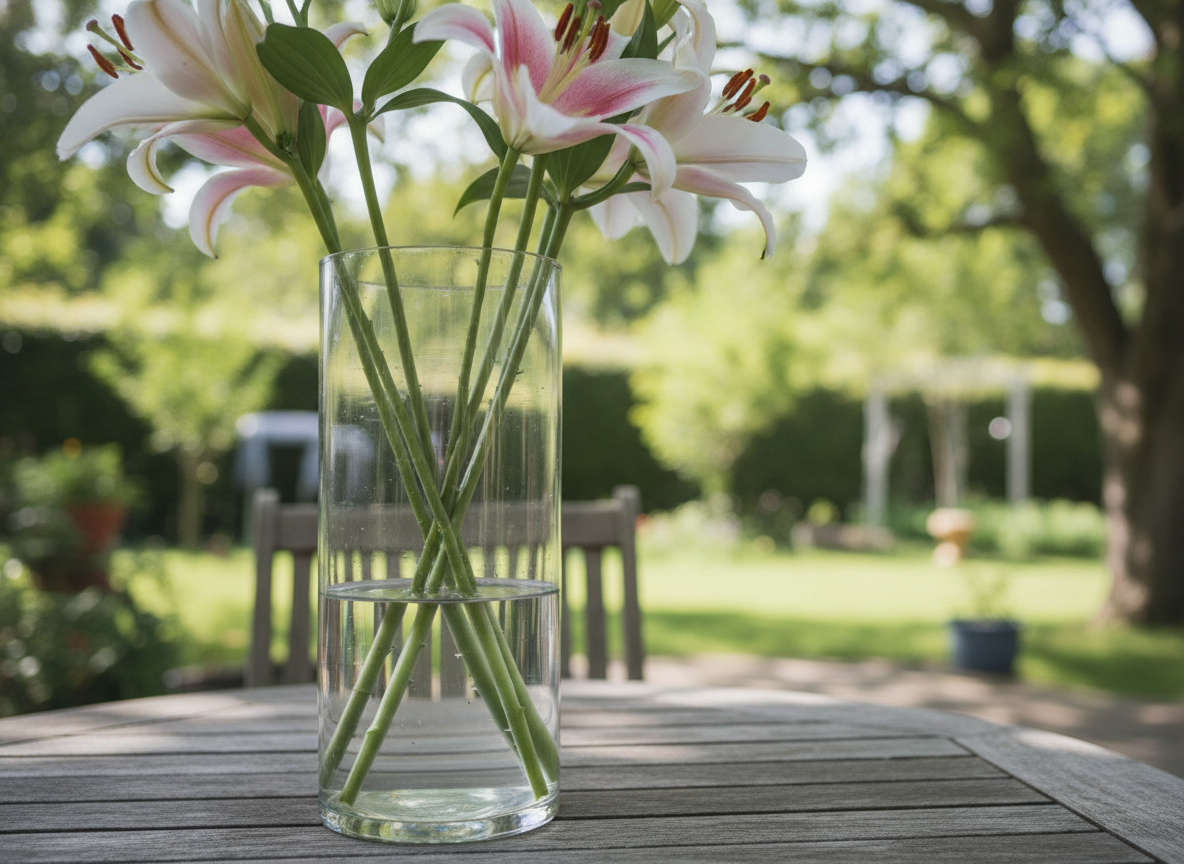
The bigger temptation isn’t the secateurs after flowering — it’s the vase during it. A lily makes a magnificent cut flower, and a border full of them is hard to walk past without wanting a few for the house. But a cut lily comes with its whole stem, and that stem is covered in leaves, and those leaves are exactly what the bulb needs to rebuild. Cut a long lily for the vase and you’ve taken the flower and the factory that would have paid for next year’s.
If you can’t resist cutting a few, follow the florist’s own rule and never take more than a third of the stem: leave at least two-thirds of the leaves standing on the plant so the bulb still gets fed. Better still, if you grow lilies specifically for cutting, plant a separate clump tucked out of sight and treat it as expendable — sacrifice those bulbs’ long-term vigour and leave your border lilies uncut. The plants in the border you’re growing for the border; the plants down the back you’re growing for the vase.
Leave the green standing until autumn
Once the flowers are all deadheaded, you’re left with a leafy green stem and no blooms — and the strong urge to tidy it. Don’t. That green stem is a solar panel wired straight to the bulb, and it works right through late summer and into autumn, quietly topping up the bulb long after the show is over. The only correct time to cut a lily stem to the ground is when the stem itself has done its job and gone yellow, then brown, and pulls away easily — usually well into autumn.
Gardeners already accept this for other bulbs without thinking twice. It’s the identical rule behind leaving daffodil leaves for their full six weeks and waiting out the eight-week window on tulip foliage: the flower is the part you enjoy, but the leaves are the part that pays for it. A lily is the same plant logic, just running two months later in the season. When the stem finally browns in autumn, cut it back to around 5 cm and leave the bulb where it is.
 Lilies in a glass vase with bulbs and stems, with plant food falling — AI-generated illustration
Feed the bulb while the stem is still working
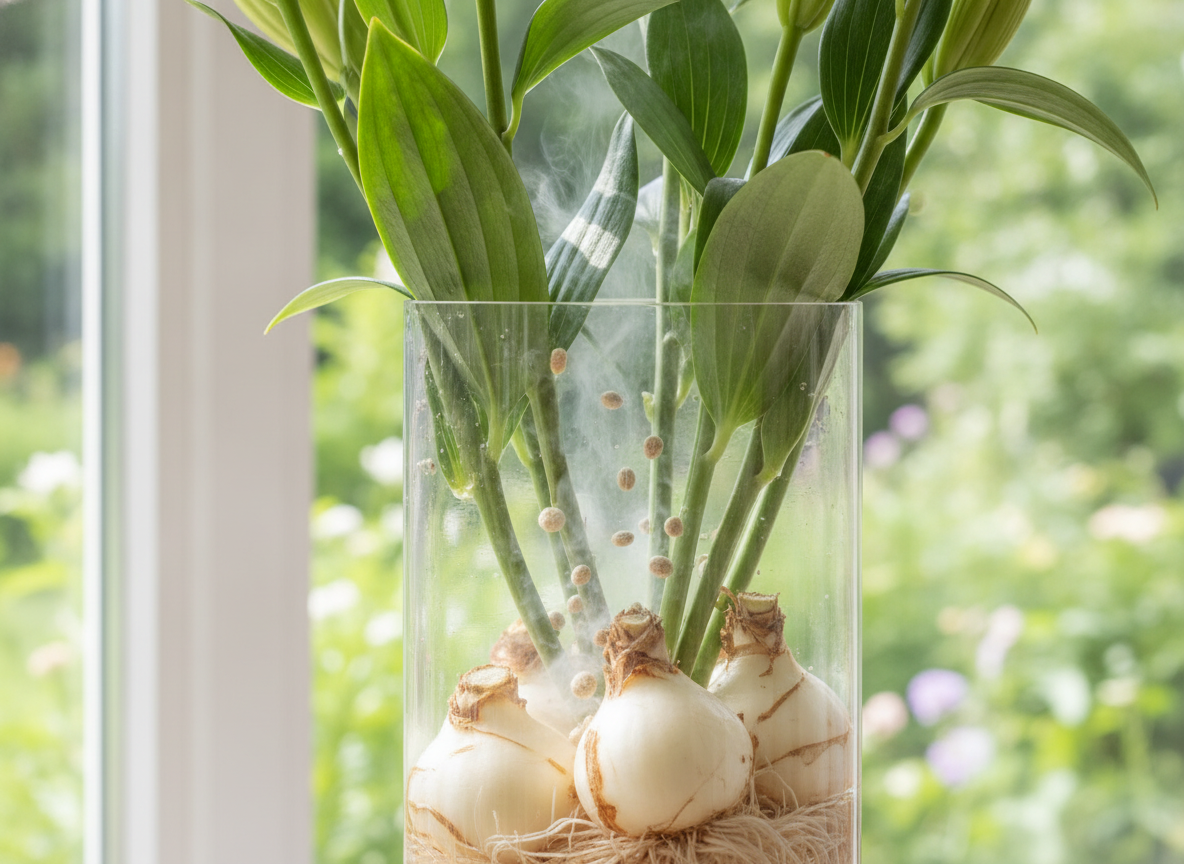
Because the whole point of leaving the stem is to fatten the bulb, this is the moment a feed actually earns its keep. Once the last flower is off, water the plant well in dry spells and give it a high-potash feed — the same tomato feed you’d use on anything you want to flower rather than leaf. Potash is the nutrient that builds flower bulbs; a nitrogen-heavy lawn feed would just push soft leaf. A couple of feeds through late summer, while those leaves are still green and pumping, is what turns a first-year bulb into a fatter, multi-headed clump the year after.
This matters even more for lilies grown in pots, which run out of food far faster than bulbs in open ground. A potted lily that’s flowered and then been left dry and unfed will often come back weak or blind the next year — not because the variety is poor, but because the bulb was never given the chance to reload.
It’s not a daylily — don’t treat it like one
One last trap, and it catches people every summer: a true lily (Lilium — your Asiatics, Orientals, trumpets and Turk’s caps, on a single upright stem) is not a daylily (Hemerocallis, the clump of strappy leaves with many short flower stems). They share a name and nothing else, and their after-flowering care is opposite. With a daylily you can cut each spent flower stem right down to the base once its buds are done, because the leaves are separate and stay put. Do that to a true lily and you remove the leaves too, and starve the bulb. Same word, opposite cut — so be sure which one you’re standing in front of.
And while you’re bent over the plant, check the undersides of those leaves you’re so carefully preserving: the scarlet lily beetle is still active in July, and its grubs can strip a stem of exactly the foliage the bulb depends on. Catching the eggs early matters more than chasing the adults — a bare stem feeds nothing.
Not sure whether the lily you’re looking at wants deadheading, a feed, or to be left entirely alone until autumn? Cresco tracks it by variety and by your own garden’s weather, and tells you the one thing to do this week — so you never cut the stem that was still working for you.