There are really two hebes, and only one needs your secateurs
Before you cut anything, work out which hebe you have — it changes everything.
The small-leaved, tight-growing types — the whipcord hebes with their conifer-like foliage, and the little grey-green bun-shaped ones — barely need pruning at all. Left alone they hold their shape for years.
The plants that tempt you towards the shears are the large-leaved, showy hebes: the ones with long spikes of purple, mauve, pink or white flowers over broad glossy leaves, at their best from June into late summer. ‘Great Orme’, ‘Midsummer Beauty’, ‘Marjorie’, ‘Pink Elephant’ — these are the ones flopping open, going leggy, and finishing their flowers about now. They are also the ones that punish a heavy hand.
The single most important thing to know about all of them is the same rule that governs lavender and cistus: hebe does not reshoot from bare old wood. Cut into the leafless brown stems and you get a permanent bald patch, not fresh growth. So the whole job is about staying in the leaf.
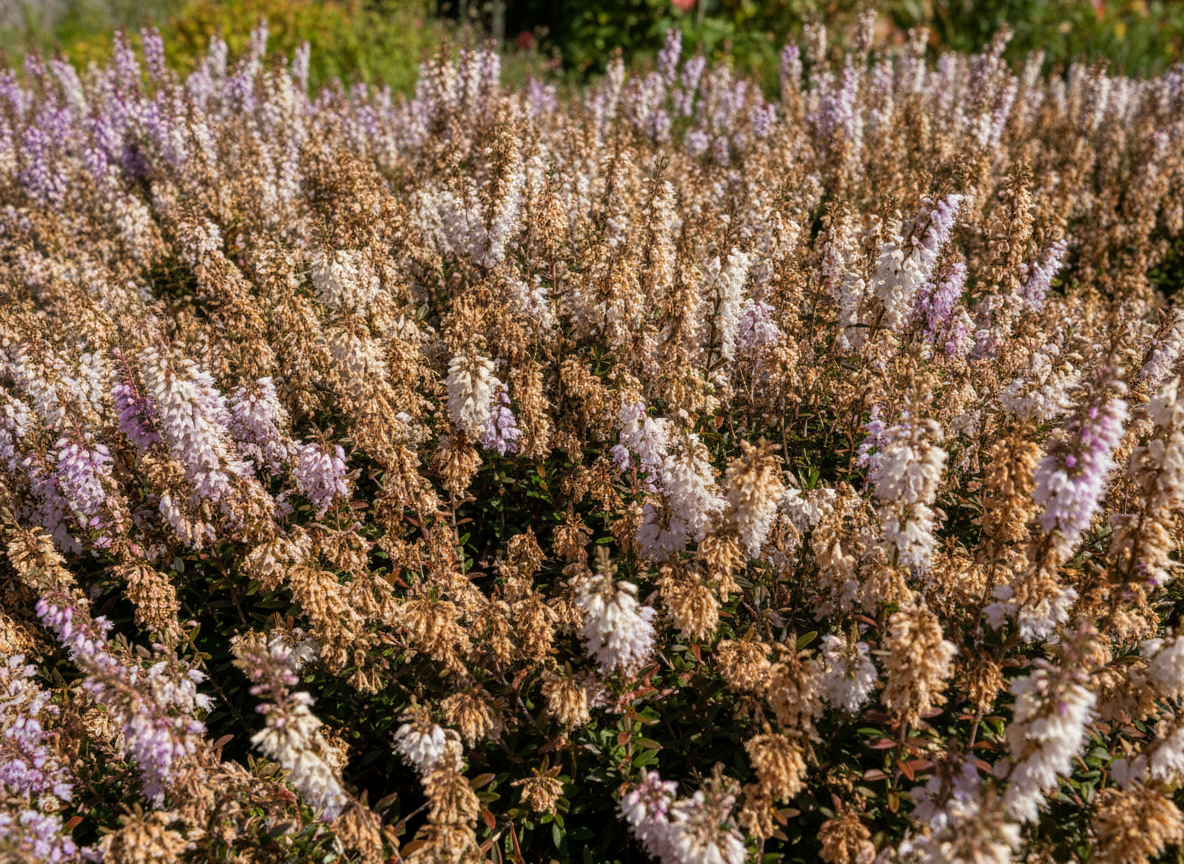 . Hebe plants with fading flowers fill the frame under natural daylight — AI-generated illustration
When: the week the flowers fade, not October
The window is right after flowering — for the big summer hebes that means mid-to-late summer, as the spikes brown off.
Don’t leave it late. A trim in early autumn forces a flush of soft new growth that won’t harden before the first frosts, and on a shrub that’s already borderline-hardy in a cold garden that soft growth is exactly what dies back over winter. The RHS files hebe in its “prune group 9” — late-flowering evergreens that want little more than a light tidy, done in good time.
If you’re weighing up spring instead, that works too — a light shaping cut in April is fine on hardier types. But the after-flowering trim does two jobs at once: it removes the spent, seed-heavy spikes that would otherwise drain the plant, and it tightens the shape before the season’s growth sets hard. That’s why most gardeners do it now.
The one rule: cut into the leaf, never the bare stem
Here is the whole technique in a sentence. Follow every stem you cut down from the spent flower, and stop while there are still green leaves or plump buds below your cut. Never keep going into the smooth, leafless brown wood lower down.
Why so absolute? Hebe carries very few dormant buds on its old wood. On a plant like a dogwood or a buddleia, hard stems are studded with hidden buds waiting to break — cut low and they explode into growth. Hebe simply doesn’t have them. Below the leafy zone the stem is a bare pipe with nothing in reserve, so a cut there just… stops. No shoot, no leaf, no recovery. It’s the identical mistake people make with lavender and with rock roses: they see a leggy, bare-based plant, decide to “cut it back hard to rejuvenate it,” and kill the frame instead.
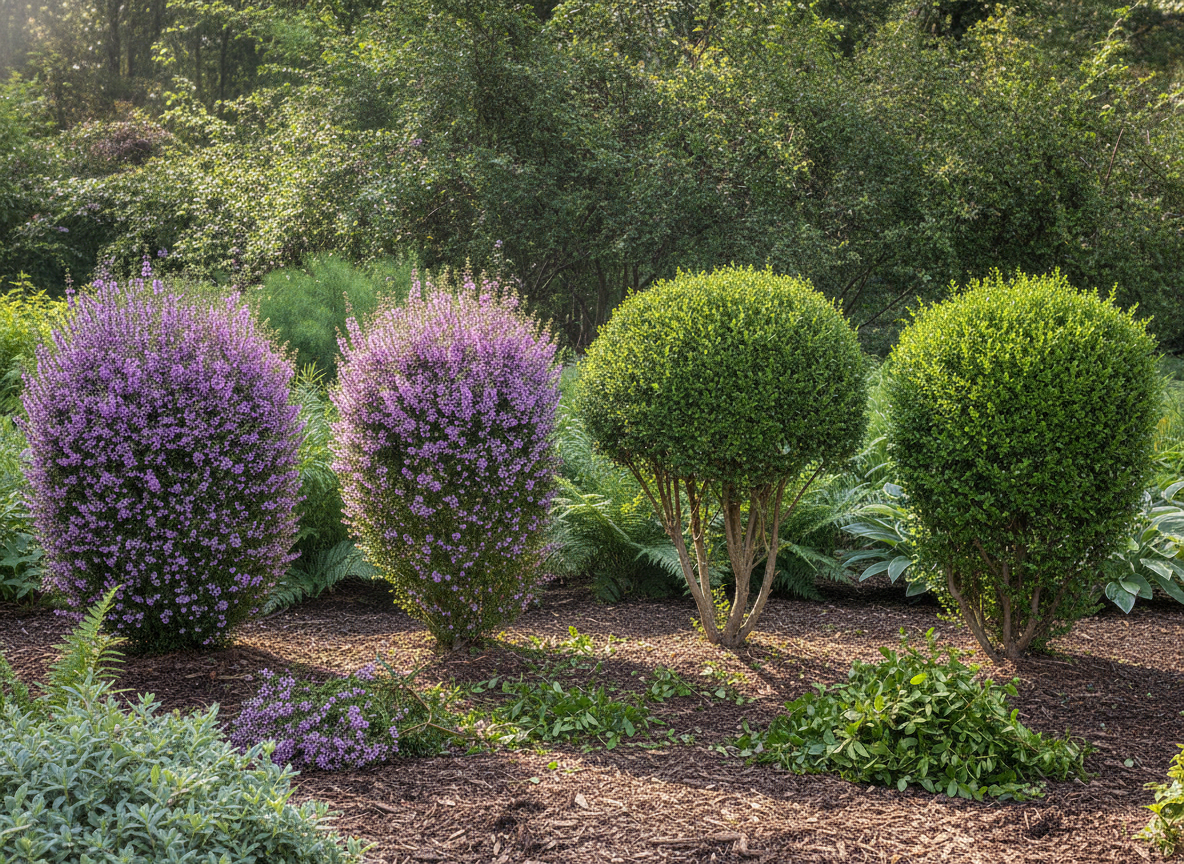 A garden with four hebe plants, two blooming purple, two neatly trimmed — AI-generated illustration
How to do it, in four passes
- Deadhead first. Snip each faded flower spike back to the first pair of good leaves beneath it. On many hebes this alone is 80% of the job and often nudges a lighter second flush of bloom.
- Then shape — a third, absolute maximum. Shorten the longest, most sprawling shoots to bring the outline back in, always cutting just above a leaf or a visibly leafy joint. Take no more than a third of the foliage in one go.
- Keep leaves on every stem you touch. The test is simple: after each cut, look down the stem — if there are no leaves left below the cut, you went too far. Ease back up to green next time.
- Stand back and check the shape, not the stems. Hebe looks best as a soft dome. Trim to the silhouette you want rather than counting centimetres, and stop the moment it reads as tidy.
Use clean, sharp secateurs on the big-leaved types — shears bruise the broad leaves and leave a browning, ragged edge. Wipe the blades between plants; hebe can carry leaf-spot and downy mildew, and you don’t want to spread it.
Whipcord and dwarf hebes: hands off
The small-leaved and whipcord hebes (Hebe cupressoides, H. ochracea ‘James Stirling’, the tidy grey buns like ‘Red Edge’) are a different job — which is to say, almost no job. They keep their shape naturally and resent cutting. Pick off any dead or reverted shoots, remove the odd bit of winter dieback in spring, and otherwise leave them completely alone. There is no after-flowering trim to do here.
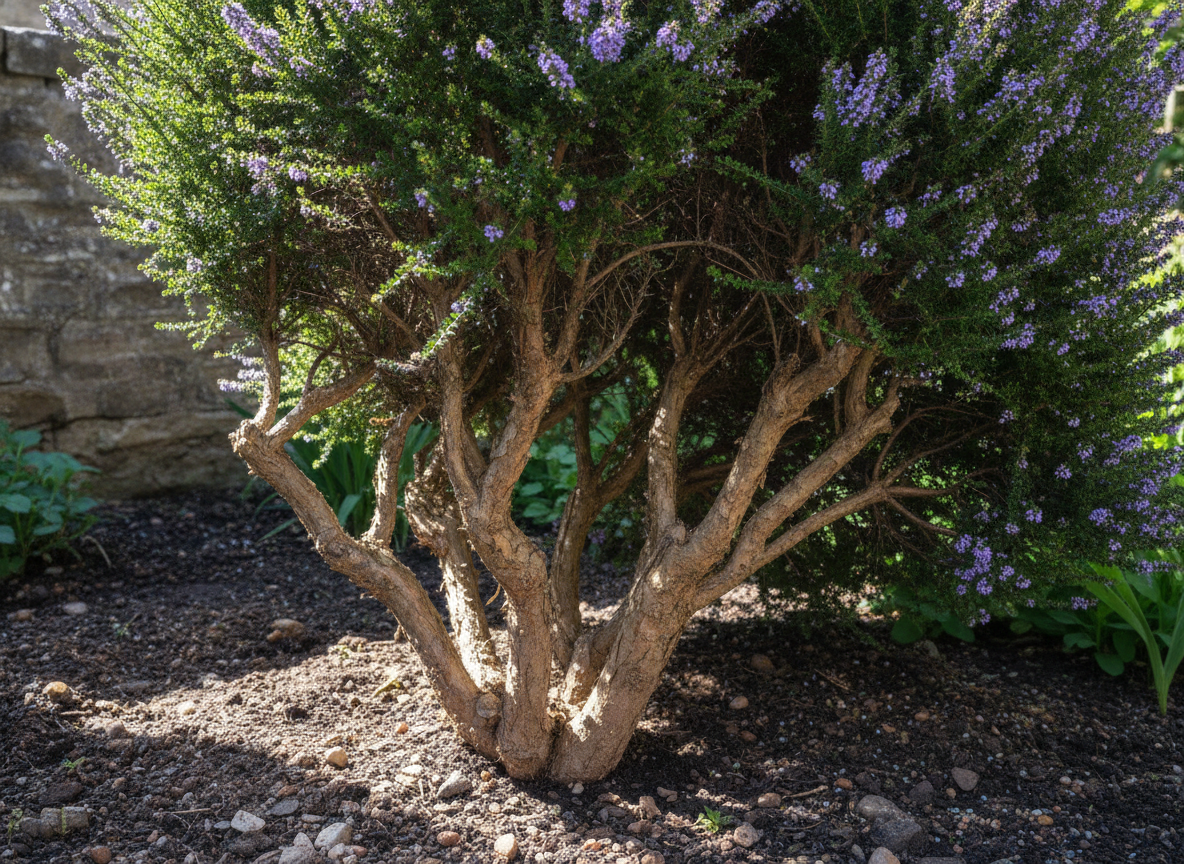 A hebe plant with a bald base and green foliage with purple flowers — AI-generated illustration
What if it’s already bald at the base?
This is the hard conversation. If your hebe is a woody, leafless mess with a topknot of leaves on the ends of long bare stems, there is no cut that fixes it — because, as above, the bare wood won’t reshoot. Cutting back hard to “start again” gives you a dead stump.
You have two honest options. Take soft-tip cuttings now (they root easily in late summer) and grow a fresh, compact plant to replace the old one — or, if a low branch touches the soil, peg it down to layer it. Then, once the replacement is away, lift the leggy original. It’s not the answer anyone wants, but it beats hacking a plant that can’t grow back.
The short version
Wait until the flowers fade, deadhead the spikes, and take a light shaping trim of no more than a third — always cutting into green, leafy growth and never into the bare brown wood below it, because that’s wood a hebe can’t grow back from. Whipcords and the little bun hebes: leave them be.
Not sure whether your shrub is a summer-flowering big-leaf that wants the trim or a whipcord that wants to be left alone — or when yours specifically finishes flowering in your garden? That’s exactly what Cresco is for: snap a photo, and it identifies the plant and tells you the right cut at the right time for your local season. And if you like the “stay in the leaf” rule, the same logic saves ceanothus from the very same fatal mistake.