By the middle of July a border Shasta daisy — Leucanthemum × superbum, the big white daisy with the buttery yellow eye — has usually given you three or four good weeks and is starting to look it. The oldest flowers have shed their petals and left a hard brown button; the next ones are going papery at the edges; and the whole clump reads as half-over. Most gardeners walk past with the secateurs and nip the dead heads off at the neck, just under the flower, to tidy it up. It looks better for a day. Then nothing happens — no new buds, no second show, just a forest of bare green sticks. The plant had a second flush in it. The cut is what threw it away.
Why snapping the head off does nothing
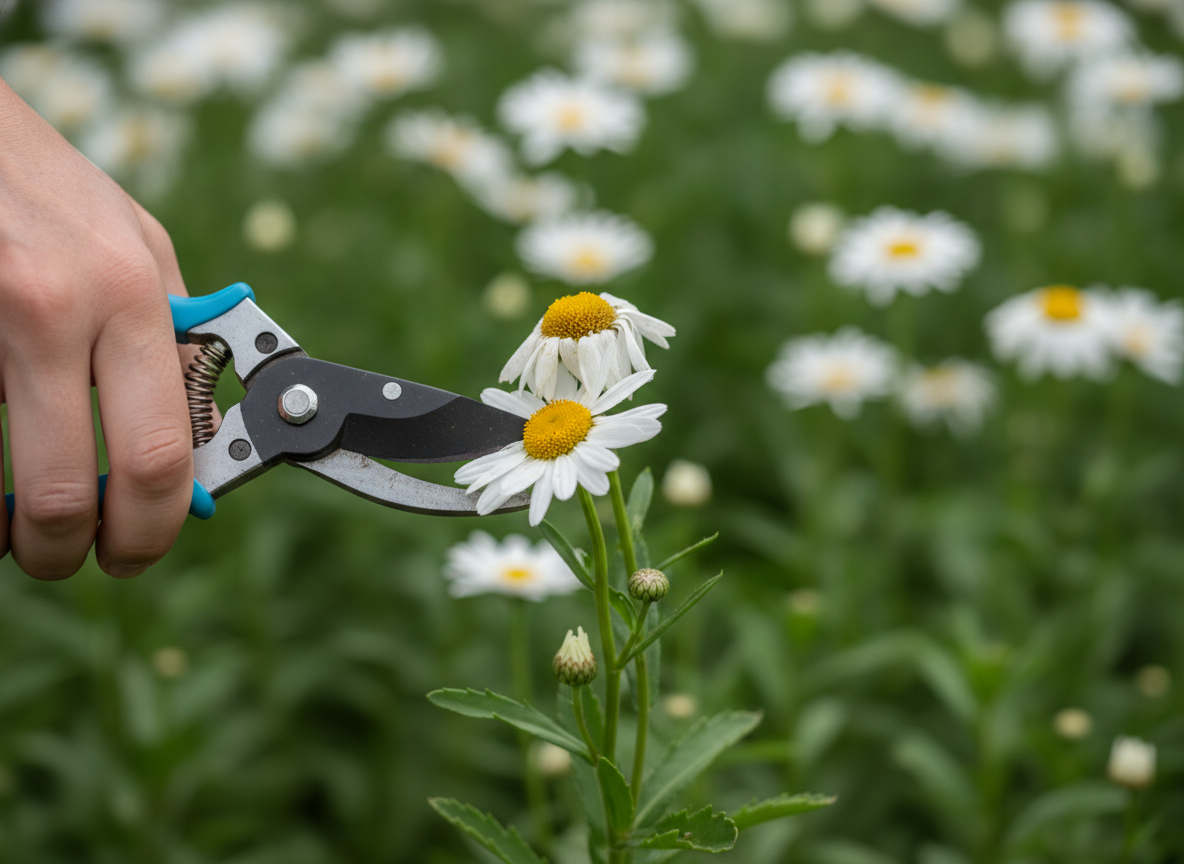
A Shasta daisy doesn’t rebloom from the stem you just beheaded. Cut a flower off right under the head and you’re left with a long, leafless stalk that has no growing point low enough to do anything useful — it can’t push a fresh bud out of bare stem, so it just stands there, green and idle, until autumn. You’ve removed the eyesore and kept the dead weight.
The buds for a second flush are waiting much further down. Run your fingers down a flowered stem and you’ll feel, at each leaf joint, a dormant bud sitting in the axil — and lower still, at the base of the plant, a cushion of fresh leafy growth close to the soil. Those low buds are what break into new flowering shoots once the plant is relieved of the spent top. Deadhead high and you leave every one of them asleep. Deadhead low — down to a leaf with a live bud behind it — and you wake the plant up.
There’s a second reason to get the spent heads off promptly, and it’s the same one behind cutting phlox before it self-seeds: once a Shasta daisy sets seed, it reads the year as done and stops making flowers to pour everything into ripening those seedheads. Named varieties like ‘Becky’ or ‘Snowcap’ don’t come true from that seed anyway, so you gain nothing by letting it ripen and lose the rest of the summer’s bloom.
 AI-generated illustration
The cut that actually triggers a rebloom
Forget the neat snip under the flower. Follow each spent stem down and cut it back to the first strong leaf with a visible bud in its axil — or, better still, to a point where you can see two shoots meeting in a low “Y”. That is where the plant will break, and cutting to it tells the daisy exactly where to grow. As a rule of thumb you’re taking off roughly the top third to half of each flowered stem, not the top inch.
Some stems won’t have anything useful low down — an old, thin, twice-flowered stalk with no fresh growth on it. Take those right out at the base. You’re not obliged to leave every stem the same length; the goal is to remove spent flower and leave live buds, and the plant looks tidier for the variety of heights anyway.
Do this stem by stem while the plant is only part-spent — most of the flush still white, a scatter of heads gone over — and you keep it flowering for weeks longer, because each cut stem restarts on its own timetable while the untouched ones carry on. It’s the same logic as cutting salvias back to their side-shoots rather than shearing them flat: cut to a growing point, not to a stump.
 AI-generated illustration
When to cut — read the flush, not the calendar
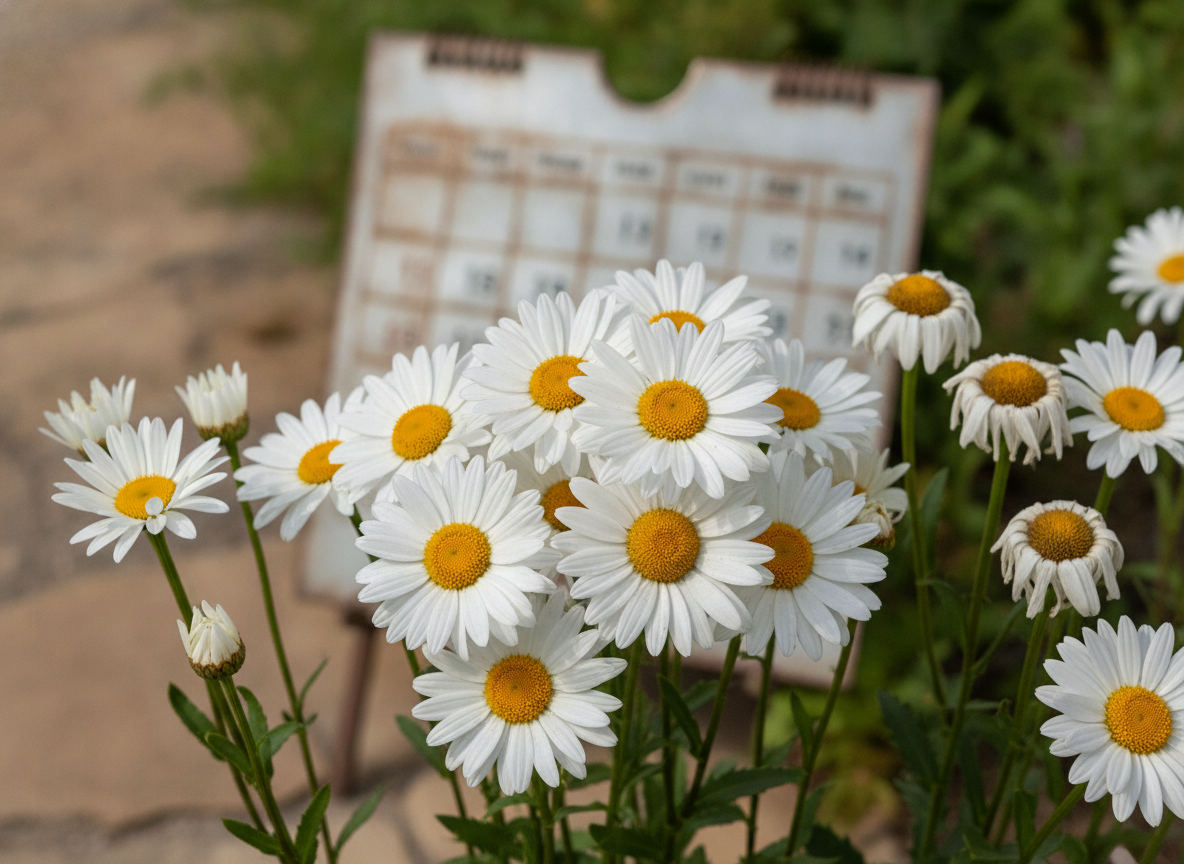
The trigger is the state of the flowers, not a date on the calendar. While most of the clump is still fresh and white, leave it — it’s doing its job and drawing in the bees. Once the majority of heads have dropped their petals and gone to hard brown buttons, the first flush is spent and it’s time to work through the plant. In a Northern European garden that’s usually somewhere in the second half of July, but a hot, dry June can bring it forward and a cool one push it back, so trust the plant over the month.
Cut too early, with half the clump still opening, and you’re throwing away flower you’d have had for another fortnight. Leave it far too late — well into September — and there isn’t enough warmth and season left for the new shoots to build buds and open before the light goes. Mid-to-late July sits in the sweet spot: enough of the first flush enjoyed, enough summer left for a genuine second showing about three weeks after you cut.
 A person cutting a clump of shasta daisies — AI-generated illustration
After the main flush: cut the whole clump back
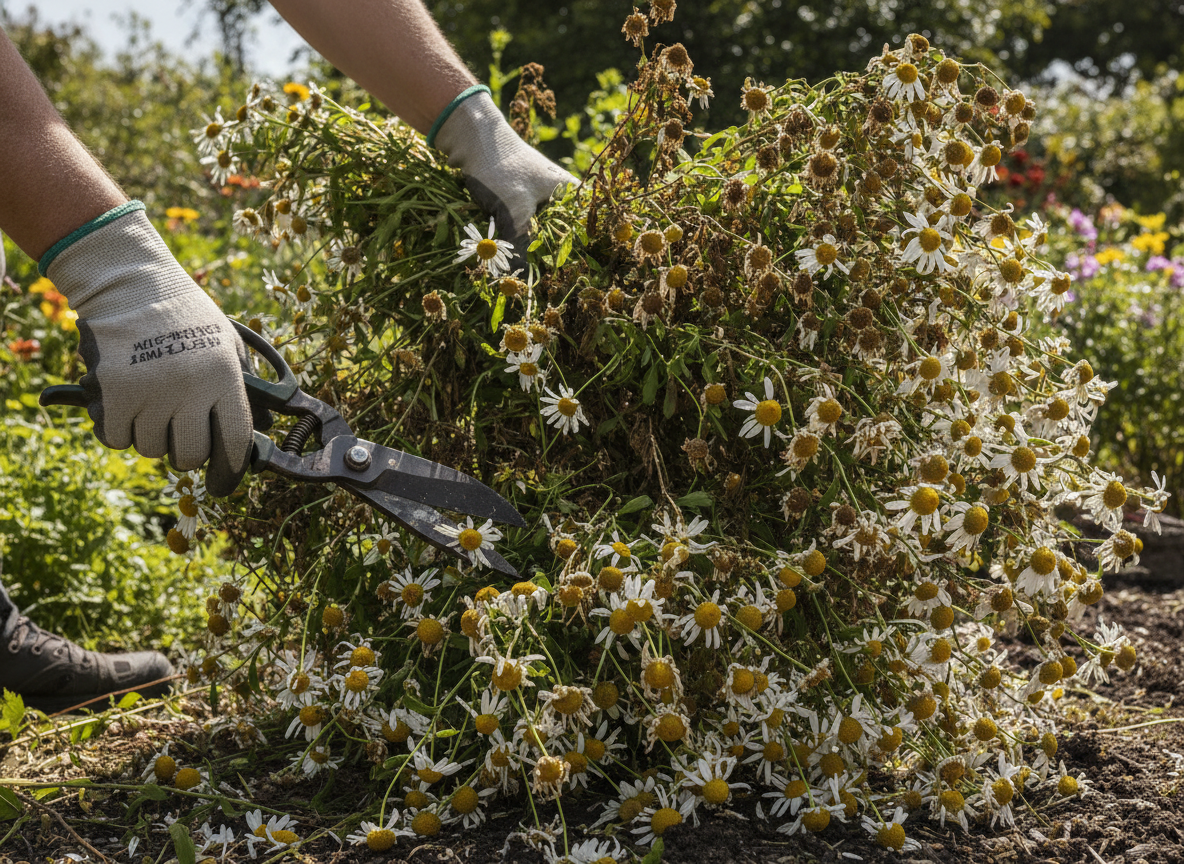
Deadheading stem by stem keeps a Shasta daisy going for a while, but there comes a point — often late July into early August — when the majority of the clump is spent, the foliage is tired, and picking off individual stems is more fiddle than it’s worth. That’s the moment to stop deadheading and cut the whole plant down in one go, right back to the low cushion of fresh basal leaves sitting a hand’s-width off the soil.
It looks drastic and it isn’t. That basal mound is already firm and green, and with the tired top growth gone it pushes up clean new foliage within a week or two and, on most established plants in a warm summer, a lighter second flush of flower into September. It’s the same one-cut reset behind the early-July Hampton hack and behind cutting achillea right back to its basal fern when it flops mid-month. Clear the shorn stems off the crown afterwards — don’t let them mat down on the fresh shoots and hold damp, or they’ll rot the new growth you’re trying to encourage.
Keep the roots cool or the second flush stalls
The one thing that quietly kills the rebloom is heat and drought at the root. Shasta daisies are shallow-rooted, and a cut-back plant sitting in soil that bakes to dust won’t find the energy to push a second flush — it just sulks and waits for autumn. After you cut, give the clump a proper deep soak once or twice a week rather than a daily splash, and lay a couple of centimetres of compost or leaf-mould over the root zone to hold the moisture and keep the soil cool. That, far more than any feed, is what turns “I cut it back and nothing happened” into a fresh crop of daisies in three weeks.
While you’re down there, look at the centre of the clump. If it’s going bare and woody in the middle with all the life pushed to the edges, the plant is telling you it’s overdue for splitting — a good job for autumn or early spring, not now, but worth noting while you can see it. A divided, replanted Shasta daisy flowers far more freely than a congested three-year-old clump.
Let Cresco time it for your border
Shasta daisies are one more plant where the right cut is less about a date and more about reading the plant — how much of the flush is spent, whether there’s a live bud low on the stem, whether the basal cushion is ready to take over. Cresco keeps track of everything you grow and tells you when each job is genuinely due for your garden and your local weather, so “deadhead low, then cut the clump back” arrives as a timed reminder instead of a guess. Get the cut right and its height right, keep the roots cool, and a plant that looked half-over in mid-July hands you a second summer of daisies.