By the second week of July the achillea that stood to attention in June has usually done the same thing it does every year: the flat plates of flower have faded to a papery brown, and the clump has fallen open from the middle like a badly packed suitcase. Stems lean out over the neighbours, the centre goes bare, and the whole plant reads as tired weeks before the rest of the border does. It looks like a staking problem. It’s actually a pruning one — and the window to fix it is open right now.
Why achillea falls open from the centre
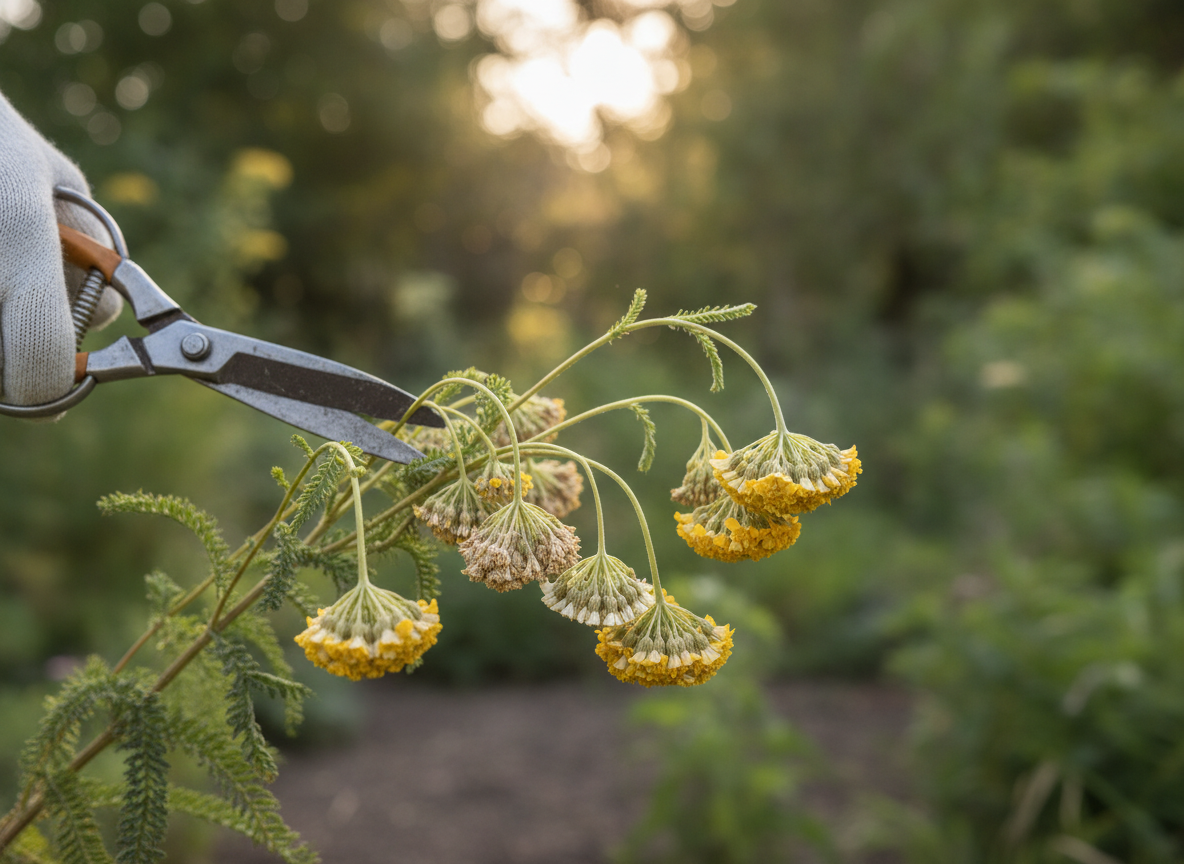
The flower head is the giveaway. Achillea carries its bloom as a wide, flat corymb — dozens of tiny florets held out sideways on a single plane at the top of a tall, increasingly hollow stem. In June, when the florets are fresh and the stem is still firm, that plate sits level and the plant looks architectural. As the florets set seed the head gets heavier and the stem, having done its growing, starts to soften and hollow. A heavy plate on a softening stem only goes one way: down and out.
Rich, moist soil makes it worse, not better. Achillea evolved on thin, sunny, free-draining ground — dry banks, poor meadows — and a well-fed border bed pushes it into lush, sappy growth that can’t hold its own weight. So the classic flop is a fat, happy plant in good soil, splaying open just as the first flush browns off. The fix isn’t a ring of stakes wrestled around a collapsed clump in July. It’s to take the spent, top-heavy growth off and let the plant rebuild from the firm base it already has waiting.
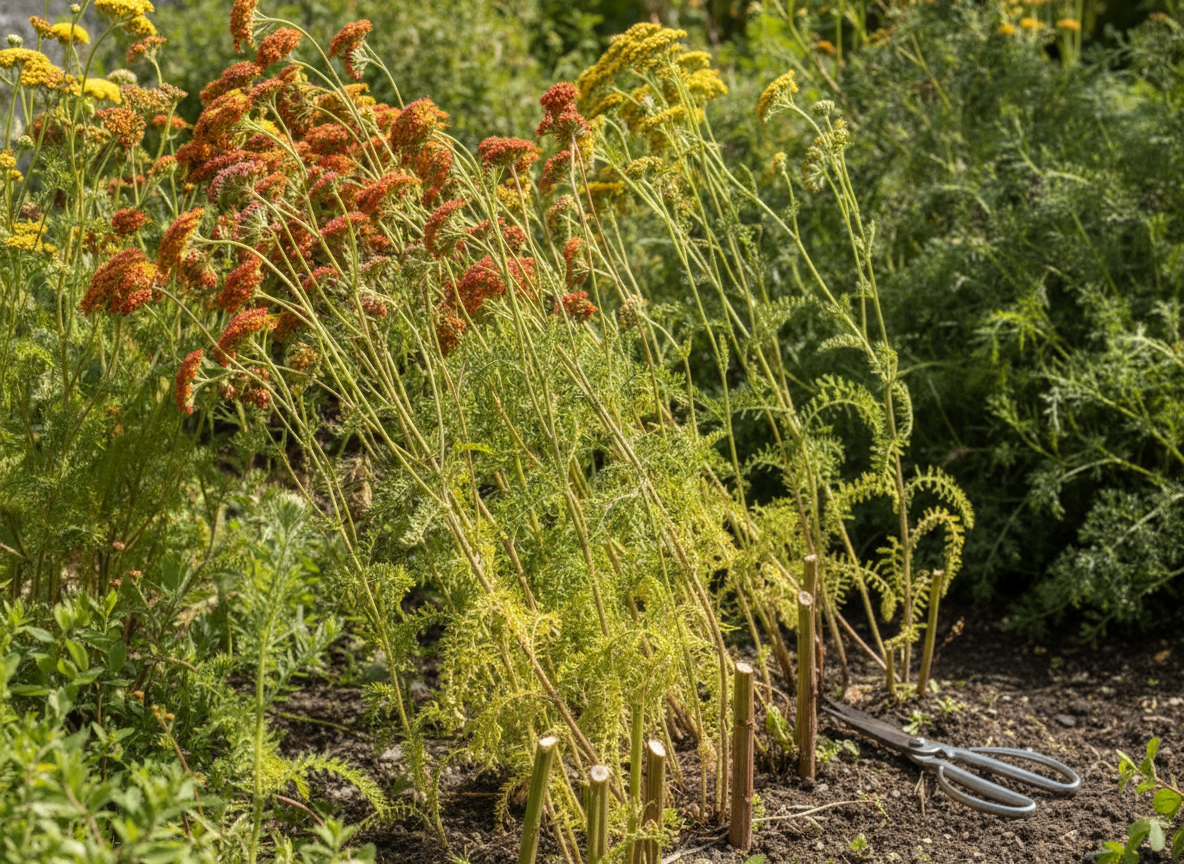 Photograph of cut and uncut achillea plants in a garden with pruning shears — AI-generated illustration
Deadheading the tops does nothing — cut the whole stem down
The instinct, faced with a floppy achillea, is to snip off the brown plates and leave the stems. Don’t. A headless stem is still a tall, hollow, leaning stem — you’ve removed the eyesore and kept the flop. Worse, the plant reads the loss of the flower head as “make a bit more,” and pushes a few weedy side-shoots near the top rather than starting fresh from the base.
The cut that actually works goes much lower. Look down into the clump, past the tall flowered stems, and you’ll find a dense mound of low, ferny, feathery foliage sitting a few centimetres off the soil — the basal growth the plant overwinters on. Cut every flowered stem back to just above that low fern. It feels brutal the first time; you’re taking the plant down to a green cushion a hand’s-width high. But that basal mound is already firm and self-supporting, and within a couple of weeks it pushes up fresh, short, upright growth — no lean, no bare middle, and on most varieties a lighter second flush of flower to carry the plant into September.
 AI-generated illustration
When to make the cut
The trigger is the colour of the plates, not a date. While most of the heads are still holding good colour, leave them — they’re doing their job. Once the majority have faded to a flat, dirty brown and gone papery to the touch, the first flush is spent and the clump can come down. In a Northern European garden that’s usually the middle two weeks of July, give or take, and it’s the same moment gardeners take the shears to a lot of early perennials — the so-called Hampton hack, the early-July echo of the May Chelsea chop.
Cut too early, with half the plate still colouring, and you throw away flower you’d have enjoyed for another fortnight. Cut far too late, in September, and there isn’t enough season left for the regrowth to firm up before the cold. Mid-to-late July hits the middle: enough of the first flush enjoyed, enough summer left to get a clean second showing.
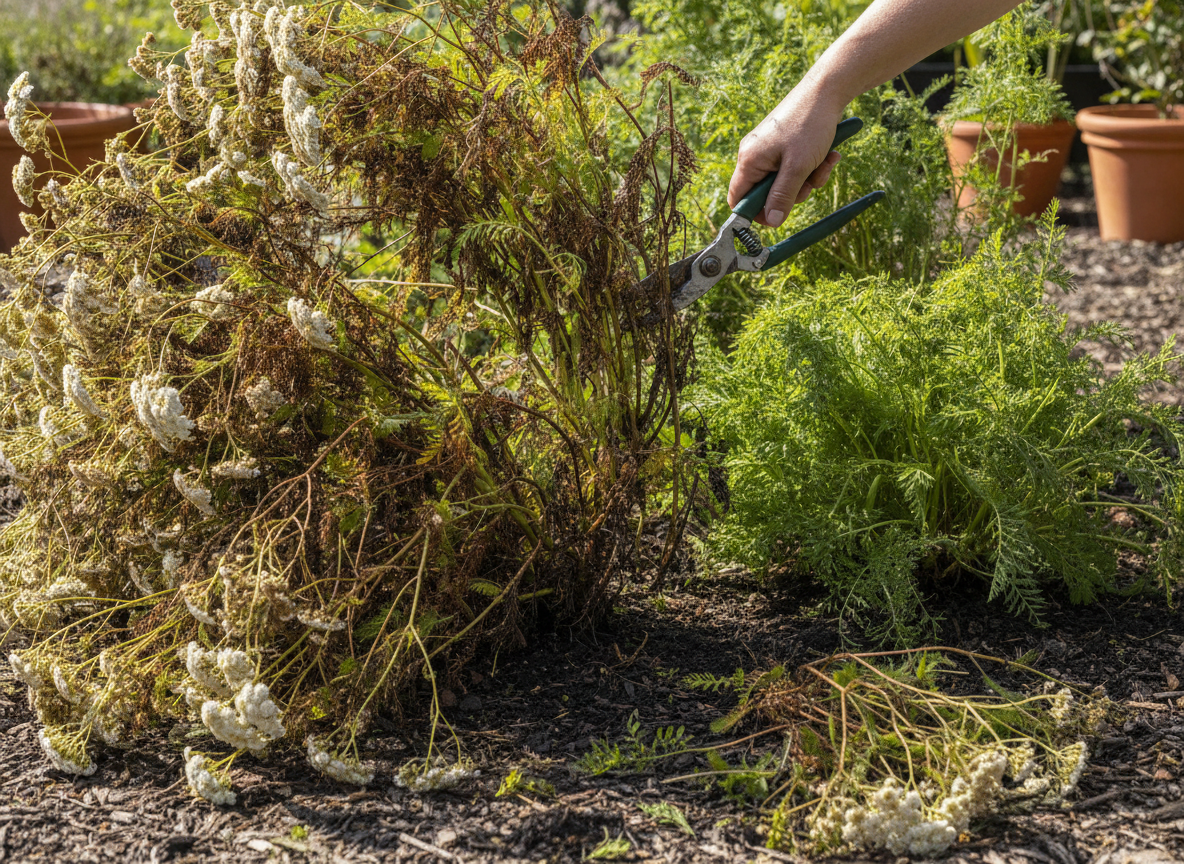 A hand prunes a wilting achillea plant in a garden bed — AI-generated illustration
How to cut back achillea, step by step
- Find the basal fern. Part the tall stems and look for the low mound of feathery leaves at soil level. That’s your cutting line — everything above it is fair game.
- Shear the flowered stems to just above it. For one or two plants, secateurs give you control; for a drift, one-handed shears do it in seconds. Aim to leave the low foliage untouched and take everything that flowered.
- Clear the cuttings off the crown. Don’t let the shorn stems sit on top of the fresh growth — they mat down, hold damp, and can rot the new shoots. Rake them off to the compost.
- Resist the watering can and the feed. A flopped achillea is often an over-fed one. After cutting back, leave it lean and dry; you want tough, upright regrowth, not another round of soft growth that falls over.
- Note which clumps need dividing. If a plant is going bare in the very centre with all the life pushed to the edges, it’s telling you it’s overdue for splitting — a job for autumn or early spring, not now, but worth flagging while you can see it.
The self-seeding trap with the coloured hybrids
There’s a second reason to cut before the heads run fully to seed, and it matters most if you grow the modern coloured achilleas — the terracottas, the deep reds, the peach-and-apricot Summer Berries types. These are hybrids, and their seedlings almost never come true. Let a ‘Terracotta’ or a ‘Walther Funcke’ shed seed across the border and next year’s babies drift back toward a muddy dirty-pink or off-white, and because seedlings are vigorous they gradually swamp the named plant you actually paid for. Cutting the flowered stems down in July, before the seed is ripe, keeps the colour you chose and stops the slow takeover.
The exception is if you’re growing achillea deliberately in a loose, naturalistic or prairie-style planting, where you want the flat brown seedheads standing for winter structure and don’t mind — or actively want — the self-sown drift. In that case, leave a good number of heads uncut, the way you would leave allium seedheads standing rather than deadheading them. It’s the same fork every seedhead plant offers: tidy and repeat-flowering, or standing and self-sowing. Just make it a decision rather than a default.
Let Cresco time it for your border
Achillea is one more plant where the right cut is less about the calendar and more about reading the plant — the colour of the plates, the firmness of the stem, the state of the basal fern. Cresco tracks what you grow and tells you when each job is actually due for your garden and your local weather, so “cut it back when the first flush browns” arrives as a timed reminder instead of a guess. It’s the same cut-for-the-next-flush logic behind shearing salvias back to their side-shoots and the early-July Hampton hack — take the tired growth off in time, and the plant hands you a second summer.