Stand in front of a summer raspberry row in July and it looks like chaos: a thicket of canes, some heavy with the last of the fruit, some bare and green and shooting for the sky. Reach in with the secateurs and it’s genuinely hard to know what to take. Cut the wrong ones and you’ve thrown away next year’s entire crop in an afternoon. The good news is that the plant has already labelled them for you — you just have to read the colour.
Every summer raspberry carries two crops of cane at once
A summer-fruiting raspberry works on a two-year cycle, and at this exact point in the season both years are standing side by side in the same clump.
Last year’s canes are the ones that just gave you fruit. They grew in 2025, spent the winter dormant, flowered this spring, and cropped in June and July. Their job is done — a raspberry cane fruits once and never again. Look at the base of the plant and you’ll see these stems are brown, woody, and a little peeling, often still holding the dried trusses where the berries hung.
This year’s canes are the tall new whips that have shot up from the base and the roots over the past few weeks. They haven’t fruited at all. They’re soft, pliable, and a fresh spring-green, sometimes with a faint waxy bloom. These are next summer’s entire harvest, standing there doing nothing but growing — which is exactly what you want them to do.
That’s the whole distinction the job turns on: brown cropped, green to come. Everything else follows from it.
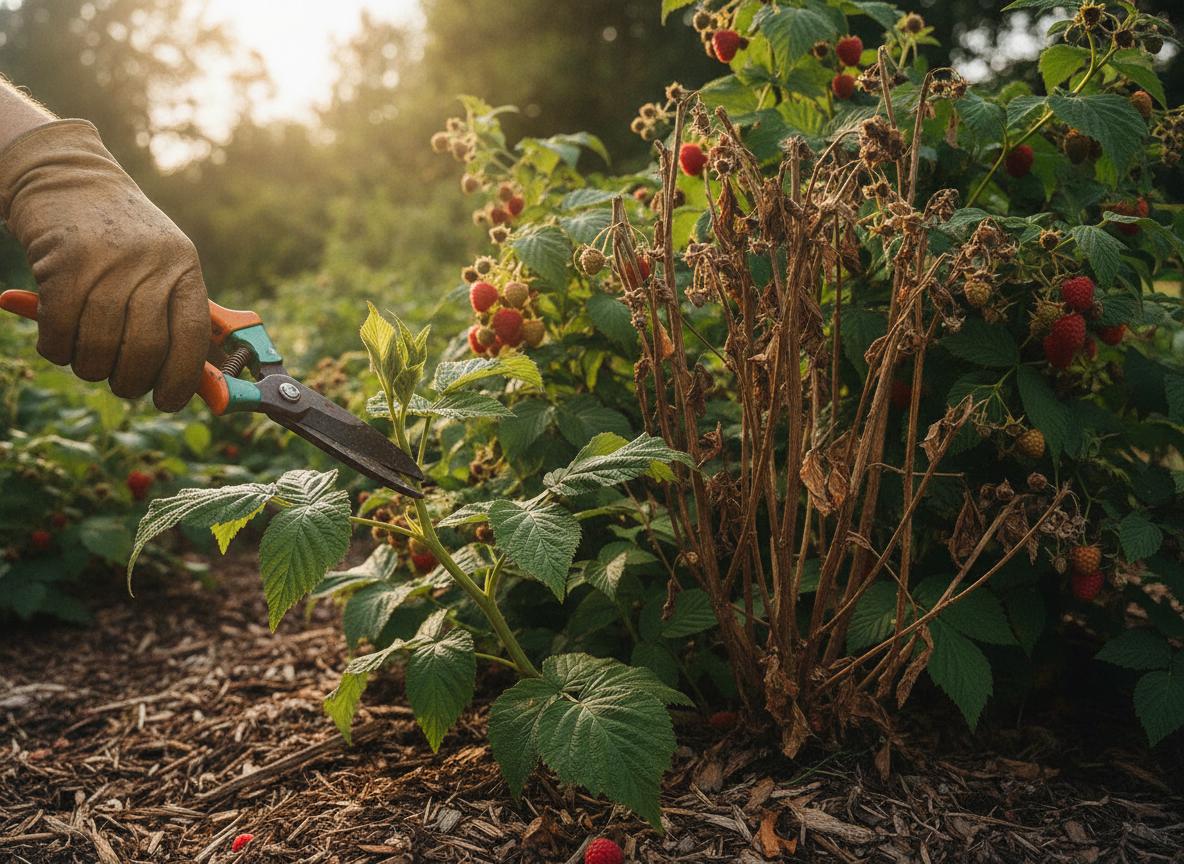 A gloved hand prunes a green raspberry cane next to dried canes — AI-generated illustration
Cut the green cane and you cancel next year
Here’s the mistake that costs people a season. In late summer the fruited canes look tired and scruffy, the new green canes look lush and vigorous — so the instinct is to tidy by taking out the “messy” ones, which to an untrained eye can be either. Worse, some gardeners give the whole row a nervous haircut over the top, shortening everything by a third “to neaten it up.”
Both cuts land on the wrong wood. Shortening or removing this year’s green canes removes the flowering wood for next June. Summer raspberries do not flower on new growth — they flower on canes that are a year old. So a green cane you cut today can’t fruit this year (it never does in year one) and now won’t fruit next year either. You’ve deleted the crop without ever seeing a berry from that cane.
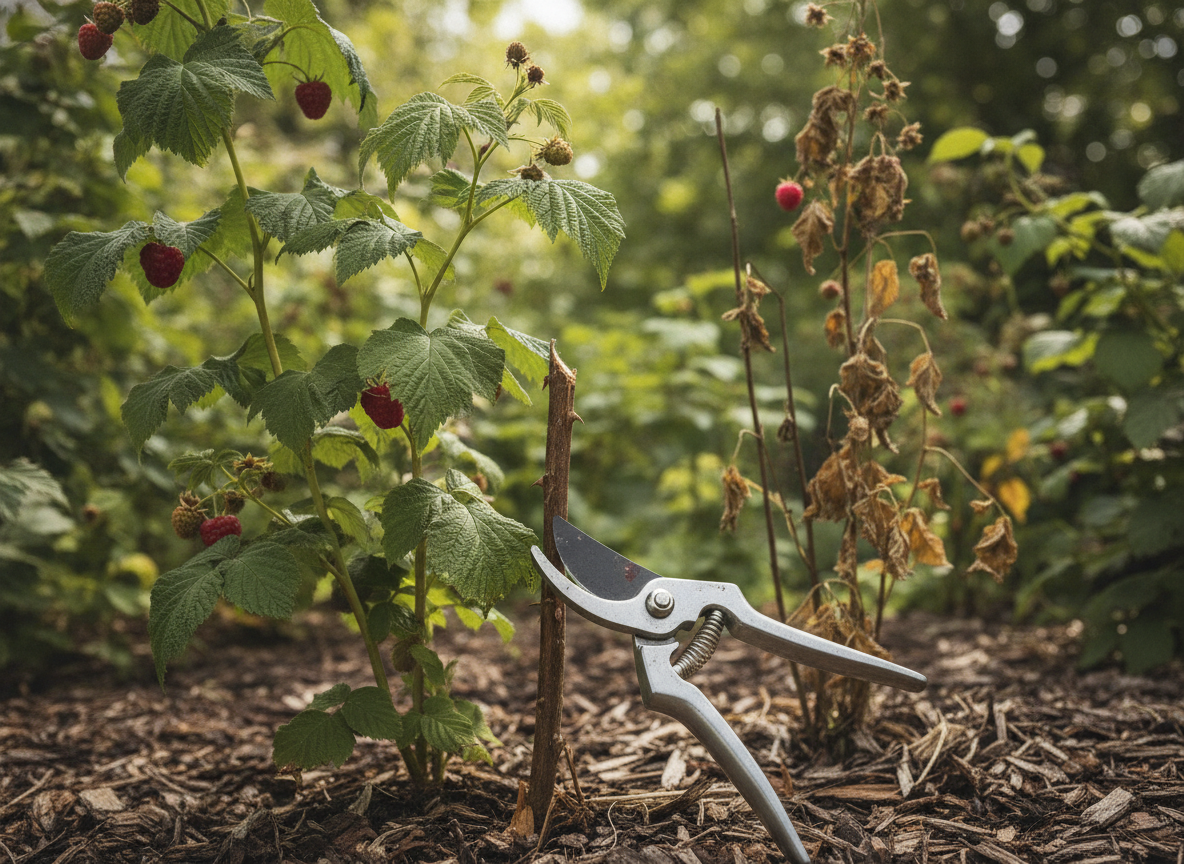 Raspberry canes with pruning shears in a garden — AI-generated illustration
When to make the cut
The trigger isn’t a date on the calendar — it’s the fruit running out. As soon as a cane has surrendered its last berry, its year is over and it can come out. Because early and late varieties finish weeks apart, a mixed row is often pruned in stages: pull the spent canes of an early sort like ‘Glen Moy’ or ‘Malling Jewel’ in mid-July, and come back for the later ‘Glen Ample’ or ‘Tulameen’ into August.
Don’t wait until winter. Left standing, the old brown canes crowd the new green ones, shade them from the light they need to ripen wood for next year, and hold onto fungal spores and cane midge over the damp autumn. Taking them out the moment they’ve finished is the single biggest thing you can do for next summer’s yield — and it opens the row up so the keepers get sun and air.
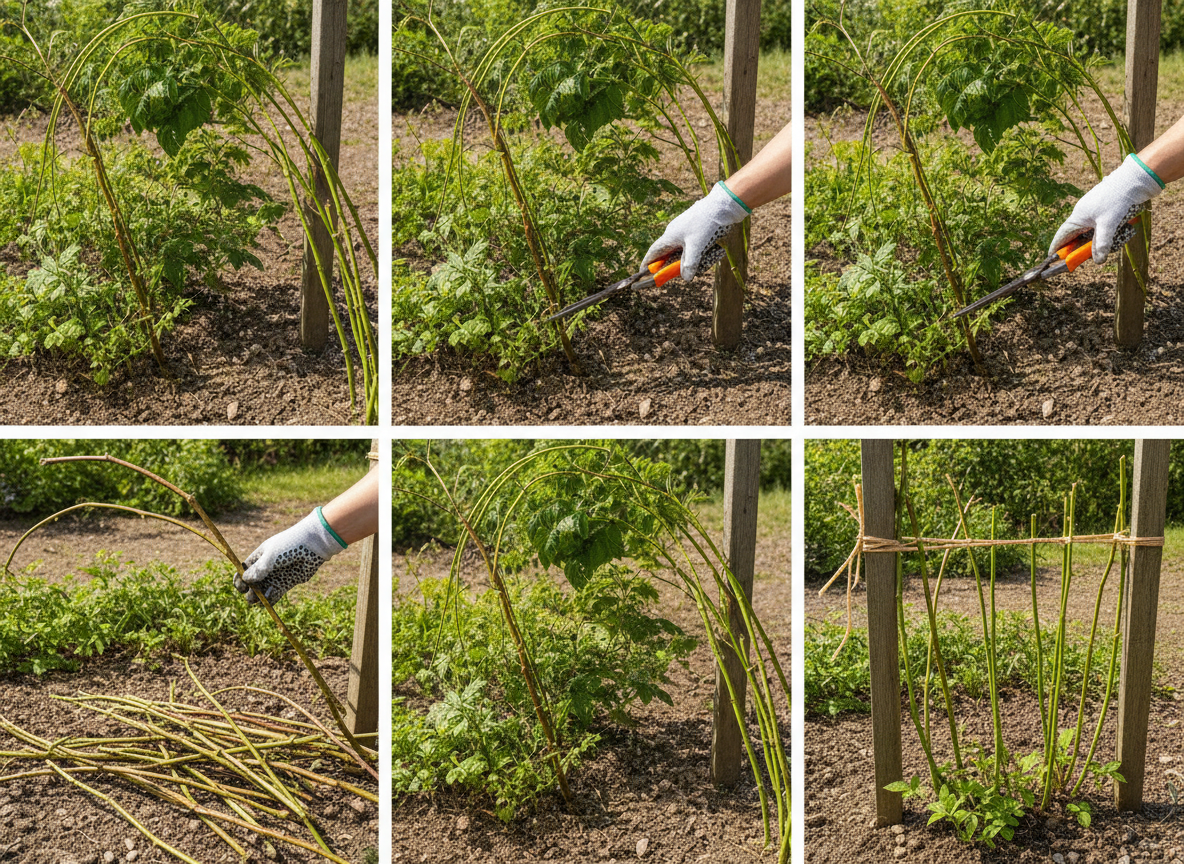 A person prunes raspberry canes and ties them to a wooden post — AI-generated illustration
How to do it, step by step
- Find the brown wood at the base. Trace each fruited cane down to soil level. If the bottom of the stem is woody and tan-brown, it’s a keeper for the compost heap, not the row.
- Cut it flush to the ground. Take each spent cane right down to the soil — no stub. A stub is just a short brown cane that shades the crown and rots.
- Leave every healthy green cane standing. Resist the urge to shorten them. They need their full length and every leaf to build the flower buds for next year.
- Thin the green canes to the strongest. Most plants throw up more new canes than they can feed. Keep six to eight of the sturdiest per plant (or per 30 cm of row) and remove the spindly ones and any that have strayed too far into the path.
- Tie the keepers in. Space the remaining green canes about 10 cm apart along the support wires and tie them in. Spread out and supported, they ripen evenly and stay clear of next year’s new growth — which makes next July’s version of this same job far easier.
The one that breaks the rule: autumn raspberries
Everything above is for summer-fruiting raspberries. Autumn (or “everbearing”) raspberries work the opposite way and it’s the classic mix-up: they fruit in late summer and autumn on this year’s green canes. So there’s no two-year-cane logic to untangle — you cut the whole plant to the ground in late winter, every cane, and the fresh canes that come up in spring crop the same year.
The one-line test: if your raspberries fruited in June and July, they’re summer types — cut the brown, keep the green, now. If they fruit from August onward, they’re autumn types — leave them entirely and cut everything down in February.
Let Cresco time it for your row
Raspberries are one more plant where the right cut at the wrong moment does real damage. Cresco tracks what you grow and tells you when each job is due for your garden and your local weather — so “prune after the last berry” arrives as a reminder, not a guess. It’s the same after-cropping logic behind summer pruning trained apples and pears, and the same first-year patience that triples a strawberry harvest: cut for next year, not just this one.