The July job most people skip
By the middle of July a gooseberry or red currant bush is a thicket. This year’s shoots have shot out in every direction, the fruit is swelling somewhere inside all that leaf, and the whole thing looks so busy that the sensible-seeming move is to leave it alone until the leaves drop and you can see what you’re doing.
That instinct costs you fruit. Gooseberries, red currants and white currants all carry their crop on short, permanent spurs clustered along a framework of older branches — and those spurs are built by a quick summer cut, not the winter one. Shorten this year’s leafy side-shoots back to five leaves now and you push the plant’s energy out of leaf and into the berries already hanging, open the bush to light and air, and set up the fruiting spurs that carry next year’s crop. It is ten minutes of work that most gardeners never do.
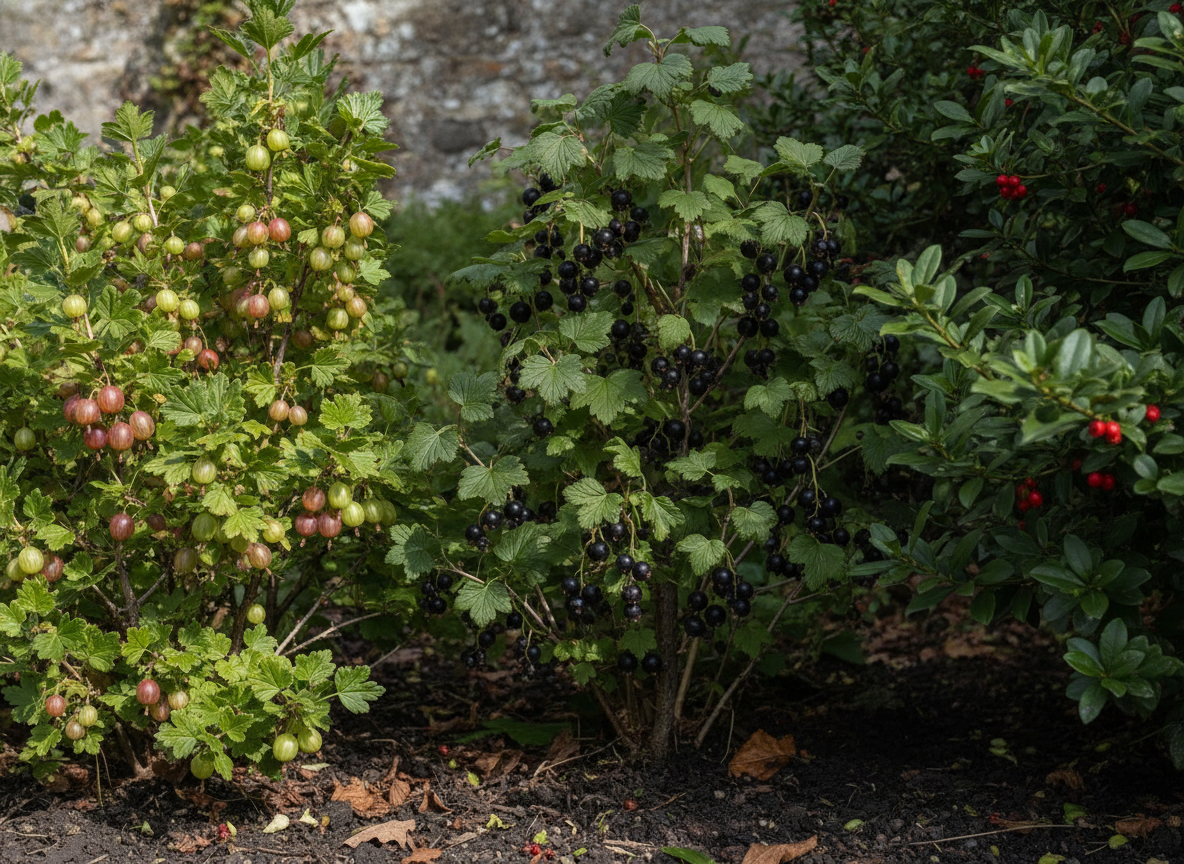 Gooseberry and currant bushes grow in a sunlit garden — AI-generated illustration
Which bushes this is for — and the one it isn’t
The five-leaf summer prune is for the spur-forming soft fruit:
- Gooseberries — bushes and cordons
- Red currants
- White currants (a red currant in all but colour, pruned identically)
These three fruit on the same wood year after year, on spurs that sit on a permanent branch structure. Summer pruning tidies the new growth and feeds those spurs, which is exactly what you want.
Blackcurrants are the exception, and it matters. A blackcurrant fruits on the young wood it made last year, not on old spurs — so its whole pruning logic is upside-down. You never shorten a blackcurrant’s shoots to five leaves; you’d be cutting off next year’s fruiting wood. Instead, once it has cropped, you take out about a third of the oldest, darkest branches right down at the base to make room for fresh young shoots. Treat a blackcurrant like a gooseberry and you’ll wonder why the crop keeps shrinking. If you’re not sure which you have, the leaves settle it: crush one and a blackcurrant smells unmistakably of cassis.
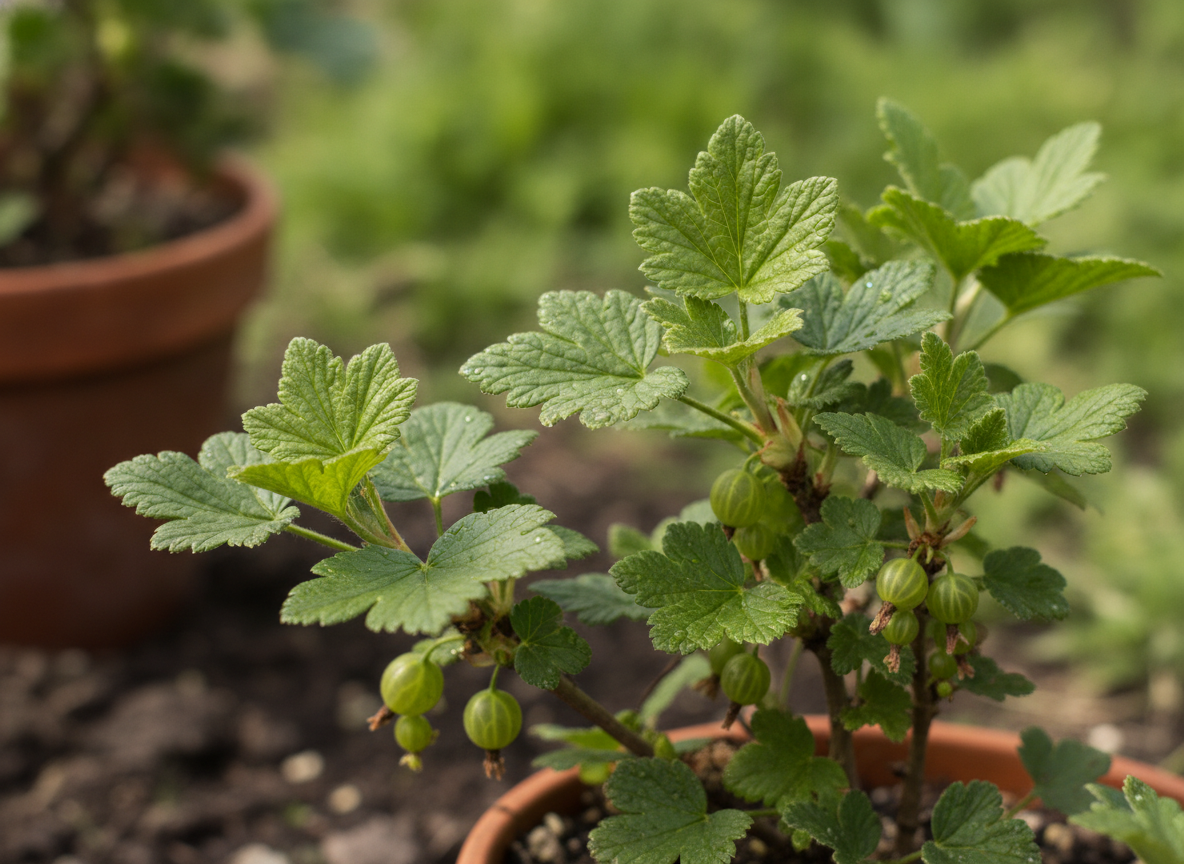 Gooseberry plant in a terracotta pot with small green fruits — AI-generated illustration
Why five leaves, and why now
The summer cut does four things at once, and the timing — early to mid-July, once the shoots have firmed up but before the fruit ripens — is what makes them line up:
- Bigger, riper berries. Every leafy side-shoot is a mouth. Cut the surplus growth back and the plant stops pouring sugar into new leaf and puts it into the fruit already set. The berries left behind swell noticeably larger.
- Light and air onto the fruit. Opening the middle of the bush lets sun reach the berries so they colour and sweeten, and lets air move through so they dry off quickly after rain.
- Fewer mildew problems. American gooseberry mildew — the grey-white felt that ruins berries and shoot tips — thrives in soft, crowded, humid growth. Thinning that congestion is one of the simplest ways to keep it off the crop.
- Easier, less bloody picking. Anyone who has reached into an unpruned gooseberry knows the thorns win. An open, five-leaf bush is a far kinder thing to harvest from.
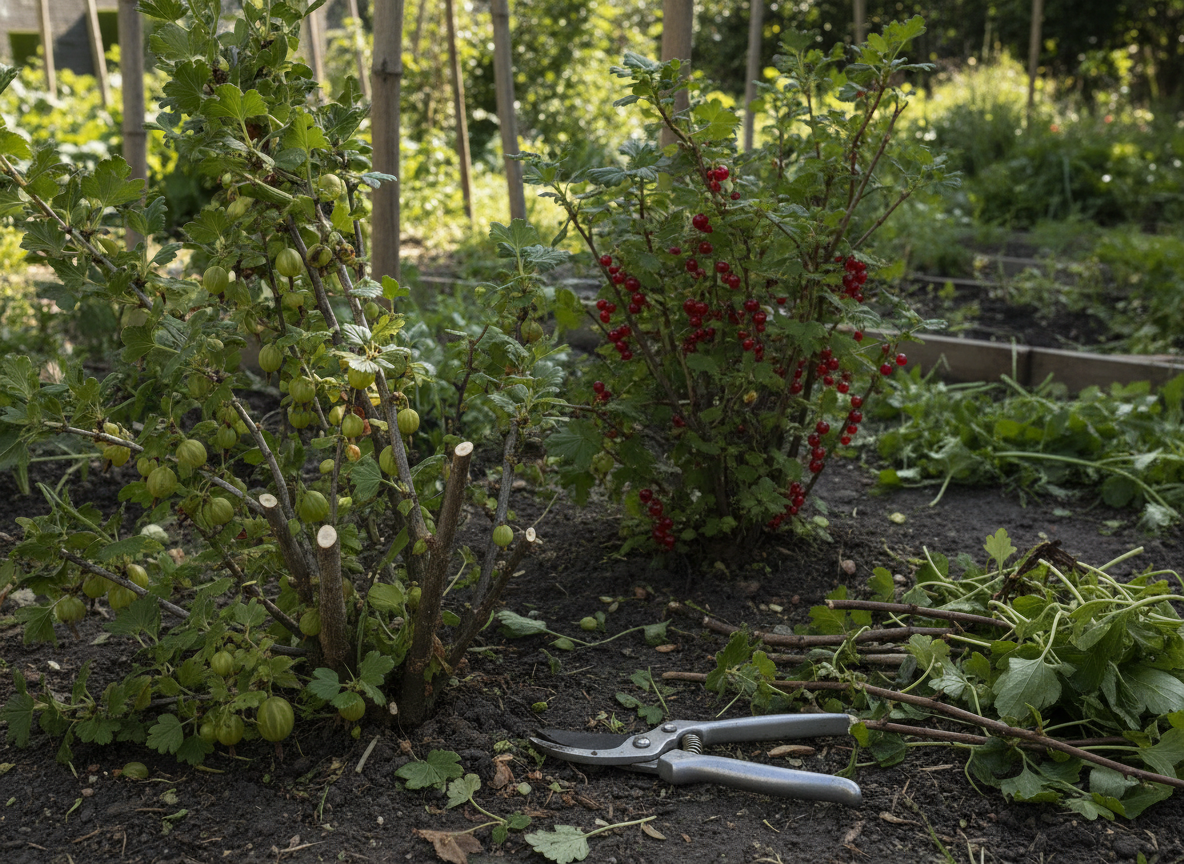 Gooseberry and currant bushes with pruning shears and trimmed branches on the ground — AI-generated illustration
How to make the cut
Work over the bush one shoot at a time — it goes faster than it sounds.
- Find this year’s side-shoots. They’re the softer, paler, whippy stems growing sideways off the main branches. They bend easily and the wood is green, not grey and woody like the older framework.
- Count five leaves from the base of each side-shoot and cut cleanly just above the fifth leaf, using sharp, clean secateurs. That leaves a short stub with a few leaves — the beginning of a fruiting spur.
- Leave the leaders alone. The main branch tips — the shoots you’re relying on to extend the framework or fill a cordon — are not touched now. Those get shortened in winter, when you can also thin and shape the whole bush into an open goblet.
- Ignore anything shorter than about 20 cm (8 in). A short shoot is doing no harm and may already be carrying fruit; the summer cut is only for the vigorous new growth crowding the bush.
Don’t strip the plant bare — you’re thinning congestion and shortening the whippy growth, not defoliating it. The framework, the leaders and the fruit all stay. If the weather has been warm and wet and you can see the first grey bloom of mildew, take those tips off first and bin them rather than composting.
What waits until winter
The five-leaf cut is deliberately light because the real structural pruning happens in the dormant season. In winter you shorten the leaders, take out any branches crossing the middle, remove the oldest tired wood, and open the centre so the bush keeps that wine-glass shape that lets light and air right in. Think of July as the tune-up and winter as the service — the summer cut feeds the fruit and the spurs, and the winter cut keeps the whole framework productive.
It’s the same principle behind the summer prune on trained apples and pears: cut in full leaf and the plant answers with fruit buds instead of more growth. And once you’ve summer-pruned the currants, it’s a natural moment to deal with the summer raspberries that have finished cropping — the whole soft-fruit corner gets sorted in one July afternoon.
Not sure whether your shoots have firmed up enough, or which of your bushes is a blackcurrant? That’s exactly the kind of plant-by-plant, week-by-week timing Cresco is built to get right — tell it what you’re growing and it tells you when to make the cut.