Border phlox is at its peak in the second half of July — those fat domes of scented flower in clean pink, coral, white and lilac that carry the back of the border through high summer. It’s also the moment a lot of gardeners quietly let their phlox start dying by committee. Not the plant itself — that’s tough as old boots — but the colour. Leave a named phlox to shed seed year after year and the clean shade you chose slowly disappears, replaced by a muddy magenta-purple you never planted. It isn’t disease and it isn’t the soil. It’s self-seeding, and the window to stop it is open right now.
Why phlox seedlings come back magenta
Almost every border phlox you can buy — Phlox paniculata — is a named selection: ‘Bright Eyes’, ‘David’, ‘Blue Paradise’, a specific plant someone spotted, liked, and bulked up by division so every plant sold is a clone of that one. The flower colour is a fixed feature of that clone. But the seed it sets is not. Seedlings are a genetic reshuffle, and when phlox reshuffles it drifts hard back toward the wild type: a tallish, vigorous plant in a washy magenta-mauve. The soft pastels, the whites, the picotees — those are the exceptions the breeder held onto, and they rarely survive the trip through a seed pod.
On its own that would just mean a few off-colour babies. The problem is that phlox seedlings are more vigorous than the cultivar they came from, and they come up right in the crown of the parent. Over three or four seasons the magenta wildlings out-muscle the named plant, the clump reads as “reverted,” and gardeners assume their pink phlox “turned” — when in fact the pink phlox is still there, just swamped by its own offspring. Deadhead before the seed ripens and the takeover never starts.
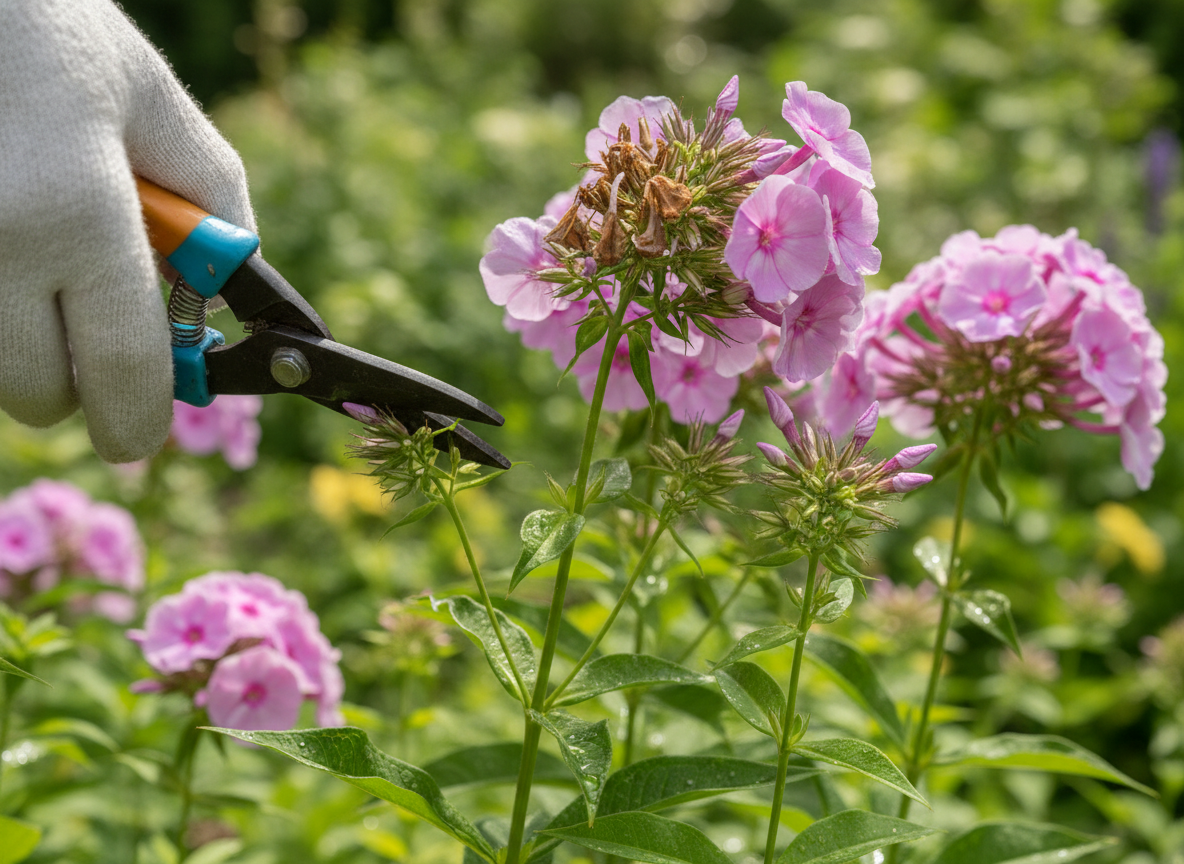 A gloved hand uses pruning shears to deadhead pink phlox flowers — AI-generated illustration
Deadhead to the side shoots, not just the top
There’s a second reason to deadhead now, and it’s the pleasant one. Garden phlox will give you a modest repeat show if you cut it right. Each main flower dome sits on top of a stem that carries smaller flower buds waiting in the leaf joints below. Snap off the spent central head and those side buds get the plant’s energy and open into a looser, later scatter of flower — smaller than the July flush, but enough to carry a well-fed clump into September.
The cut is the same logic behind shearing salvias back to their side-shoots for bloom until frost: you’re not just removing the eyesore, you’re redirecting the plant to the next set of buds already in the pipeline. Take the faded dome off with a cut just above the first pair of healthy side shoots, and leave the rest of the leafy stem standing to feed them.
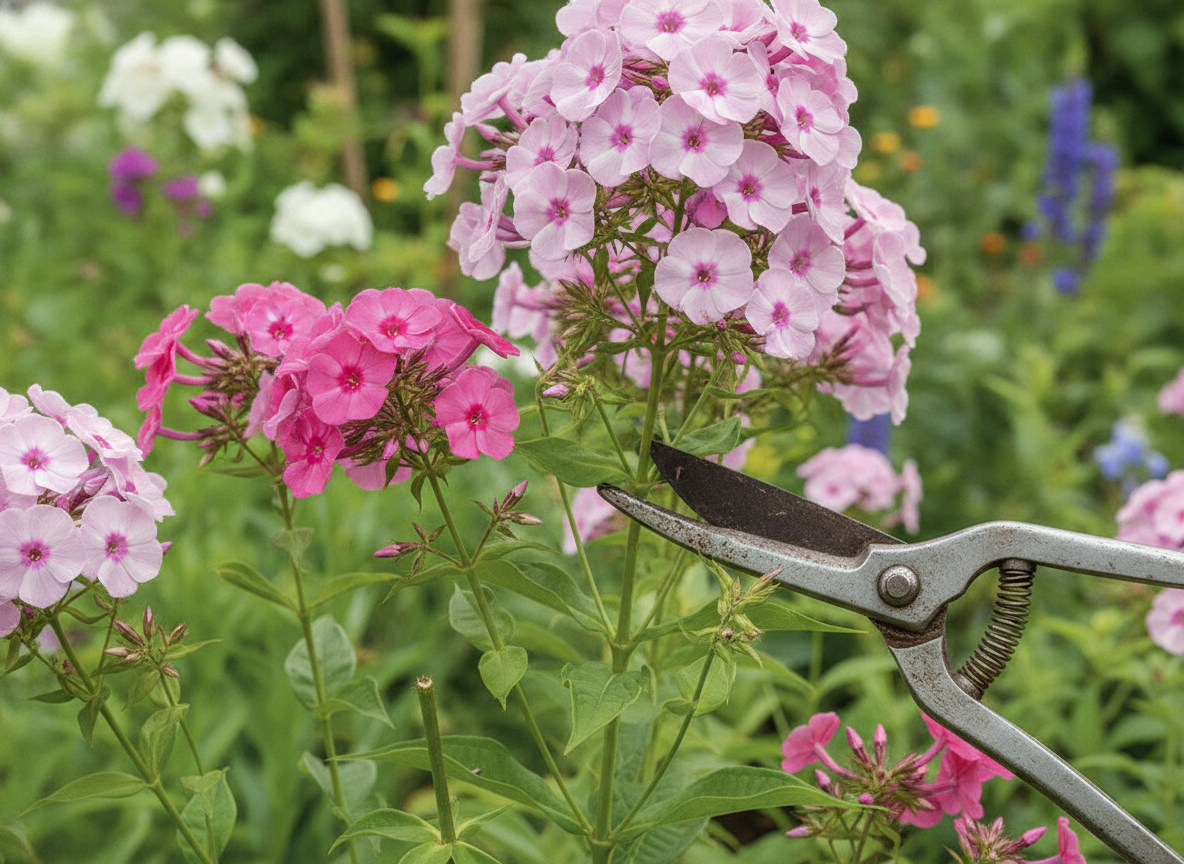 Gardening shears pruning a phlox plant with pink and white flowers — AI-generated illustration
When to make the cut
Read the dome, not the calendar. A phlox panicle opens from the centre outwards over a couple of weeks: while the middle is still throwing fresh colour, leave it — it’s at full value. The moment to move is when the centre of the dome has gone over — browning, dropping its florets, and starting to swell into little green seed capsules where the flowers were — while the outer ring may still hold a few blooms. That swelling is the seed forming, and it’s your deadline: cut before those capsules ripen and split.
In a Northern European garden that’s usually the back half of July through into early August, plant by plant, since early and late cultivars run a week or two apart. It’s the same season gardeners take the shears to a lot of midsummer perennials — the early-July Hampton hack that resets tired clumps for a second flush. Phlox is a gentler version of the same job: you’re taking heads, not whole stems.
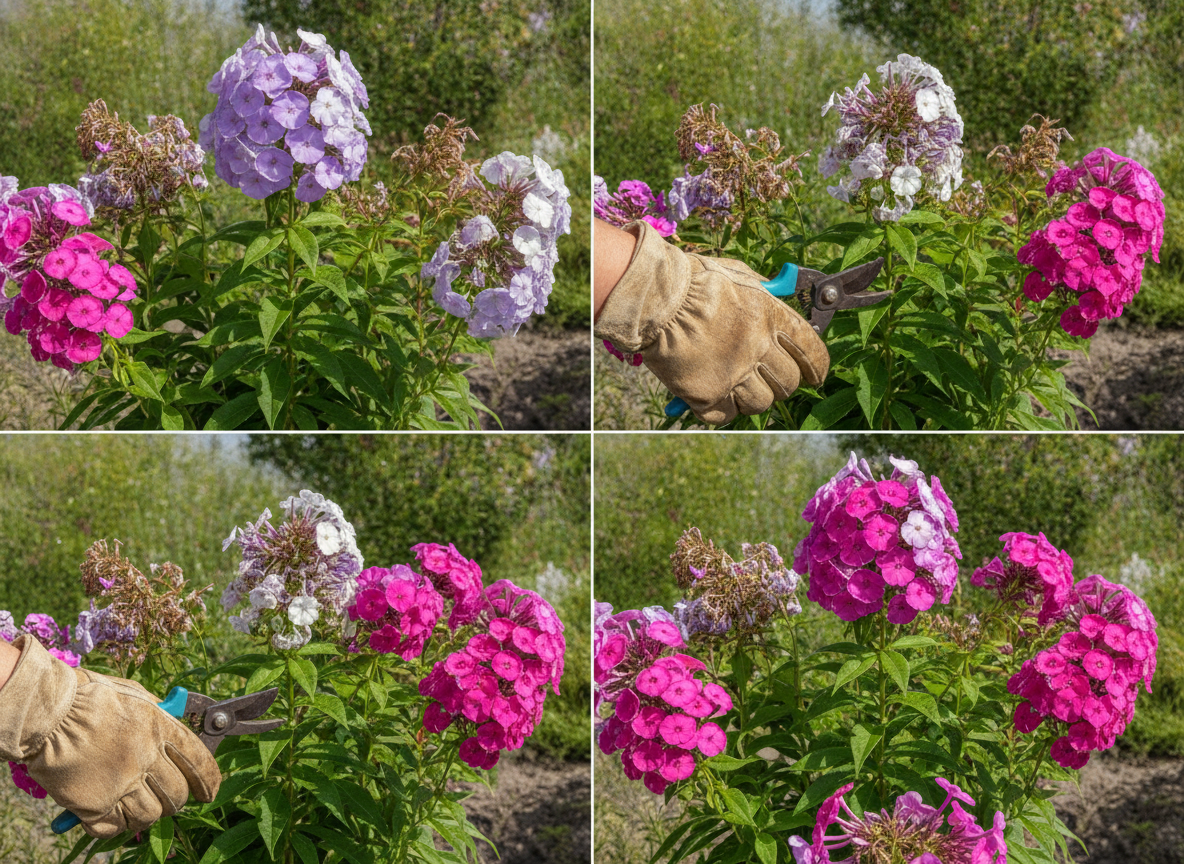 A four-panel image of hands pruning phlox flowers — AI-generated illustration
How to deadhead phlox, step by step
- Find the first side shoots. Follow a spent dome down its stem to the first pair of healthy leaves with small buds or shoots tucked in the joint. That’s your cutting point.
- Cut just above them. Clean secateurs, one snip above that pair. You’re removing the whole faded head and the bare bit of stem above the side shoots — not shearing the plant to the ground.
- Take every head before it seeds. The colour-drift problem is a numbers game; a few missed heads are enough to seed a border. Go over the clump and get them all, especially on named pinks, whites and bicolours.
- Bin the seedy heads, don’t compost them. Ripe phlox seed survives a cool garden compost heap and rides the finished compost straight back onto your borders. Put the deadheaded panicles in the council green bin instead.
- Feed and water a repeat-flowering clump. The second flush is only worth chasing on a plant with the reserves to make it. A mulch and a can of water after cutting helps; a starved, mildewed clump is better left to rest.
When to leave the seedheads on
There’s one honest exception. If you grow phlox in a loose, naturalistic or prairie-style planting and you actually want a self-sown drift — or you’re growing a species phlox rather than a named cultivar, where the seedlings come more or less true — then let some heads stand and seed. The dry panicles also give a little winter structure and the odd seed for birds. It’s the same fork every seed-setting plant offers, the one behind the decision to leave allium globes standing rather than deadheading them: tidy and true-to-colour, or standing and self-sowing.
The trap is only a trap when it’s a default — when a treasured pink or white cultivar is quietly reverting because nobody decided either way. On those, deadhead. It’s the same instinct behind cutting red valerian back before it seeds across the garden: with a keen self-seeder, the cut you make in July is really about what the border looks like in two years’ time.
Let Cresco time it for your border
Phlox is one more plant where the right move is about reading the plant — the state of the dome, the swelling seed, the side shoots waiting below — rather than a fixed date. Cresco tracks what you grow and tells you when each job is genuinely due for your garden and your local weather, so “deadhead the phlox before it seeds” arrives as a timed nudge instead of something you notice too late, once the magenta seedlings are already up. Get the cut in on time, and you keep the colour you chose — and often a second, softer flush to see the border into autumn.