The pink has gone brown on top — that’s your cue
By the third week of July the flat, rosy heads that covered your Spiraea japonica through June have done their work. Look closely and the flowers at the centre of each cluster have already faded to a dull, papery brown, while a few outer florets cling on pink. From a distance the whole shrub reads as tired: patches of rust-brown sitting on top of the fresh green (or gold, on the coloured-leaf kinds) foliage.
That browning is the signal to reach for the shears. Summer spiraea — the low, mounded, pink-flowered shrubs sold as ‘Anthony Waterer’, ‘Goldflame’, ‘Little Princess’, ‘Magic Carpet’ and the like — will flower a second time if you take the spent heads off promptly. Leave them and the plant spends the rest of the summer ripening seed instead, the flush fizzles out, and you’re left with brown corymbs sitting on the bush until autumn. A ten-minute shear now buys you fresh flowers when the border is starting to thin.
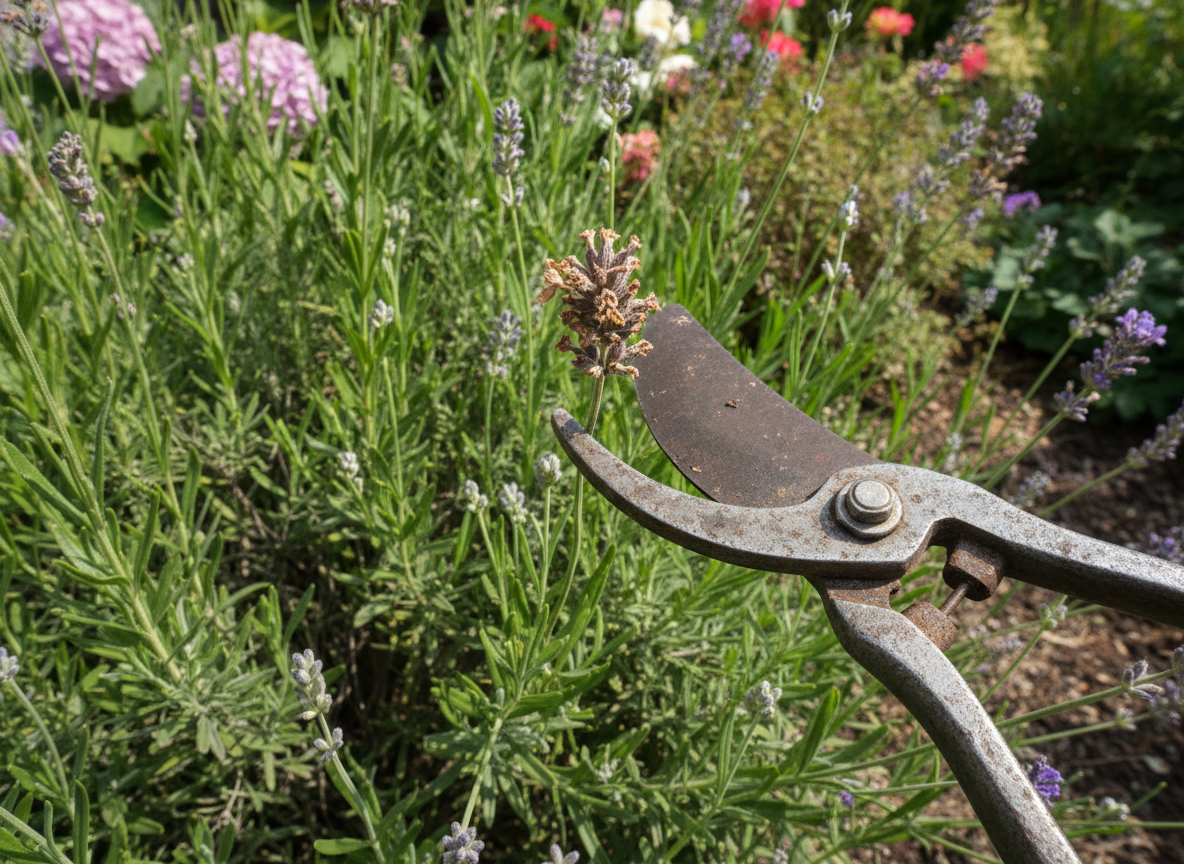 A person uses pruning shears to cut a spent lavender flower head — AI-generated illustration
Shear off the spent heads, not the whole shrub
This is a light job, not the hard cut you may have given the same shrub in early spring. You’re only removing the faded flower clusters and the couple of centimetres of stem behind each one — enough to take the browning heads off and land the cut just above a strong pair of leaves or a side shoot.
The quickest way is to treat the top of the mound like a soft hedge. Run a pair of shears (or one-handed snips on a small plant) across the shrub, skimming off the spent flower heads and the tips that carried them, following the natural dome of the plant rather than cutting it flat. You’ll take off roughly the top 5–8 cm — the flowered layer — and leave the whole leafy framework untouched. Within a few days the shrub looks tidy and green again; within a few weeks new shoots push from just below each cut and set a second, smaller crop of flower heads.
Resist the urge to go harder “while you’re at it”. Cutting deep into the bush in July removes the growth that would carry the late flush and leaves a bare, gappy shape going into autumn. Save the hard reduction for late winter.
 A vibrant late July garden with varied flowering plants and a stone path — AI-generated illustration
Why this works — and why it’s the opposite of the bridal-wreath rule
The reason a summer shear pays off comes down to where the flowers form. Spiraea japonica and its relatives flower on the current season’s growth — the shoots the plant makes this year. So when you shear off the spent heads, the fresh shoots that break below the cut have time to grow, ripen and flower again before the season ends. It’s the same logic that keeps buddleia flowering till frost when you deadhead the spent cones, and the same principle behind shearing catmint back for a second flush.
This is exactly why it’s worth being sure which spiraea you have, because the spring-flowering kind wants the opposite treatment. The white, arching, cascade-of-blossom types — bridal wreath (Spiraea ‘Arguta’, S. × vanhouttei, S. nipponica) — flower in April and May on last year’s wood. You prune those right after they finish flowering in early summer, taking out old flowered stems to the base, and you never shear them in July or you’d be cutting off next spring’s display. Same genus, two completely different jobs — told apart by flower colour and season: pink and flat-topped in high summer means shear now; white and arching in spring means leave it.
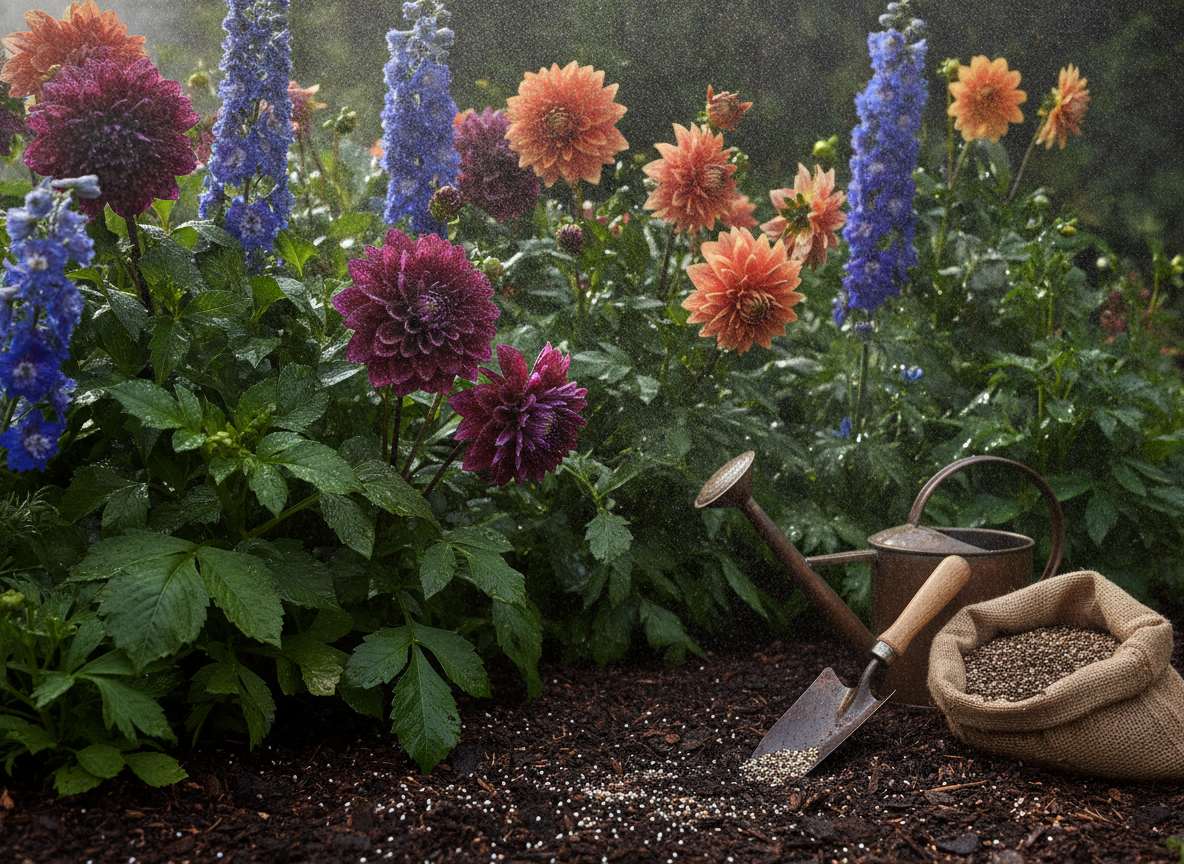 A late July garden with dahlias and delphiniums being watered and fertilized — AI-generated illustration
Feed and water to fuel the encore
The shear is most of the job, but a shrub you’ve just asked for a second round of flowers wants something to build them from — and late July soil is often bone dry. On the day you cut, water the plant well if the ground is dry, and scatter a handful of general-purpose fertiliser or a mulch of compost around the base. That pushes the plant to break fresh shoots quickly rather than sitting still through a dry spell.
After that, leave it be. New growth fills the dome back out within a fortnight, and the second flush of flowers follows through late August and into September — lighter than the June show, but arriving just as much of the border is winding down. On the coloured-foliage varieties you get a bonus: the new shoots come with the bright young leaf colour those plants are grown for, so the shrub looks fresher as well as flowering again.
Which spiraeas this suits — and the caveat
The July shear is for the summer-flowering Japanese spiraeas grown as low mounds for their flat pink-to-crimson heads: ‘Anthony Waterer’, ‘Goldflame’, ‘Golden Princess’, ‘Little Princess’, ‘Magic Carpet’, ‘Shirobana’ and similar named forms. These flower on new wood, respond well to being refreshed, and reliably give a worthwhile late flush from a well-timed cut.
Two things to keep in mind. First, the second flush is a bonus, not a rescue — if the plant is overgrown, leggy or bare at the base, the real fix is a hard reduction to 15–20 cm in late winter (February to early March), when the plant is dormant and about to grow away. Because it flowers on new wood, that hard cut costs you nothing and keeps the shrub dense and low. The July shear is the summer top-up between those bigger cuts. Second, if you actively want seedheads for the birds or the plant is somewhere you’d rather not fuss over, it’s perfectly fine to skip the shear — spiraea won’t come to harm either way. You’re choosing a second show, not preventing damage.
For the spring, arching, white spiraeas, don’t apply any of this: those get their single after-flowering prune in late May or June and are left alone the rest of the year.
Knowing which of your shrubs flowers on old wood and which on new is the whole game with summer pruning — and it’s exactly what Cresco tracks for you, plant by plant, so you get a reminder to shear the summer spiraea in July and to leave the bridal wreath well alone.