What a fading cosmos flower is really doing
A cosmos (Cosmos bipinnatus) is an annual with one job: set seed before it dies. Every open flower is a step towards that goal, and the plant is counting. While the daisies keep opening, it stays in growing-and-flowering mode. The moment enough of them are allowed to ripen into seed, the plant reads the season as finished and stops — the flush thins, the stems get leggy, and by late August a patch that should be smothered in bloom is mostly going over.
That is the whole reason deadheading works. You are not tidying; you are lying to the plant. Take the fading flowers off before they set seed and it never gets the “job done” signal, so it keeps throwing new buds right up to the first frost. Leave them on and it winds down early. On a well-grown cosmos the difference between the two is roughly six extra weeks of flowering — the back half of summer.
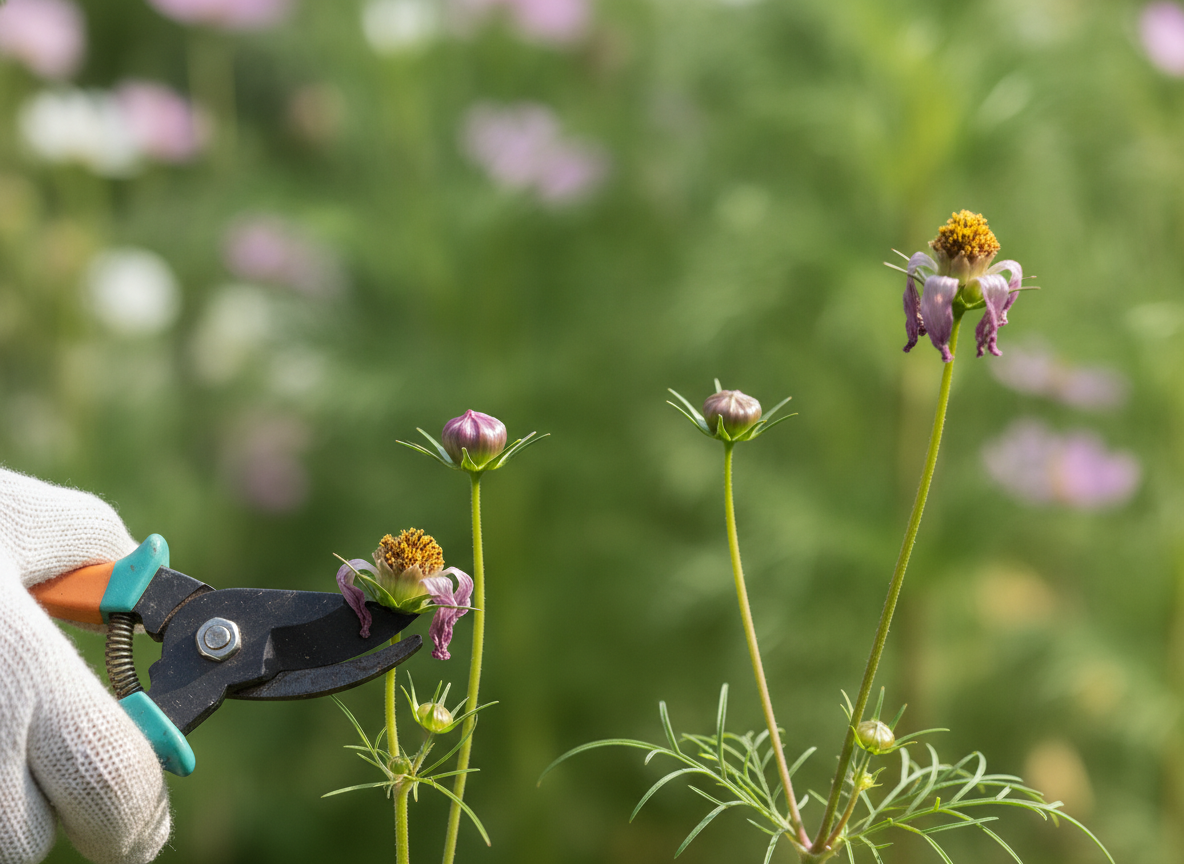 The photograph depicts gloved hand with pruning shears about to deadhead a cosmos flower — AI-generated illustration
Deadhead down to a bud, not the head
Here is the mistake almost everyone makes: they pinch or snap the spent daisy off at the top of its stalk and move on. That does remove the seedhead, but it leaves a bare, stiff stalk poking up out of the plant with no growing point below the cut — so nothing breaks from it, and you are left picking your way through a thicket of little green sticks.
Instead, follow the spent flower’s stem back down into the plant and cut just above the next bud, the next side-shoot, or the next pair of leaves. There is almost always a fork lower down with new growth waiting in it. Cut there and the plant breaks those buds into fresh flowering stems within a couple of weeks — and the plant stays full instead of turning into a lollipop on a stick. If a whole stem has finished and there is nothing usable below, take it right back to the base.
The trick is telling a spent flower from a fat bud, because on a cosmos they can sit side by side. A finished flower has lost most of its colour, the petals are shrivelled or gone, and the centre is a raised, spiky green knob — the seedhead forming. An unopened bud is smooth, rounded and swollen with colour. When in doubt, roll it gently between finger and thumb: the seedhead feels bristly, the bud feels firm and smooth. Take the bristly ones; leave the smooth ones.
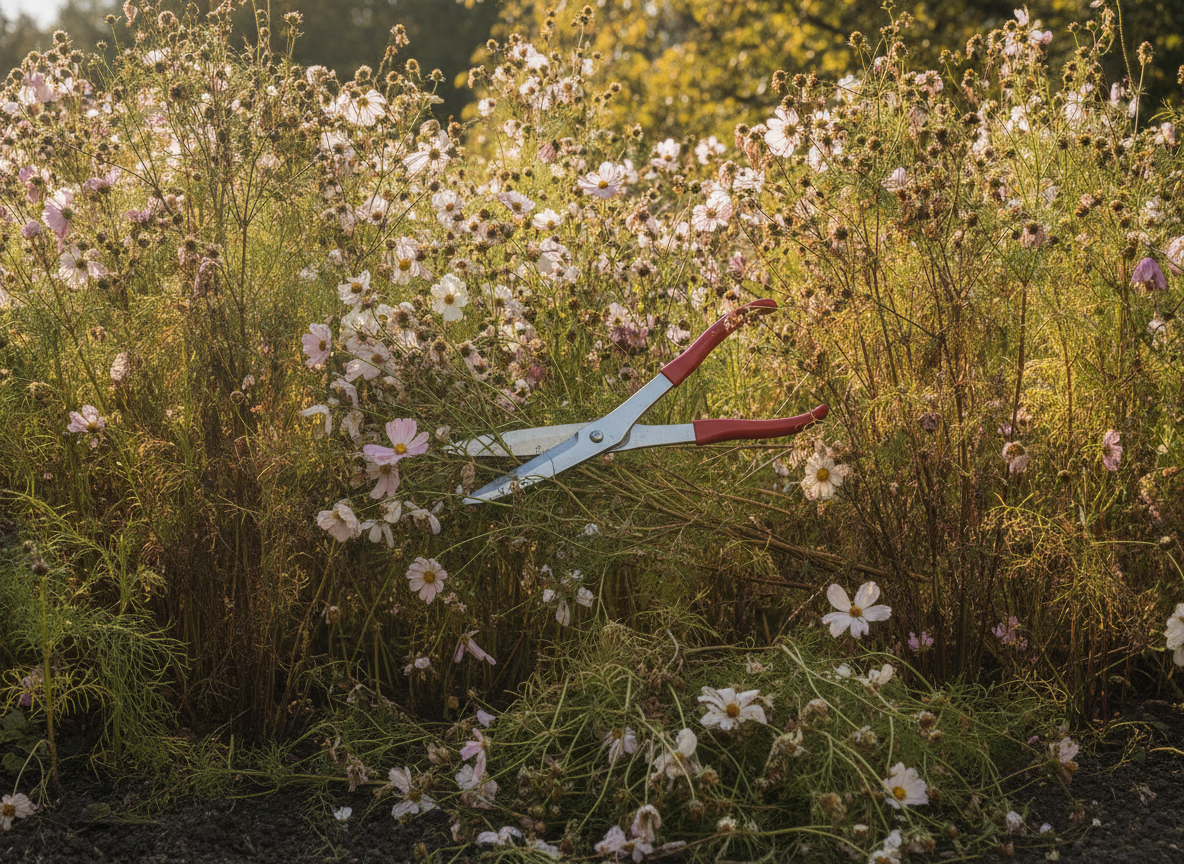 A pair of shears rests among spent cosmos plants — AI-generated illustration
When the whole patch has gone over: shear it
Deadheading flower by flower is fine for a few plants by the back door, but if you have grown cosmos as a cutting row or a big drift, going round with snips is a job you will quietly abandon by August. There is a faster reset. When most of the blooms on a stand have faded together and it is looking tired and top-heavy, take the shears to the whole thing and cut it back hard — down to around 30–45 cm (12–18 in), above a band of healthy leaves.
It looks brutal for a week. Then the plant, denied its seed and cut back to a mass of dormant buds, breaks from all of them at once and comes back bushier and shorter than before, covered in a fresh batch of flower in two to three weeks. You lose a fortnight of bloom and get a month of it back, on sturdier stems that do not flop across the path. One hard shear in late July or early August will usually carry a stand right through to the frosts.
Either way, the enemy is the same: seed. A cosmos left to ripen a good crop of seedheads is a cosmos that has decided to stop. Whether you take them one at a time or all at once, the point is to get the spent flowers off before the seed sets.
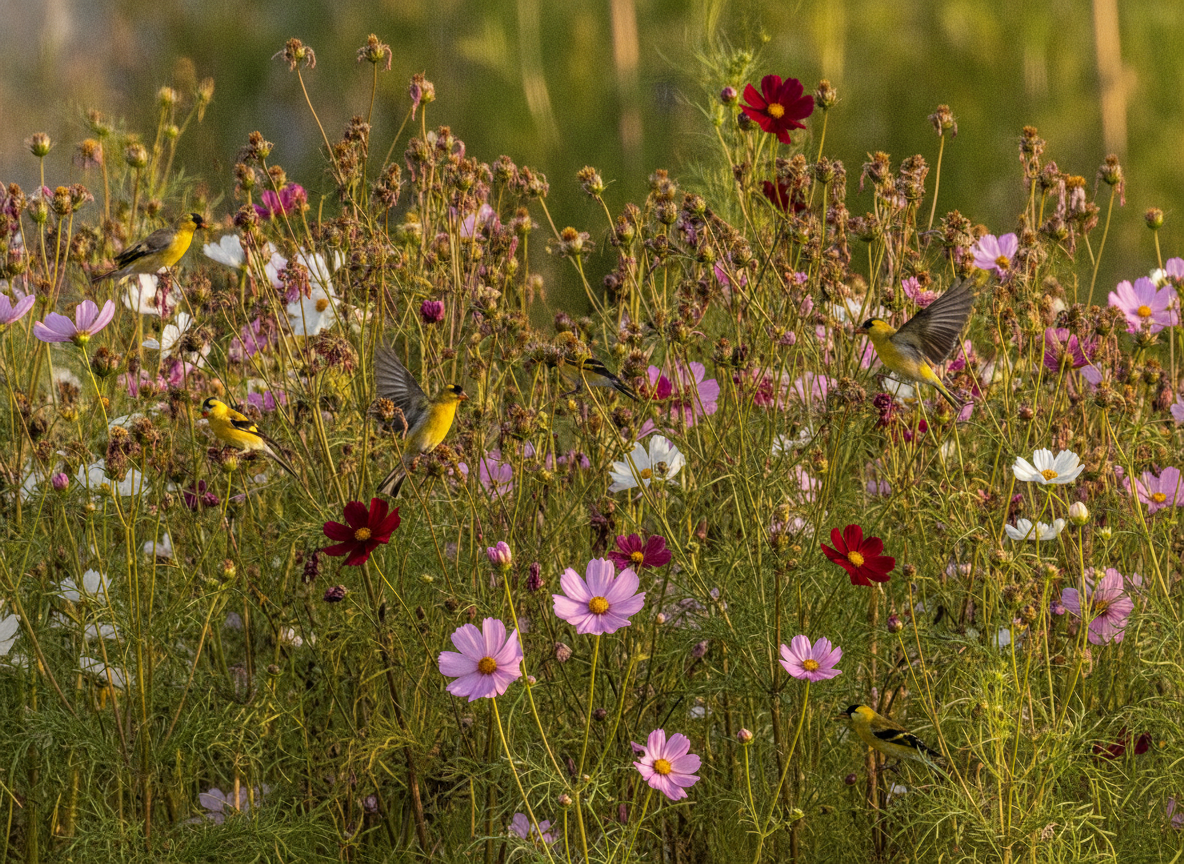 American goldfinches perch amongst cosmos flowers — AI-generated illustration
Leave a few for the goldfinches — but only at the end
There is one deliberate exception to all of this. Cosmos seed is a favourite of goldfinches, and the plants self-sow readily — so at the very end of the season, once the frosts are clearly coming and there is no more flowering to lose, stop deadheading and let the last flush run to seed. The birds work the heads through autumn, and next spring you will find free seedlings coming up around the parent plants to pot on or move.
That is an autumn decision, though, not a summer one. Right now, in July, every seedhead you leave is flowering time you are giving away. Save the seed-saving for September.
The same rule, plant after plant
If this feels familiar, it should. It is the same bargain behind picking sweet peas every single day or they stop, and behind deadheading buddleia through summer to keep it flowering into October: remove the spent flower before the plant commits to seed, and it flowers again. And as with telling a dahlia’s pointed spent bud from a round fat one, half the skill is just learning to read which is which before you cut.
The catch is that every plant in the border runs its own clock — the cosmos wants a weekly walk with snips, the buddleia wants its cones taken as they brown, the hedge wants leaving well alone until autumn. That is exactly what Cresco keeps track of for you: tell it what is growing in your garden and it tells you which plant needs the secateurs this week, tuned to your own local weather rather than a generic calendar — so nothing quietly stops flowering while you weren’t looking.