The one job that keeps alstroemeria flowering into autumn
Alstroemeria — Peruvian lily — is one of the longest-flowering plants you can put in a border. From June it throws up wave after wave of freckled, orchid-like blooms in apricot, wine, cream and hot pink, and a happy clump will still be going in October. But whether it flowers for four months or fizzles out by August comes down to one small habit, and most people get it wrong.
The instinct, when a flowering stem goes over, is to reach for the secateurs and cut it off at the base like any other perennial. Don’t. On alstroemeria you pull the whole stem out instead — grip it low, near the soil, and tug it free with a gentle twist, the way you’d pull a stick of rhubarb. It feels far too rough for a plant this delicate-looking. It’s exactly what keeps it flowering.
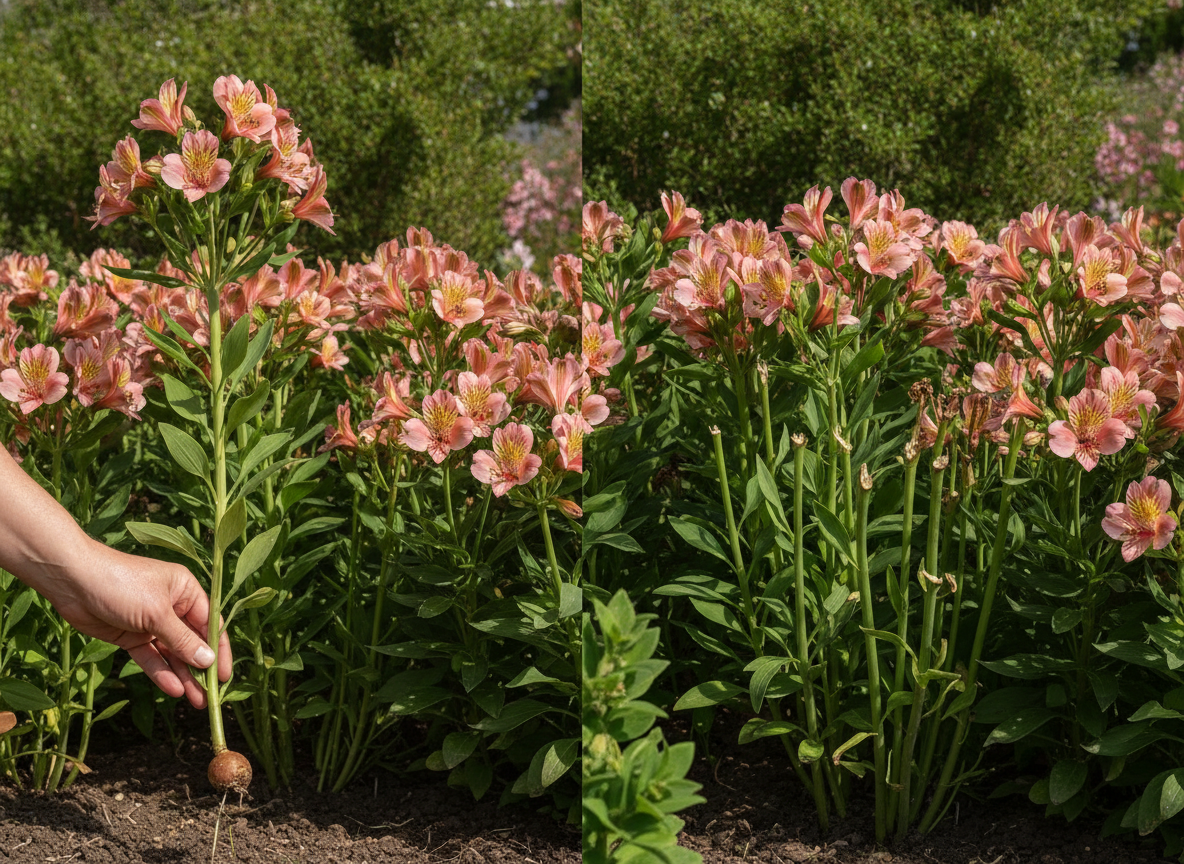 A hand pulls alstroemeria stems, illustrating the benefit over cutting — AI-generated illustration
Why pulling works and cutting doesn’t
Alstroemeria grows from a mat of brittle, tuberous roots, and each flowering stem runs down to a growing point on that mat. When you snap a stem out by pulling, you give that growing point a small jolt — and the plant answers a broken stem the way it answers being grazed in the wild: by pushing up new flowering shoots to replace what it lost. Pull as the flowers fade and you’re effectively asking the clump for another round, over and over, right through the season.
Cut instead, and two things go wrong. First, you don’t trigger that regrowth response nearly as strongly — a clean snip signals far less “damage” to the plant than a stem pulled clean out of the crown. Second, and worse, cutting leaves a stub of stem still attached to the root below ground. That stub has no leaves, nothing to do, and in damp soil it simply sits there and rots — and the rot can spread down into the fleshy roots and take part of the clump with it. Pulling removes the whole stem cleanly and leaves nothing behind to go soft.
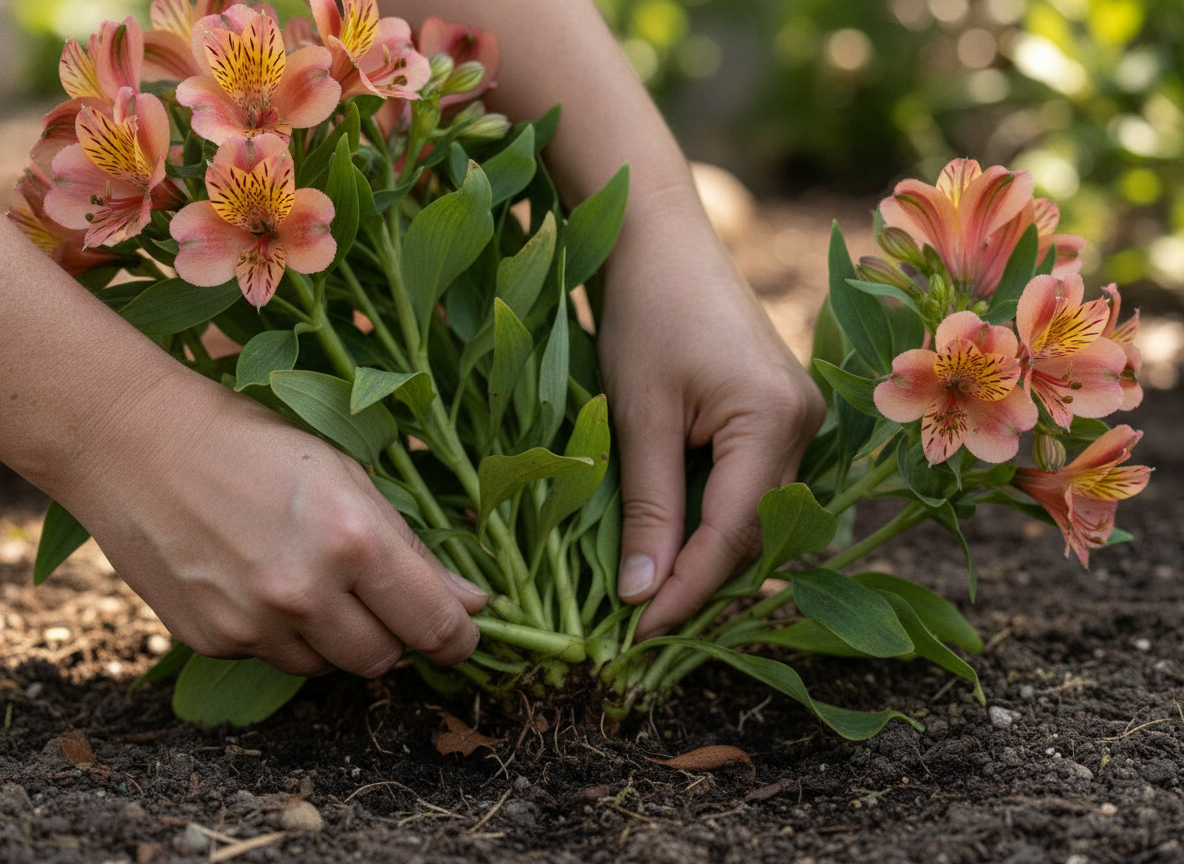 Hands demonstrating how to pull an alstroemeria stem from a clump in a garden — AI-generated illustration
How to pull a stem without wrecking the clump
The technique matters, because done carelessly you can lift roots or snap the stem off high and leave the very stub you were trying to avoid. Do it like this:
- Water the day before if the soil is dry. Damp soil lets the stem slip out cleanly; bone-dry soil makes it tear raggedly or drags the roots up with it. In a dry July spell, give the clump a good soak the evening before you plan to tidy it.
- Grip low, right at the soil line. Wrap your hand around the base of the stem as close to the ground as you can. The lower you hold, the cleaner the break.
- Pull straight up with a slight twist. One firm, steady tug — not a yank. The stem should come away from the crown with a soft snap. If it resists hard, twist gently as you pull rather than fighting it.
- Steady the clump with your other hand if the whole plant threatens to lift, especially on a young plant that hasn’t rooted deeply yet.
Pull the spent stems the moment their flowers go over, and don’t wait until the plant looks tired all over. Little and often keeps a steady procession of fresh shoots coming.
The exception: a plant in its first year
There’s one time to hold off, and it’s worth knowing. In its first season after planting, an alstroemeria is still building the root mat everything depends on, and pulling stems out can loosen a crown that hasn’t anchored yet. For that first year, snip spent stems off with secateurs instead — accept the small compromise — and switch to pulling from the second season on, once the plant is established and pulls out cleanly without lifting. Established clumps are tough as old boots; new ones need a year’s grace.
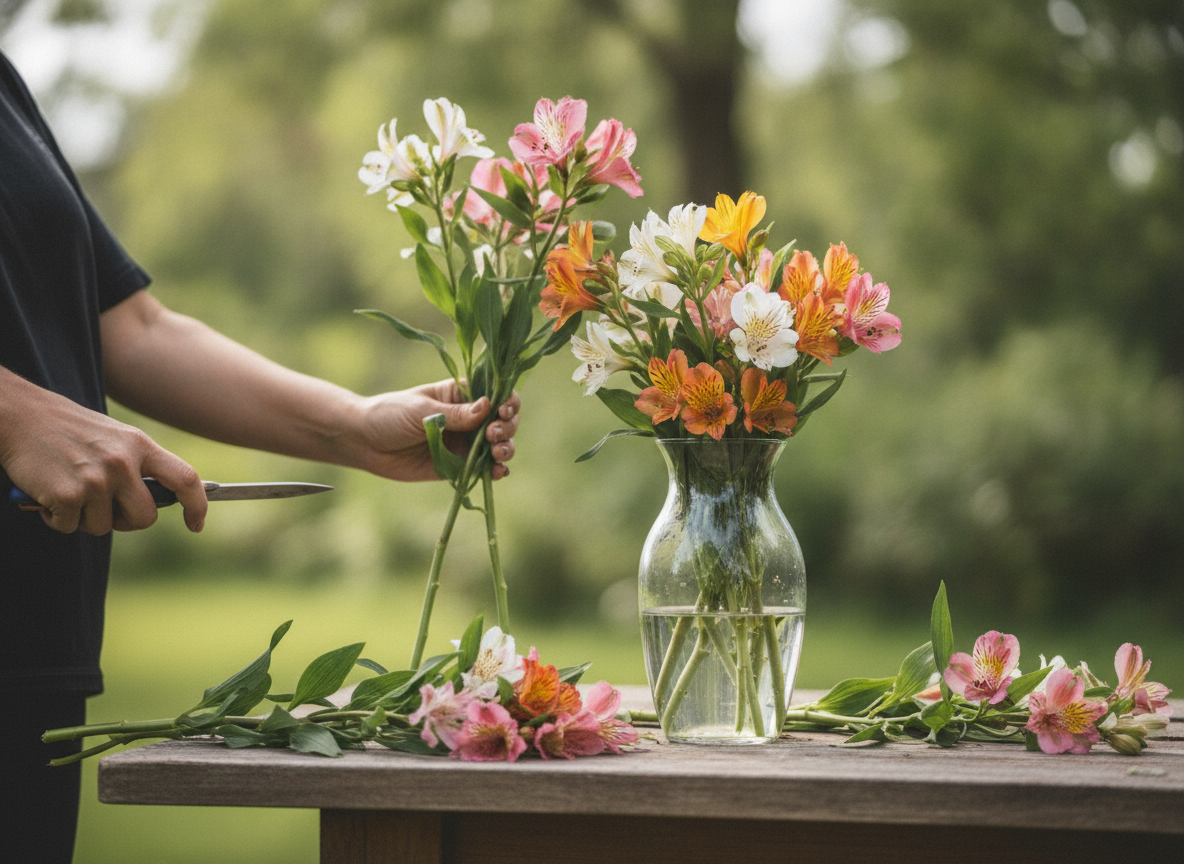 A person’s hands arranging cut alstroemeria flowers in a vase on a wooden table — AI-generated illustration
Cutting for the vase — same rule
The pull-don’t-cut rule isn’t just for deadheading. If you grow alstroemeria for cutting — and you should, because pulled stems last two to three weeks in a vase, far longer than most cut flowers — harvest them the same way. Pull the flowering stems rather than snipping them, and the plant reads it as the same productive “damage” and sends up replacements. It’s the classic cut-and-come-again logic, except here you pull-and-come-again: the more you take, the more it makes. It’s the same bargain as sweet peas, which stop flowering the moment you stop picking — the plant flowers to set seed, and every stem you remove before it can is a fresh demand for more.
Strip the lower leaves off the part of the stem that will sit under water, and the flowers will open their tight top buds indoors over the following week.
What to do at the end of the season
Keep pulling spent stems right through summer and into autumn. When the whole plant finally goes over with the first hard frosts, cut the remaining top growth down to the ground — that end-of-year tidy is the one time secateurs are the right tool — and mulch over the crown with a few centimetres of compost or bark. Alstroemeria roots sit shallow and the growing points can be caught by a severe freeze, so that blanket matters in a cold winter. Come spring the clump wakes up and the whole cycle starts again.
Get into the pull-don’t-cut habit and alstroemeria quietly becomes one of the hardest-working plants in the garden: months of freckled flowers, weeks of vase life, and almost nothing to do beyond a firm tug every few days. Not sure whether a stem is spent enough to pull, or when a particular plant flowers where you live? The Cresco app reads your plants and your local season and tells you exactly what to do, and when — deadheading logic like cosmos, where you cut down to a bud rather than snap off the head, differs plant by plant, and Cresco keeps it straight for you.