How to tell a clump has had enough
A healthy perennial spreads outward a little each year. After three or four seasons that outward creep catches up with it: the crown gets so congested it starts to starve itself, and the plant tells you in three ways.
The clearest sign is a dead or bare patch in the middle. The oldest, woodiest growth sits at the centre of the clump, and once it’s exhausted the plant keeps living only as a ring of fresh shoots around a hollow, dead heart. You’ll see it on hardy geraniums, asters, heleniums and border phlox especially — a doughnut of leaf around a gap.
The other two signs are quieter. Flowers get fewer and smaller than they were two summers ago, because too many shoots are fighting over the same patch of soil. And the whole plant flops open from the middle, splaying outward where it used to stand as a mound. If any of those sound like a clump in your border, early autumn is the moment to fix it — and you’ll come away with three or four plants where you had one.
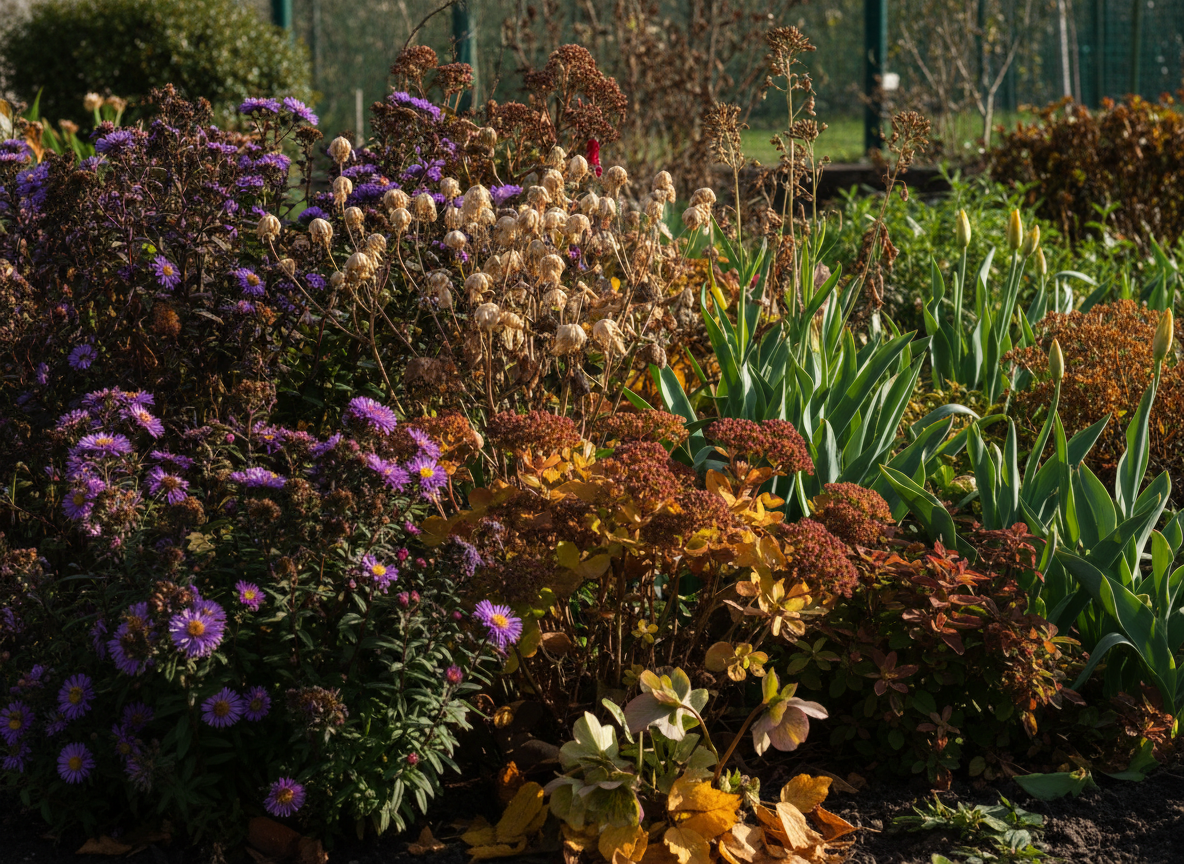 A garden bed with various perennial plants, some flowering and some dormant — AI-generated illustration
Autumn or spring? One simple rule
You can divide most herbaceous perennials in autumn or spring — the trick is knowing which plant wants which. The rule is easier than the exceptions make it sound: divide when the plant is not in active growth, and split summer-flowerers in autumn.
So right now, early autumn, is the window for the great mass of summer border plants that have finished their show: hardy geraniums, astilbe, heleniums, rudbeckia, daylilies, oriental poppies, sedum. The soil is still warm from summer and usually moist, so the fresh divisions root before winter and hit the ground running next spring.
Three groups are better left until spring:
- Slightly tender perennials — agapanthus, kniphofia, penstemon. Split them now and a wet winter can rot the divisions before they’ve settled. Agapanthus in particular resent being disturbed at all, so leave them well alone until they’re truly congested.
- Ornamental grasses — miscanthus, panicum, pennisetum. These want warmth to re-root, so wait for spring. It’s also why you leave grasses standing all winter rather than cutting them back now.
- Autumn-flowerers — asters and Japanese anemones. Don’t cut short a plant that’s still working. Divide them in spring instead.
And two useful exceptions the other way. Spring-flowering plants such as pulmonaria and primula are fine to divide in autumn now, since they’ve had all summer to recover. Bearded irises break the pattern entirely — they make new roots in high summer, so you divide those in July, six weeks after flowering, not now.
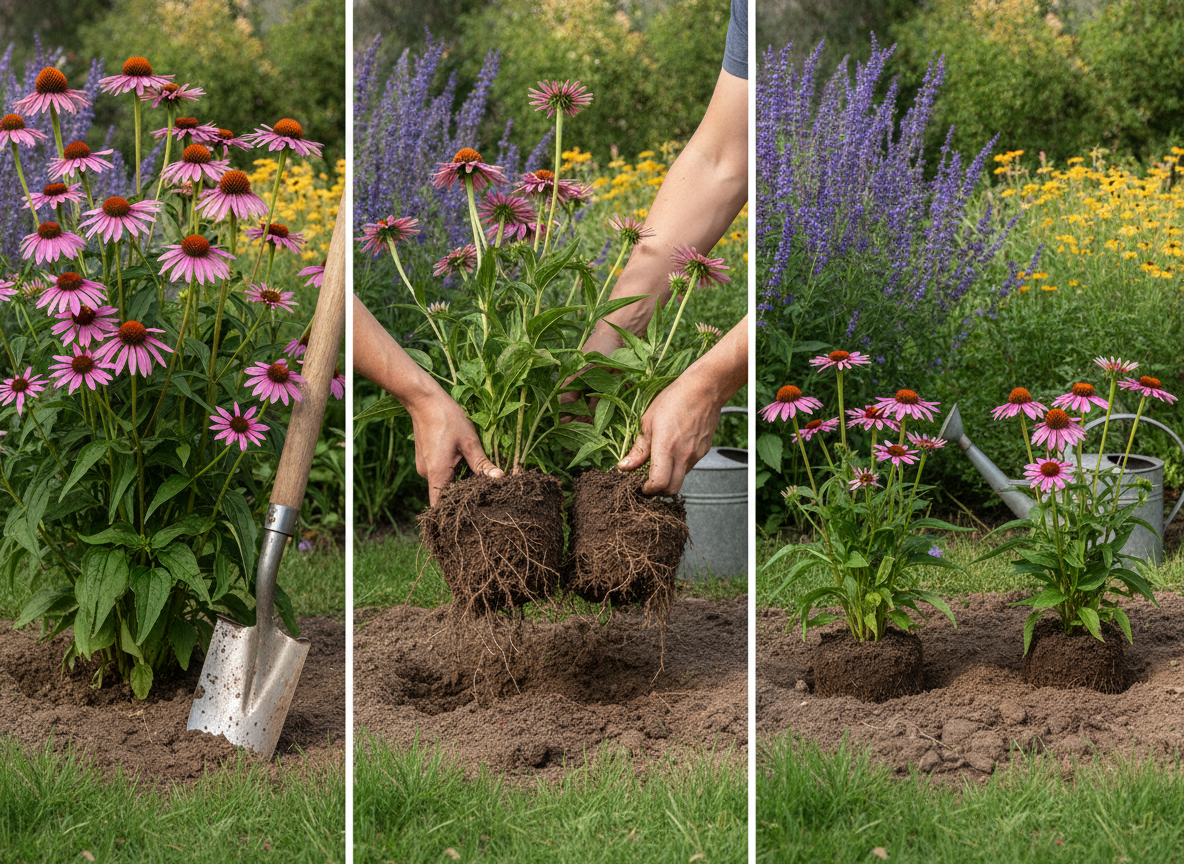 A gardener lifts and splits flowering perennials — AI-generated illustration
Lifting and splitting, step by step
Pick a mild, still day when the soil is moist but not sodden. If it’s been dry, water the plant well the evening before so the roots lift with soil around them.
- Lift the whole clump. Push a garden fork in well clear of the crown, right around the plant, and lever it out. Getting the fork in too close slices through the roots you want to keep.
- Shake off the loose soil so you can see what you’re working with — where the live shoots are, and where the dead centre is.
- Split it. For a big, tough clump, drive two forks back-to-back into the middle and push the handles apart — they lever the crown into halves without chopping the roots. Smaller clumps pull apart by hand; fleshy-rooted things like hostas and daylilies take a clean spade or an old bread knife straight down.
- Throw the middle away. The woody, dead heart won’t come back — keep only the vigorous outer sections, each with a good fist of roots and at least three or four healthy shoots or buds.
Don’t be shy with the fork. A clump that looks murdered on the bench recovers far faster than you’d expect, because every piece you keep is young growth with room to breathe.
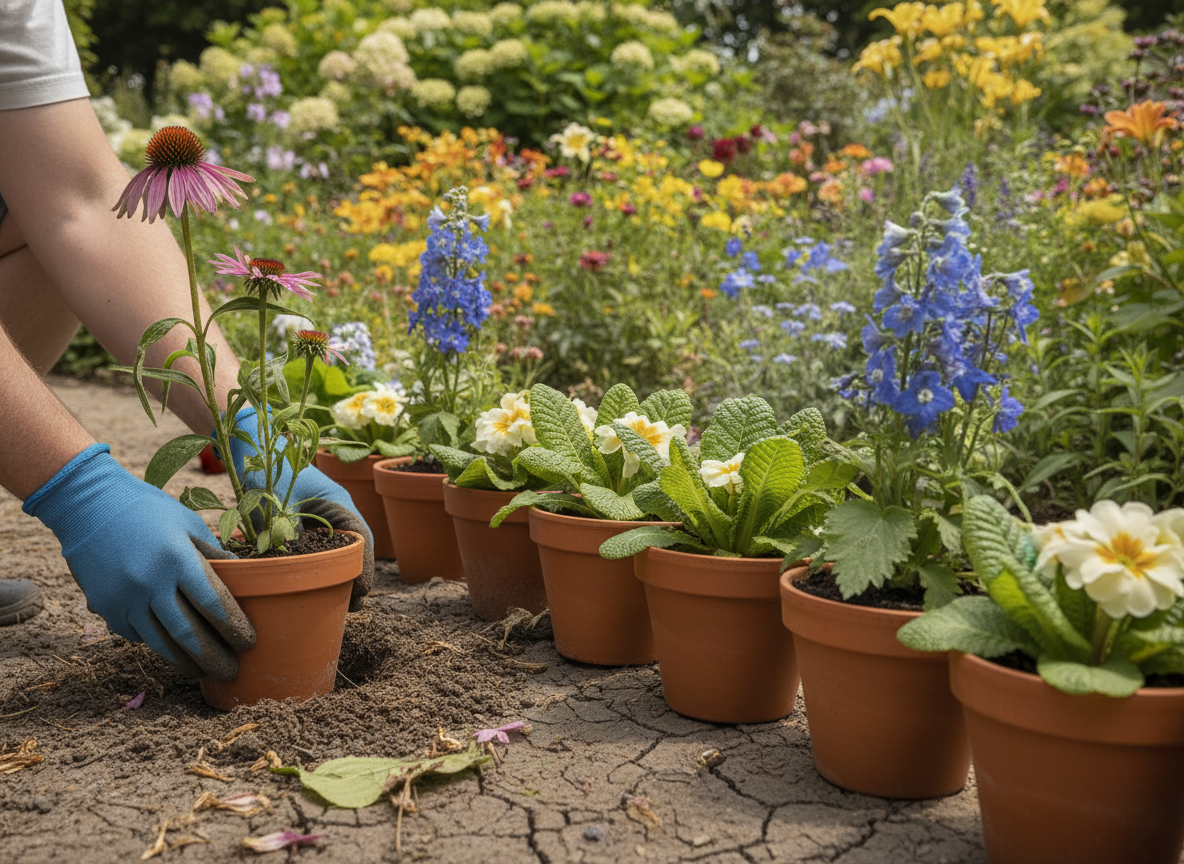 A person repotting plants in a garden setting — AI-generated illustration
Replant before they dry out
This is the step that decides whether it worked. Bare roots dry out in minutes in an autumn breeze, so have the new spots ready before you lift, and get the divisions back in the ground the same hour.
Replant each piece at the same depth it was growing — the crown sits at soil level, not buried. Firm the soil gently around the roots, water it in even if rain is forecast, and mulch around (never over) the crown to hold moisture and cushion the first frosts. Any spare divisions go straight into pots of compost, watered and stood somewhere sheltered — that’s your free stock for next year, or for the plant swap.
One caveat: if your autumn has turned cold and wet already, or your soil is heavy clay that stays waterlogged, hold off and divide in spring instead. Divisions sitting in cold, airless mud rot rather than root.
Split the right plants now and you’ve done three jobs in one afternoon: rescued a tired clump, doubled or tripled your stock for nothing, and set up a fuller border for next summer. Cresco tracks the right dividing and pruning window for every plant in your garden, so you know which clumps to lift this month — and which to leave until spring.