The tidy-up urge is two months early
By early September a hosta looks like it’s on the way out. The big lush leaves that carried the shady corner all summer are starting to lose their gloss, the edges are going papery, and a few lower ones have yellowed and flopped onto the soil. It reads as “finished,” and the shears come out with everything else in the autumn tidy.
Put them away. Cutting a hosta down now — while most of the leaf is still green or only just fading — is one of those tidy jobs that quietly costs you next year. The plant isn’t done. Those leaves are still working, and the single most useful thing you can do for a hosta in early autumn is nothing at all. There is a right time to cut it hard, and a genuinely important job to do when you cut — but that moment is weeks away yet, and rushing it is the mistake.
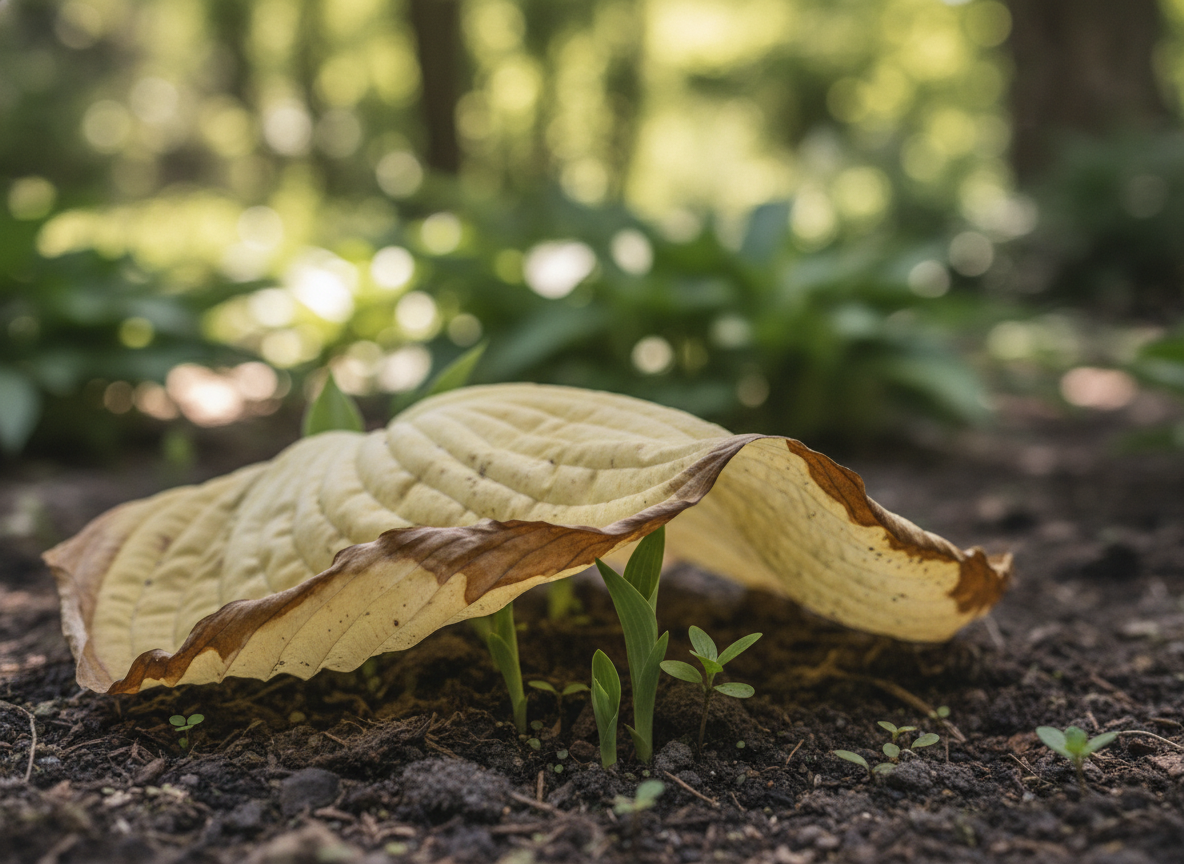 A fading hosta leaf shelters new growth in the garden — AI-generated illustration
Why a fading leaf is still doing its job
A hosta is a herbaceous perennial: every autumn the top-growth dies away completely and the whole plant retreats into a fat crown and root system underground, which is what carries it through winter and powers the fresh flush of leaves next spring. How well it comes back depends almost entirely on how well fed that crown is when it goes dormant.
That feeding happens in autumn, through the very leaves that look tatty to you. As the season turns, the plant pulls sugars, starch and nutrients back out of the foliage and down into the crown — which is exactly why the leaves yellow and fade. The colour draining out of them is the plant recovering its investment. A green or half-green leaf is still mid-transaction. Cut it off now and you bin the reserves the plant hadn’t finished withdrawing, and you send a smaller, hungrier crown into winter. The visible result comes next May: fewer leaves, a smaller clump, a plant that sulks instead of surges.
So the rule for early September is simple: let the leaf finish the job. Wait for the plant to tell you it’s done, rather than deciding for it.
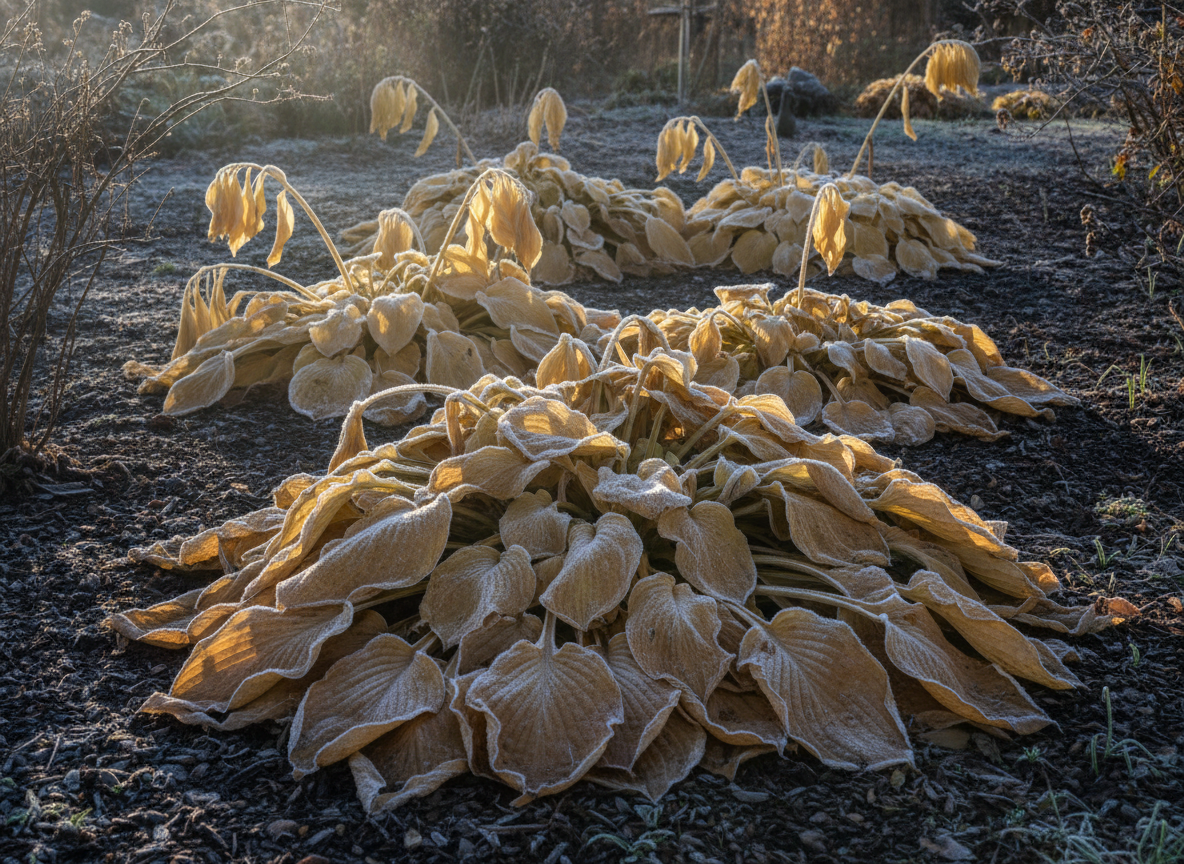 Frosted hostas are collapsed in a garden with morning sunlight — AI-generated illustration
When to actually cut: at collapse, after the first frost
The signal you’re waiting for is unmistakable once you know it. Leave the plant until the foliage has yellowed right through and collapsed — gone soft, floppy and translucent, lying flat on the ground rather than standing. In most gardens that comes with the first proper frosts, somewhere from mid-October into November, and a hard frost will often finish a whole clump off in a single night. Collapsed and colourless means the crown has taken back everything it can. Now it’s safe to cut.
When that point arrives, the cut itself is quick:
- Cut the whole plant down to around 5 cm (2 in) above the crown. Sharp secateurs are plenty for one hosta; shears make short work of a big drift. You’re removing spent foliage, not shaping anything, so there’s no finesse to it — just take it all off low.
- Take off the flower scapes too, if you haven’t already. The tall stalks that carried this summer’s lilac or white flowers turn to woody spikes and set seed you don’t need; cut them right out at the base.
- Don’t dig or disturb the crown. The bud for next year is already formed just under the surface. Cut above it and leave it be.
If you’d rather not cut at all, you can leave hostas to rot down naturally — but for this plant that’s the worse option, and the reason is the job most people skip.
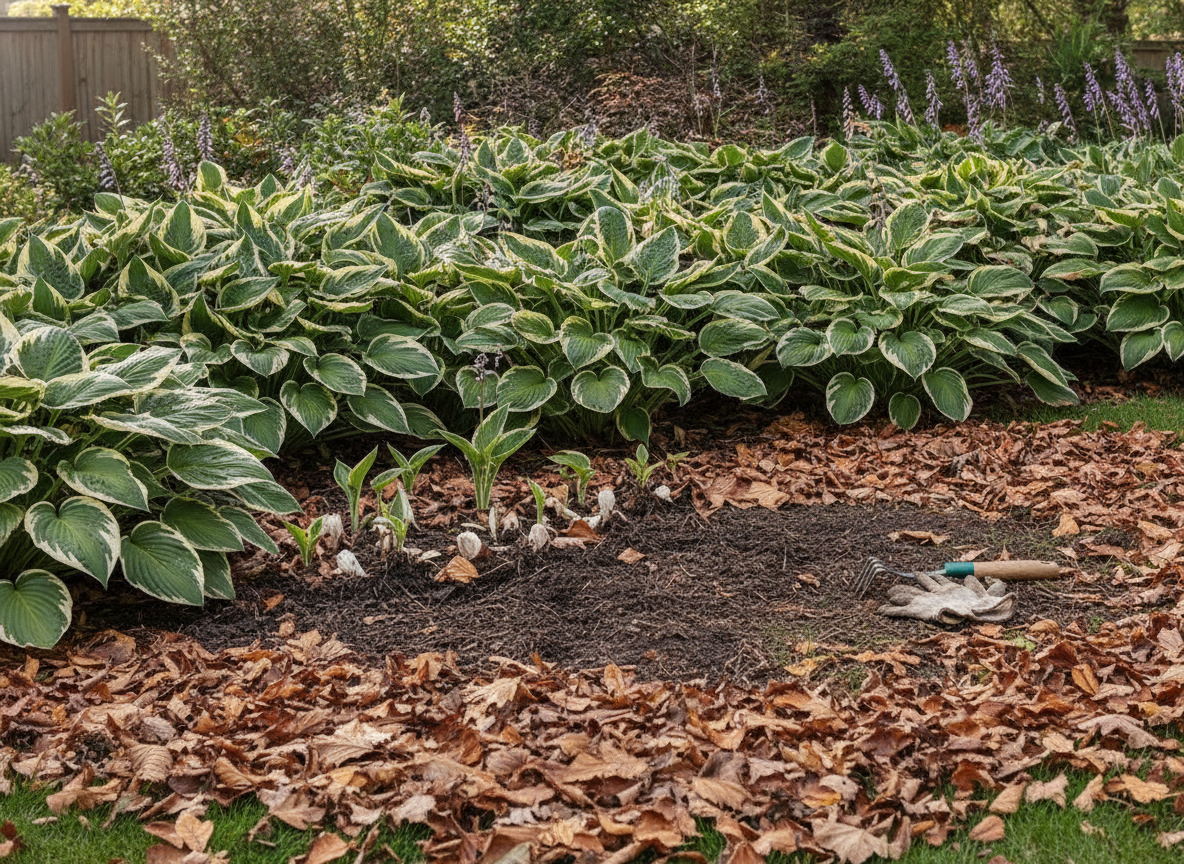 A garden bed with hostas and cleared leaves, showing garden gloves and a trowel — AI-generated illustration
The bit everyone skips: clear the leaves away
Here’s where hostas break the rule you may have learned from other perennials. With ornamental grasses and sedum, the standing skeletons earn their keep all winter — they’re structure, frost-catchers and bird food, and you deliberately leave them until spring. A hosta is the opposite. Once it collapses it isn’t a winter feature; it’s a wet, rotting heap of leaf lying directly on the crown.
And that heap is a slug nursery. Slugs and snails are the number-one pest of hostas — the shredded, hole-punched leaves of high summer are their work — and a pile of decaying foliage over the crown is the perfect place for the adults to shelter through winter and, worse, for them to lay their eggs right on top of next year’s shoots. Leave the mush in place and you’re hatching an army that’s already sitting on the buffet the moment new leaves push up in spring.
So when you cut a hosta down, gather every scrap of the dead foliage and get it off the bed — don’t just let it drop and lie there. Bin it or hot-compost it rather than leaving it on the soil surface nearby. Clearing the collapsed leaves does two jobs at once: it removes the slugs’ winter lodging and it strips out a good share of the eggs before they ever hatch. It’s the cheapest slug control you’ll do all year, and it’s the whole reason the autumn cut is worth doing properly rather than leaving to nature.
What to do with them now, in early autumn
Between now and that October collapse, the to-do list is short:
- Deadhead the spent flowers. If the flower spikes have finished but the leaves are still good, snip the scapes out at the base now — it tidies the plant and stops it wasting energy on seed. Leave the leaves entirely alone.
- Keep after the slugs. Early autumn is still mild and damp — prime slug weather. A late-summer generation feeding now is next spring’s problem in miniature, so keep trapping, hand-picking after dark or using your preferred control while the leaves are still worth protecting.
- Don’t feed, don’t split. Skip the autumn feed — you don’t want soft new growth now — and hold off dividing congested clumps, which is an early-spring job done as the shoots emerge, not an autumn one.
Everything else waits for the leaves to fade in their own time. The same “let it die back before you cut” logic governs plenty of the autumn border — it’s why you deadhead Japanese anemones now but leave the cut-down until spring. Hostas just add one extra step at the end: clear what you cut.
Let Cresco time the cut for your garden
“After the first frost” is a moving target — your hostas take their cue from your local weather and how early the cold arrives, not from a date on the calendar, and in a mild autumn the collapse can come weeks later than the books say. Plant & Bloom by Cresco builds a care calendar around your actual conditions and the specific plants you grow, so you get a nudge to cut back and clear away at the right moment for your garden — not too early, when you’d rob the crown, and not so late the slugs have already moved in. Snap a photo of a struggling hosta and it’ll tell you whether you’re looking at frost, slug damage or something else, before you reach for the shears.