The flat heads are doing a job
Right now, in early September, border sedum (Hylotelephium spectabile, still sold as Sedum spectabile) is at its best — those broad, flat heads shifting from pale green to dusky pink to deep brick red, crawling with bees on every warm afternoon. It looks like a plant that will need tidying the moment the colour goes. It isn’t.
The head that fades to bronze in October is not spent. It’s the single best piece of winter structure in the whole border. Sedum holds its heads dead-flat and dead-level, on stiff stems that don’t collapse — which means every frost outlines them in white, and the first wet snow sits on top of them like icing on a bun. Cut them off in the autumn tidy and you swap three months of that for bare soil.
The wildlife case is just as strong. The seedheads hold on into the new year, and goldfinches and other small birds work them over through the lean weeks. The hollow stems are where ladybirds, lacewings and solitary bees shelter over winter — the same predators that clear your aphids in May. Flatten the plant in September and you evict all of them.
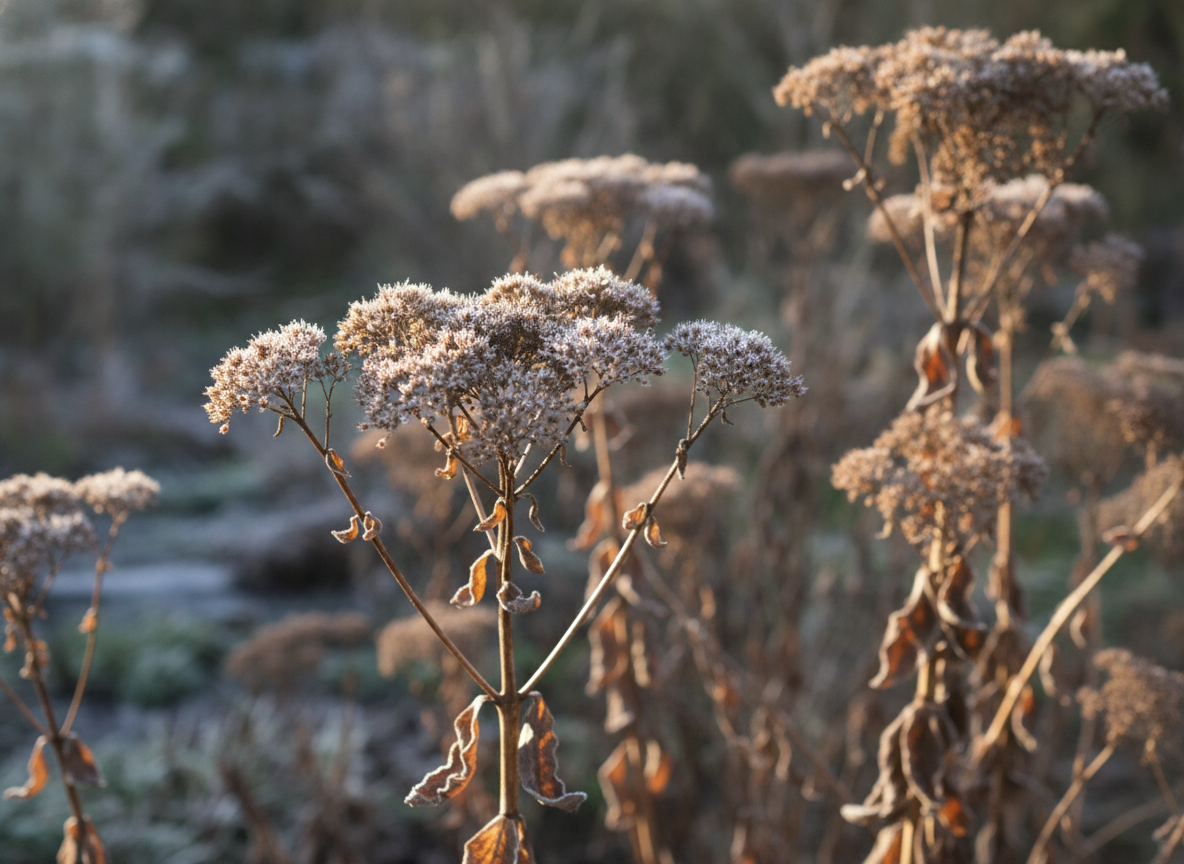 . Frosted sedum plants in a garden — AI-generated illustration
Don’t deadhead it either
The instinct that gets sedum cut too early is deadheading — snipping the flowers as they brown, the way you would a dahlia or a cosmos. Resist it. On sedum, the faded flower is the seedhead. There’s no second flush waiting behind it to encourage; the plant flowers once, sets its heads, and then those heads become the winter feature. Deadhead sedum and you’ve thrown away the whole point of the plant’s second act.
The only thing worth removing in autumn is a stem that has genuinely snapped or rotted at the base — clear that, and leave everything standing.
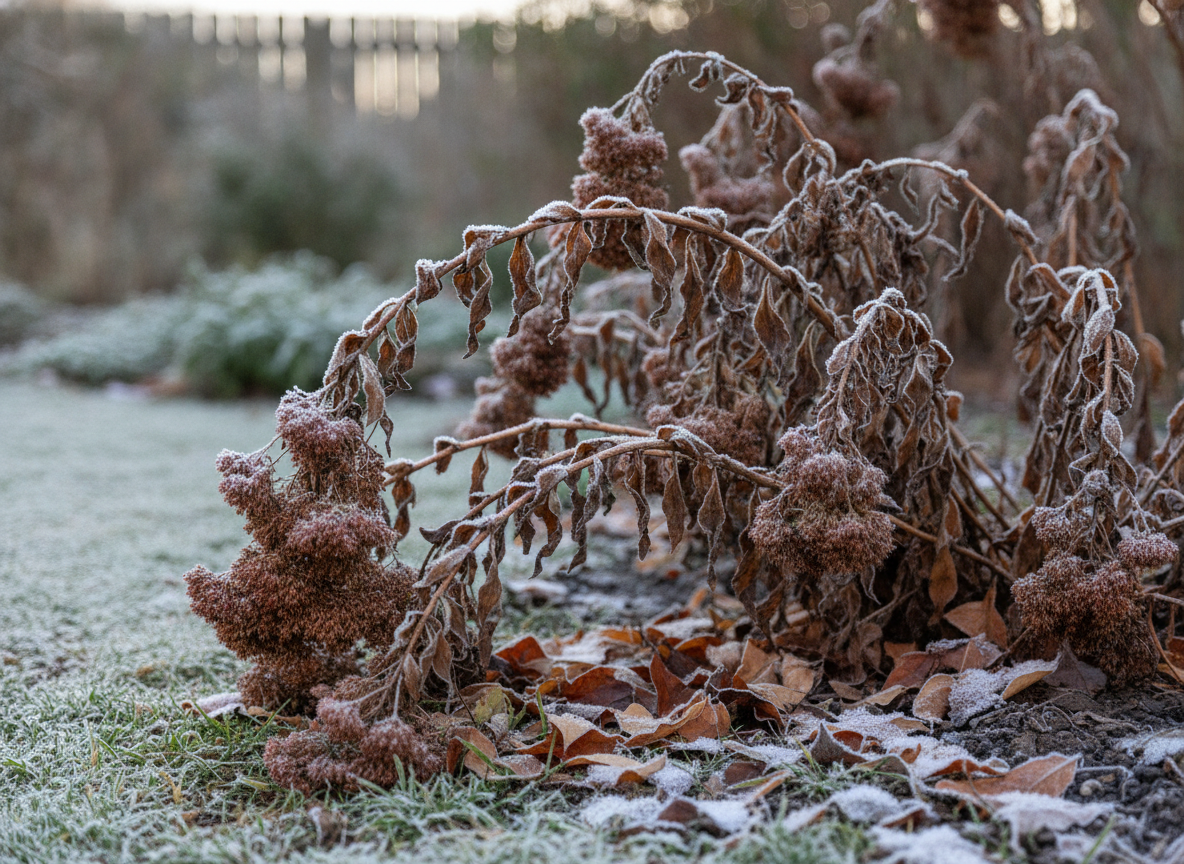 The photograph shows frosted sedum stems bent over in a garden — AI-generated illustration
When the stems actually come down
The cut comes in early spring — late February into March, depending on your winter — and you make it just as the new growth shows. Look at the base of the clump and you’ll see tight little rosettes of grey-green leaves pushing up through last year’s stubble, like miniature cabbages. That’s your signal. Cut every old stem down to just above those rosettes, clear the debris, and the plant has a clean slate for the year.
Doing it now, in spring, rather than in autumn also protects the crown. The old stems and their thatch act as a loose blanket over the base of the plant through the coldest, wettest weeks — and sedum’s fleshy crown is far more likely to be lost to winter wet than to cold. Leave the cover on until the danger has passed.
This is the same logic behind leaving your ornamental grasses standing until spring and the last coneflower cones for the birds: a border that’s cut flat in October is bare for five months, while one that’s left standing carries frost, seedheads and wildlife right through to the new season.
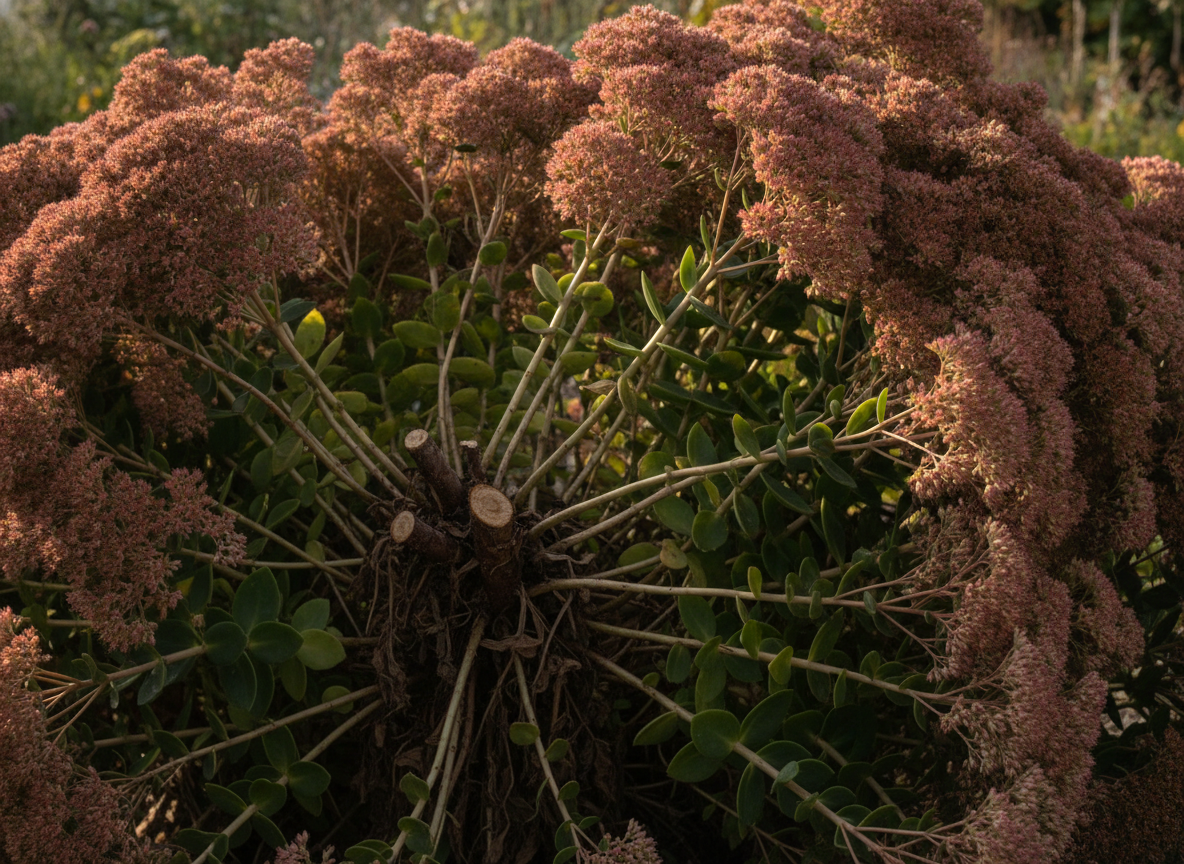 Sedum plant with cut stems and blooming flowers — AI-generated illustration
If it flopped open, the cut you needed was in June
There’s one thing autumn scissors will never fix, and it’s the commonest complaint about sedum: the plant splays open from the middle, the heads flop outward, and a bald gap opens in the centre. People see the mess in September and assume a hard cut will sort it. It won’t — cutting now just removes the winter display and leaves the same weak-stemmed clump to do it again next year.
Sedum flops for two reasons: soil that’s too rich, and a plant that hasn’t been pinched. The heads grow heavy on soft, sappy stems and simply can’t hold themselves up. The fix is earlier, and it’s mechanical — the Chelsea chop. Shear the whole clump back by a third to a half in late May or early June, and the plant responds by throwing more, shorter, sturdier stems with smaller heads that stand up on their own. Flowering comes a week or two later, but upright.
So the sedum you’re looking at now, flopped or not, is already set for this year. Note it for the diary: chop it at the end of May, and leave the autumn heads exactly where they are.
The one-line rule
Enjoy the heads while they colour, don’t deadhead them, and don’t cut the plant down until you see next year’s rosettes at the base in spring. If it flopped, the answer is a Chelsea chop in May — not a pair of secateurs in October.
Not sure whether the plant in your border wants leaving or cutting this month? Cresco reads your own photo, works out exactly what you’re growing, and tells you the job for this week where you garden — not a generic calendar.