The autumn-tidy urge is the mistake
Late August is when ornamental grasses finally earn their keep. The flower plumes are up, catching the low evening light; the whole clump moves in the wind when nothing else in the border does. And it is exactly now — as the rest of the garden starts to look tired — that the tidy-up instinct kicks in. You reach for the shears, decide the grasses look “done,” and cut them to the ground with everything else.
Don’t. For the great majority of ornamental grasses, an autumn cut is the single most common way to spoil them. You throw away four months of the best thing they do, you strip the plant of its own winter overcoat, and — with one group of grasses in particular — you can kill the plant outright. The grass isn’t finished in August. It’s just getting started.
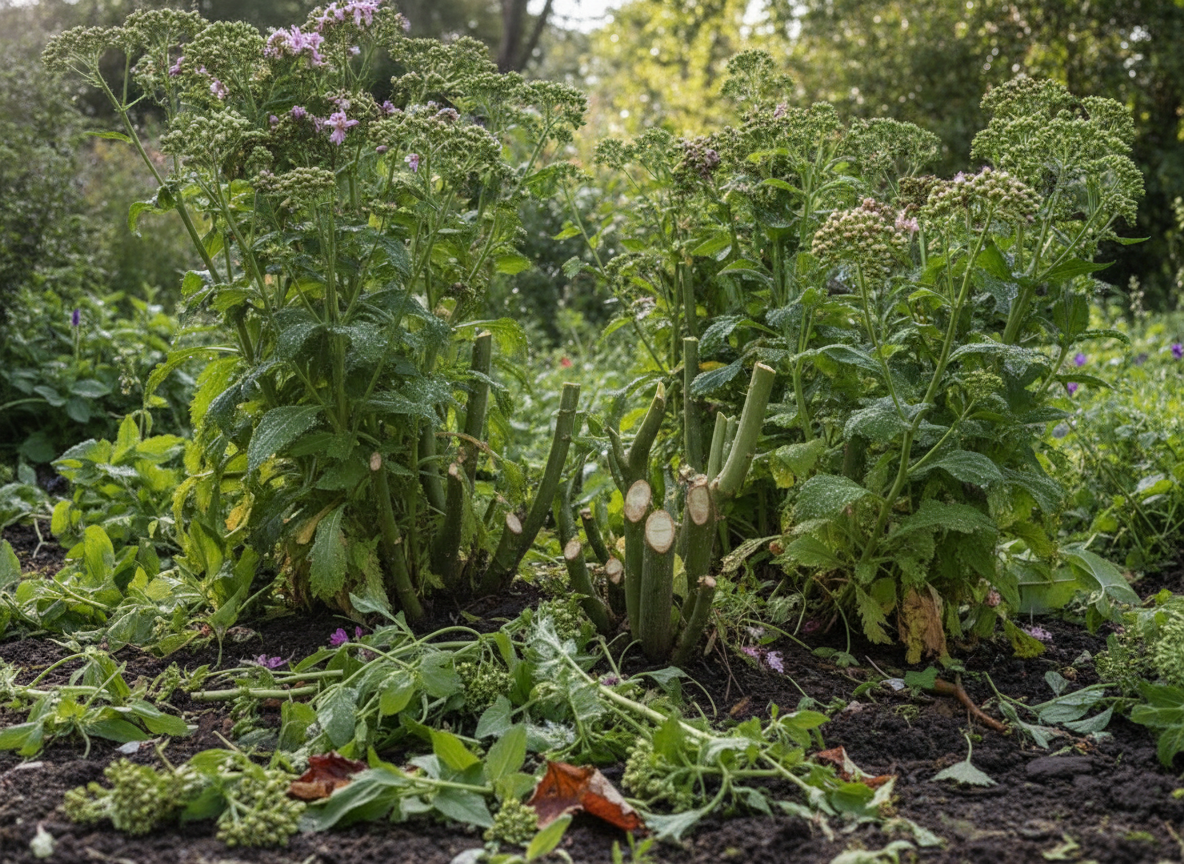 A garden shows healthy plants next to cut plant stems — AI-generated illustration
What cutting them now actually costs you
A grass left standing does three jobs through the cold months, and cutting it in autumn cancels all three.
The winter display. This is the obvious one. Deciduous grasses bleach to gold, straw and warm brown as they die back, and they hold that colour standing upright for months. Rimed with frost on a still January morning, or catching horizontal winter sun, a stand of Miscanthus or Calamagrostis is the best thing in the garden precisely when there’s nothing to compete with it. Cut it in September and you’re left staring at bare soil until April.
The seedheads. The plumes aren’t just for you. Finches and other small birds work the seedheads through autumn and into winter, and the dense clumps give insects and other small creatures somewhere to shelter. It’s the same logic as leaving the last coneflower heads standing — we make the case for that here — and grasses do it on a bigger scale.
The plant’s own protection. This is the one gardeners miss. That mound of old top-growth isn’t dead weight — it’s insulation. It shields the crown from the worst of the winter wet and cold, and it lets rain drain off rather than sitting in the heart of the plant. Cut a grass hard in autumn and you expose the crown to months of cold, sodden soil. On heavy ground, that’s how a healthy clump rots away over winter and simply fails to reappear in spring.
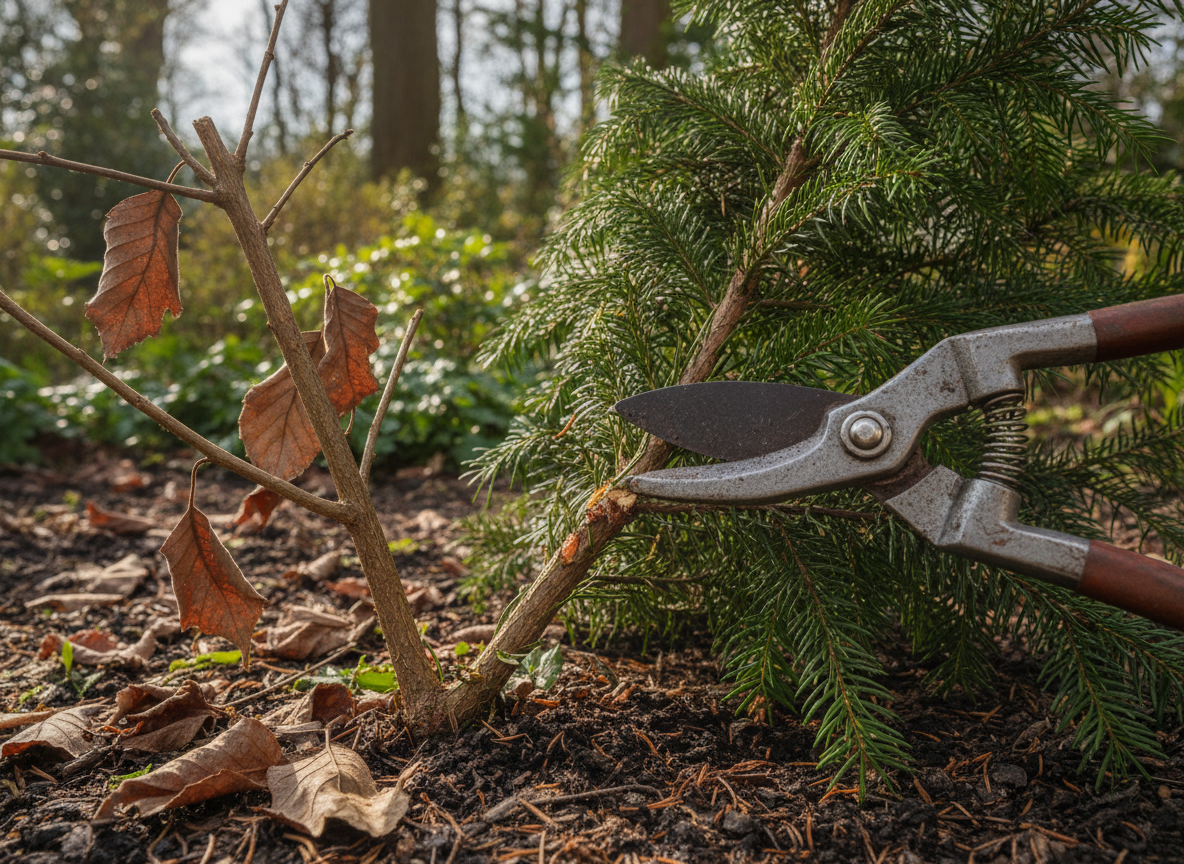 Pruning shears are poised to cut a branch from a small evergreen next to a leafless deciduous plant — AI-generated illustration
Deciduous or evergreen? This is the cut that can kill
Before you cut anything, you need to know which kind of grass you have, because the two groups want opposite treatment — and getting it wrong on the second group is fatal.
Deciduous grasses die back completely and go dormant. The top-growth turns brown and lifeless, but the plant is alive at the base, waiting to push fresh green shoots in spring. This group includes most of the big border grasses — Miscanthus, Calamagrostis (feather reed grass), Panicum (switch grass), Molinia (moor grass) and Pennisetum (fountain grass). These are the ones you leave standing all winter and cut right down at the end of it.
Evergreen and semi-evergreen grasses keep living foliage year-round. Stipa tenuissima (Mexican feather grass), Festuca, most Carex (sedges) and Sesleria fall here. You must never shear these to the ground. They don’t regrow from the base the way deciduous grasses do, and a hard cut into an evergreen grass can leave you with a dead brown lump that never recovers. Instead of cutting, you comb them: in spring, pull a gloved hand (or a spring-tine rake for a big clump) up through the plant to tease out the dead, loose material, leaving the living blades in place. A light trim to tidy the tips is fine — cutting to the crown is not.
If you’re unsure which you’ve got, the safe move is simple: leave it alone until spring and watch. A grass that has gone completely brown and crisp is deciduous and can be cut; one that still has green in the heart of it is evergreen and should only be combed.
The underlying rule — leave it until spring, because cutting now risks the plant itself — is the same one that governs penstemons over winter and faded hydrangea heads. Autumn tidiness is a habit worth un-learning.
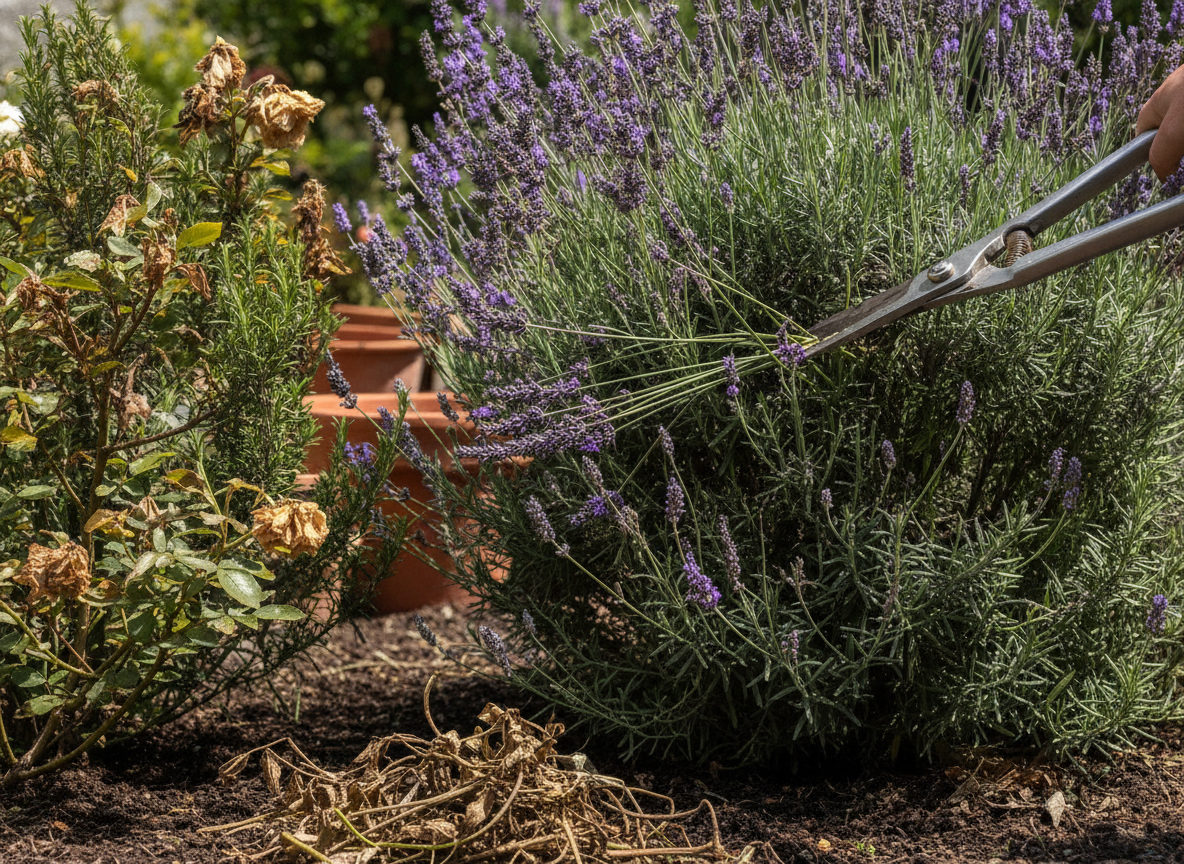 A hand uses pruning shears to cut lavender in a garden bed — AI-generated illustration
When to actually cut, and how
For deciduous grasses, the window is late winter to early spring — roughly late February into March — timed for just before the new green shoots start to push through at the base. Cut too late and you’ll be trimming around fresh growth (and slicing the tips off it); cut in autumn and you’ve lost everything above.
When the time comes:
- Tie the clump into a sheaf first. A length of string wrapped round the whole plant turns a scattered, awkward cut into one clean handful — and stops the dead stems blowing all over the border.
- Cut low, but not into the crown. Take deciduous grasses down to around 10–20 cm (4–8 in). Sharp secateurs are fine for a small clump; shears or a hedge trimmer make short work of a big one. Watch for the new shoots at the base and cut above them.
- Clean, sharp blades. Miscanthus stems in particular are tough and can be surprisingly sharp-edged — gloves and long sleeves are worth it.
The one exception to “leave it standing”: on heavy, wet soil, or after a storm has flattened a clump, a grass can collapse and start to rot in the middle over a mild, sodden winter. If yours has flopped open or is going slimy at the base, there’s no virtue in leaving it — cut it back early and let the crown dry out. The “leave until spring” rule assumes the plant is standing upright and dry.
What to do with them now instead
In late summer, the right amount of pruning is almost none. Enjoy the plumes — they’re at their peak. If a few stems have browned off early or snapped, pull or snip those out to keep the clump looking sharp, but leave the structure intact.
Save the bigger jobs for the right season, too. Congested clumps that flower less in the middle want dividing, but that’s a spring task, done as the new growth begins — not an autumn one. And skip the autumn feed: soft, sappy late growth forced now won’t harden before frost. The best thing you can do for an ornamental grass in August is stand back and let it perform.
Let Cresco time the cut for your garden
“Late winter” is a moving target — your grasses take their cue from your local weather and how mild the winter runs, not from a fixed date. Plant & Bloom by Cresco builds a pruning calendar around your actual conditions and the specific grasses you grow, so you get a reminder when your clump is about to break into growth — the exact moment to cut. Snap a photo and it’ll tell you whether you’re looking at a deciduous grass to cut hard or an evergreen one to comb, before you make a cut you can’t undo.