The autumn tidy-up is exactly when to leave it alone
Right now, in late August, a hardy fuchsia in the ground is at its best — dozens of little ballerina flowers hanging off arching stems, and no sign of stopping until the first proper frost. That’s the problem. In a few weeks the display fades, the rest of the border collapses, and out come the secateurs. The fuchsia — leggy, half-brown, obviously “done” — looks like the next thing to cut down.
Don’t. Cutting a hardy fuchsia back in autumn is one of the most reliable ways to lose it over winter, and almost nobody links the dead stump in April to the tidy-up they did in October. The plant isn’t asking to be pruned now. It’s asking to be left standing.
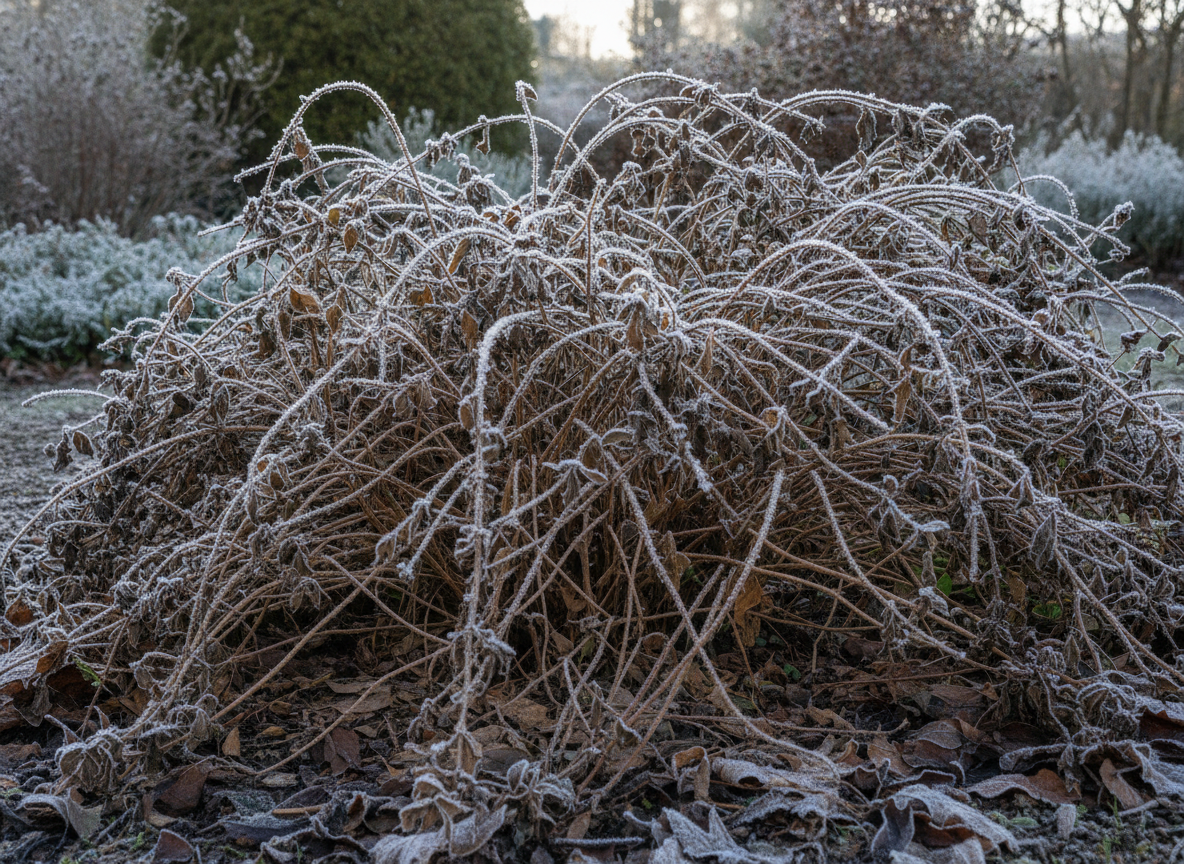 AI-generated illustration
Why last year’s stems are the plant’s winter coat
A hardy fuchsia is a woody-based deciduous shrub, not a soft perennial that dies cleanly to the ground. Two things follow from that, and both say the same thing: keep the stems on.
First, it flowers on new wood — the fresh growth it pushes each spring. Cut it hard in autumn and you send the right signal at the wrong time, nudging out soft new shoots just as the plant should be shutting down. That unhardened growth has no defence against the first frost, and the energy spent making it is wasted.
Second — and this is the one that actually kills plants — the standing stems are the crown’s own frost armour. That tangle of bare wood traps a pocket of air around the base, sheds the worst of the rain off the centre, and takes the winter dieback itself so the living crown lower down stays buffered. Strip it off in autumn and you leave the crown exposed to the thing that finishes off borderline-hardy plants in northern Europe: not cold alone, but cold plus wet sitting in the soil all winter. A rotted crown doesn’t come back.
Hardy or tender? Check before you touch it
This all applies to hardy fuchsias — the ones planted permanently in the ground that come back from the base each year. The reliable garden-hardy names are worth knowing: Fuchsia magellanica and its forms, along with cultivars like ‘Riccartonii’, ‘Mrs Popple’, ‘Hawkshead’, ‘Genii’ and ‘Tom Thumb’. Left in a border, these behave like the sub-shrub described above.
The trailing, big-flowered types you buy for hanging baskets and summer pots are a different animal — tender fuchsias, which won’t survive a frost outdoors at all. Those you lift before the first frost, cut back by about a third, and overwinter somewhere cool and frost-free. If yours has spent the summer in a basket, it’s almost certainly tender and this “leave it standing” advice isn’t for it. If it’s been in the ground for years and keeps coming back, it’s hardy — leave it be.
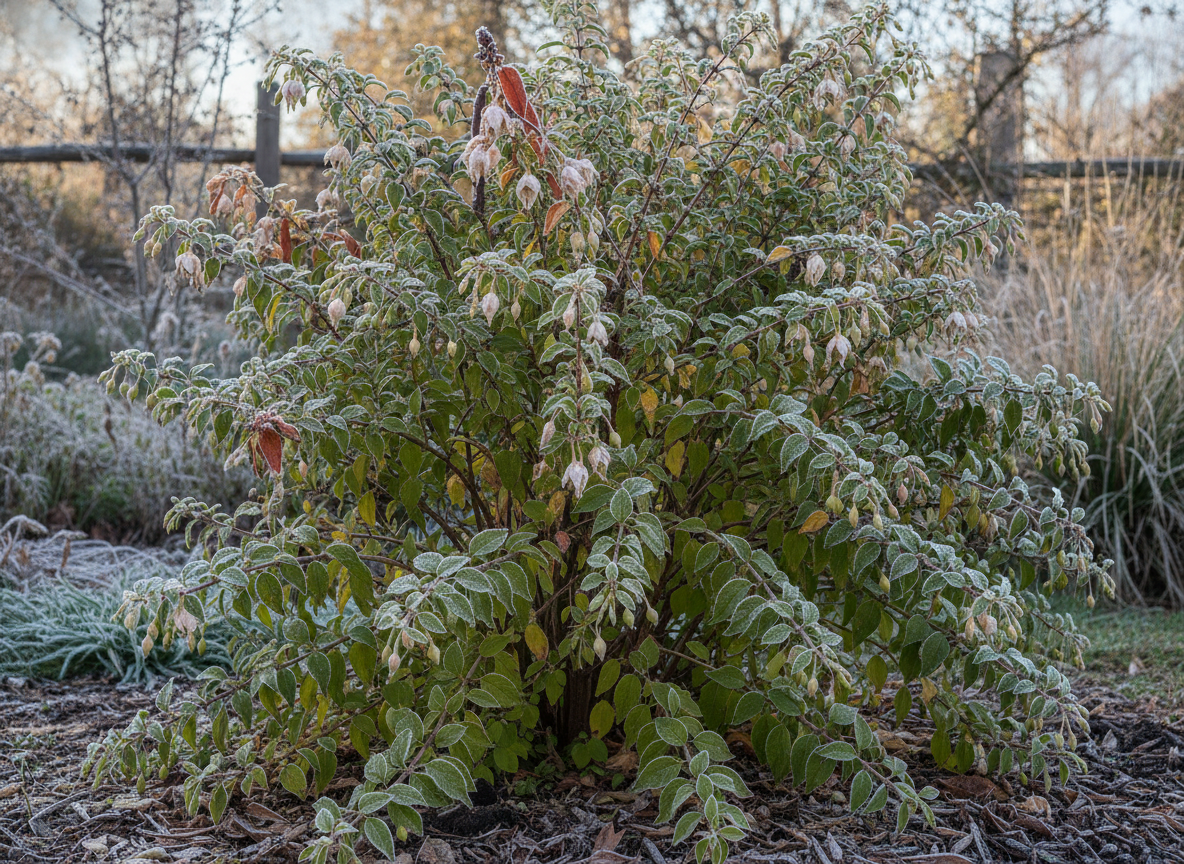 A hardy fuchsia plant covered in frost in a garden — AI-generated illustration
What to do right now, instead of cutting
For the next few weeks, the job is to keep the flowers coming. Hardy fuchsias bloom right through into October, and the more you pick or snip off the little spent flowers and the small seed-pods forming behind them, the longer the plant keeps throwing new ones. That’s deadheading, not pruning — you’re taking off finished flowers, not shortening stems.
One thing to ease off on now: feeding. A late hit of high-nitrogen feed does the same damage as a late cut, forcing soft growth straight into the frost. If you’ve been feeding through summer, stop. The time for a feed and a mulch is spring, right after you make the real cut. The same “leave it standing over winter” logic applies to a whole cast of plants this time of year — ornamental grasses and Russian sage both want the exact same restraint.
When frost blackens it: mound the crown, leave the top
At some point in autumn the first hard frost will blacken the foliage and the plant will look thoroughly dead. It isn’t — and this is the moment the tidy instinct is strongest, so this is the moment to sit on your hands. Leave every blackened stem exactly where it is.
What you can do is protect the crown, which matters most for first-year plants and in colder, wetter gardens. Once the top has died back, pile a generous mound of dry mulch — bark chippings, leaf mould, or garden compost — right over the base of the plant, around 8–15 cm deep. That mound, plus the standing stems above it, is what carries a borderline-hardy fuchsia through a bad winter. In genuinely cold spots, do this every autumn as routine.
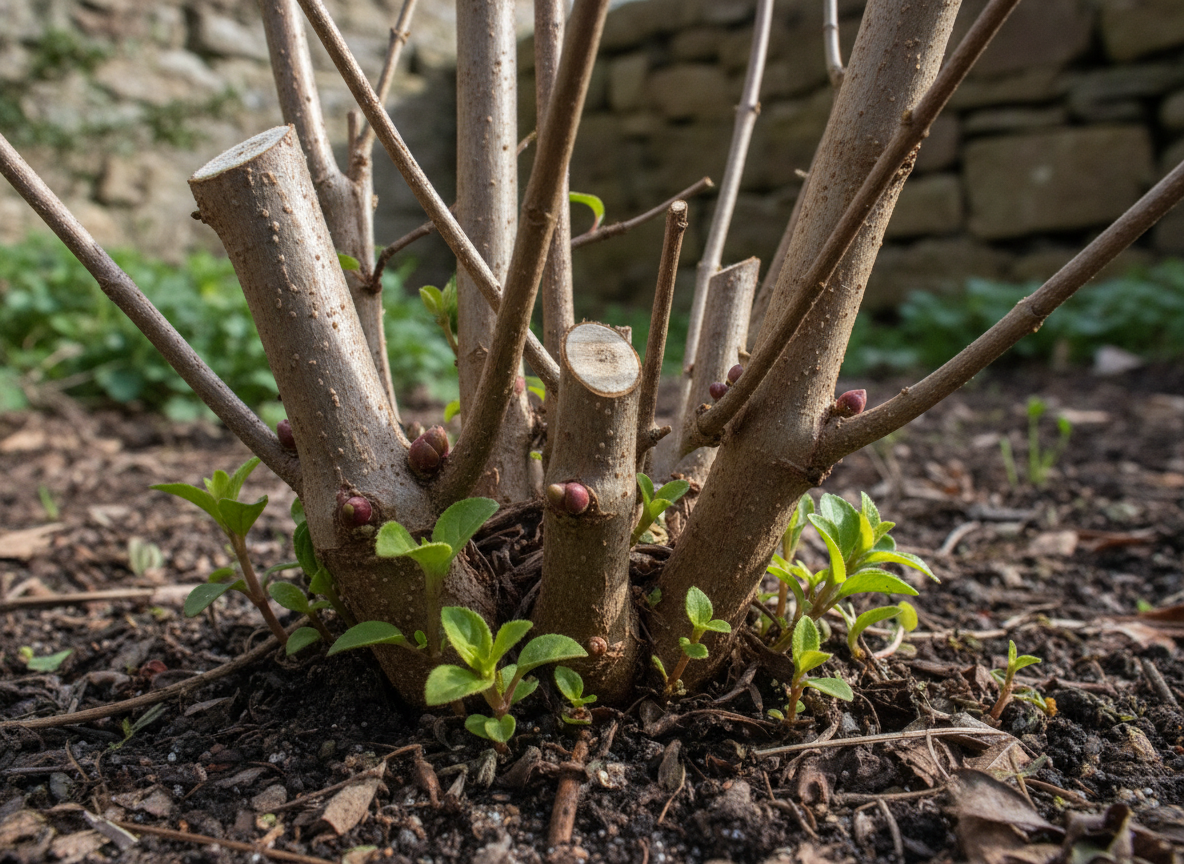 A pruned hardy fuchsia plant with new shoots emerging — AI-generated illustration
The one cut it wants — in spring, to the lowest live buds
The prune a hardy fuchsia genuinely needs is a single hard one, and it comes in spring — not autumn, and not mid-winter either. Wait until you can see the plant coming alive: small green buds breaking low down on the old stems, or fresh shoots pushing from the base. Depending on how far north and how sheltered you are, that’s usually somewhere between late March and April. In the coldest gardens, hold off until the risk of a hard frost has passed.
Then cut hard. Take each old stem down to just above the lowest pair of healthy buds you can find, close to the ground — often only 5–10 cm of framework left standing. Remove anything that’s clearly dead and brown with no buds. Don’t be timid: this is the cut that forces the vigorous new growth the flowers ride on, and a fuchsia hacked low in spring comes back denser and flowers harder than one left to sprawl. Established plants shrug it off and romp away on the new wood within weeks.
If a bad winter has killed the top growth right down to the ground, don’t write the plant off. A well-mulched hardy fuchsia very often resprouts from below soil level even when every visible stem is dead — scratch the base for green, cut back to it, and give it until early summer before you give up.
The short version
A hardy fuchsia flowers on new spring wood and uses last year’s stems to shelter its own crown, so the autumn tidy-up is the one prune it can’t survive. Keep deadheading now for flowers into October, ease off the feed, and when frost blackens the top, leave it — mound bark or leaf mould over the crown instead. Make your single hard cut in spring, down to the lowest live buds, once new growth shows. Cut now and you gamble the plant on a mild, dry winter; leave it and you get a stronger, bushier fuchsia for nothing.
Knowing which plants take an autumn cut and which resent one is half of good pruning — our month-by-month pruning guide maps the whole year. And if you’d rather just be told when your fuchsia — and everything else in the garden — needs cutting, timed to your own local frost dates, that’s exactly what Cresco was built to do.