Why tall roses work themselves loose
A rose that has flowered all summer is often waist-high or taller by October, carrying a heavy head of leaves and spent stems on a root system that sits surprisingly close to the surface. When the first real autumn gales arrive, that top-heavy plant acts like a lever. Every gust swings the stems, and the base pivots in the soil. Back and forth, day after day, the movement opens a funnel-shaped gap around the crown.
That gap is the real damage. It fills with rain, then freezes, and the roots that should be anchoring the plant are left sitting in a cold, waterlogged pocket. Fine feeding roots tear. In a bad blow, a whole bush can lean over or be wrenched half out of the ground. Roses are among the plants most vulnerable to this because their roots are shallow and their summer growth is tall and leafy — a lot of sail area on a short stem.
The fix is not complicated, and it is not the same job as pruning your roses properly. It is a quick, blunt reduction to take the wind out of the plant.
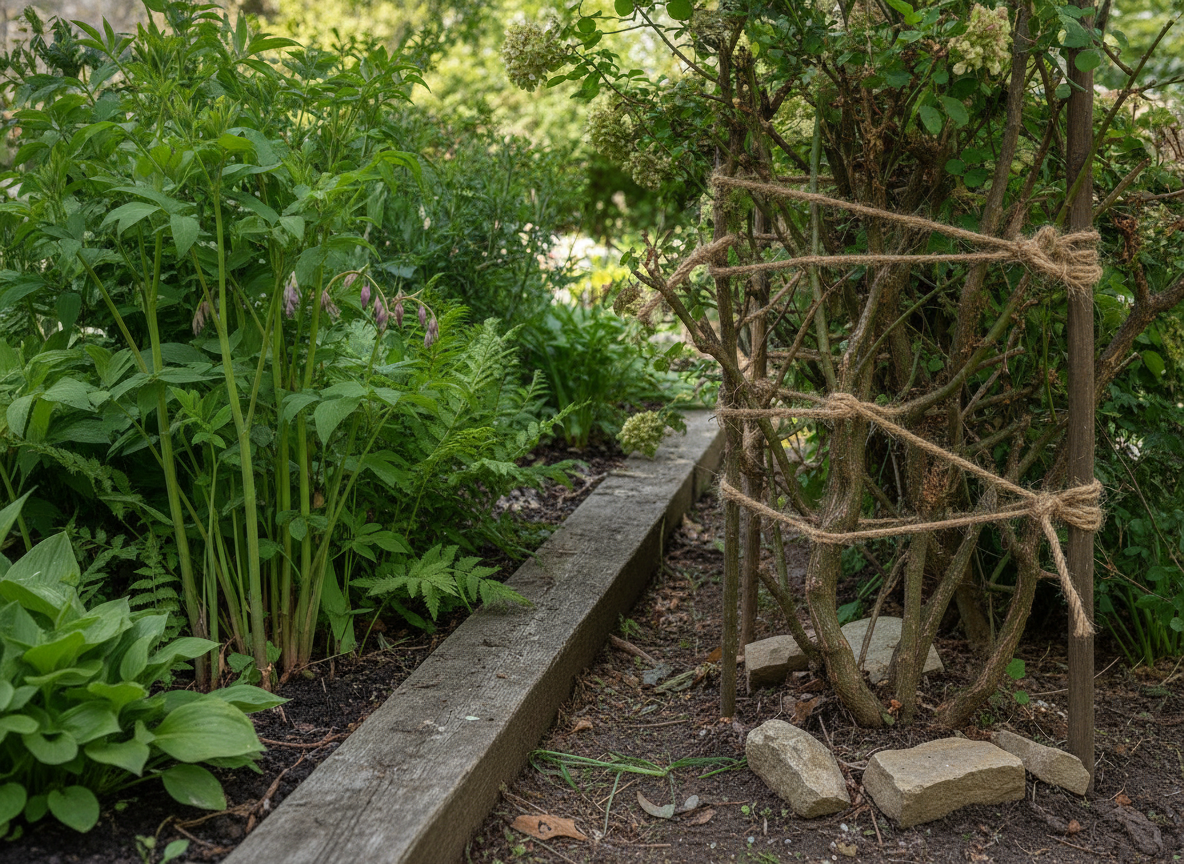 A garden plant is supported by stakes and twine next to other foliage — AI-generated illustration
This is not your spring prune — keep them separate
The single most common mistake is to treat this as the rose prune and go in hard. Don’t. Autumn is the wrong time to make the shaping, structural cuts that decide next year’s plant.
A hard prune now does two harmful things. It stimulates soft new shoots at exactly the moment the plant should be shutting down, and those tender shoots are then blackened by the first hard frost, leaving die-back that can run down into older wood. It also leaves you with fresh, open pruning wounds going into the wettest, coldest months, which is an invitation to stem cankers.
So think of autumn and spring as two different jobs:
- Autumn (now): a rough reduction of the tallest, whippiest growth by about a third — sometimes up to a half on very tall bushes — purely to stop wind-rock. No fussing over bud direction, no thinning.
- Spring: the real prune, when you cut back hard to a healthy framework, remove old and crossing wood, and shape the plant. That’s when the growth buds are waking and any frost damage is easy to see and cut away.
If you’ve been leaving the last flowers to form hips for the birds, you don’t have to strip them all — but the tallest, seed-laden stems are usually the ones catching the most wind, so they’re the first to come down. (More on that call in rose hips won’t form if you keep deadheading.)
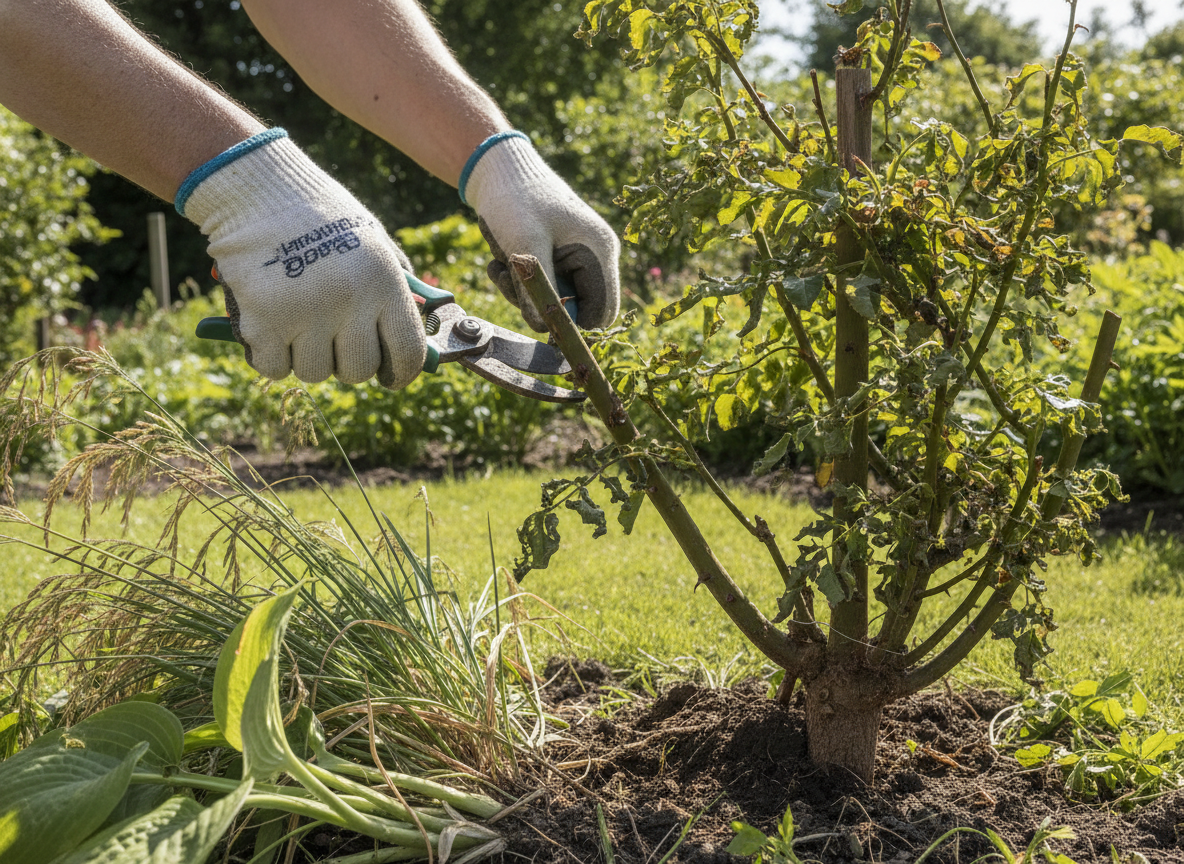 Gloved hands prune a rose bush in a garden with pruning shears — AI-generated illustration
When to make the cut
There’s no single date. The right moment is when two things line up: the main flush of flowering is over, and the autumn winds are starting to pick up — for most gardens in northern Europe that’s from mid-October into November, once growth has slowed and the leaves are beginning to turn.
Don’t rush it in early autumn while the plant is still growing and flowering strongly, and don’t leave it so late that the first big storm gets there first. If a named storm is forecast and your roses are tall, a five-minute reduction the day before is worth far more than a tidy job the week after.
Your local weather is what actually decides this, not the calendar — an exposed, windy garden needs the cut earlier and harder than a sheltered courtyard. This is exactly the kind of “right plant, right week, where you live” timing the Cresco plant care planner is built to flag for you, so a job like this doesn’t slip past until after the damage is done.
How to do it
The whole point is speed and stability, not precision:
- Reduce the tallest stems by a third, up to a half on very leggy bushes. You’re aiming to bring a top-heavy plant down to something the wind can’t lever. Cut roughly, above an outward-facing bud where it’s easy — but don’t agonise over it; you’ll tidy these cuts properly in spring.
- Take off the whippy, over-long shoots that whip about in a breeze, and remove any obviously dead or damaged wood while you’re there.
- Firm the soil back down around the base. If the plant has already started to rock, gently tread the ground around the crown to close any gap and re-anchor the roots. This step matters as much as the cut.
- Clear the fallen leaves from around the base, especially if the plant had black spot this year — the spores overwinter on that debris. (If you battled black spot, see black spot on roses? strip, don’t spray.)
A pair of sharp, clean secateurs is all most bushes need; loppers for anything thicker than a pencil.
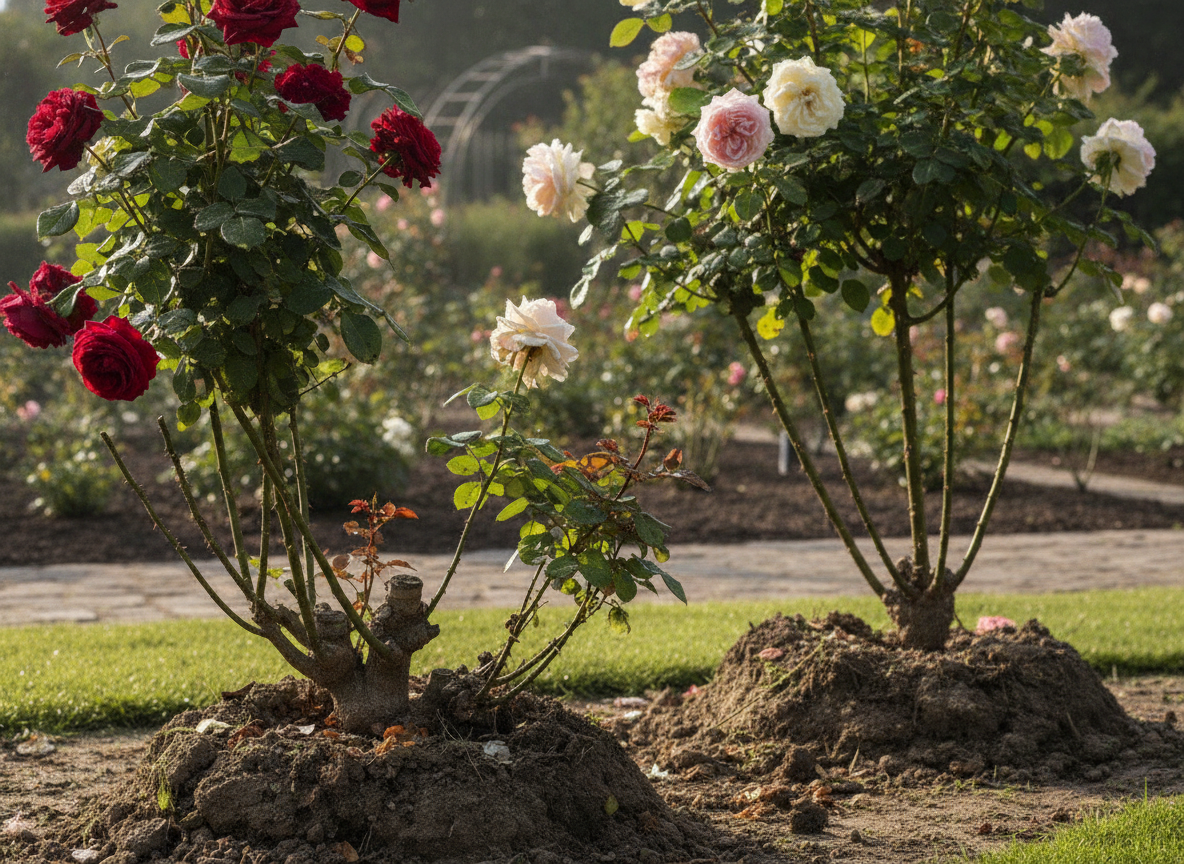 Two rose bushes, one red and one pink, are shown with exposed soil around their bases — AI-generated illustration
Which roses actually need it
Not every rose. Focus on the tall and the exposed:
- Hybrid teas and floribundas that have shot up over summer — the classic candidates.
- Shrub and English roses that are tall and leafy by autumn.
- Standard (tree) roses, which are the most at-risk of all: a heavy head on a single stem is a lever with a fulcrum. Check the stake and ties are sound, and reduce the head so it doesn’t act like a sail.
Low, compact patio and ground-cover roses rarely rock and can usually be left until spring. Climbers and ramblers are a different job entirely — you don’t reduce them for wind-rock, you make sure their long canes are tied in firmly so they can’t be torn off the wall or thrash themselves loose. If yours are still flapping about, tie them in now; tying in climbing roses along horizontal canes covers how and why.
The mistake to avoid
To be clear, because it’s the one that costs flowers: don’t do your proper, hard spring prune now. Cutting roses back to a low framework in autumn stimulates soft growth that frost will kill, opens wounds in the worst weather for disease, and gains you nothing over waiting for spring. The autumn cut is deliberately rough and only as deep as it needs to be to stop the plant swaying.
Do the quick reduction, firm the soil, tie in the climbers, and leave the real pruning for a bright morning next March. Your roses will come through the winter anchored, undamaged, and ready for you to shape them properly when the buds break.