The autumn tidy is the one thing that ruins the show
A dogwood grown for its stems — Cornus alba, C. sericea, C. sanguinea and their named forms like ‘Sibirica’, ‘Midwinter Fire’ or ‘Flaviramea’ — is an odd plant in the border. All summer it’s a plain green mound, easy to walk past. Then the leaves drop, and the thing it was actually planted for finally arrives: a thicket of stems in sealing-wax red, orange, lime-green or near-black, lit up on the exact days the rest of the garden has nothing to offer.
Which is why the timing of the cut matters so much. Come round the border in October with the shears, tidying everything to the ground, and it’s very easy to take the dogwood down with the rest — and hand yourself a bare stump for the whole of the season it exists to carry. The colour you’d be cutting off is only now beginning; the plant is weeks away from its best.
Leave it. On a stem dogwood, the autumn cut isn’t a tidy-up, it’s throwing away the display. The prune this plant genuinely wants comes at the other end of winter.
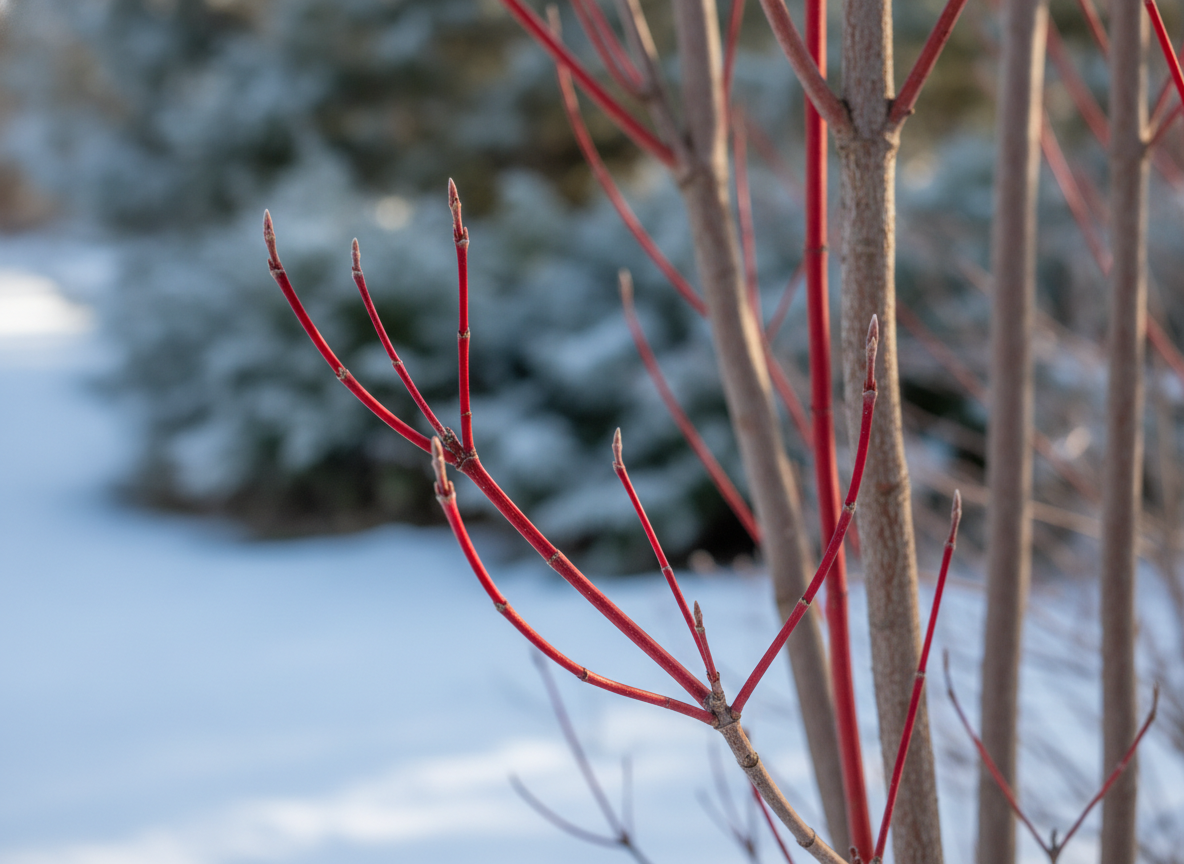 A close-up of red dogwood stems in a frosted winter garden — AI-generated illustration
Why the colour lives on the youngest wood
Here’s the thing that makes dogwoods different from most shrubs you prune. The vivid colour is almost entirely on one-year-old wood — the whip-like stems the plant threw up this past season. Second- and third-year stems dull down to a muddy greenish-brown, thicken, and stop pulling their weight in the winter picture.
So the whole game with a stem dogwood is to keep forcing a fresh crop of young stems. That’s what the hard prune does: cut the plant down hard and it responds by launching a mass of vigorous new shoots, each one carrying next winter’s colour at full intensity. Skip the prune for a few years and you get a big, twiggy shrub with dull bark and the good colour stranded out of sight at the tips.
But — and this is the whole point of the timing — those bright young stems are also this winter’s display. Cut them off in autumn and you remove the very thing you were growing, months before you get to enjoy it. The stems have to stand through the cold first. Only once they’ve done their winter’s work do you take them off, right as the plant is about to build the next set.
 AI-generated illustration
The cut that matters: early spring, down to a low framework
The prune a stem dogwood wants is a single hard one, made in early to mid-spring — roughly March, once the worst frosts have passed but before the new leaves break. Wait that long on purpose: you get the full winter display first, and you’re not pushing tender new growth out into cold nights.
There are two honest ways to do it, and the right one depends on the plant’s age and how much you can face cutting.
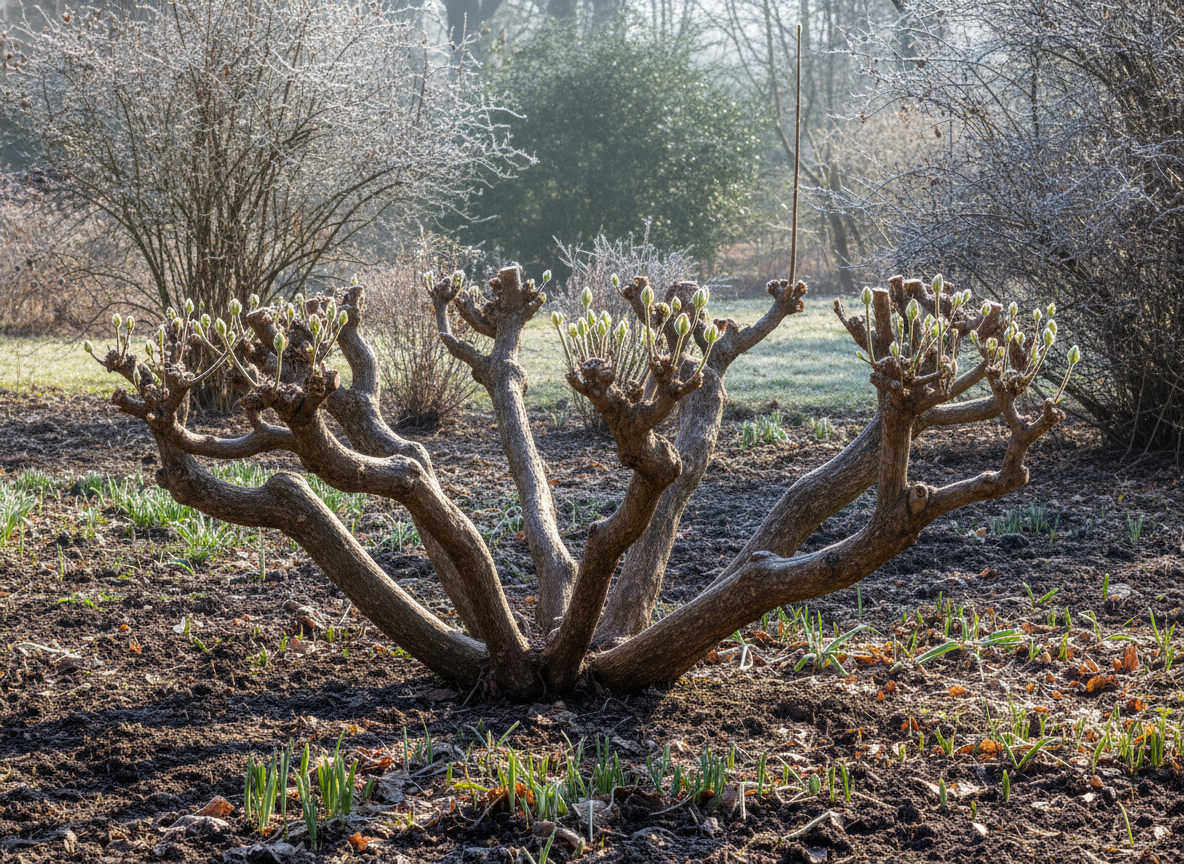
Hard coppice (stooling) — the brightest colour. Cut every stem down hard, to about 5–8 cm above a low permanent framework of old wood — a knuckle of stumps 15–20 cm off the ground that you cut back to each year. It looks brutal and it’s meant to. From that stubby base the plant fires out a dense cage of long, straight, intensely coloured new stems over summer, and every one of them will be first-year wood come winter. This is how the display beds at places like RHS Wisley and the winter gardens get that uniform glow.
One-in-three — colour with more height. If you don’t want to lose all the height each year, or the shrub is doing a screening job, take out only the oldest third of the stems at the base each spring, cutting the thickest, dullest, most-branched ones right down and leaving the younger stems. Over three years the whole plant rotates through, you always keep some structure, and you still keep feeding in fresh young wood. The colour is a notch less intense than a full coppice, but the plant is bigger and less of a shock to look at in April.
Either way, feed and mulch straight after the cut — a hard prune asks for vigorous regrowth, and that regrowth is exactly what carries the colour. It’s the same logic as the hard spring prune buddleia wants: cut hard in spring, feed, and let the current season’s growth do the work.
Don’t hard-prune a young plant
One caveat that saves a lot of disappointment: give a newly planted dogwood two or three years to establish before you start coppicing it hard. A young plant needs to build a root system and a decent framework first; coppice it the spring after planting and you can check it badly. Let it settle, and once it’s throwing up plenty of strong stems on its own, start the annual spring cut.
If you inherit a big, neglected, dull-stemmed old dogwood, you can still bring it back — but do it as a renovation over two or three springs (that one-in-three approach) rather than one savage cut into thick old wood, which some forms resent and are slow to recover from.
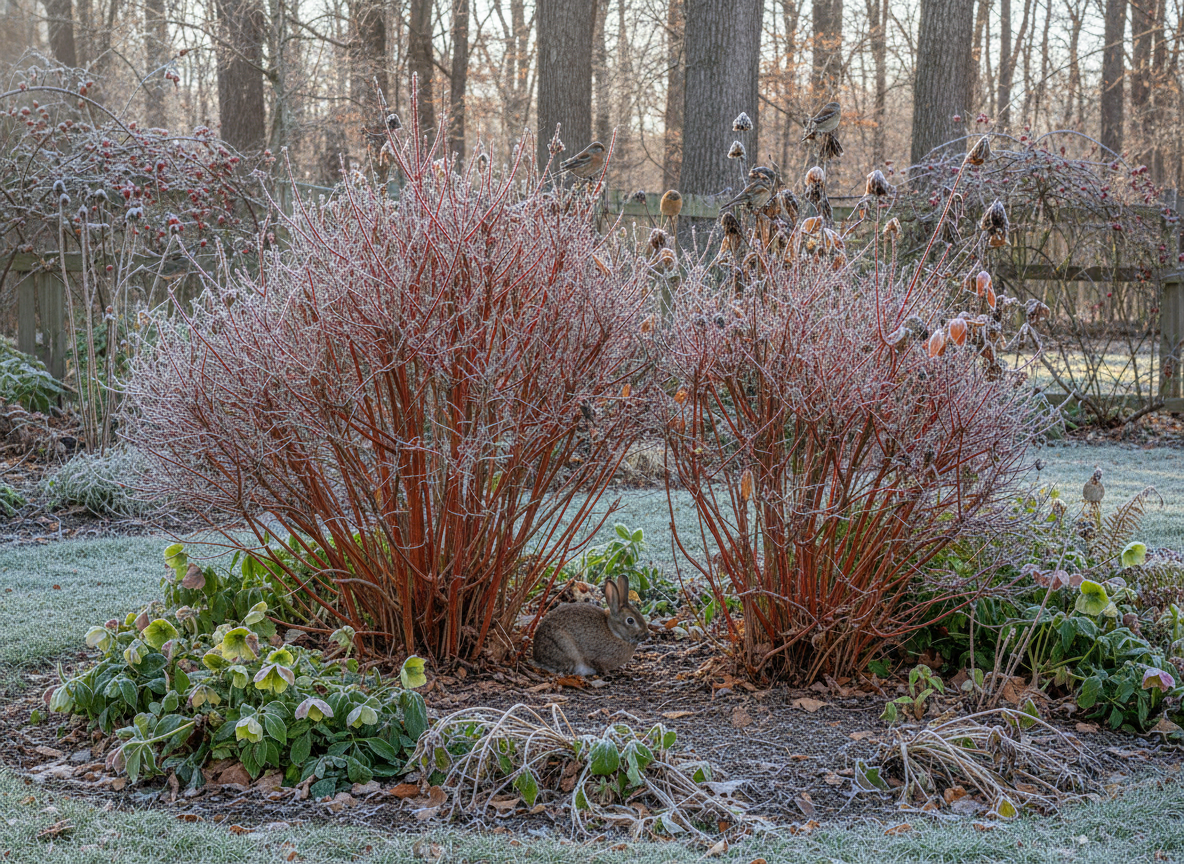 A small rabbit rests between two frosted red twig dogwood shrubs — AI-generated illustration
What to do now, instead of cutting
Nothing, really — and that’s the point. Let the leaves colour and fall; the show only properly starts once they do. If you want to lift it further, the classic trick is to plant stem dogwoods where low winter sun can shine through them, and to back them with something pale — a frosted grass, a white wall — so the colour reads from across the garden. Those ornamental grasses you’re also leaving standing until spring make the ideal neighbour: both earn their keep in exactly the months nothing else does.
Hold off on feeding now, too. Save the mulch and the feed for spring, straight after the cut, when the plant is about to build the growth that actually needs it.
The short version
A stem dogwood’s colour lives on one-year-old wood, and this winter’s stems are the crop you grew all season — so the autumn tidy-up is the one cut that throws the display away. Leave the stems standing through winter, then in early spring either coppice the whole plant hard to a low framework for maximum colour, or take out the oldest third for colour with more height. Feed after the cut, give young plants a couple of years first, and you’ll have fresh, glowing stems every winter.
Knowing which plants take an autumn cut and which you leave until spring is half of good pruning — our month-by-month pruning guide lays out the whole year. And if you’d rather just be told when your dogwood — and everything else — needs cutting, timed to your own local frost dates, that’s the job Cresco was built for.