The two-prune plant everyone prunes once, at the wrong time
By early October a Buddleja davidii looks like it’s asking to be cut down. The butterfly bush has shot up to two or three metres over the summer, the last purple cones have gone brown and seedy, and the whole thing is leaning drunkenly over the path. The natural instinct — the one most gardeners follow — is to take the shears and cut it hard back to a low framework, “getting it out of the way for winter.”
That single autumn cut is the most common way to weaken, and occasionally kill, an otherwise indestructible shrub. Buddleia is a two-prune plant, and the two prunes are not interchangeable. There’s a small tidy-and-steady job to do now, and a proper hard prune to do in spring — and if you collapse them into one autumn haircut, you hand the plant to the frost.
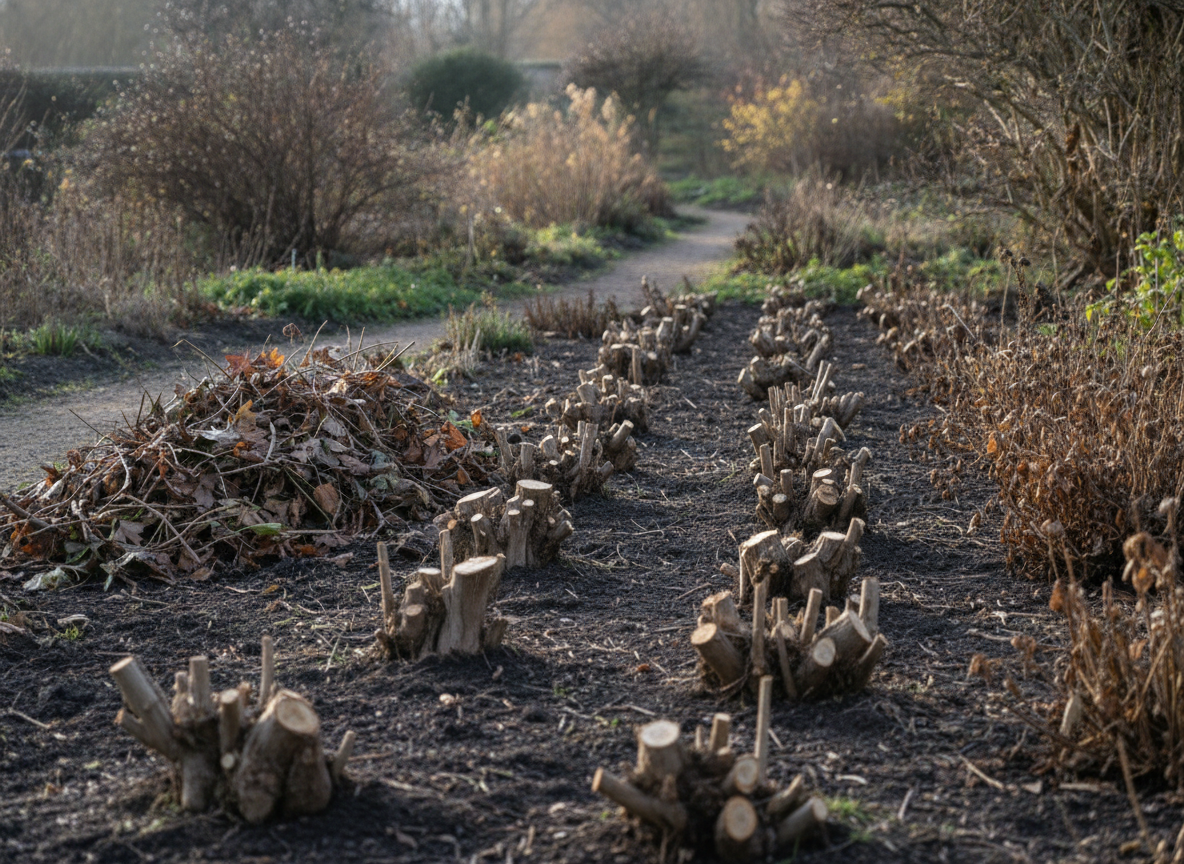 Rows of hard-pruned shrubs and a pile of garden waste on the ground — AI-generated illustration
What a hard autumn cut actually does
Buddleia flowers on wood it grows in the same year, which is why it responds so well to a hard prune — cut it low in spring and it rockets back with long, flower-tipped new shoots. But that same eagerness is the problem in autumn. Cut it hard in October and one of two things happens, neither of them good.
If the autumn stays mild, the plant does what buddleia always does after a cut: it pushes fresh, soft green growth. That growth has no time to ripen and harden before the cold arrives, so the first real frost blackens it and the dieback runs back down into the wood you left. If instead the autumn turns cold quickly, the freshly cut stems sit there hollow and open, and water collects in them, freezes, and splits the wood — letting rot down toward the crown at the base of the plant. Either way you’ve traded a leggy but healthy shrub for one going into winter wounded.
There’s a mechanical reason to leave the top growth on, too. A tall, bushy top acts as a flag that catches winter wind and works the rootball loose in the soil — “wind-rock” — which opens a gap around the stem where water pools and roots freeze. The fix for wind-rock is not to remove all the top growth (that stresses the plant); it’s to take just enough off the top to lower the sail.
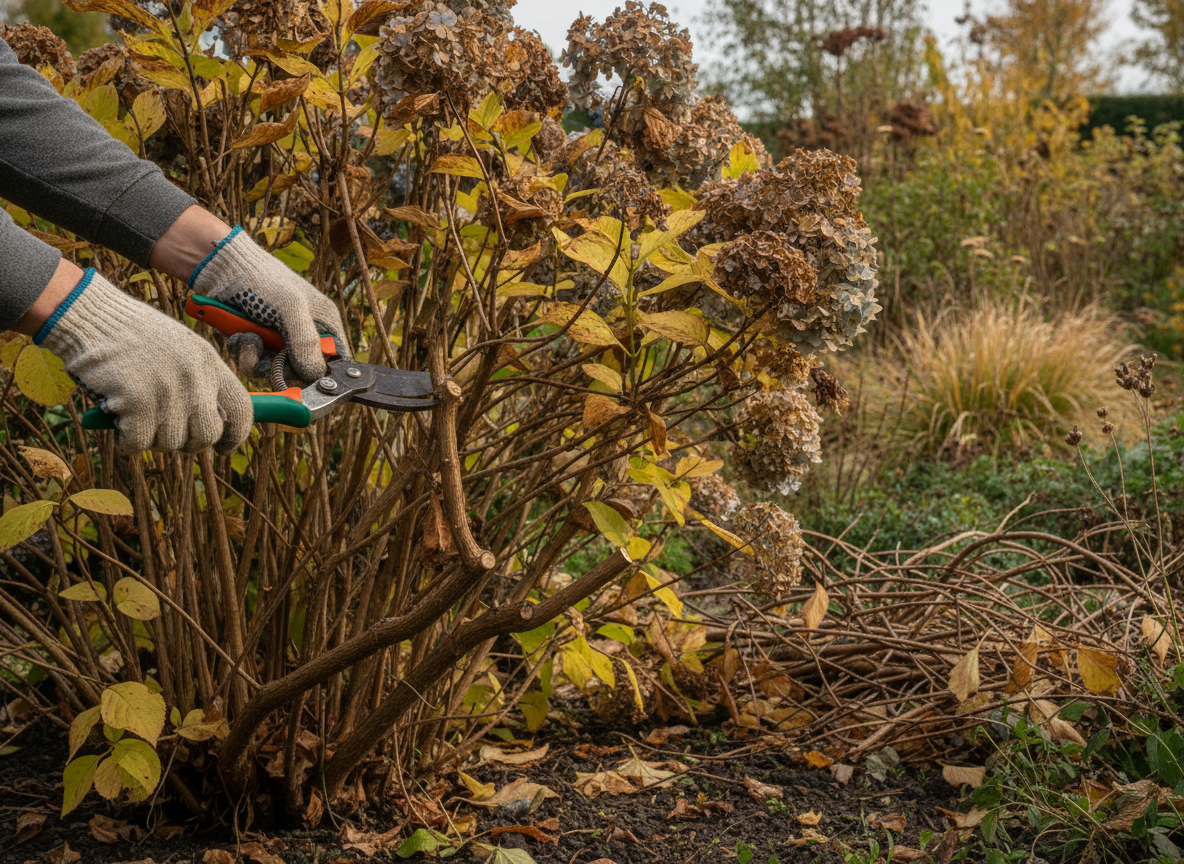 A person’s gloved hands prune an autumn hydrangea bush — AI-generated illustration
The autumn job: shorten, don’t renew
So the October task is small and conservative. Walk round the shrub and shorten the tallest, whippiest stems by no more than a third — enough to stop them whipping about and rocking the roots, and to stop the whole plant flopping over onto whatever’s next to it. You are cutting for stability, not for shape, and definitely not for next year’s flowers.
Leave the bulk of the plant standing. The framework of older wood, and the mass of growth below your cuts, is what shelters the crown through the coldest weeks. Don’t cut into the thick old stems, don’t try to bring the plant down to knee height, and resist the urge to “balance it up” into a neat dome. A shrub that looks slightly untidy in November is exactly what you want; the tidying happens in spring, when it’s safe.
If your buddleia is in a sheltered spot — against a warm wall, tucked out of the wind — you can often skip even this and leave it completely alone until spring. The autumn shorten-back is really insurance for plants on exposed, windy sites. When in doubt, do less.
The real prune waits for spring
The hard prune — the one that actually shapes the plant and drives the flowering — belongs in March or early April, once the worst frosts are behind you and you can see the buds breaking. That’s when you cut Buddleja davidii hard back to a low permanent framework, taking the previous year’s stems down to within a couple of buds of the older wood, roughly knee-high. Do it then and the plant answers with vigorous new shoots that carry the summer’s flowers; do it now and you’re asking it to make that same tender growth straight into winter.
This spring-not-autumn split isn’t unique to buddleia — it’s the same logic behind cutting Russian sage in spring rather than autumn and leaving hardy fuchsias uncut until the frosts pass. In every case the old top growth is doing a winter job, and cutting it early throws that protection away.
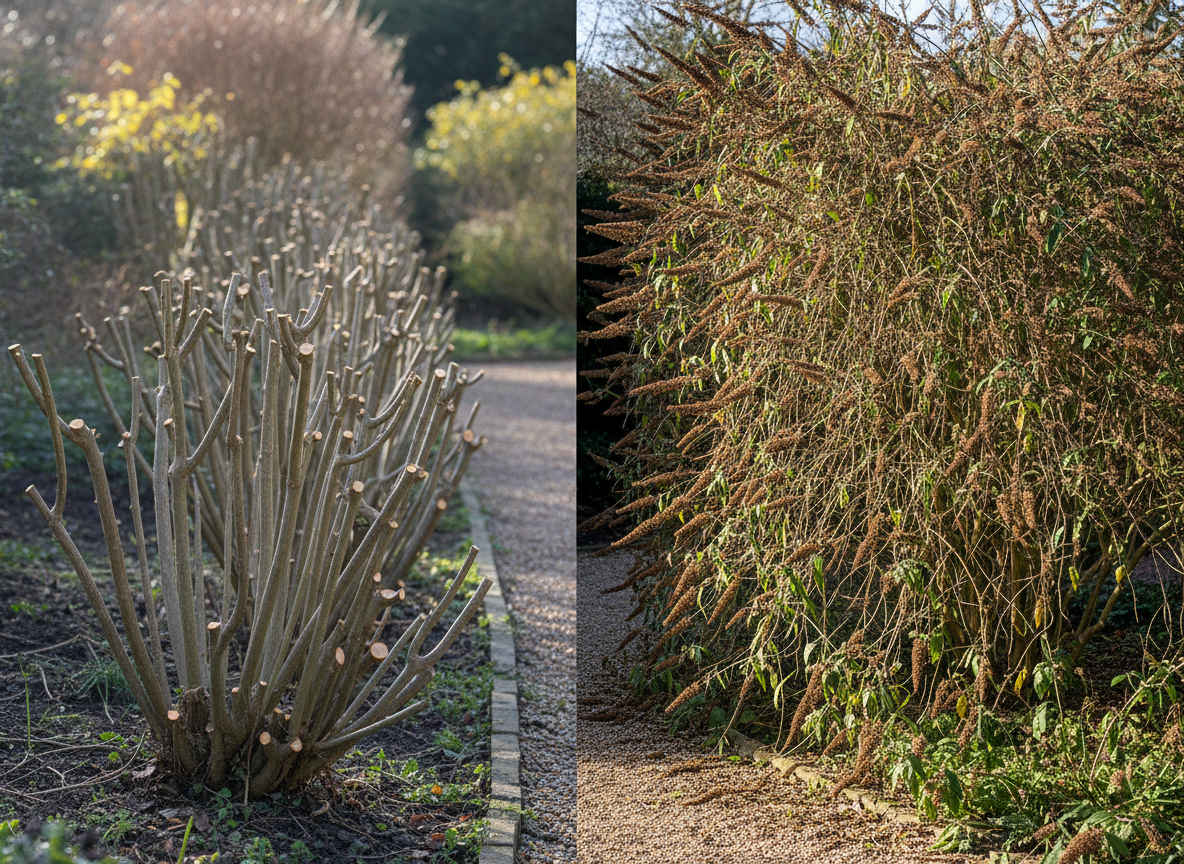 A split image showing pruned buddleia shrubs alongside an unpruned buddleia plant — AI-generated illustration
Not every buddleia gets the hard prune
Before you reach for the shears at all, check which buddleia you have — because the hard-prune rule only applies to the common summer-flowering kinds.
- Buddleja davidii and its cultivars (the classic tall butterfly bush, flowering July to autumn on this year’s wood) — these are the ones that get the light autumn shorten and the hard spring prune.
- Buddleja alternifolia and Buddleja globosa (the orange-ball tree) flower in late spring and early summer on wood made the previous year. Hard-prune these in spring and you cut off the flowers before they open. They’re pruned lightly, straight after flowering in June — not now, and never hard in spring.
If you’re not certain which you’ve got, the safest move in autumn is the smallest one: shorten only the longest stems for stability, and identify the plant properly before you do anything more drastic in spring.
Leave the seedheads standing a while
One more reason to hold off. Those brown, spent flower cones aren’t just untidy — the seedheads hold on into winter, and goldfinches and other small birds work through them in the lean months. Leaving them also means you’re not stimulating the late, doomed flush of growth that hard-cutting provokes. If self-seeding worries you (and buddleia does seed around freely), you can snip off the very worst of the spent cones without cutting into the framework — the same light deadheading that kept it flowering into autumn, just to stop the seed spreading. That’s a fingertip job, not a pruning one.
The hard part, as ever, is the calendar. “Shorten now, hard-prune in spring” only works if you know when your garden’s frosts really arrive and depart — cut too early in spring and a late frost catches the new growth; leave the autumn shorten too late and the wind has already rocked the roots. That’s the timing Cresco is built to get right: tell it what’s growing in your garden and it reads your own local frost dates, then tells you the week to shorten, the week to leave well alone, and the week in spring to finally cut it hard.