Too many flowers to deadhead one at a time
Coreopsis — tickseed, if you like the common name — is one of those plants that gives and gives right through summer, a low golden haze of small daisies on wiry stems. And that generosity is exactly what defeats the usual advice. “Deadhead to keep it flowering” is sound in principle, but stand over a mature clump of threadleaf coreopsis and count the spent blooms: there are hundreds, most no bigger than a coin, tangled through fresh buds on the same fine stems. Snip them off one by one and you’ll be there till dusk, and the plant will have set a fresh batch of seed before you finish.
So most gardeners do the other thing, which is nothing — and by late August that shows. Left alone, coreopsis pours energy into ripening seed rather than opening buds. The flush thins, the stems flop and brown at the base, and a plant that was solid colour in July looks tired and gappy by the bank-holiday weekend. Neither fiddling nor neglect gives you the long season the plant is capable of.
The answer is to stop treating coreopsis like a rose and start treating it like a lawn: don’t pick off the dead flowers, shear the whole thing.
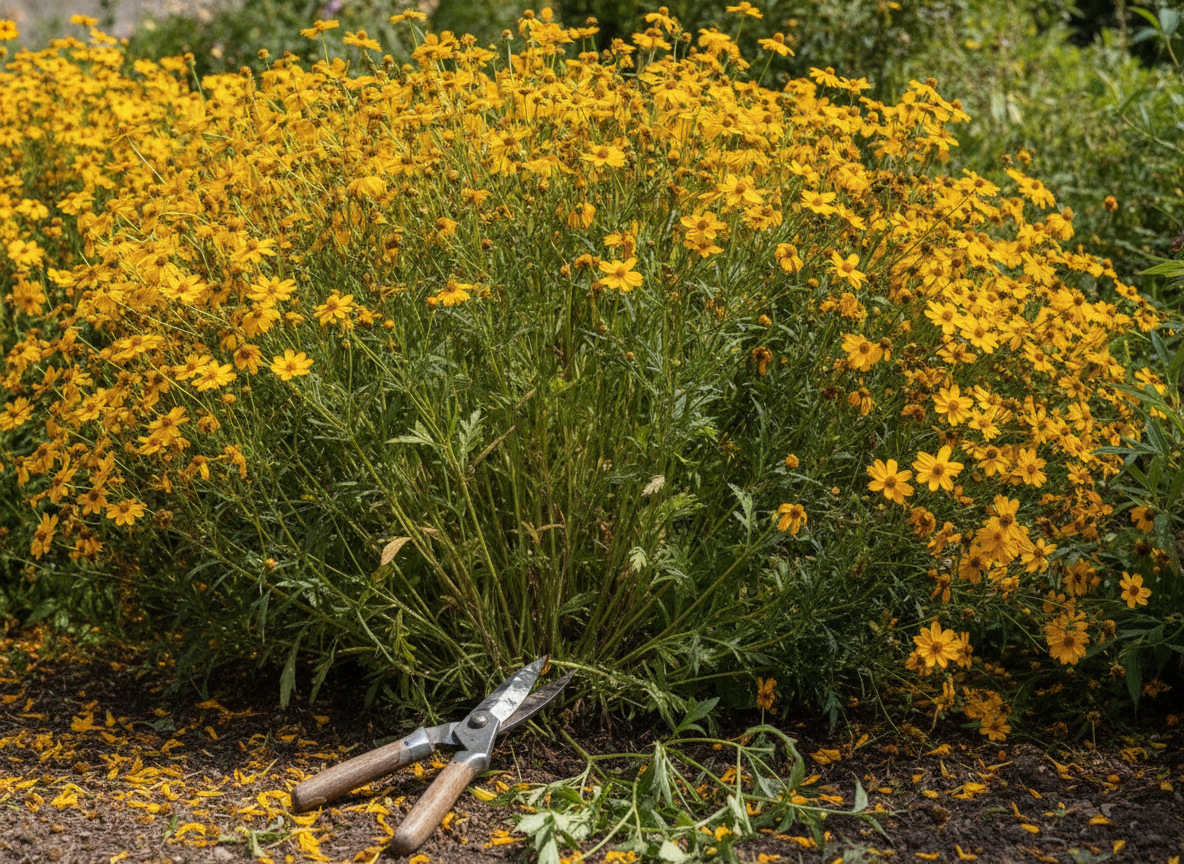 A clump of yellow coreopsis with pruning shears nearby — AI-generated illustration
Shear the whole clump — by a third to a half
Take a pair of shears — hand shears or hedge shears, whatever’s comfortable over a low mound — and cut the entire plant back by about a third, and up to a half if it’s really flopped and browning. You’re not being delicate. In one pass you remove every spent flower, every forming seedhead, and the tired top growth all together, leaving a firm dome of fresh green foliage a few inches high.
It looks drastic for a week or so. Then the plant, relieved of its seed-setting job and cut back to healthy growth, does what it does best and breaks into new shoots from all over the clump — followed, in two or three weeks, by a second flush of flowers that carries it well into autumn. It’s the same whole-plant reset that gives you a second mound of flowers from a sheared catmint, and it works for the same reason: with these free-flowering perennials, the shear is quicker, kinder and more effective than any amount of individual deadheading.
The threadleaf types — Coreopsis verticillata, the ‘Moonbeam’, ‘Zagreb’ and ‘Grandiflora’ sorts with the fine, ferny leaves — respond best of all, bouncing back into a tidy cushion. The large-flowered kinds (C. grandiflora, C. lanceolata) take the shear happily too, though on those you can deadhead the bigger individual blooms if you prefer and only shear once the whole plant tires.
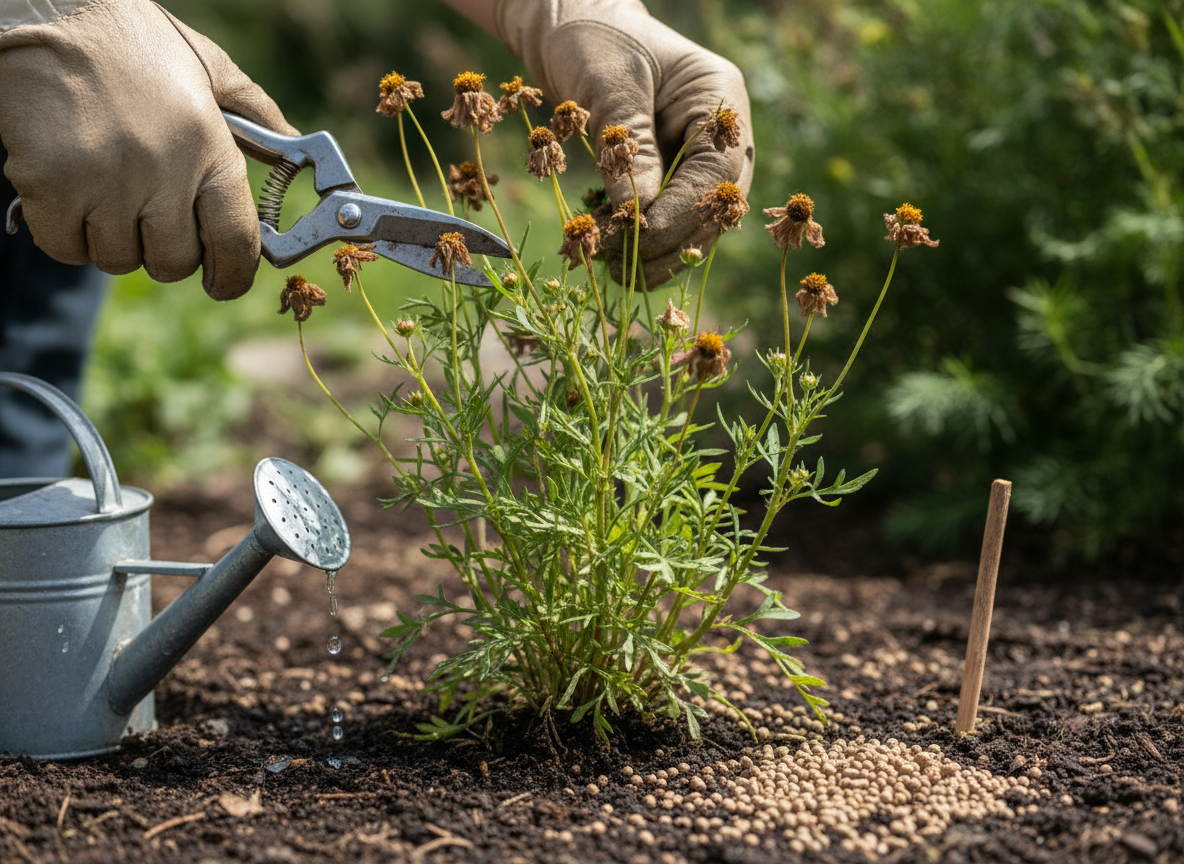 A gardener deadheads coreopsis flowers with pruning shears — AI-generated illustration
Feed, water, and wait about two weeks
A hard shear asks the plant to build new growth fast, so give it the fuel. Water the clump well after cutting, especially in a dry August, and scatter a little general fertiliser or a scoop of compost around the base to push the regrowth. Within a fortnight you’ll see fresh foliage filling the gap; a week or two after that the new buds start to open.
This is the same principle behind cutting a whole plant down for a fresh start rather than nibbling at the edges — it’s exactly how you get a second flush from faded geums. The plant has the energy and the season left; you’re just redirecting it out of seed and back into flower. On coreopsis, done in the second half of summer, that redirection can nearly double the length of the display.
One caution: don’t shear and then let it bake dry. A plant cut hard and left thirsty sulks instead of rebounding. If you can’t water, wait for a spell of rain in the forecast and shear just ahead of it.
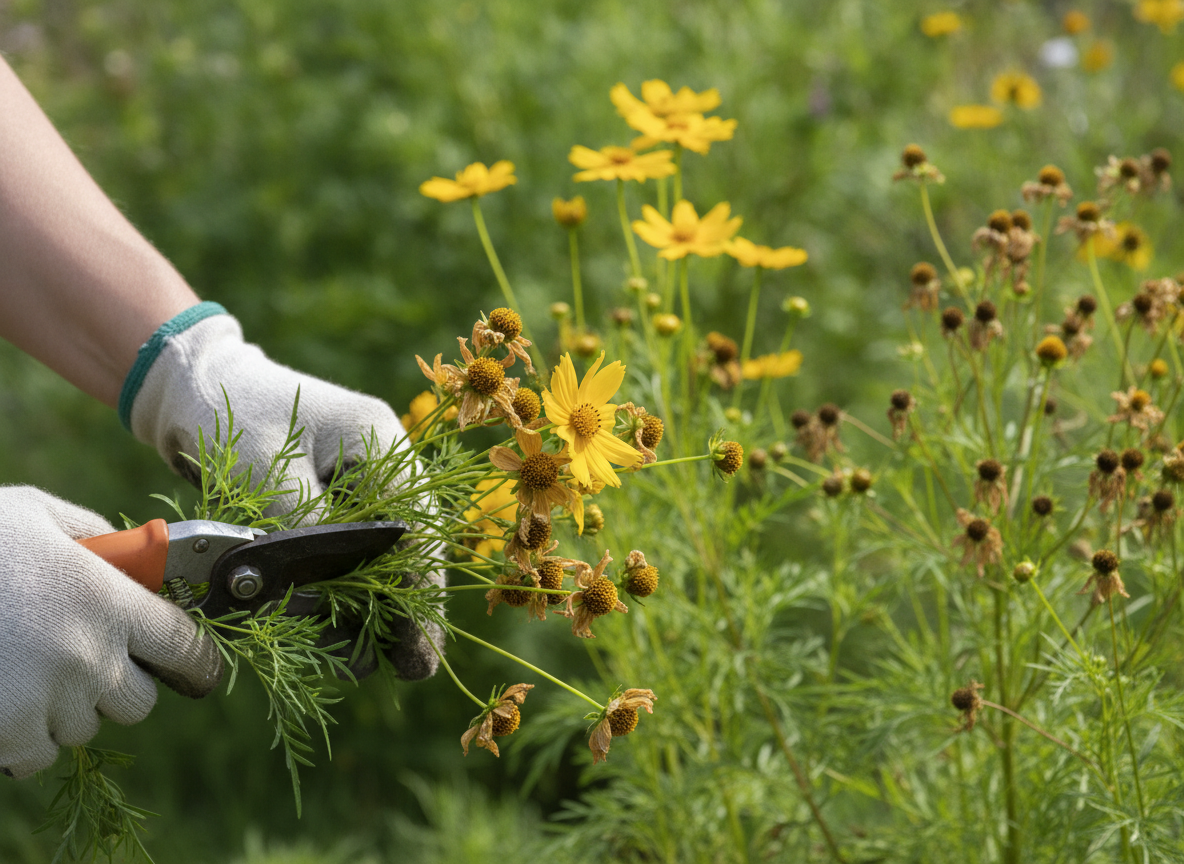 Coreopsis being deadheaded in a garden — AI-generated illustration
Annual or perennial — it changes the aftercare
Not all tickseed is the same plant, and it’s worth knowing which you’ve got before autumn.
The bright, often bicoloured Coreopsis tinctoria (calliopsis) is an annual — it lives one season, flowers itself to exhaustion and dies. Shearing prolongs its show, but its real trick is self-seeding: leave a few late flowers to ripen and drop, and you’ll get a scattering of free plants next spring where they land.
The perennial kinds are the ones that reward the shear year on year — but many of them, threadleaf types especially, are naturally short-lived and can fade out after three or four seasons if you let them exhaust themselves setting seed. Shearing helps here too, because a plant that isn’t pouring everything into seed keeps more in reserve. Back it up by lifting and dividing the clump every two or three springs, splitting off the vigorous young outer growth and discarding the woody middle, and a perennial coreopsis will keep its place in the border far longer.
When to stop, and what to leave for winter
There’s a cut-off for the hard shear. New growth needs time to firm up before the cold, so the last big cut-back wants to go in by late August or very early September in most gardens — shear a threadleaf coreopsis to the ground in October and you leave it soft and vulnerable going into winter, with no time to recover.
Once flowering genuinely finishes, resist the urge to tidy the plant down to bare earth for the winter. The spent stems and seedheads earn their keep: the seed feeds goldfinches and other small birds, and the standing growth shelters the crown and overwintering insects — the same case for leaving structure up rather than cutting it all back in autumn. Cut the old growth down to the base in late winter or early spring instead, just as the new basal shoots start to show.
The one judgement call the plant can’t make for you is timing that first hard shear to your garden — the flush fades weeks apart between a hot, free-draining border and a cool northern one. The Cresco pruning calendar tracks each plant against your local season, so you get the nudge to shear when your coreopsis actually tires, not when the calendar says it should.