The one week in the rose year when the rule flips
All summer the advice runs one way: catch every spent bloom, cut it back to a strong outward-facing leaf, and a repeat-flowering rose answers with another flush. Keep at it and a modern shrub or floribunda will hold colour from June clean into October. It is the single most reliable thing you can do to a rose, and there is a right way to make the cut that keeps the bush shapely while you do it.
Then, some time in September, the rule quietly reverses — and almost nobody is told. The moment to stop deadheading arrives well before the roses themselves look finished, and if you carry the summer habit straight on into autumn you cost the plant two things at once: the hips it would have set, and the seasonal signal those hips send that tells the whole bush to stop growing and get hard for winter. This is the changeover, and getting its date right matters more than any single cut you made all summer.
 AI-generated illustration
What a hip actually is, and why the plant wants it
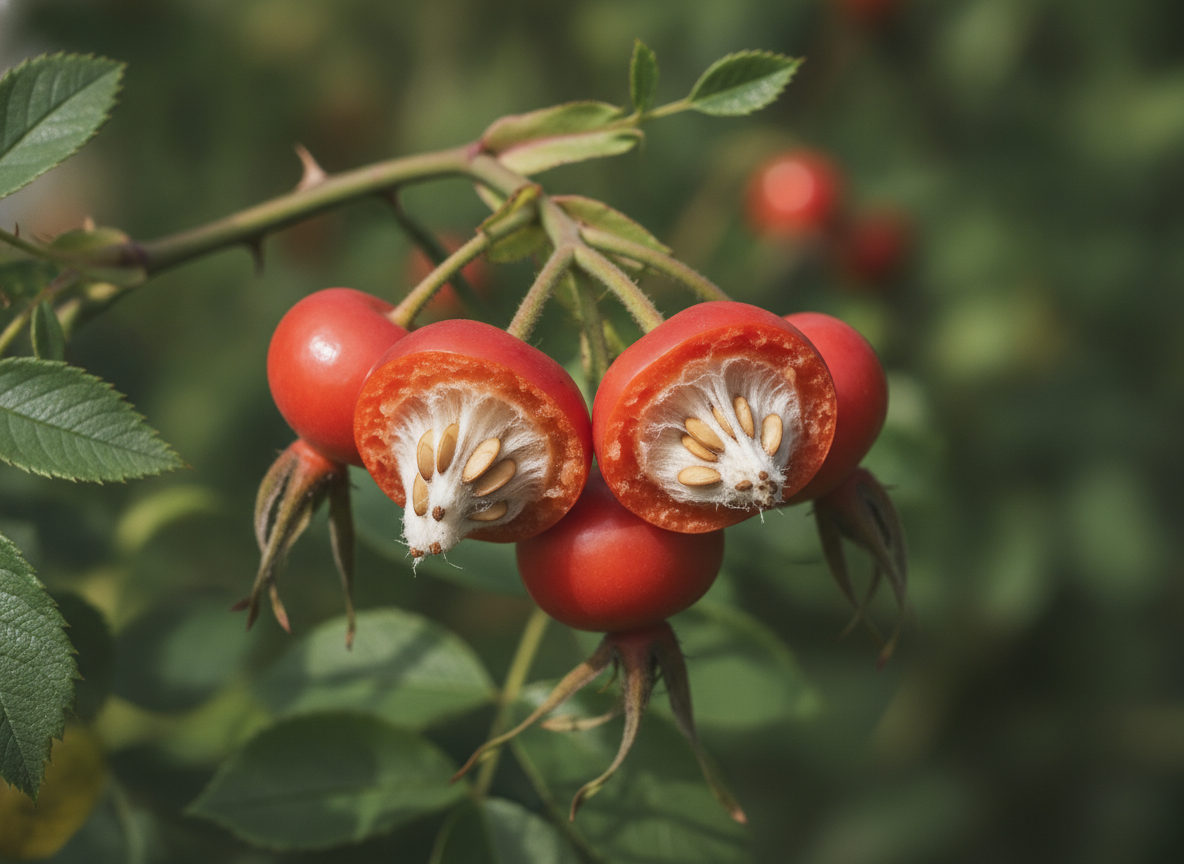
A rose hip is the fruit — the swollen seed-case a rose forms once a flower has been pollinated and left alone. Deadhead a bloom and you remove the ovary before it can swell, which is exactly the point in July: no seed-set, so the plant reads the job as unfinished and throws another flower to try again. That is the whole engine behind repeat-flowering.
But seed-set is also the plant’s own calendar. As the days shorten and a rose is finally allowed to ripen fruit, the ripening hip releases hormones that flip the bush out of growth mode. Wood that was soft and green starts to firm up and turn woody; the plant draws its energy down toward the roots and stops pushing the tender new shoots that a September deadhead would otherwise provoke. Those late soft shoots are the problem — they have no time to harden, and the first proper frost blackens them, letting rot in at the tips. So leaving the hips on is not laziness. It is how you tell a rose the year is over, at the time of year it most needs telling.
 AI-generated illustration
When to stop: six weeks before your first frost
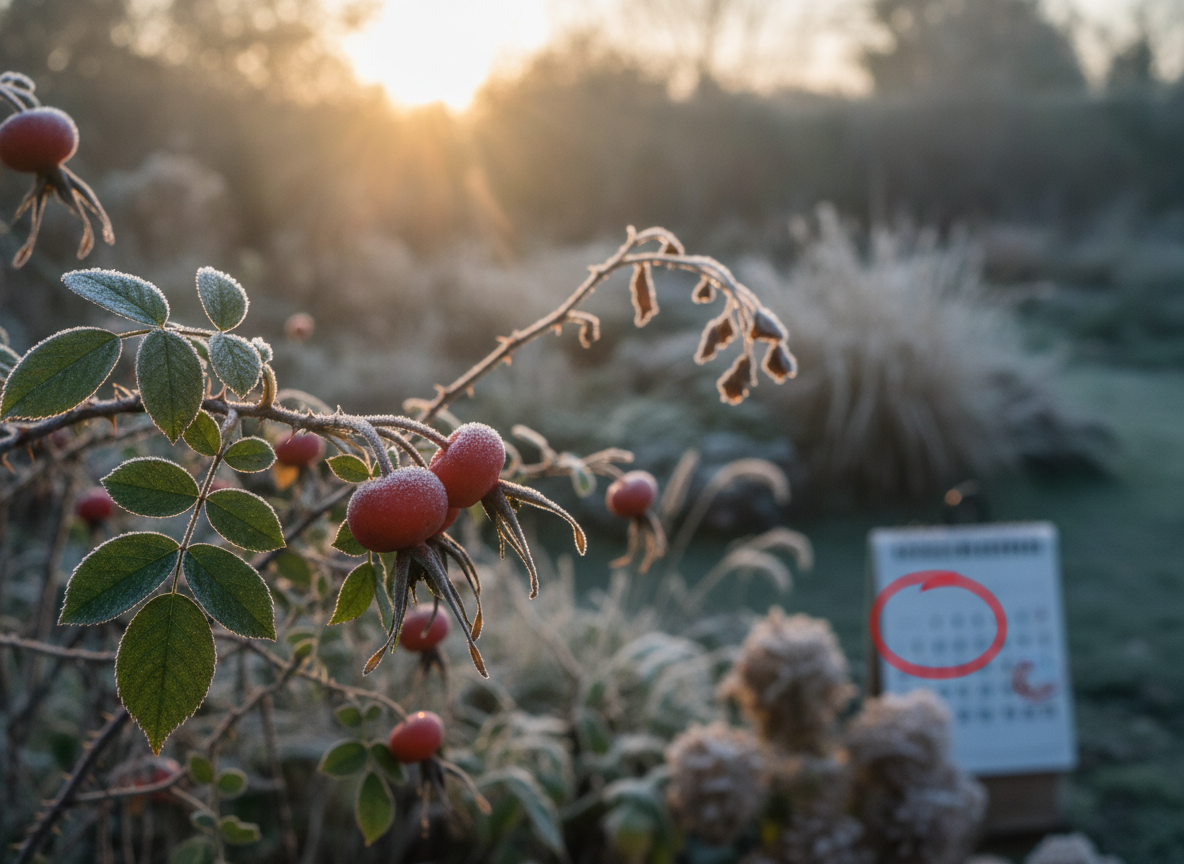
The number to hold onto is six weeks before your average first autumn frost — that is when the last deadhead of the year should fall. A flower you cut back later than that can only open into cold, shortening days; it will not amount to much, and the fresh growth you provoke by cutting is growth the plant cannot ripen in time.
The trouble is that “six weeks before first frost” is a moving date, not a line on a wall calendar. In a mild coastal or city garden the first frost may not land until well into November, so you can keep deadheading into early October. In a cold inland or northern garden the frost can come by mid-October, which pulls your last cut back to the start of September. Guess wrong in the tidy-minded direction — keep snipping because the bush still looks willing — and you march the plant into winter carrying soft, unhardened shoots. This is precisely the local-weather problem Cresco was built to solve: it reads your own frost dates rather than a generic national one, and tells you the week to put the secateurs down.
Not every rose is worth the wait
Before you leave a bush to fruit, know what it will actually give you. Hip quality varies enormously by type, and this is where a lot of disappointment comes from.
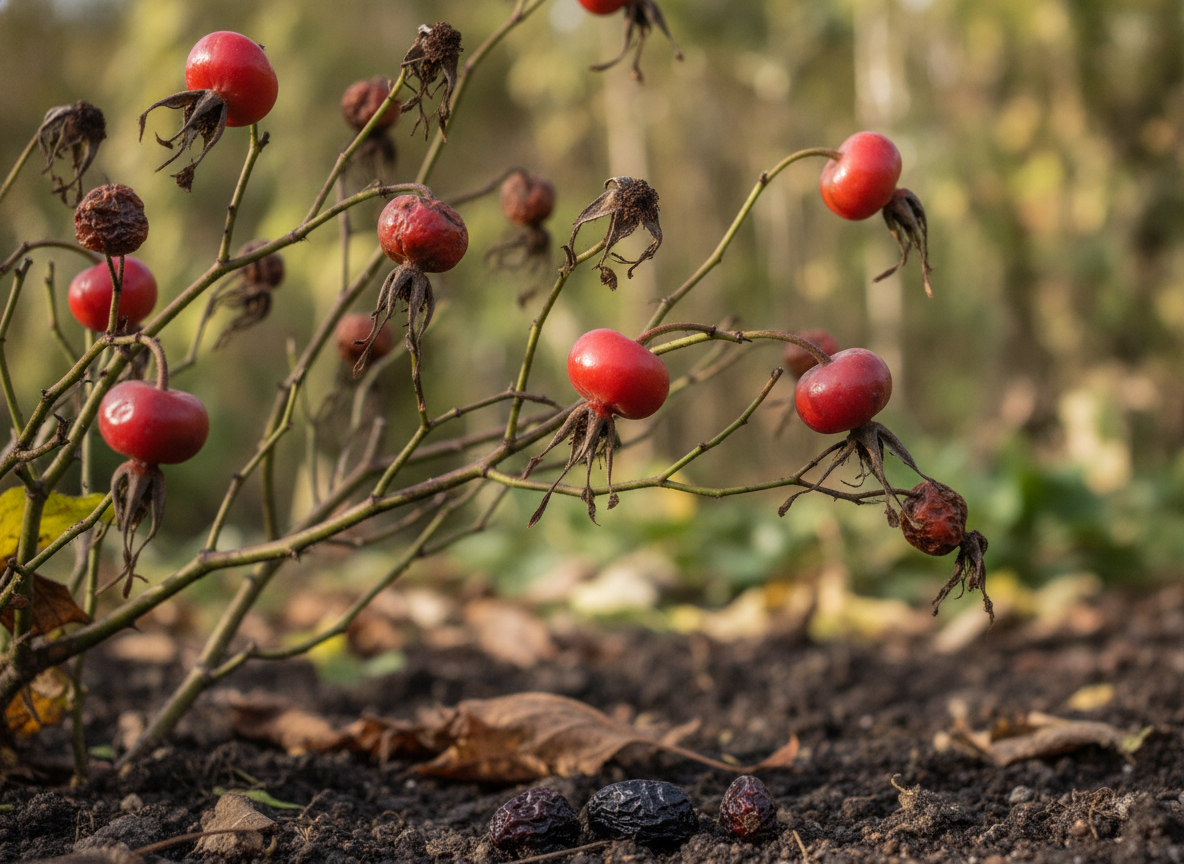
- Species and shrub roses — Rosa rugosa, Rosa moyesii, the dog rose and their kin — set the show-stopping hips: fat scarlet tomatoes or long flagon-shaped fruits that colour up hard and hang for months. If you have one of these, stopping in time is genuinely worth it for the autumn display alone.
- Many hybrid teas and floribundas set poor, sparse, or muddy-looking hips, or none at all — some modern varieties are effectively sterile. On these the reason to stop deadheading is purely the winter-hardiness signal, not the fruit. You still stop; you just do not do it for looks.
Either way the action is the same — you simply lower your expectations about the fruit on the highly-bred repeat-flowerers, and let the species roses steal the autumn show.
 A rose bush with ripening rose hips in a garden — AI-generated illustration
What “stopping” looks like in practice
Stopping does not mean walking away from the bush entirely. Keep doing the housekeeping that has nothing to do with seed-set: snap off any petals that have balled up and gone brown in the wet so they do not rot against a stem, and keep stripping and binning black-spotted leaves right up until leaf-fall, because that disease overwinters on fallen foliage and comes back at you in spring.
What you stop is the productive cut — the reach down to a five-leaflet leaf that says “make me another flower”. Leave the faded blooms on their stems to swell into hips instead. And resist the urge to give the whole bush a shape-up “to neaten it for winter”: autumn is not the time to prune a rose. Cut a bush back hard now and you both remove the hardened wood that shelters the crown and stimulate a last doomed flush of soft growth. The real structural pruning of most roses waits for late winter or early spring, when the plant is dormant and you can see what you are doing.
The whole-border version of the same switch
If this feels familiar, it should — it is the autumn version of a rule that runs through the whole border. It is the same reversal behind leaving the last coneflower cones standing for the goldfinches: deadhead all summer for flower, then stop on purpose and let the seedheads do their winter work. On roses the payoff is double — the hips feed blackbirds, fieldfares and waxwings through the hungry months, and the act of setting them is what hardens the plant against the cold.
The only hard part is the timing, because every plant keeps its own version of this clock and they do not all flip on the same week. Miss the changeover and you either lose a flush of flower or send the plant into frost half-awake. That is exactly the call Cresco makes for you: tell it what is in your garden and it tells you which plant needs the secateurs this week — and, just as importantly, which one to leave strictly alone — timed to your own local frost, not a calendar printed for the whole country.