Only one kind of fig will ever ripen in your garden
Stand under a fig in mid-August in a cool-climate garden and you’ll usually see three different sizes of fruit at once: a few that are softening and ready to pick, a crowd of hard green ones the size of a marble or walnut, and — if you look right at the very tips of this year’s shoots — tiny nubs no bigger than a pea, tucked into the leaf joints.
Most people fuss over the marble-sized crowd. They’re the biggest, so surely they’re the ones to protect and wait for. That instinct is exactly backwards, and it’s why so many fig trees crop badly year after year.
Here’s the thing almost nobody is told: outdoors in Northern Europe, a fig ripens one crop a season, and it isn’t the one you’d expect. The figs that ripen next summer are the pea-size embryos forming right now at the shoot tips. They stay tiny all winter, sit tight through the cold, and swell into fruit the following July and August. The big green ones you’re nursing this month formed too late — they will not get enough heat to ripen before the season ends, and they’ll still be hard and sour when the leaves drop.
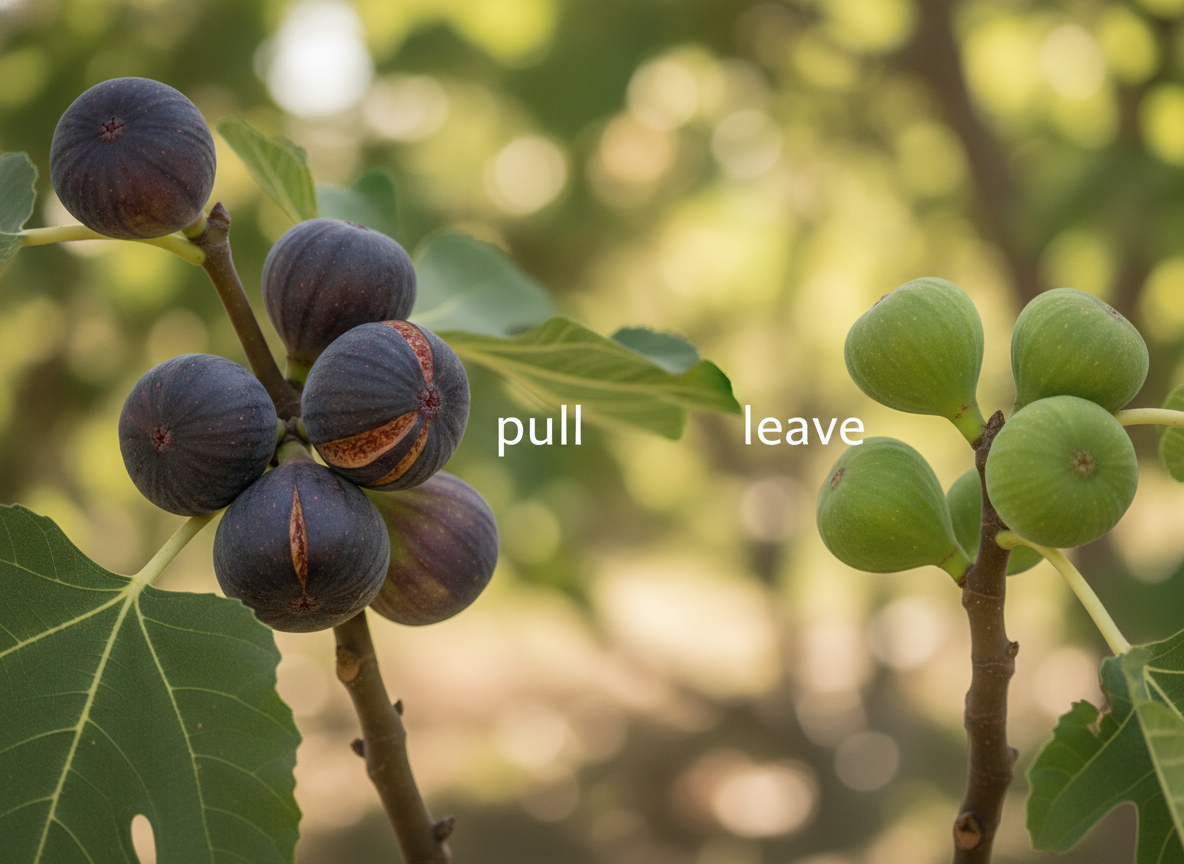 A close-up shot of figs on a tree — AI-generated illustration
Which figs to pull, and which to leave
The rule is simpler than the plant makes it look. Once you’ve picked the ripe fruit, work along each branch and remove anything bigger than a pea. Leave only the tiniest embryo figs, the ones sitting in the leaf axils at the ends of the current season’s growth.
- Pull: any fig from small-marble size upward. These are this year’s second flush. In a cool garden they’ve run out of runway and won’t finish.
- Keep: the pea-size (or smaller) nubs right at the shoot tips. These are next year’s actual crop.
You can twist the larger ones off with your fingers or snip them with secateurs — they come away easily. Don’t strip the leaves doing it; the foliage is still feeding those embryo figs and the wood before autumn.
The one exception is a warm, sheltered spot — a fan-trained tree against a sunny south wall, or a fig grown under glass. There, a second crop sometimes gets enough heat to finish, so watch those before you strip them. But for a fig in the open, in a pot, or against an average wall, the marble-sized fruit is a lost cause this year.
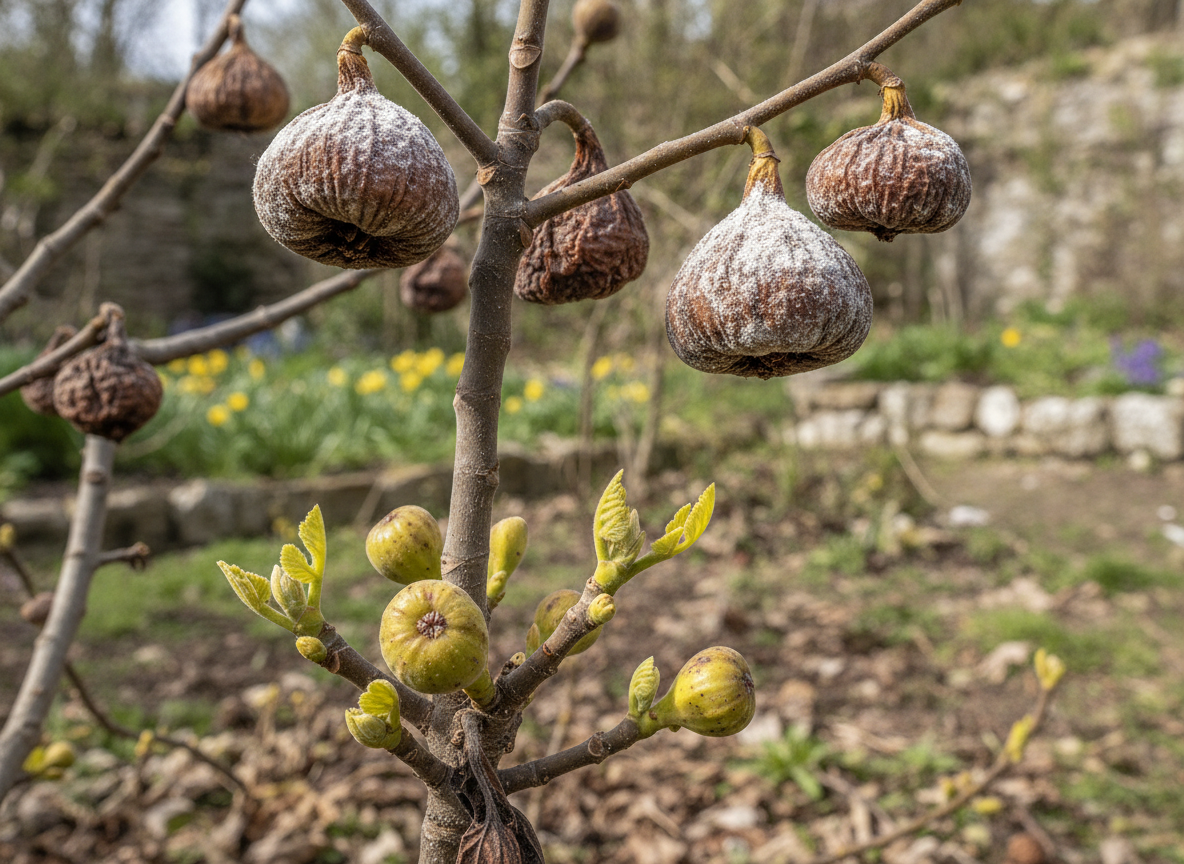 A fig tree with both dried figs and new spring growth — AI-generated illustration
Why leaving the big ones costs you next spring
There are two reasons to be ruthless, and both are about next year rather than this one.
The first is energy. A fig only has so much to give, and every half-ripe fruit it’s still carrying in October is a drain — sugars and water going into fruit that will never pay you back, instead of into the wood and the embryo figs that will. Pull the passengers and the tree pours what’s left into the crop that counts.
The second is rot. Those hard green figs don’t fall cleanly. They hang on, soften in the first damp spells, and turn into little pockets of grey mould right next to the embryo figs you’re trying to overwinter. Clear them now and you take the fungus off the tree before winter sets in — the same logic behind stripping black-spotted rose leaves rather than spraying them.
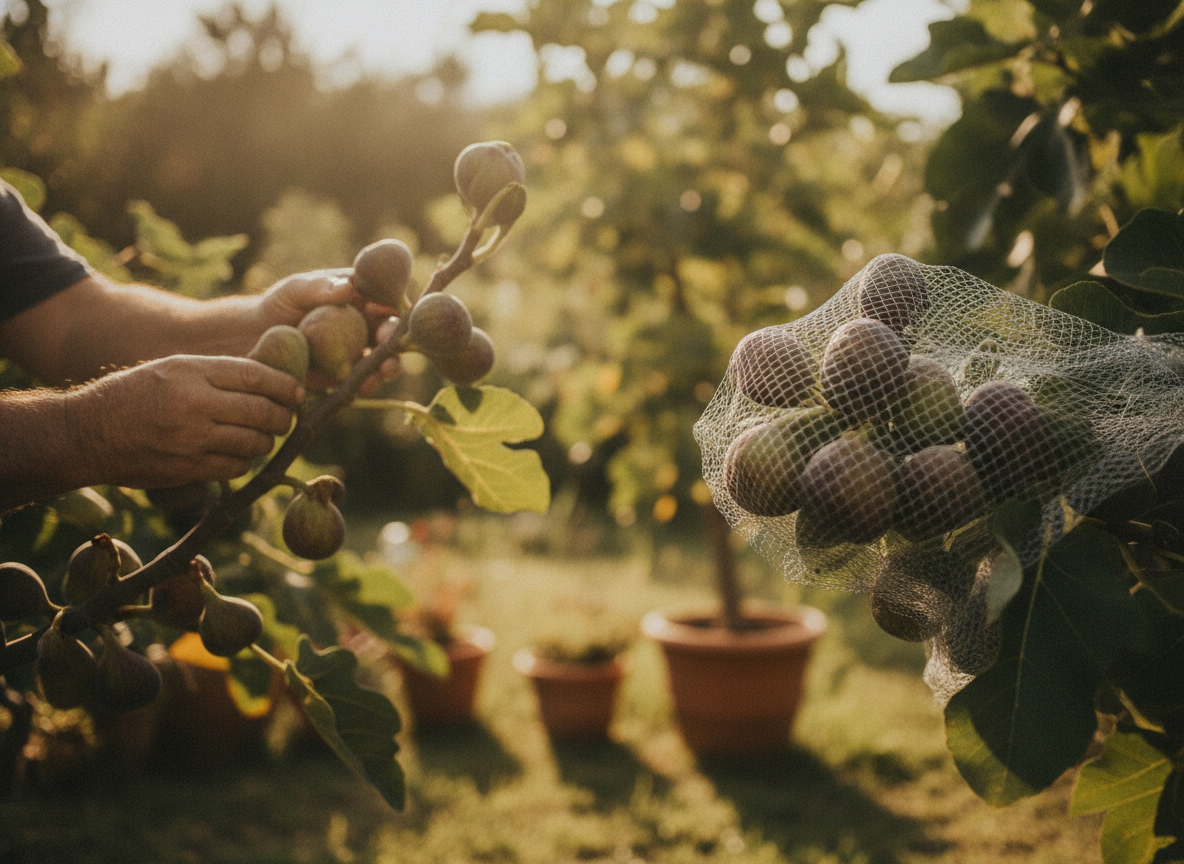 A person’s hands tend to fig branches, some of which are covered in netting — AI-generated illustration
Do it now — then protect what’s left
Late August into September is the window: once the main crop is coming in, that’s your cue to go over the tree and take off the oversized second flush. It’s not a one-and-done job — check back every couple of weeks through autumn and remove any latecomers that swell past pea size.
Then, before the first hard frosts, protect the embryos you’ve kept. They’re the whole point of the exercise, and they’re frost-tender. A screen of horticultural fleece over a wall-trained tree, or moving a potted fig into a cold porch or unheated greenhouse, is usually enough to carry those pea-size nubs through to spring.
The other August fruit jobs that work the same way
Pulling unripe figs belongs to the same late-summer logic as the rest of the fruit garden this month: stop the plant spending energy on growth and green, and steer what’s left into fruit and next year’s buds. If you grow other fruit, two jobs pair naturally with it right now:
- On a grapevine, the August summer prune does exactly this — cutting back the whippy shoots so sugar goes into the bunches, not the leaves.
- On trained apples and pears, the summer cut shortens this year’s side shoots once they’ve turned woody, building fruit buds for next season.
Figs reward the same discipline. Take off the fruit that can’t finish, keep the pea-size promise of next year, and wrap it up warm. Do that every August and a fig that used to give you a handful of ripe fruit will start giving you a proper crop — because for the first time, the whole tree is working on the figs that were always going to ripen anyway.
Not sure whether your fig is warm enough to carry a second crop, or when to pinch it back next June? That’s the kind of plant-and-place question Cresco is built to answer — a pruning calendar tuned to your exact plants and your local weather.