Why late summer is the last trim of the year
Rosemary has spent the spring flowering and the early summer growing, and by mid-August it’s usually looking a little loose — longer at the tips than you remember, a bit open in the middle, leaning where a shoot got heavy. This is the moment to tidy it. It’s also close to the last moment you safely can.
The reason is frost, not the plant. A trim tells rosemary to push fresh growth from just below each cut, and that new growth is soft, green and completely unhardened. Give it six or eight warm weeks and it firms up and survives the winter fine. Cut too late — into September or October in most of northern Europe — and the plant answers with tender shoots that have no time to toughen before the first hard frost, which then blackens them. You’ve spent the plant’s energy on growth it can’t keep.
So the rule of thumb is simple: make your last shaping cut about six weeks before your first expected frost. In much of the Low Countries and the UK that first frost lands from late October into November, which puts the last safe trim squarely in the second half of August. Do it now and the regrowth has time. Leave it until autumn and you’re better off not cutting at all until spring.
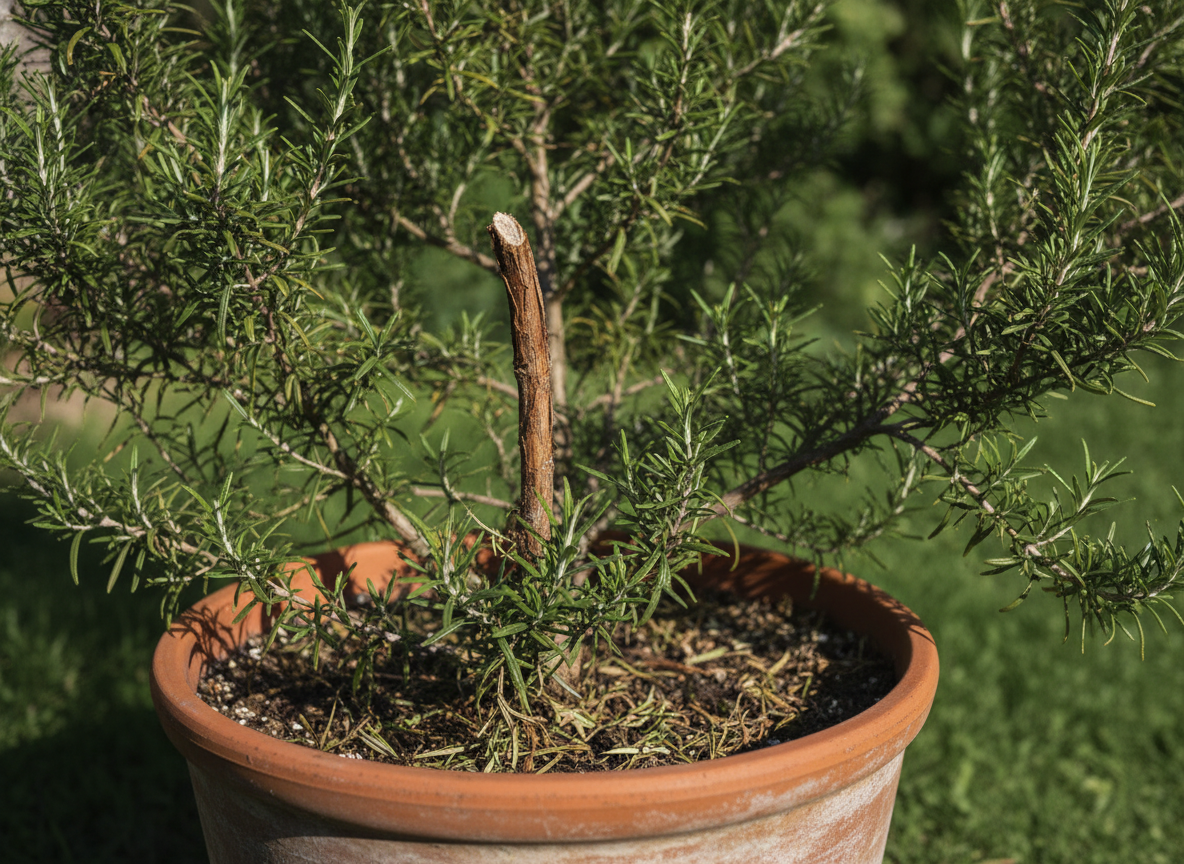 A potted rosemary plant with a pruned central stem — AI-generated illustration
The one cut rosemary never grows back from
Here’s the mistake that quietly ruins more rosemary plants than any pest: cutting back into the bare, woody base.
Rosemary is a Mediterranean sub-shrub, and like lavender and cotton lavender, it will not reliably shoot again from old, leafless wood. The dormant buds simply aren’t there. If you shear the whole plant down hard — the way you’d cut a boxwood or a privet — you’ll expose that grey, twiggy interior, and most of it will just sit there brown and dead while the plant sulks.
The trick is to only ever cut where there are still leaves. Follow any stem inward from the tip and you’ll reach a point where the green needles stop and bare wood begins. Keep your cut on the leafy side of that line — ideally leaving at least a couple of centimetres of growth below where you snip. Cut there and the plant breaks readily into new shoots. Cross the line into bare wood and you’re gambling with a stem that may never leaf again.
This is exactly why little-and-often beats one big annual chop. Trim rosemary a bit each year and you keep the green skirt low and dense, and you never have to reach for old wood. Skip it for two or three seasons and the plant grows out at the tips, goes bald and open at the base, and by the time you notice, the only cut that would restore the shape is the one that kills it.
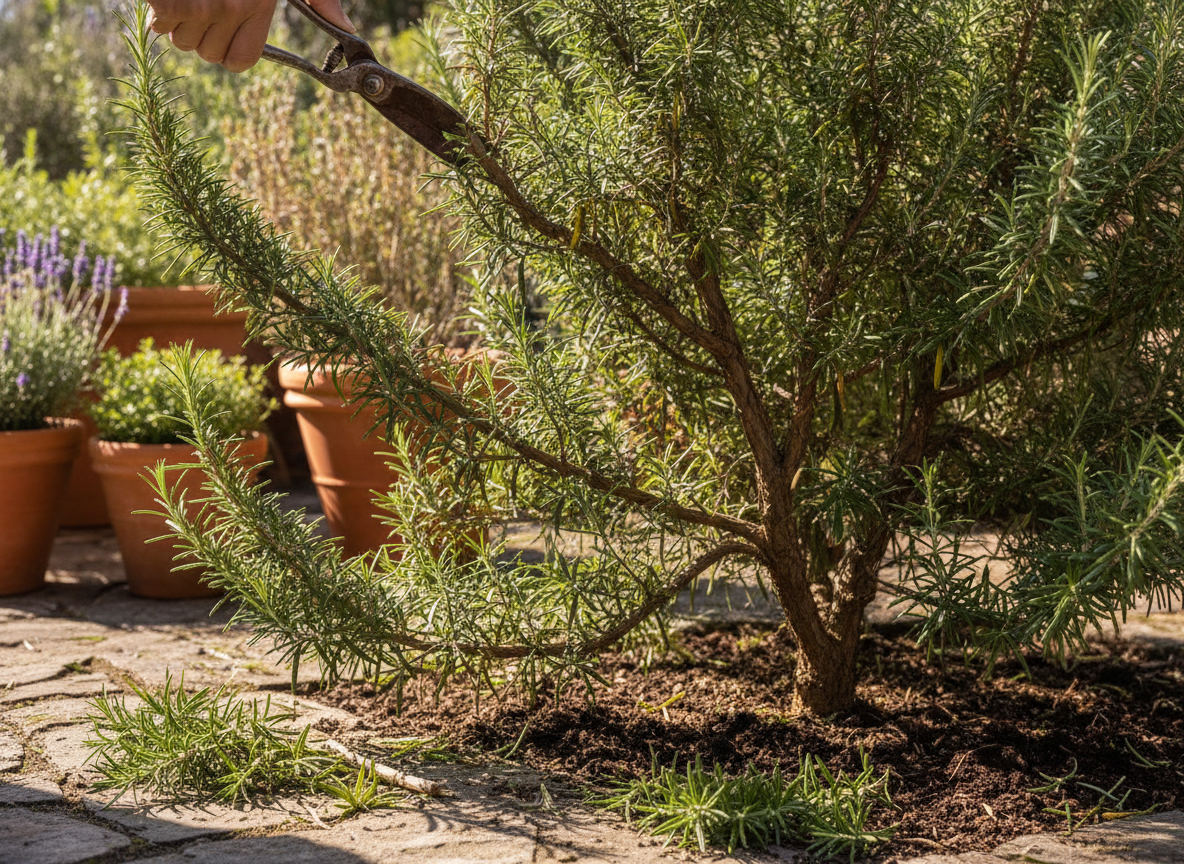 A person prunes a rosemary bush in a garden — AI-generated illustration
How to make the cut
You don’t need much. A clean, sharp pair of secateurs or garden snips, wiped with a little alcohol if you’ve just been on a diseased plant.
Work over the plant shoot by shoot rather than shearing across the top. Take each long, floppy or straggly stem back by a third at most, always cutting just above a leaf joint and always staying in green growth. Aim to keep a rounded, slightly domed shape — rosemary looks best and stays densest as a low mound, not a lollipop. As you go, pull out any completely dead twigs from the middle; opening the centre a little lets light and air in and keeps the base furnished.
A light trim like this is also your harvest. The sprigs you remove are perfectly good in the kitchen or, better, as cuttings — August-trimmed shoots root easily. Strip the lower needles from a 10 cm sprig, push it into gritty compost, and you’ve a free plant for the day the parent finally goes woody.
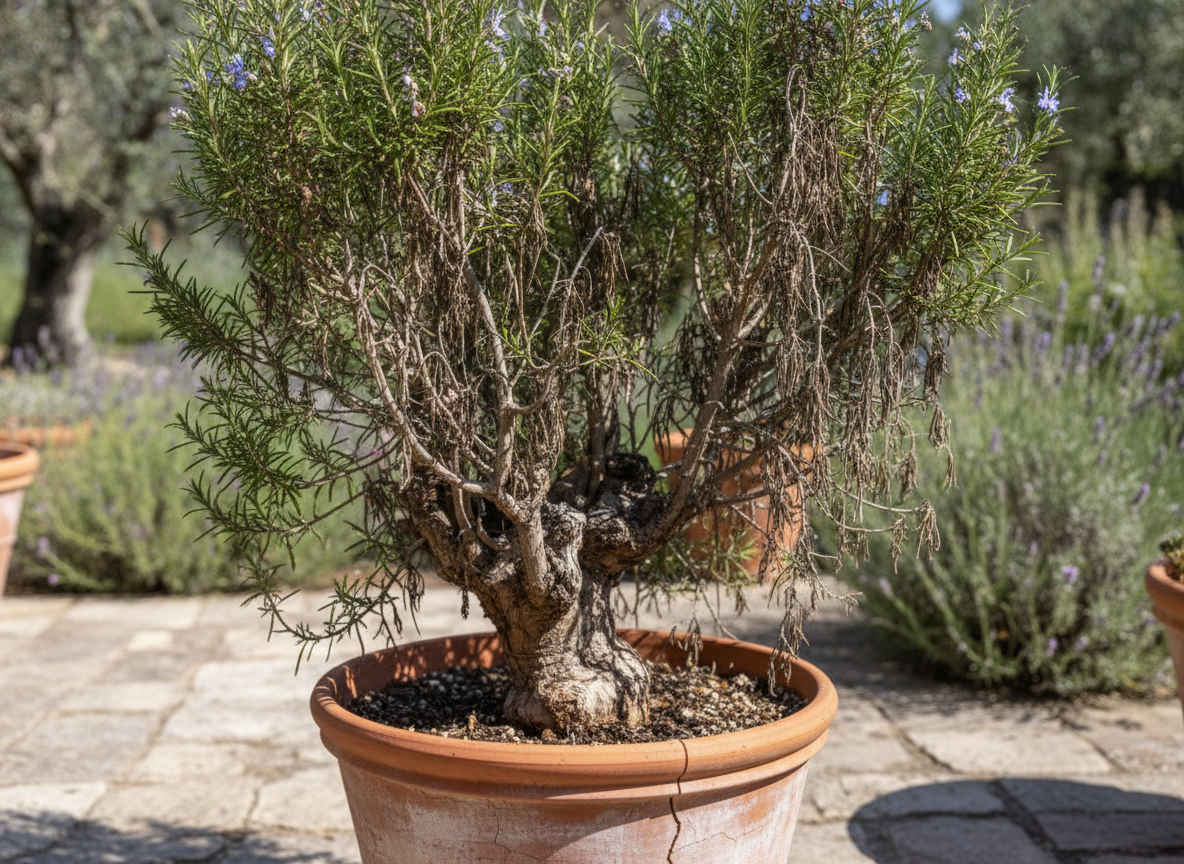 A potted rosemary plant with a woody and bare base — AI-generated illustration
Already woody and bare at the base?
If your rosemary is already a leggy sprawl with a bald, twiggy middle, don’t try to fix it in one go this month. A hard cut into that old wood now, so close to autumn, is the worst of both worlds — it either fails to reshoot or pushes tender growth straight into the frost.
Instead, take the small trim you safely can this August — tidy the tips, remove the deadwood, lighten the weight — and plan the real work for late spring, once new growth is visibly moving. Even then, rosemary rarely rejuvenates from bare wood, so the honest answer for an old, woody plant is often to take cuttings now and grow its replacement. A rosemary raised from an August cutting will be a dense, well-shaped young plant by next summer, exactly when you retire the parent.
The short version
Give rosemary one light, shaping trim in the second half of August — a third off the straggly stems, always cutting into green growth, never into the bare wood it can’t recover from — and then leave it alone until spring. It’s the last safe cut of the year, the one that keeps the plant compact through winter instead of open and frost-scorched.
For the wider picture of which shrubs take a summer cut and which resent it, our month-by-month pruning guide lays out the whole calendar. And if you’d rather be told exactly when your rosemary — and everything else in your garden — needs cutting, based on your own local frost dates, that’s the job Cresco was built for.