Why the timing is the whole job
There’s a reason so many summer jasmines (Jasminum officinale) end up as a scented tangle over the door that flowers less every year. It isn’t the plant, and it usually isn’t the site. It’s that the one prune it gets happens in spring — the neatest-looking moment, when you can finally see the mess after winter — and that is exactly the wrong week to do it.
Summer jasmine flowers on wood that grew the previous season. The long, whippy shoots it threw out this summer are next year’s flowering stems: they have spent the warm months ripening, and the buds that will open into that June-to-August froth of white, sweet-scented flowers are already forming along them. Cut those shoots off in March because they look untidy, and you are cutting off next summer’s flowers before they ever open. The plant grows back vigorously — jasmine always does — but it spends the season making leaf and stem instead of bloom, and you get a green curtain with almost no scent.
Prune the same plant now, in the days after the main flush fades, and you get the opposite result. You are working on wood that has already flowered and done its job, and you leave the whole rest of the summer for the new growth to ripen and set buds for next year. Same cuts, opposite outcome — the only variable that changed is the month.
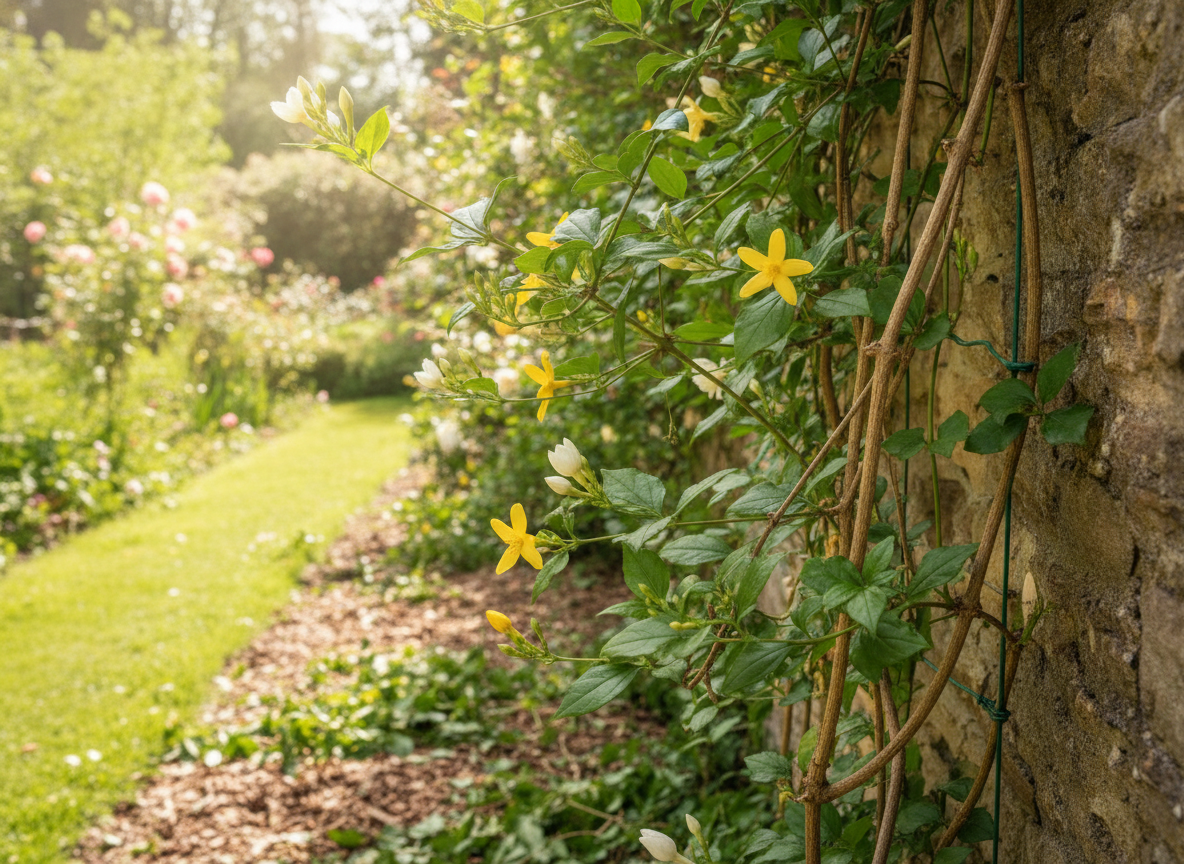 Yellow and white jasmine vines grow against a stone wall in a sunlit garden — AI-generated illustration
Is it actually summer jasmine? (the winter-jasmine trap)
Before you cut, be sure which jasmine you have, because the two common garden ones are pruned at opposite ends of the year.
Summer jasmine (Jasminum officinale, and the pink-budded J. × stephanense) is a true twining climber with soft, ferny leaves and clusters of small white star-flowers you can smell from across the garden. It flowers from about June into late summer. This is the one you prune now, right after flowering.
Winter jasmine (Jasminum nudiflorum) is a different animal: a lax, arching shrub with bare green stems that carries yellow flowers with no scent on the leafless wood in the depths of winter. It flowers on the previous season’s growth too — but because it blooms in January and February, “after flowering” for it means early spring. Prune winter jasmine now and you’ll strip off the wood that was about to give you flowers in the dark months.
A quick test: if it’s white and scented and finishing about now, it’s summer jasmine — read on. If it’s the yellow one that lights up a February wall, put the secateurs away until it has finished flowering in spring.
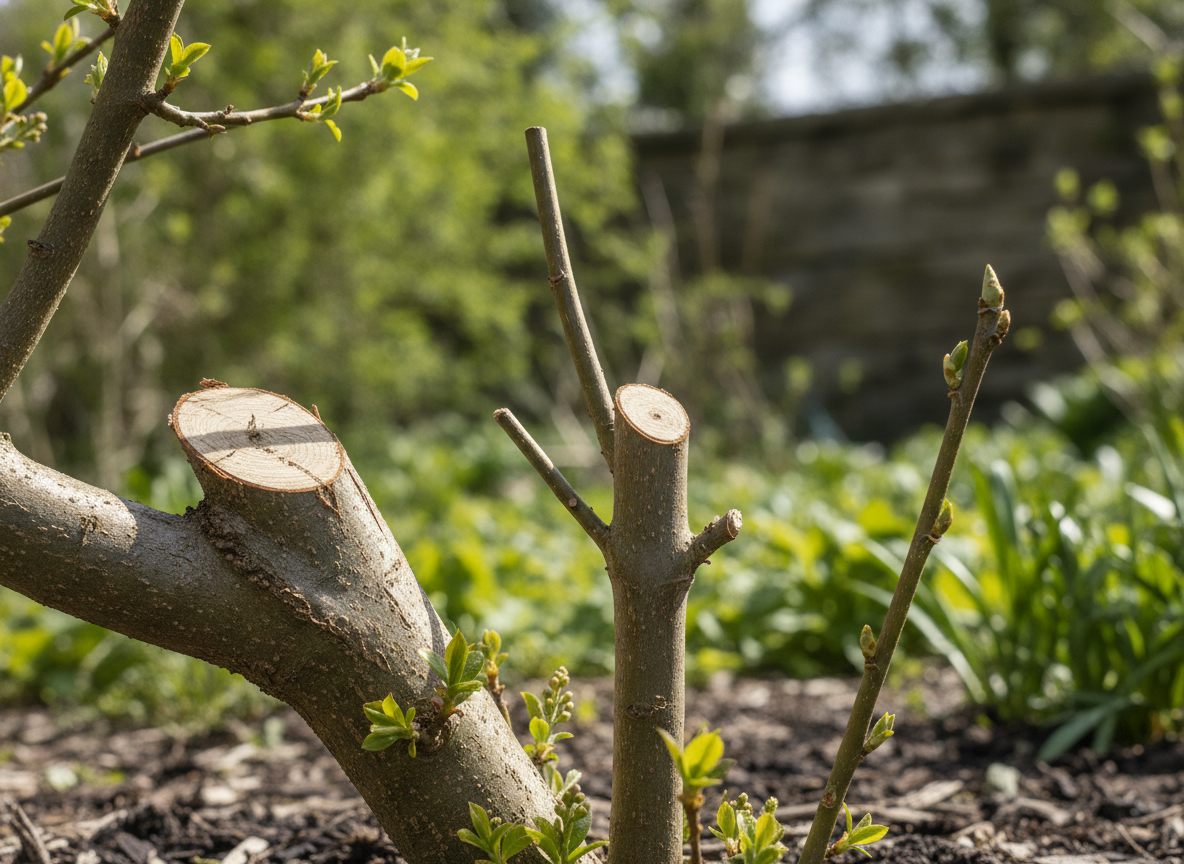 . The photograph depicts three fresh cuts on pruned tree branches — AI-generated illustration
The three cuts, in order
Summer jasmine is forgiving, so you don’t need to agonise over every stem. Work through it in three passes and you’ll cover everything that matters.
1. Take out the oldest, thickest stems at the base. Follow one or two of the fattest, most congested main stems all the way down and cut them out at or near ground level. This is the cut most people skip, and it’s the one that keeps the plant flowering low down instead of building an ever-higher “bird’s nest” of dead wood with all the bloom up in the gutter. Removing up to a third of the oldest wood each year forces fresh, vigorous shoots from the base — the stems that will carry flowers within reach.
2. Shorten the stems that just flowered. Trace the shoots that carried this summer’s flowers back to a strong, healthy side shoot or a pair of plump buds lower down, and cut there. You’re not shearing it like a hedge — you’re removing the spent, flowered tips and letting the growth below take over. On a plant that’s simply too big for its space, this is where you bring it back to the wire, trellis or frame it’s meant to sit on.
3. Untangle and tie in the new whippy shoots. Those long, leafy new stems are next year’s flowers, so they’re the ones you keep. Comb out the worst of the tangle, cut away anything dead, weak or heading in the wrong direction, and tie the keepers in along their support while they’re still flexible. Spread them out rather than bunching them — jasmine flowers best when light and air reach the whole framework, not just the outer skin.
If it’s an overgrown, bare-at-the-base monster
An old jasmine that’s been sheared over the top for years — or never pruned at all — often ends up as a bare rope of trunk with a mattress of growth balanced on top. You can’t fix that in one August with the after-flowering prune above, but you can start the recovery.
Jasmine takes hard renovation well. You have two options. The gentler one is to do the base-thinning cut in step one more aggressively over two or three seasons, taking out a third of the oldest stems each year so fresh growth builds up from below while the plant keeps flowering. The drastic one — for a plant that’s genuinely a lost cause — is to cut the whole thing down to about 60 cm in late winter or early spring; it will throw up strong new shoots, though you’ll sacrifice a season’s flowers while it rebuilds. Feed and water it well after a hard cut, and it usually comes back better than it was.
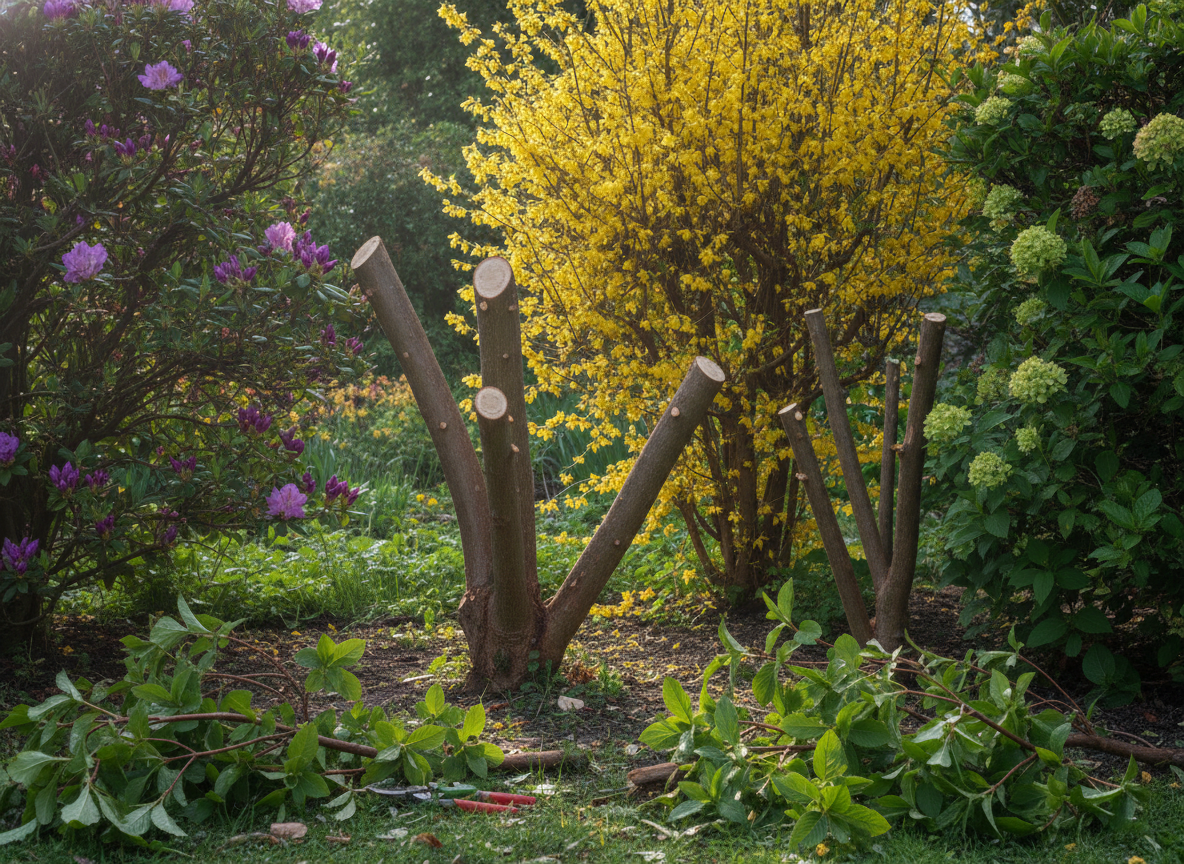 Garden scene with pruned stumps, flowering bushes, and discarded branches — AI-generated illustration
Don’t prune these by mistake
The “prune after flowering” rule is specific to summer jasmine. A couple of look-alikes want to be left alone right now:
- Star jasmine (Trachelospermum jasminoides) — the glossy-leaved, evergreen “jasmine” on so many fences — isn’t a true jasmine and only needs a light tidy after flowering. Don’t give it the hard base-thinning treatment.
- Winter jasmine, as above, waits until spring.
Get the window right, plant by plant
The trap with jasmine is that the tidy-looking moment and the correct moment are six months apart — and the same “prune after flowering” logic lands in a completely different month for the honeysuckle, wisteria or clematis a metre away. That’s the kind of thing that’s easy to get wrong from memory and easy to get right with a reminder.
Cresco tracks the pruning window for every plant in your garden and nudges you when each one is due — so the summer jasmine gets its cut the week the flowers fade, not next March. If your jasmine climbs alongside a honeysuckle that’s going bare at the base or a wisteria waiting on its five-leaf summer cut, it’ll keep each one on its own schedule.
Cut it now, tie in the new growth, and next June the scent lands by the door — not over next door’s fence.